Brexit

17 reasons to love Brexit

From our UK edition

‘But what are you going to do with the powers?’ the minister asked, while I negotiated devolution of powers to London when Boris was mayor. The government wouldn’t grant powers unless we explained how we would use them. And that is what is missing in the Brexit non-debate. We are ‘taking back control’ — but we haven’t really thought what we will do with that control once we have it. It is true there has been discussion of trade deals, transforming the Common Agricultural Policy and the colour of our passports. But if that was all we could do, even most Brexiteers wouldn’t have considered it worth it. So, what could we do once we Brexit? Well actually, given how extensive EU law is, an awful lot.

May’s indecision is not helping Tory Brexit tensions

From our UK edition

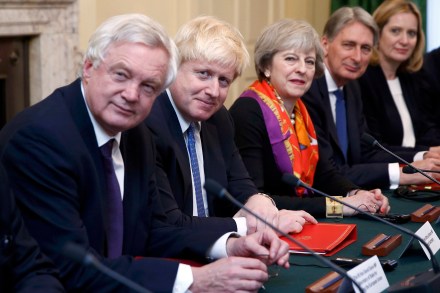
After PMQs today, Theresa May will rush back to Downing Street to chair a meeting of the Brexit inner Cabinet. This meeting will take place against a backdrop of heightened Tory infighting over Europe. This isn’t being caused by the Cabinet, who have been fairly well behaved in recent days, but the backbenches. May’s problem is that both wings of the Tory party think that her policy is, to a certain extent, equidistant between them. So, whenever one side ratchets up the rhetoric, the other feels obliged to follow suit. Since Jacob Rees-Mogg took over as chair of the European Research Group, the main Brexiteer group in the Tory party, it has taken a far more confrontational approach to the government.

What the papers say: A customs union is the least worst Brexit option

From our UK edition

Theresa May has been condemned for her failure to stick up for the NHS during her conversation with Donald Trump last night. The criticism comes after Trump tweeted to say Britain’s National Health Service was ‘going broke and not working’. But while we can be rightly proud of the NHS, we shouldn’t be blind to its problems, says the Daily Telegraph. Politicians have queued up to defend the institution and talk of ‘how much they love it’. ‘Only in Britain is it necessary to fetishise the way we deliver health care’, argues the Telegraph.

80-year-old pensioner receives anti-Brexit death threat

From our UK edition

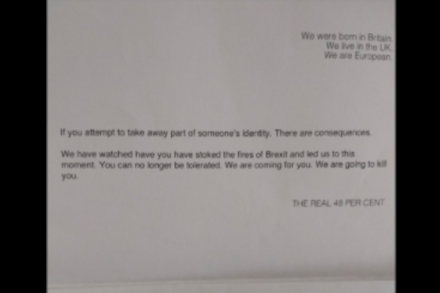
Here we go. There's been a lot of talk in recent months of the vicious rhetoric coming from Brexiteers - but what about ardent Remainers? Zac Goldsmith – the MP for Richmond Park – has taken to social media to share a letter that was sent to an 80-year-old constituent. Signed by 'the real 48 per cent', the author of the letter promises: 'We are coming for you. We are going to kill you.' https://twitter.com/ZacGoldsmith/status/960541047272112128 Well, Mr S did always think there was something rather sinister about the Remainer claim that Brexit voters would die at a faster rate to those who voted In...

Jacob Rees-Mogg’s criticism of the Treasury doesn’t go far enough

From our UK edition

Treasury civil servants have been getting indignant about the suggestion by Jacob Rees-Mogg that their reports have been biased in favour of EU membership. But are they protesting too much? As it happens we have a recent example of what a genuinely independent study by the Treasury looks like. Between 1999 and 2003, HM Treasury evaluated the five economic tests set by the government to determine whether or not the UK should join the euro. Officials drew on expertise and research from around the world in a spirit of open debate, and published the results in stages, before taking the decision. In a lecture to the Mile End Group at Queen Mary University of London in 2013, the process was described by David Ramsden, the economist who supervised the work. It is available to watch on YouTube.

‘Divide and rule’ is a dangerous game for a Prime Minister with no majority

From our UK edition

It's crunch week for Theresa May. The Prime Minister is under pressure to finally decide what the government's negotiating position ought to be going into the second round of EU negotiations. In order to work out what the UK's trade relationship with the EU should be after Brexit, May will meet with her Brexit war Cabinet on Wednesday and Thursday to try and agree a position on post-Brexit trade. There's hope that this will bring an end to the drift which has led Brussels figures like Angela Merkel to joke about May's 'make me an offer' approach to the talks. The crux of the issue relates to whether the UK will be in a customs arrangement of some kind with the EU.

Sunday shows round-up: Amber Rudd defends civil service

From our UK edition

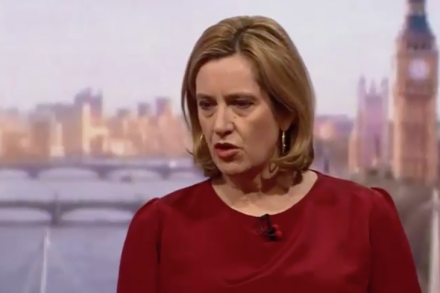
Amber Rudd: ‘I have complete confidence’ in the civil service The Home Secretary has defended the civil service after recent comments made by members of her party. Brexit minister Steve Baker and backbencher Jacob Rees-Mogg – now the chair of the influential European Research Group – have both criticised the institution. Baker apologised to the House of Commons on Friday for suggesting that there was significant internal pressure from civil servants to stay in the EU customs union, while Rees-Mogg accused officials who drew up a post-Brexit economic analysis of ‘fiddling the figures’.

The best way to avoid a Tory split? Decisive leadership

From our UK edition

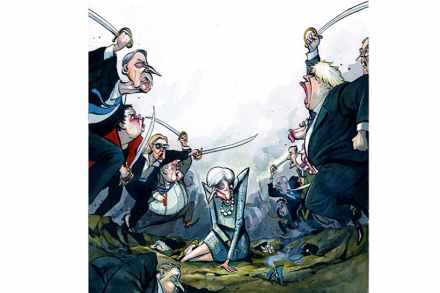
At political Cabinet this week, the chief whip warned ministers how difficult it was to hold the Tory party together, I write in The Sun this morning. Julian Smith warned them that noises off from the Cabinet made it even more of a struggle to maintain unity. Smith is right. The Tory party is dangerously divided, a split is a real possibility. He’s also right that ministers sounding off over Brexit heighten these tensions. But what he didn’t mention is the most important thing, the need for leadership. Ministers are putting forward their views on Brexit so publicly because there isn’t a clear government position. They think everything is still to play for, so a bit of public lobbying is justified.

Germans – not Brits – are the ones who keep mentioning the war

From our UK edition

The German ambassador, Peter Ammon, leaves Britain this month and retires after a distinguished diplomatic career as Berlin's man in Paris, Washington, and finally London. Before packing his koffer, Herr Ammon issued the traditional plangent lament that every single German envoy to our shores in my adult lifetime has voiced: Why, oh why, must Britain keep mentioning the war? In a valedictory interview with the Guardian (where else?) Herr Ammon appealed to the UK to stop 'fixating' on World War Two, instancing the huge success of the films 'Dunkirk' and 'Darkest Hour' as examples of our deplorable tendency 'to focus only on how Britain stood alone in the war, how it stood against dominating Germany. Well, it is a nice story, but does not solve any problem of today'.

Darkest Hour is superb Brexit propaganda

From our UK edition

After I wrote that I would not be going to see Darkest Hour, so many people told me I should that I did. The Kino cinema in the village of Hawkhurst was packed for the afternoon showing and the youngish man in the seat next to me wept copiously. The scene in which Churchill travels by Tube is as absurd as I had heard. But one can understand the purpose of the device: here is a man who has become prime minister without a popular mandate yet has a stronger intuition of the general will than most of the high-ups who surround him. So he moves among the people — rather as Shakespeare presents ‘a little touch of Harry in the night’ on the eve of Agincourt: ‘That every wretch, pining and pale before,/ Beholding him, plucks comfort from his looks’.

The toxic politics of ‘soft Brexit’

From our UK edition

The management principle that in static organisations, people are promoted to their level of incompetence reveals the government’s two most inept politicians to be the Prime Minister and the Chancellor of the Exchequer. Appearing at Davos last week, Philip Hammond pitched the government into its current – conceivably terminal – Brexit crisis. Thanks to his intervention, the Chancellor’s game plan is now obvious: the softest possible Brexit. Getting away with it involves a softly, softly approach. The politics of being outside the EU but ruled by the EU as a de facto Brussels protectorate require copious doses of political Temazepam. This, one would have thought, would have come naturally to Philip Hammond.

Letters | 1 February 2018

From our UK edition

Creeping repression Sir: John O’Sullivan is correct to argue that Europe’s centrist establishment often ‘does not really accept the right of its challengers to come to power. And when they do, it casts them as being illegitimate as extremists’ (‘A new Europe’, 27 January). We fear, however, that like a number of our fellow conservatives, Mr O’Sullivan’s enthusiasm to see elites get their come-uppance creates blind spots for creeping authoritarianism. At the end of a second term by its Fidesz government, Hungary performs worse on all of the World Bank’s Worldwide Governance Indicators than it did a decade ago.

The Spectator Podcast: Lead or go

From our UK edition

On this week’s episode we're wondering whether Theresa May can weather this latest storm, speaking to a robot expert (and a literal robot), and getting the inside story of male allyship workshops. The Prime Minister’s fortunes have ebbed and flowed since her disastrous election, but a yuletide season of relative calm has been replaced by her greatest challenge yet. 'Lead or go': that’s what James Forsyth says in this week’s cover piece, as pressure mounts on Theresa May to cobble together something resembling an agenda. He joins the podcast along with Giles Kenningham who worked at No.10 under David Cameron.

Theresa’s choice

From our UK edition

The Brexit ‘inner cabinet’ met on Monday. It was meant to be an important meeting, one which made some real progress on deciding what kind of economic relationship with the EU the UK is seeking. Senior civil servants had been told that the crucial topic of the Irish border would be on the agenda. This is one of the hardest parts of the Brexit equation to solve, and the answer will reveal plenty about the kind of trade deal the UK is seeking and the trade-offs it is prepared to make. But when the agenda for the meeting was circulated on Friday night, Ireland was not there. This left only data and security — the two least controversial of the nine questions that the Brexit cabinet is meant to address.

The real reason hospitals threw back that Presidents Club cash

From our UK edition

I visited St Thomas’ Hospital on Monday, to discuss fundraising for a cardiology research project. On the way in, I spotted an acquaintance taking her little boy for tests; she was busy explaining why the doctors needed to do what they were about to do, so I didn’t interrupt. I also spotted a block on the map labelled ‘future site of Evelina Children’s Hospital’, and my thoughts turned to the £650,000 pledged for Evelina at the Presidents Club dinner: £400,000 of it in an auction bid from the restaurant tycoon Richard Caring to secure naming rights on a high-dependency unit.

Julian Smith finds Brexit diplomacy a piece of cake

From our UK edition

Julian Smith has his work cut out as Chief Whip. As well as trying to stop Tory MPs firing off letters to 1922 Committee chairman Graham Brady, Smith must try and keep both Tory Remainers and Tory Brexiteers in line. In a bid to do this, Smith met with the European Research Group – the all-powerful Brexit wing of the Conservative party – this week to try and ease concerns that the government is about to water down the version of Brexit it is seeking. Now Jacob Rees-Mogg is chair of the ERG, the group is seen to have greater potential for trouble. So, what was his strategy? Serving cake. A Victoria sponge cake was brought out to keep the rebels at bay – reports that the cake was homemade are yet to be confirmed or denied.

David Lammy’s shambolic PMQs appearance should worry Corbyn

From our UK edition

Theresa May is in China so the Westminster bunfight has been replaced by dull politics. Journalists hate dull politics. But normal people welcome a few days respite from the cocktail of gossip, malice and envy known as ‘democracy’. David Lidington took the PM’s place. Decent chap. Reliable second-eleven all-rounder. Against him was Labour’s Emily Thornberry who tried to trip him up three times. And three times he refused to be tripped. It was fun to watch. Dainty, unpredictable. Quite a change. She recalled their last despatch-box tussle in 2016 when the Tories had an opinion-poll lead of 17 points. Mr Lidington had likened Labour’s infighting to a pirate film written by the Carry On team. ‘Ooh,’ crowed Labour’s front bench.

Tory attacks on the Brexit impact report will help Corbyn

From our UK edition

The good news is that the latest civil service analysis of the most likely impact of Brexit is more optimistic than previous civil service estimates of Brexit’s consequences for the British economy. The bad news is that they’re still pretty gloomy. The best case scenario, modelled for officials at the Department for Exiting the EU, envisages a two per cent hit to GDP by the 2030s. The worst, trading in a 'No deal is better than a bad deal' environment, suggests an economy eight per cent smaller than would otherwise be the case.  As Brexit bonuses go this seems on the thin side. No wonder the reaction to Buzzfeed’s scoop on the latest analysis is an exercise in proving the reality of confirmation bias.

What the BBC won’t tell you about the leaked Brexit forecasts

From our UK edition

The leaked government Brexit forecasts have this morning been reported by the BBC just as its leakers intended: as embarrassing proof that Brexit is bad for the economy. If it had any vague interest in being impartial, perhaps the Beeb would have bothered to make the rather obvious point: not only have we seen such forecasts before, but the new figures are more optimistic than HM Treasury’s last effort. The government’s April 2016 analysis said that the economy would be 3.8 percentage points smaller than it otherwise would have in 15 years if we were to stay in the EEA; that has now been revised down to a 2pc hit. With a free trade deal outside the single market, the Treasury’s initial guess was a 6.2-point hit; it has revised that to 5 points.