Bp

Can we trust Palantir?

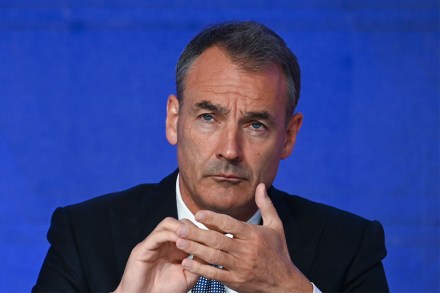
Best not to say too much about Albert Manifold, who was ousted as chairman of BP last week after only eight months in post over ‘governance oversight and conduct issues’. Manifold called the board’s allegations against him ‘lies’ and writs may be expected to fly. But the broader question is why a 117-year-old company built on long-term collegiate strategy-making has become incapable of holding a stable leadership team together from one year to the next. Bernard Looney was chief executive from 2020 until he resigned in 2023 after allegations that he misled BP’s board over relationships with colleagues. His successor, Murray Auchincloss, lasted less than two years before being replaced by Meg O’Neill, headhunted from Woodside Energy in Australia.

This is the least business-savvy government in half a century

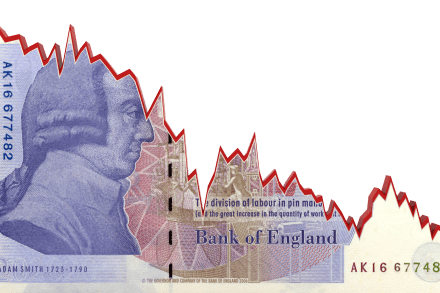
In this season of scant corporate news – a Ryanair rant against the French here, a new BP oilfield there – it’s hard to know what business leaders are thinking about the cold months to come. Until, that is, you read a survey conducted last month for the Institute of Directors. Given that I’m writing from France this month, I’d call it an absolute croissant-dropper. The nub is that 639 UK businesses, large and small, report ‘optimism in prospects for the UK economy’ at -72, lower even than their darkest pandemic sentiment at -69 in April 2020. Export hopes and investment intentions are down, wage expectations are sharply up and, unsurprisingly, headcounts are set to fall.

Why wasn’t Russell Brand cancelled in his prime?

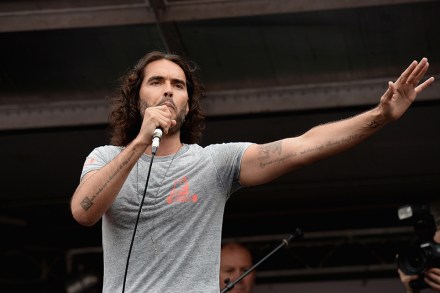
In 2014, Rolf Harris was convicted of sexual offences against girls. I wrote in this space that this would have represented more of a cultural change in the treatment of celebrities if he had been unmasked at the height of his fame. Current stars, I suggested, are much more rarely denounced: ‘I would not dream of suggesting that Russell Brand is a sex criminal, but we know, from his own account, that he has slept with a great many women.’ He had even, on his infamous Radio 2 show, boasted of sleeping with Andrew Sachs’s grand-daughter, yet ‘the BBC broadcast this as comedy’. ‘If the celebrity wheel of fortune ever went against Brand,’ I went on, ‘would it be surprising if some of the women decided to accuse him of “inappropriate” acts?

Bernard Looney shows why every board should be braced for scandal

Bernard Looney, the fallen BP chief, always had a certain swagger about him. I’ve no idea whether he was unsafe in taxis, but he was certainly prone to unguarded remarks. ‘Not every barrel of oil in the world will get produced’ was a bold way, back in 2018, to introduce BP shareholders to the idea that the world’s energy giants will one day have to strand remaining carbon assets if they really intend to achieve net-zero targets. ‘This is literally a cash machine’ was not the best way to describe BP’s profit performance in November 2021, when British households were beginning to feel the pain of soaring energy bills.

Why is the National Portrait Gallery cutting ties with BP?

When is money so soiled that merely accepting it makes you tainted? It has been reported today that the National Portrait Gallery (NPG) and Scottish Ballet are ending their sponsorship deals with the oil and gas company BP following years of protests. Climate activists argue that these sponsorships launder the reputations of those responsible for despoiling the planet. BP has long been a significant arts sponsor; the NPG’s annual portrait exhibition has been supported by the company since 1989. And in 2016 BP announced renewed sponsorship deals with the British Museum, NPG, the Royal Opera House and the Royal Shakespeare Company, pledging a total of £7.5 million over five years, starting in 2018.

Is Brexit really to blame for fuel-rationing?

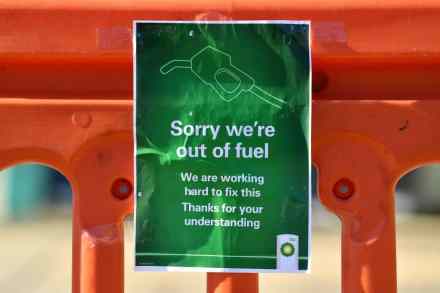
All current ills in the world, of course, can be blamed on two things: climate change and Brexit. So far, there are few people blaming the rationing of petrol and diesel on extreme weather-related to climate change (although give it time), but the usual suspects have certainly been quick out of the blocks to blame it all on Brexit. Lord Adonis, for example, has claimed:  'Brexit is now leading to fuel-rationing' BP has blamed its inability to keep petrol stations stocked on a shortage of lorry-drivers, but can that really be blamed on Brexit?  In July, the Road Haulage Association (RHA) published a survey of 615 haulage firms as to what they thought was the cause of the then already-developing driver shortage.

In defence of Amazon

We should take heart from BP’s £5.1 billion second-quarter loss, accompanied by a halving of its dividend. What’s good about that? Nothing — except that the loss reflects a write-down of the value of oil and gas assets that shifts the company to a more realistic footing for an extended period of low oil prices and reduced demand, indicating resilience rather than impending doom. In recent times, BP has lived through Deepwater Horizon, history’s most politicised oil-rig disaster, and extricated itself from TNK-BP, history’s nastiest Russian joint-venture. It operated when oil was below $20 a barrel in 2001 and when it hit $147 in 2008. It has plans to achieve net zero carbon by 2050.

The RSC should ignore the climate change mob and stick with BP

It is often said that Western culture worships youth. Yet this cult of youth worship has started to mutate into something a bit weirder, as it increasingly seems that ours is a society that now worships children. This year, for instance, has seen the rise to global ascendency of the 16-year-old Swede, Greta Thunberg. She has become the child-saint icon of the environmental movement, whose apocalyptic scorn is fawned over by liberal politicians and woke-conscious big business. Her teenage acolytes bunk school, with the blessing of their teachers, to raise awareness as to the plight of climate change. Elsewhere, we are told that it is imperative to hold a second Brexit referendum 'for the sake of the children' (and even, to make the point clearer, 'our children's children').

Is ‘turbocharging’ the new code for Keynesian crisis spending?

‘Turbocharging’: sounds exciting, doesn’t it? Two weeks ago, I noted that our incoming PM had deployed this power-word — with its subliminal reminder of his pedal-to-the-metal reputation as the former motoring correspondent of GQ — to describe what ‘free ports’ would do to regional economies. Since then, it has clearly been scrawled on Dominic Cummings’s Downing Street whiteboard: Foreign Secretary Dominic Raab and Chief Secretary to the Treasury Rishi Sunak were also bandying it around this week.

Deutsche Bank is right to return to its domestic roots

Among the numbers attached to the restructuring of Deutsche Bank announced by Chief Executive Christian Sewing this week, the 18,000 job cull is most startling. But others tell the story just as vividly. First, the fact that the venerable institution, a pillar of Germany’s post-war economic resurgence, had raised €30 billion of new equity in the past decade in pursuit of a dream of becoming ‘Europe’s Goldman Sachs’ — but that sum is double its current shrivelled market capitalisation. Second, its most recent investment banking boss Garth Ritchie is leaving with an €11 million payoff, having collected ‘about €36 million’ over three years in which it became obvious his division was fit only for the axe.

Art institutions should stop virtue-signalling about funding and focus on what they’re showing

The ethics of the private patronage of arts institutions has never been straightforward issue. But as the preoccupation with transparency and corporate responsibility has grown, wealthy benefactors can nowadays turn from pillars of respectable society to moral pariahs in the blink of an eye. Such is the fate of the fabulously rich Sackler family, major philanthropists with fingers in arts institutions across the UK, in the face of mounting criticism over its close links to Purdue Pharma, the family-owned US pharmaceuticals giant and maker of the opioid painkiller OxyContin – the drug now the focus of outrage over the opioid epidemic that has made addicts of thousands in the US over the last two decades.

Pay packets, profits and promotions

I usually take a stern view of corporate pay packets that are out of line with profits and shareholder value, but I’m prepared to make an exception for Bob Dudley. The American-born chief executive of BP collected $19.6 million last year, up 20 per cent on his 2014 remuneration, while the embattled oil giant clocked up a record loss of $6.5 billion and shed thousands of jobs. But even in the rugged world of oil and gas, few men have survived tougher career challenges than Dudley, who in his previous role as head of the Russian joint venture TNK-BP was so threatened by hostile locals that he had to operate from an undisclosed location outside Russia.

This great commodity rally doesn’t mean that spring has arrived

All in all, this is an odd moment for an outburst of high spirits: not from me — I’m as phlegmatic as ever — but from commodity investors. The price of a barrel of oil has rallied from $27 to $40 after talks between Saudi Arabia and Russia about restricting supply; one pundit called that ‘meaningless theatre’ but others expect a climb back to $50. In a similar mood, copper prices have risen by almost a fifth — reflecting producer cutbacks combined with a belief that the Chinese downturn in demand might not be so severe as was first feared.

Good and bad politics: the Budget against a backdrop of Greek chaos

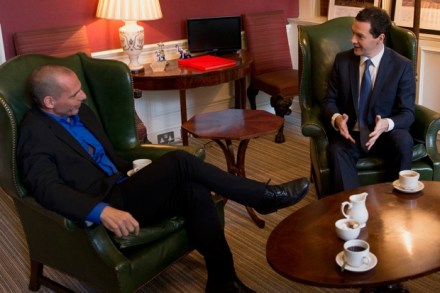
George Osborne’s Budget was good politics: not so much in terms of tactical point-scoring, though there was plenty, but in terms of striving for big objectives of fiscal rectitude and wider prosperity by incentivising sensible economic behaviour and discouraging casual reliance on the state: ‘a country that backs those that work hard and do the right thing’, in David Cameron’s phrase. Some of it will provoke rage, some of it will swiftly unravel, but it was a real attempt to steer the UK in a positive direction. How sad that it had to be presented against the backdrop of the Greek crisis, which is the most howling concatenation of bad politics so far this century.

Why cheap oil could mean a Labour victory

BP’s profits are down, and the oil giant is slashing up to $6 billion out of its investment plan for the year. At Shell, the cut could amount to $15 billion over the next three years. At troubled BG, still waiting for new chief executive Helge Lund to arrive, capital spending will be a third lower than last year. I wrote recently of ‘consequences we really don’t need’ as the oil price continues to plunge: cheering though it is for consumers (and good for short-term growth) to find pump prices at a five-year low, the full impact will not be felt until a decade hence, when projects cancelled now might have come on stream to ease supply in whatever cat’s-cradle of conflict afflicts the world by then.

Margaret Hodge’s oily donation

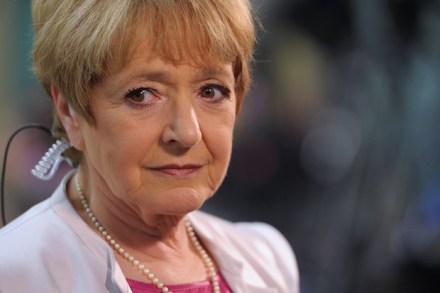
Despite being the heiress to a steel fortune, Margaret Hodge never stops criticising multinational corporations over their tax affairs including the use of offshore havens and complex company schemes that befuddle the taxman. BP, for example, reportedly has 85 subsidiaries in a variety of tax havens built up over many years. That has not stopped moaning Margaret taking a hefty £8,000 donation from Bryan Sanderson. Who is he? Well, he is the former BP director, who worked at the company for over three decades.

Is the US using bank fines to bring allies into line against Russia?

Here’s one for all you conspiracy nuts out there, prompted by readers’ comments on my recent item about whether BP has been unjustly targeted by the US political and judicial establishment. I gather there’s a theory that the hounding of non-US banks by the US Department of Justice for sanctions-busting and trading misdemeanours has a more sinister foreign-policy impetus behind it. Notably — according to Conflicts Forum, a website I’m told is breakfast reading for trainee spooks — the $9 billion fine imposed by US authorities on BNP of France for financing trade with Iran, Sudan and Cuba may also have been intended to punish the French for refusing to cancel their contract to build two Mistral-class amphibious assault ships for the Russian navy, about which I wrote in August.

BP’s been punished enough – but not because Americans hate the Brits

I should declare two connections before I start offering opinions about the latest US judgment against BP relating to the ‘Macondo’ disaster — the explosion on the Deepwater Horizon oil rig and subsequent spillage in the Gulf of Mexico in 2010. The first is that I’m occasionally invited to interview BP executives for its in-house magazine. That doesn’t mean I’m in their camp, but it does mean I have had the opportunity to discuss Macondo with, among others, chairman Carl-Henrik Svanberg, and I did not think he was merely parroting the corporate line when he told me, ‘We’re not going to let people take advantage of us, but we’re going to do what’s right and be a showcase of responsibility.

The man who could sell the British public on fracking

Iain Conn, who will succeed Sam Laidlaw as chief executive of Centrica, would have been a dead cert for the top job at his current employer, BP, were it not for the Deepwater Horizon oil rig disaster in the Gulf of Mexico in April 2010. The subsequent PR fiasco terminated the BP career of the then chief executive Tony Hayward — who seemed crushed by the episode, but recovered to make a double fortune at Genel Energy and Glencore. Had Hayward served a full term, Conn (BP’s head of refining and marketing) would almost certainly have followed him. As it was, BP found it more politic to appoint an American, Bob Dudley, to repair relations in Washington while simultaneously arm-wrestling with the Kremlin-connected oligarchs who were BP’s co-investors in Russia.

Relax, you can safely ignore BP’s “warnings” about the impact of Scottish independence

Why, a Tory grandee asked me recently, won't more businesses come out against Scottish independence? It was, in his view, axiomatic that independence would be bad for businesses north and south of the border. So why the silence? Perhaps, or at least in part perhaps, because when businesses do raise their concerns they often contrive to present themselves as hopeless chumps. I am sure Bob Dudley, chief of BP, is personally committed to Britain but the idea, as expressed in an interview with the BBC, that Scottish independence creates "big uncertainties" for his business is poppycock. Well, a kind of poppycock anyway. It would require BP to operate in another country and I can see why the petroleum giant would be happy to stick with the familiar status quo.