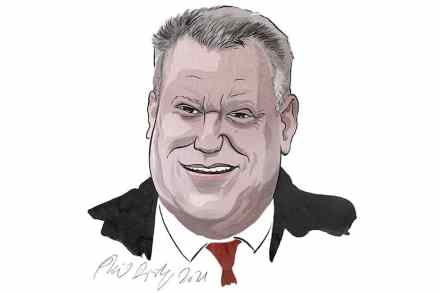
Boris johnson

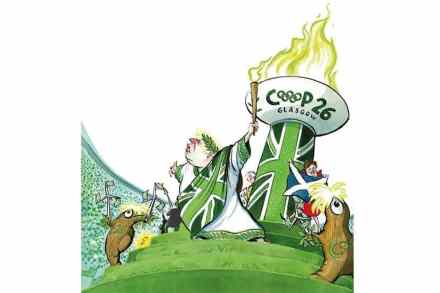
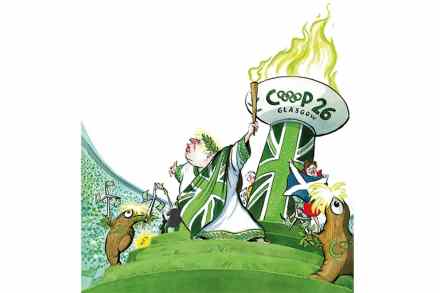
Cop out: Boris’s battle to save the climate summit

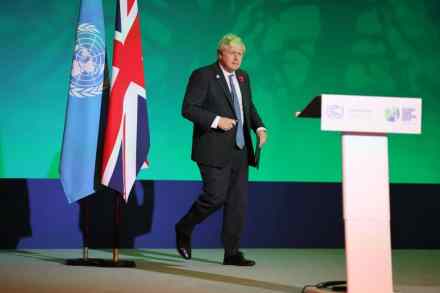
As so often, the Queen put it best. While opening the Welsh parliament a couple of weeks ago, she was caught on microphone discussing the COP26 summit and its frustrations. ‘Still don’t know who is coming,’ she told the Duchess of Cornwall. ‘It’s really irritating when they talk, but don’t do.’ In just a few words, she perfectly summed up the challenges facing Boris Johnson in Glasgow. The PM wants to get countries to commit to net-zero carbon emissions by 2050. But how to get a deal, if the main players aren’t at the table? Xi Jinping hasn’t left China since the Covid outbreak and will stay put now. Vladimir Putin is weeks away from opening a new pipeline supplying gas to Germany and continues to be quite the energy power broker.

The curious case of Boris and the bishops

Back in July the wedding of Boris and Carrie at Westminster Cathedral prompted Steerpike's diligent colleague Robert Peston to ask a personal – but constitutionally important – question: is the PM a Catholic? As the head of government in a country with an established church, the Prime Minister and his office are intimately involved in deciding who runs the Church of England via his role in the appointment of bishops. Some premiers of course have relished their role in the ecclesiastical process. When appointing the Archbishop of Canterbury in 1961, Harold Macmillan was said to have been urged by the incumbent Geoffrey Fisher not to appoint Michael Ramsay as his successor on the grounds that: 'I have known him all his life – I was his headmaster at Repton.

How serious is the government about Net Zero?

The green agenda is leading the news, with Boris Johnson on a PR mission to sell his environmental plans to the country (and sceptical Tory MPs) ahead of Cop26. Several documents were published last week, including the much-delayed Heat and Building strategy, the Net Zero strategy and the Net Zero review which is meant to offer some idea of how much exactly the whole agenda will cost. Downing Street is pushing their environmental policies as a gradual transition rather than something that could drastically impact household finances. But how might this work in practice? Tomorrow, The Spectator is hosting its own virtual Cop26 summit (you can get tickets — free and open to all — here).

Why did we decide that Covid was over?

Look, I don’t know much epidemiology. Can’t pretend to. So what follows is, necessarily, a personal finger to the wind. But perhaps it chimes with your experience.  First time round — back in the days when we were all huddled indoors, leaving the house only to stand on the doorstep of a Thursday night to bang pans with a wooden spoon, or making solo expeditions to a denuded supermarket where we do-si-dohed around each-other in the aisles… yes, back in those days, I didn’t know very many people who got Covid. Acquaintances, the odd friend. Some scary stories. Some scarier statistics. But not so many ‘rona stricken friends. Could we inch towards herd immunity down a road scattered with corpses rather than heaped with them?

Boris Johnson should trust the market to solve climate change

In a 368-page document published this week, the government announced its strategy to cut emissions to net zero by 2050 and confirmed its target for all electricity to come from low carbon sources by 2035.  It’s difficult to imagine worse timing for the release. An energy crisis is exposing the failures of decades of massive state meddling in the market. Insulate Britain have been picnicking on the M4 and M25. And on Wednesday a leak of documents showed Saudi Arabia, Japan and Australia are asking the UN to play down the need to move rapidly away from fossil fuels. None of this has weakened the Prime Minister’s resolve, though that’s hardly surprising.

This heat pump scheme is a bung to the rich

Who does the government think will be the 90,000 lucky people who succeed in pocketing £5,000 grants to replace their gas boilers with heat pumps? Just-about-managing homeowners in ‘Red Wall’ seats who strained every sinew to buy a draughty two up, two down – or well-off homeowners with nice period houses, lots of capital and three cars on the drive? Here’s a little clue: even taking into account the £5,000 grant it will still cost upwards of £5,000 to install the heat pump itself, plus another £10,000 for insulation and to install larger radiators – so it is really not an option for the first group. As for the second, they are bound to lap up those grants, just as they have every other environmental handout on offer.

Why does Boris Johnson keep on winning?

For his critics, Boris Johnson offends the notion that the British are a sensible people so deeply we feel we no longer understand much of our country. How, we wonder, can so many voters support an obvious phoney? How does a prime minister who makes it up as he goes along get away with it? The fraudulent promises of rising living standards, the national self-harm of Brexit, the deliberate exacerbation of tensions in Ireland and the treatment of former friends in Europe as enemies have produced an anti-Johnsonian culture. Its brilliant satires and devastating newspaper columns are as ferocious and outraged as the anti-Thatcherism of the 1980s – and just as ineffective. A report released today by Labour Renaissance throws a bucket of cold realism over our fevered rages.

Why the early election rumours won’t go away

The Conservative party doesn't have a great track record when it comes to early elections — MPs are still scarred by Theresa May losing the Tory majority after going for a snap poll in 2017. But that hasn't stopped talk of an early election building in recent weeks. This isn't about a vote tomorrow or next month but instead whether Johnson opts to go to the polls in 2023 rather than 2024.  There are compelling reasons that could tempt Johnson to go early The conventional wisdom is that Johnson won't even consider going early — he's already lost too much time to Covid and needs to deliver on levelling up. Meanwhile, few expect the government to win a bigger majority than the one it currently enjoys — so why rush?

Rishi in, Keir out: 2020’s most popular baby names

Once the popularity of politicians was judged by how many babies they were asked to kiss – now it's by how many kids are named after them. The Office for National Statistics has today revealed the most popular baby names for 2020, with Oliver and Olivia remaining the most popular names for boys and girls in England and Wales for the fifth consecutive year. Mothers aged 35 years and over continued to choose more traditional names, while younger mothers opted for more modern and shortened names. But none of that matters here in Westminster where all eyes were (naturally) combing the ONS figures to see how many new mothers and fathers have chosen to bestow the names of our elected leaders on their darling offspring.

It’s no wonder young people don’t understand levelling up

There are two ways Number 10 can look at new polling which shows only 14 per cent of Britons understand the slogan ‘levelling up’. The first: the government has utterly failed to communicate its signature policy. The second: at least they didn’t poll the Cabinet. The findings, which come in research by Redfield & Wilton Strategies for PoliticsHome, are interesting for what they tell us about now much the slogan has cut through (66 per cent have heard of it) versus how much it's been understood (one in three haven’t the foggiest what it refers to).

Why Covid means the big state is back

History suggests that when the state expands in a crisis, it doesn’t go back to its pre-crisis level once the emergency is over. After the first world war, the Lloyd George government extended unemployment insurance to most of the workforce, fixed wages for farm workers and introduced rent controls. The second world war led to Attlee's nationalisations, along with the creation of the NHS and the modern welfare state. In the magazine this week I ask if Covid will lead to a permanently bigger state. There is another danger in all this intervention: can the country afford it? Last year, state spending exceeded 50 per cent of GDP for the first time since the end of the war.

David Frost’s protocol diplomacy

As a general rule in post-Brexit politics, when David Frost makes a public intervention on the Northern Ireland protocol, it tends to dampen rather than soothe UK-EU relations. Frost, charged with improving the protocol, is a divisive figure in Brussels who is seen to catch flies with vinegar rather than honey. His speech was expected to be an escalation in the current war of words between the two sides. In the end, the talk itself was slightly less confrontational than expected. Frost effectively declared the Northern Ireland protocol dead and called on the EU to work with the UK Frost effectively declared the Northern Ireland protocol dead and called on the EU to work with the UK to come up with a new protocol to prevent a hard border on the island of Ireland.

Don’t bet on the EFFing crisis bringing down Boris

Boris Johnson is taking one heck of a risk by making labour shortages a deliberate part of his economic strategy. That, at least, is the conventional wisdom about the Prime Minister in the wake of party conference season.  If things go well, then businesses will raise productivity by investing heavily in new machinery and more training for home-grown workers who currently lack key skills. And then all will be fine for Johnson. But if things go badly, labour shortages will merely fuel rampant inflation, while gaps on shop shelves will become endemic. Key groups of voters will turn on the PM, hastening his demise.

A matter of Truss: the unlikely rise of Lizmania

If Boris Johnson were to vanish tomorrow, who should replace him? The American pollster Frank Luntz asked this of about 200 people at The Spectator’s live podcast last week, and the answer was Liz Truss. This took me by surprise – I’d have said Rishi Sunak – but there’s no doubting the Lizmania that was in the air in Manchester.  The new Foreign Secretary was pulling in the crowds, flirting with the right-wing think tanks (it’s time for her to be ‘reinfected with sound ideas’ she told them) posing for selfies and – later, in the nightclubs – dancing with her army of admirers. Her events were the ones with the biggest queues on the way in and the biggest smiles on the way out.

The Tories will pay a price for Boris’s housing strategy

One of the themes of Conservative conference was that the government has dropped plans for a radical reform of the planning system, which was designed to get more houses built in the south east. Both Boris Johnson and the new party chairman Oliver Dowden were keen to stress this point. But, I say in the Times today, this is a mistake. The Tories are the party of the property-owning democracy, and live and die by this The Tories have been spooked by the Chesham and Amersham by-election where the Liberal Democrats ran hard against planning reform and took the seat on a 25 per cent swing from the Tories. Boris Johnson will pay little immediate electoral price for this U-turn. Indeed, at the next general election he’ll probably benefit from it.

Build Back Boris!

As a clarion call, a sounding of hosannas, a piece of fiery rhetoric to hold puissance over the soul of the nation, 'Build Back Better' is a raspberry. It is a stock that will never sell, a verbal wreck. It lacks zing and pep and, above all, Boris. If Lenin had disembarked from his sealed train and told the frenzied crowds that he would 'Build Back Better', they would have packed him back to the Huns. Having said that, there were times yesterday when Boris riffed on the theme and seemed a bit more himself. ‘Build Back Beaver,’ he said. (Was Carrie backstage?) And even ‘Build Back Burger,’ which sounded encouragingly like the Boris of yesteryear that we have missed so sorely. That’s when a thought struck me.

Boris’s hostage to fortune

Most prime ministers would be worried about supply chain shortages. But as became increasingly clear at the Tory party conference in Manchester, Boris Johnson has instead spotted a political opportunity. He denies there is a crisis and claims that the recent ‘stresses and strains’ amount to nothing more than the economy reawakening after lockdown. As for the worker shortages, he believes they are proof of a ‘robust economy’ which will result in people being paid more. This has been the Tories’ theme in Manchester: set up a dividing line between a government that wants workers to be paid more and those who want to ‘reach for the same old lever of uncontrolled immigration to keep wages low’.

Levelling up is Johnsonian cakeism

Until this morning, few people in Britain will have heard of the works of Wilfredo Pareto (1848-1923). Now, thanks to prime ministerial recommendation, his name is suddenly on everyone’s lips. Maybe he was even the inspiration for the name of Boris Johnson’s one-year-old son. Pareto, apparently, is the inspiration behind the whole idea of ‘levelling up’ But was it good idea to raise the memory of the Italian economist and political philosopher? Pareto, apparently, is the inspiration behind the whole idea of ‘levelling up’.

The real issue facing trans people isn’t pronouns

It’s a strange reflection of our times that with so much else at stake, the leaders of both main parties have been asked, at their party conferences, whether they think that only women have cervixes. Both men prevaricated. Sir Keir Starmer declared this is ‘something that shouldn’t be said’. Boris Johnson avoided the question altogether. It is a straightforward biological fact that only women have cervixes, but simply stating it was more than the Prime Minister and the leader of the opposition were prepared to do. Rosie Duffield, a Labour MP, faced such a ferocious backlash after making this statement that she felt she could not safely go to the Labour party conference.

Boris’s speech was comedy, not policy

Last week, Keir Starmer derided Boris Johnson as a 'trivial man' in his Labour conference speech. Today in his own address to his party in Manchester, the Prime Minister decided to lean into that description. He didn't bother to give a serious speech He didn't bother to give a serious speech groaning under the weight of meaty policies. There was just one announcement in the whole 45-minute offering: a £3,000 'levelling up premium' to send maths and science teachers to schools in deprived areas.