Books

Stop reading

From our US edition

Like you, I enjoy reading. I know, of course, because you are reading this. But perhaps you also share my interest in preventing others from reading. In case you are not yet enlisted in the Restricted Literacy Movement, allow me to point out our three basic claims. (Call it RLM, why don’t we: acronyms don’t have to be read, after all.) First, literacy beyond the rudimentary has become unnecessary. Most people can do their jobs and find fulfilling leisure without it. Second, attempting to produce literacy in the unwilling is an expensive, typically futile undertaking. Third, literacy is simply harmful to many who have acquired it. It engenders discontent, self-doubt and destructive impulses.

reading

Who’s ready for another Biden family memoir?

From our US edition

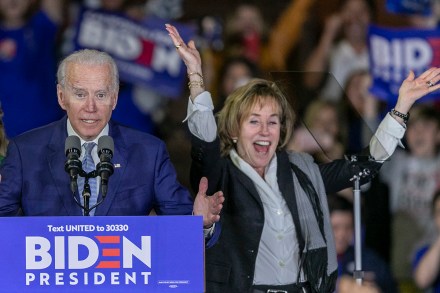
Americans are about to get what they desperately need: another book from the Biden family! Valerie Biden Owens isn’t just the president’s little sister; she's also the author of Growing Up Biden: A Memoir. The book’s cover features a photo of a young Valerie and her siblings sitting on a couch with their mother. According to Amazon, the book "details Valerie’s decades-long professional career in politics, and the central role she played in her brother’s life as an insightful adviser, an ever-loyal advocate and best friend.” The timing of the book’s release — it will hit shelves next week — is almost as terrible as Joe Biden’s recent poll numbers. Almost.

biden family memoir

Waugh in Hollywood

From our US edition

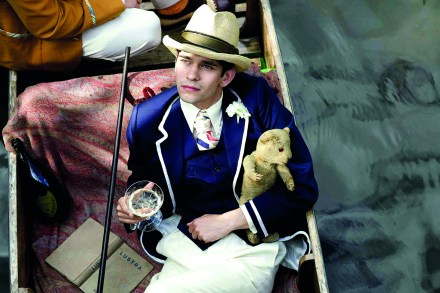
The English author and curmudgeon Evelyn Waugh (1903-66) is today best known for his 1945 novel Brideshead Revisited. A luxuriant evocation of the beauties of pre-World War Two Oxford, coupled with a cautionary narrative about the destructive power of Catholic guilt, it has remained a constant favorite with everyone from college students to literature scholars. It was memorably filmed for British television in 1981, and it launched the careers of Jeremy Irons and Anthony Andrews as, respectively, the novel’s narrator Charles Ryder and the flamboyant aesthete Sebastian Flyte.

waugh
psychopath

Femmes fatales in fiction and life

From our US edition

In her memoir written from a prison in New York, Dorothy Daniels gives readers a whistle-stop tour of “flashy female psychopaths” who have existed throughout history. Daniels is a food critic and a cannibal, a woman who exhibits an acute awareness of her own commercial value as a true-crime story. Before being caught by police, she considered the most humiliating moment in her life to be when she was fired from the masthead of a popular food-and-drink magazine: an experience, she bemoans, that belongs to “ordinary people.” Dorothy Daniels is, of course, fictional.

realists

Dirty realists

From our US edition

I recently finished yet another predictable novel about Brooklyn neurotics and needed a gritty palate cleanser. Raymond Carver’s Where I’m Calling From: Selected Stories seemed ideal. Carver, a master of the short-story form, has long been one of my go-to writers, but, in recent years, he has increasingly lost literary relevance. Twenty years ago, Carver’s terse, minimalistic style was all the rage. Like Hemingway and Bukowski, Carver birthed a sea of mediocre imitators onto the American literary scene. In most US short-story collections published in the Eighties or Nineties, Carver’s stylistic and thematic influence is evident from the first page.

On receiving books in the mail

From our US edition

I receive a lot of books in the mail. Perhaps you do, too. Some of these I order. Most come from publishers or authors hoping for a review. A few are gifts. I prefer to buy books at used bookstores. You never know what they might have on hand, and there’s nothing better than discovering a gem of a book by a writer you’ve never heard of. Plus, the price is always right. Independent bookstores are great, too. I’m no snob. I bought a book just the other day at the gamified Barnes and Noble in town — the atrociously overrated Call Us What We Carry by Amanda Gorman, who read at Joe Biden’s inauguration (more on that at some point, perhaps). But I prefer independent bookstores because, like at used bookstores, there’s an element of surprise in the store’s stock.

mail

The books that made me who I am

Gstaad This is my last week in the Alps and I’m trying to get it all in – skiing, cross-country, kickboxing, even some nature walking along a stream. (I did my last downhill run with Geoffrey Moore, one that ended in a collision with a child at the bottom of the mountain, and I’m thinking of calling it quits on the downhill-skiing front.) The trouble with athletes is that we early on enact the destiny to which we are all subject, an early death. The death of sports talent is a subtle process. The eyes go first, then the step falters. Eventually you feel like an old man who is not in the same league as his opponent. I was lucky to get old late – in sport, that is.

Some of the best social commentary around: Celebrity Book Club with Steven & Lily reviewed

When I was ten years old I had a babysitter who was a beautiful graduate student at an Ivy League university who loved to read celebrity gossip tabloids to ‘turn her brain off’. After I’d finished my homework, she and I would watch the only reality TV show I’ve ever loved, The Hills, and read magazines about Brangelina. This all ended when I was with my mom at the grocery store and I tried to buy a tabloid, and my mother, a Woman of Taste, asked what on earth I was doing. I said, copying my babysitter, ‘it’s to turn my brain off’, and my mom flipped out and made me to go to my room and read something like Stella Gibbons’s Cold Comfort Farm.

In praise of the Dome

London’s City Hall stands empty. The bulbous, Foster + Partners-designed ‘glass testicle’ — in Ken Livingstone’s words — occupies one of the best sites in the capital: Thames-side, squaring off to the Tower of London, and overlooking Tower Bridge. But in December, its occupiers — the Mayor, the London Assembly and the Greater London Authority — deserted their glitzy £43 million headquarters for a cheaper building more than five miles east at the Royal Docks in Newham. It took them less than 20 years to outgrow their purpose-built home. According to the architectural commentator John Grindrod, City Hall is a giant glass-and-steel metaphor.

I’m a Latinx person of letters

From our US edition

A development has reshaped the world of letters. The literary universe is no longer a boys’ club but the playground of woke Brooklyn ladies who’ve swallowed up editorships and literary-agent gigs. The results continue to be predictable: a constant bombardment of books from elite white women about the travails of neurotic Brooklyn ladies, and victim narratives about brown suffering. The fetishization of people of color has come to define the woke relationship with so-called marginalized communities. Virtually every literary book — except for those based in Brooklyn — details the struggles of a victimized minority. The Booker Prize longlist or the National Book Award finalists will annually bombard you with weepy tales of generational POC suffering.

poc
failure

Succeeding at failing

From our US edition

My London agent calls to break the news gently. “Your book is dead. I can’t sell it. Sorry. But you do have the most fabulous collection of rejections from publishers I’ve ever read.” “Really? Can you get me a book deal for a book of my book rejections? Failure is a hot topic now.” “You’re funny...” “Thanks.” “...but not commercial. Still, there is some good news.” “Really?” “I’ve sold your ex-wife’s new book for a huge advance!” My ex-wife and I have the same agent so I’m well practiced in the art of the fake congratulation. It’s what we men do, our equivalent of the fake orgasm. “That’s such wonderful news!” Two weeks later, more failure.

Why don’t I come with a trigger warning?

Last week brought the news that some universities have attached more ‘trigger warnings’ to certain books, concerned that students may find their contents offensive and upsetting. No, we’re not talking about Lolita, American Psycho or The 120 Days of Sodom. The works judged too disturbing for young people of a sensitive disposition include Oliver Twist, Nineteen Eighty-Four and Harry Potter and the Philosopher’s Stone. I’m not making that last one up. The English department at the University of Chester has included it as a set text on its Approaches to Literature module and cautioned students that it may ‘lead to some difficult conversations about gender, race, sexuality, class, and identity’.

Getting the jokes in Proust

From our US edition

Did you read Proust in lockdown? Lockdown, it seemed, offered the eons of vacancy apparently required to finally get around to À La Recherche Du Temps Perdu, aka “The Big One”: a book to be attempted only by the pretentious one percent in the discharge of their services to intellectual snobbery. I did. I read it twice. I read it because it’s always a pleasure and a novelty, and because I want to get it made as a long-form television series. Proust is perfect for TV: better than anything else, the format can show the passage of time. This is the sine qua non of any Proust reckoning, and it has defeated all attempts so far to make the book into a feature film. We are doing well.

proust
genis

Reading gaol

From our US edition

In my more whimsical moments, when I’m worried that I don’t have the time and opportunity that I once had to read great works of literature, I have occasionally wondered about committing a minor felony of some sort. I would then be incarcerated for a couple of months and aim to use the time as a reading retreat. All I would need was earplugs, comfy bedding and a prison library card. Now there’s precedent, too. The author Daniel Genis used his time inside jail to read more than a thousand books during his ten years’ incarceration, and this memoir, Sentence, is his account of his education inside, both literary and (un)sentimental. But by the time I finished reading it, any idea of straying from the straight and narrow had well and truly left my consciousness.

literature

The death of literature

From our US edition

The greatest men make the greatest mistakes. One thinks of the late John Lukacs, the Hungarian-American historian who claimed that the age of the book is at an end. That is far from being the case, the electronic book having failed to drive the print version to extinction as enthusiasts had predicted. Indeed, the continuing flood of printed and bound books remains among the greatest threat to books today — good books, that is, books worth an intelligent man’s time.

Why do British galleries shun the humane, generous art of Ruskin Spear?

Where do you see paintings by Ruskin Spear (1911–90)? In the salerooms mostly, because his work in public collections is rarely on display. Until the National Portrait Gallery closed for redevelopment it was, however, possible to study Spear’s splendid portrait of ‘Citizen James’ (Sid James) peering from a black and white TV screen, and his oil sketch of Harold Wilson wreathed in pipe smoke, the epitome of political cunning. Both were strikingly more convincing than their companion array of anodyne commissioned images. Like his beloved Sickert, Spear painted commissioned portraits but also took to making enigmatic ‘unofficial’ portraits based on press photographs — or, in the case of Sid James, a snap off the telly.

Robert Harris on Boris Johnson, cancel culture and rehabilitating Chamberlain

Robert Harris has long been on a one-man crusade to reverse history’s negative verdict on the architect of appeasement. He argues that it was Neville Chamberlain’s duty to go the extra mile for peace and give Britain the moral authority to fight Hitler in the second world war. ‘There seems to be a general feeling that he couldn’t have done much else. He bought us precious time.’ Now the appearance of an acclaimed Anglo-German Netflix film Munich — The Edge of War, starring Jeremy Irons as Chamberlain, and based on Harris’s 2017 novel Munich, gives him the chance to bring his quixotic campaign to a mass audience.

‘The Fifth Head of Cerberus’ at 50

From our US edition

Gene Wolfe’s sci-fi novella, The Fifth Head of Cerberus, was published fifty years ago this year. It is a minor masterpiece. Set in the town of Port-Mimizon on the imaginary planet of Saint Croix, the story follows a family who are descendants of French colonizers. A sister planet, Saint Anne, was also colonized by the French. The original inhabitants of both planets were shapeshifters, and one of the early questions of the novella is whether the current inhabitants of both planets are in fact French or shapeshifters who, according to one theory, killed the would-be colonizers and permanently took on their form. The story is narrated by one of two brothers, who live in a large house on 666 Saltimbanque.

Stacking up

From our US edition

"It feels almost like there is money in writing again.” So the historian and New York Times bestselling author Dan Jones tells me. Is he referring to increased book sales, or lucrative adaptation deals? Not this time. Instead, he’s discussing Substack, which launched in 2017. It has now become the platform of choice for writers to develop their careers on their own terms, without having to give substantial percentages away to agents, publishers and lawyers. For years, authors have felt that they have been little more than galley slaves, flogging themselves and their wares for the profit of multinational corporations. Now, finally, they have been given an opportunity to take back control of their own careers and destinies. The format is a simple one.

substack

Spare me the celebrity Christmas memoir

Is there anything more dispiriting at this time of year than the dreaded 'celebrity' memoir – the publishing industry's annual two-fingered salute to all us starving mid-list authors? Last week I managed to weave my way through a heaving Waterstones, eventually arriving at one of those vast tables groaning with needy 'personalities'; there they all were, present and correct in their neat hierarchical piles (the higher the advance the bigger the stack). This year's roll call of vaguely familiar faces has been much the same as any other year.