Book review

St George: patron saint of England, patronised by all

From our UK edition

What did St George do? Killed a dragon, as everyone knows. And yet, as Samantha Riches points out, no mention of the dragon is made before the Norman Conquest. Nor is the pairing ‘England and St George’, invoked by Shakespeare’s Henry V, much noted outside Britain. Foreigners do not know that the English think St George is theirs alone. Many other nations are keen on him — Ethiopia, with a 13th-century church carved out of rock for him, Egypt where the Copts rejoice in him, or of course Georgia — and they all tell local versions of his legend.

The blood-dimmed tide is loosed

From our UK edition

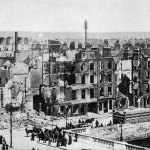
As Lytton Strachey remarked of the Victorian era, writing the history of the Irish revolution is inhibited by the fact that we know too much about it. As the centenary of the 1916 Rising approaches, an avalanche of books, articles and television programmes is bearing inexorably down; even the re-enactments have begun, with Dublin’s city centre taken over last Easter Monday by jolly crowds in period dress, celebrating ‘the Road to the Rising’. No one got shot, no buildings were blown up, and no shops were looted, but it was the thought that counted, and everyone had a good time.

The same old song

From our UK edition

T.S. Eliot liked to recall the time he was recognised by his London taxi driver. Surprised, he told the cabbie that poets weren’t often recognised. ‘I’ve an eye for celebrities,’ the driver replied. ‘I ’ad that Lord Russell in the back o’ the cab the other day. I said to ’im, “All right, then, Bertrand, so wossit all about?” And, you know what, ’e couldn’t tell me.’ I’ve always felt the story reflects well on the cabbie. While it may have been asking too much of Bertrand Russell to condense his philosophy into the length of a taxi journey, he surely ought to have been able to say something useful. George Steiner is a public intellectual almost of Russell’s stature.

Sink or swim

From our UK edition

The Lost Child begins with a scene of 18th-century distress and dissolution down by the docks, as a woman — once a slave in the West Indies, for a time a weaver and now an itinerant single mother dubbed ‘Crazy Woman’ by those who might toss a coin in her direction — finally gives up the unequal struggle. What becomes of her son, in whom still beats ‘a strong and tenacious heart’ despite his abandonment, is for the moment unclear; his connection to the novel Wuthering Heights occupies a later portion of this sometimes frustratingly patchwork novel. For now, though, we are transported to 1950s Oxford and a woman with rather better prospects: Monica Johnson, whom we meet as she is entertaining her father over tea and Dundee cake in her college room.

Pure word music

From our UK edition

Since his debut with the Booker-nominated The Restraint of Beasts in 1999, Magnus Mills has delighted and occasionally confounded his loyal readers with a series of novels and short stories about projects, schemes and expeditions that never quite seem to pan out. In these situations, his characters tend to dither politely between cautious enthusiasm and mild exasperation. It’s the deadpan comedy of thwarted logistics. Similarly, a person could drive him or herself slightly mad trying to puzzle out exactly what Mills’s books are about. Do they have a hidden meaning? Are they parables, allegories, fables? One often has the sense that the author knows but enjoys not telling. What matters is not the purpose of the fence but the job of building it.

Pessimism keeps breaking in

From our UK edition

State-of-criticism overviews and assessments almost always strike a bleak note —the critical mind naturally angles towards pessimism — so it can be worthwhile occasionally to announce that, against expectations, despite everything, literary criticism is still alive and in print. Recent technological and economic threats have not been as damaging as the so-called theory wars of the 1970s and 1980s, and while theory does colour some recent fiction (treated with ironic humour by Jeffrey Eugenides, say, or with cramped loyalty by Tom McCarthy), critics outside the academy now act as though it has been vanquished through institutional assimilation; the models are Edmund Wilson and Clive James, not Derrida and de Man.

A neglected corner of Roman history

From our UK edition

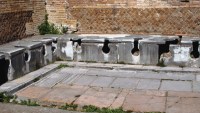
When Ovid was seeking ‘cures for love’, the most efficient remedy, he wrote, was for a young man to watch his girl on the toilet. The American author of The Archaeology of Sanitation in Roman Italy begins with this worrying poetic advice. The evacuation of the human body has had little previous attention from historians of Rome, she says, but ‘Ann Olga Koloski-Ostrow on the toilet’ should not become the citation attached by fellow scholars to her name. We might all be put off. Her fear is well-founded. The reason that there are dozens of books about the Romans’ baths and almost none about their latrines reveals much about us and nothing about them. High-minded archaeologists used to prefer their heroes as brave bathers discussing philosophy.

Dangerously close to home

From our UK edition

Mystery fans and writers are always looking for new locations in which murder can take place. Attica Locke has an absolute beauty in her latest thriller, Pleasantville. The eponymous district in Houston, Texas, was created in the aftermath of the second world war: ‘a planned community of new homes, spacious and modern in design, and built specifically for negro families of means and class’. However, many of the same fears and frustrations that affect poor black people are also prevalent here; racism, prejudice, the sense of being trapped in a social ghetto. And when a teenage girl is found dead, the town splits along the old faultlines of class, political difference and simple human longing. The story is set in 1996.

Little brother’s helper

From our UK edition

Can there ever have been another book in which one of the authors (Anne Thurston in this case) so effectively pulls the rug out from under the other? Of course Gyalo Thondup is entitled to tell his story, beginning with his life as a boy in a small town near the Tibet-China border where, in 1937, his younger brother was identified as the 14th Dalai Lama. He recalls everything from then on without a shadow of doubt: his family’s long overland trip to Lhasa, their transformed, luxurious life there, his trips to China, India, Taiwan and Hong Kong, learning Chinese and about China, and marrying a Chinese woman.

The nature of belonging

From our UK edition

‘I nauseate walking; ’tis a country diversion. I loathe the country and everything that relates to it... Ah l’étourdie! I hate the town too.’ Millamant’s expostulation about the unresolved pull between rural and urban life has echoed down three centuries since The Way of the World. With Melissa Harrison’s second novel this quandary brings all the splendid, closely observed exposition that it did in her first, Clay. Set around a small London park over the course of a year, Clay featured several parallel, disparate lives which met some while before infinity, along with a telling eye for flora and fauna which created a metropolitan pastoral. At Hawthorn Time, too, comes with a tantalising prologue which anticipates three strands one May.

A mingling of blood and ink

From our UK edition

Historical fiction is sometimes accused of being remote from modern concerns, a flight towards nostalgia and fantasy. It’s not an accusation you can reasonably level at M.J.Carter’s historical crime novels. The first, The Strangler Vine, was set in an unsettling version of colonial India. Its sequel, The Infidel Stain, takes place three years later in 1841, in a London that Dickens would have recognised. The story follows the subsequent careers of her two main characters — the louche and mysterious Jeremiah Blake and his far more respectable young friend Captain William Avery, now retired from the East India Company’s army. Blake is making his living as an inquiry agent.

In a niche of their own

From our UK edition

As words commonly used to write about the visual arts become increasingly useful to advertisers, ‘to curate’ is becoming the synonym du jour for ‘to choose’. For David Balzer however, this shift in language reflects a shift in behaviour. ‘Now that we “curate” even lunch, what happens to the role of the connoisseur in contemporary culture?’ Curationism asks. The answer, in a word, is relegation. Whereas connoisseurs know the best Rembrandts, wines and restaurants, curators promote an object to high status through their mere engagement with it, imbuing it with a new-found quality through their act of choosing. In the art world, this has resulted in superstar curators like Hans Ulrich Obrist, who tour the world making items desirable via their selection alone.

Trailing clouds of glory

From our UK edition

With Alpine wreckage still being sifted, this is either a very good or a very bad time to write about the mystery and beauty of aviation. I am a nervous flyer, always imagining the worst will happen, so when I hear that ‘the captain has turned off the seat-belt sign’ I feel a jolt of relief. Even more so when, halfway through the trip, the captain himself speaks to the passengers in a voice whose mellifluous calculation is as precise as the in-flight computers. You would always want the voice of the pilot to be Mark Vanhoenacker’s. He is an unusual hybrid: a BA 747 pilot and, now, an author of real distinction with a genuinely poetic sensibility as well as a memorable turn of phrase. Although flight is the greatest modern adventure, it has been poorly served by literature.

Too little, too late | 16 April 2015

From our UK edition

For most of us, the centenary of the Great War means recalling the misery and sacrifices of the Western Front: Ypres, the Marne, Arras, Verdun, Passchendaele, the Somme. Few of us give as much thought to the Eastern Front and, apart from regular studies of the ever-popular, self-mythologising Lawrence of Arabia, fewer still dwell on the first world war in the Middle East. This was the theatre that hosted the Arab Revolt, famously dismissed by Lawrence as ‘a sideshow of a sideshow’. The Great War centenary brings renewed attention to another neglected tragedy of the conflict. Starting in 1915, the Turks embarked on a process that culminated in the systematic extermination of the Armenian people.

Just sign here…

From our UK edition

This being the 800th anniversary of the signing of Magna Carta, it is not surprising that there should be two new biographies of King John; not surprising either that one should be billed as ‘The Making of a Tyrant’, the other as a story of ‘Treachery’ and ‘Tyranny’. King John has long been regarded as the worst English king: cruel, deceitful, avaricious, untrustworthy, incapable and cowardly. For some of us he remains indelibly the despicable younger brother of Richard the Lionheart, as so memorably portrayed by Claude Rains in the irresistible swashbuckling Errol Flynn movie The Adventures of Robin Hood.

The mask of death

From our UK edition

Remember Ebola? It killed more than 8,000 people last year — before we were all Charlie — with a quarter as many again dying since January. Almost all the deaths have occurred in the war-weakened west African states of Guinea, Liberia and Sierra Leone; no licensed drug or vaccine yet exists for a virus that claimed its first victim almost 40 years ago in Zaire, now the Democratic Republic of Congo. The spread of that maiden epidemic northwards over the border with Sudan is the basis for Amir Tag Elsir’s punchy short novel, Ebola ’76, originally published three years ago and now translated with fluency and keen timing by two young Arabists, in a fetching edition from a small London outfit focused on African and Middle Eastern subjects.

Putting away the fear of childishness

From our UK edition

Go to any bookshop — always supposing you’re fortunate enough to have any left in your neck of the woods — and chances are that lots of window space will be given over to two genres — children’s books and cookbooks. Step inside, and the children’s books are under your nose. Last year, children’s books were the fastest growing section of the books market. Yet the amount of space given over to children’s fiction and literature in the forums — newspapers and arts programmes — where we talk about books is remarkably small.

Attack of the night witches

From our UK edition

The name Lyuba Vinogradova may not ring any bells, but her ferrety eye for spotting a telling detail may already have impressed you. As Antony Beevor generously acknowledges in his introduction to this book, her work as his researcher in various archives played an important role in the creation of his triumphant Russian histories; she has also assisted Simon Sebag Montefiore and Max Hastings, among others. Here she brings to light the fascinating story of the world’s first and only all-female aviation regiments. As German troops advanced towards Moscow in 1941, the celebrated aviatrix Marina Raskova determined to form three ‘women’s regiments’: fighters, night bombers and long-distance bombers.