Book review

Indulge your inner reptile

From our UK edition

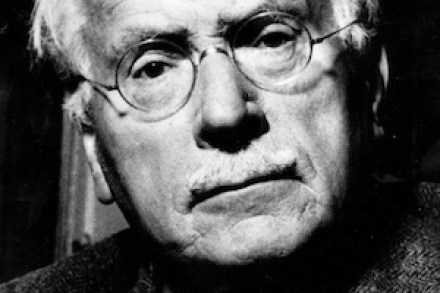
What do you get if you cross renegade psychoanalyst Carl Jung with lizard-men conspiracist David Icke? It is a question no one in their right mind would ask, but this book represents a kind of answer anyway. Offering a rambling pseudoscientific argument that some countries are better than others at enabling their citizens to flourish, it affects to have uncovered archetypes of the Jungian ‘collective unconscious’ that are characteristic of each nation. Meanwhile, cultures get a gold star if they indulge, rather than repress, the ‘reptilian’ part of our brains, which is mainly interested in food and sex, as opposed to the ‘limbic’ brain (emotions) and the cortex (higher reasoning). As the authors repeatedly insist, ‘The reptilian always wins.
Toujours la politesse

From our UK edition

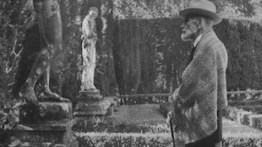
Robert Cumming’s opening sentence is: ‘Kenneth Clark and Bernard Berenson first met in the summer of 1925.’ One is then transported to terraces of cypress and statuary, sunshine and high art, Edith Wharton and Paul of Yugoslavia cooing over a balustrade. Clark was 22 and had just finished at Oxford; he was ‘doing’ Italy with Charles Bell, Keeper of Fine Art at the Ashmolean. Lunch at I Tatti, Berenson’s citadel of aesthetic endeavour near Florence, was arranged. By the end of it, Clark had been taken on as Berenson’s assistant for the revision of the master’s classic The Drawings of the Florentine Painters.

Passionate pioneers

From our UK edition

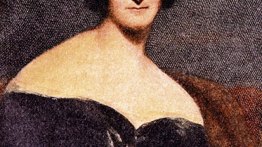
If Mary Wollstonecraft, as she once declared, ‘was not born to tred in the beaten track’, the same with even greater reason could be said of her daughter Mary Shelley. Not only was she the child of the author of A Vindication of the Rights of Woman, she was also the daughter of William Godwin, the radical political philosopher. Given this auspicious pedigree, it is perhaps not surprising that Shelley would lead a life every bit as daring as her mother, and in Frankenstein produce a masterpiece of equal fame. A joint biography of this most famous mother/daughter combination is, therefore, a good idea.

Heigh-ho, heigh-ho…

From our UK edition

Work is a funny old thing — a four-letter word to some, the meaning of life to others. There have been occasions during the past three years, since I was given the heave-ho from my last regular newspaper column, when I’ve felt that I didn’t exist any more, despite having a happy marriage and more than enough money. Then I recently returned from a carefree holiday, realised that I had four deadlines over the next four days (including this one) and momentarily wished for those wilderness times. But on balance I know I would rather work than not. That is, of course, if one can call reading a book about work, and then scribbling 700 words about it, ‘working’ at all.

A peephole into Peru

From our UK edition

Mario Vargas Llosa likes to counterpoint his darker novels with rosier themes: after the savagery of The Green House came the soufflé of Aunt Julia and the Scriptwriter with its mischievous nod to TV soaps, followed by The Feast of the Goat, a searing portrait of the Dominican Republic under Trujillo. Sixteen novels on, The Discreet Hero is Llosa-lite. Nobel laureate, academic and politician (he ran for president in 1990), Peru’s most celebrated writer has acknowledged Flaubert as his spiritual mentor. In The Perpetual Orgy, a critical study, he put forward his theory of Flaubert’s style: the manipulation of narrative and time, obsession with pairs, humanising of objects. All are here, in abundance, in the new book.

Bitten by the bug

From our UK edition

‘Good night, sleep tight, don’t let the bedbugs bite,’ my mother used to say when she tucked me in at night, which may be why, like the author of this book, I never thought bedbugs were real. ‘Bedbugs? Are you crazy? That’s not even a real thing,’ Brooke Borel told her father (a pathologist who specialises in skin conditions). But as Mr Borel told his disbelieving daughter, bedbugs are real all right. They even have a fancy Latin name: Cimex lectularius. So, having been bitten to buggery (moral: never share a flat with someone who bought a used futon off the internet) Brooke Borel did what virtually every journalist ends up doing, eventually, and wrote a book about her misfortunes.

Dirty dealing across the board

From our UK edition

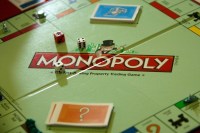
I knew there had to be a point to Monopoly. The game itself is tedium made cardboard, the strongest known antidote to the will to the live. There is a 12 per cent chance that any given game of Monopoly will go on for ever (the other 88 per cent just feel like that). In fact I’m still not convinced that the name isn’t a spelling mistake. The story of Monopoly, on the other hand — now there’s a thing. Specifically, the story of how it was invented. For decades the accepted version had down-on-his-luck Charles Darrow creating the game in the 1930s, as entertainment for his impoverished family and a reminder of happier times when they’d holidayed in Atlantic City.

Gunning for freedom

From our UK edition

Like the documentary journalist Iain Overton, author of this book, I was taught to shoot and maintain a gun as a boy. As an adult I joined a campaign to monitor, curb and limit the arms trade. I taught my children good gun protocols and how to shoot. There is an undeniable pleasure in shooting. When I moved to Texas I immediately bought a black powder Navy Colt with which to practise the cowboy spins, rolls and shifts I had learned as a boy. The thing Bible-belt Baptists, Bedouin tribesmen, Brazilian drug-barons and Boer farmers have in common is a love of guns. Guns are in our DNA. Yet statistics prove that, wherever they proliferate, murder and suicide rise and children are killed.

What did Steve Davis do to succeed at snooker? Everything his dad told him

From our UK edition

Among the more intriguing insights into an election that seems to be taking longer than a Cliff Thorburn 50 break is the fact that Ed Miliband is a snooker fan. Which doesn’t mean he was a Steve Davis fan. Davis was ‘boring’, Miliband told the Guardian recently. The sentiment was widely shared during Davis’s 1980s heyday. Indeed, the writers of Spitting Image found him so dull they nicknamed him ‘Interesting’. Hence the hostage-to-fortune title of what is by my count Davis’s third volume of autobiography. Will the leader of the opposition find anything in the book’s turgidly ghostwritten pages to modify his opinion? One fears not. Yet if Interesting isn’t exactly unputdownable, nor is it unpickupable.

St George: patron saint of England, patronised by all

From our UK edition

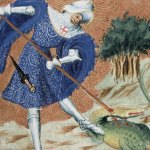
What did St George do? Killed a dragon, as everyone knows. And yet, as Samantha Riches points out, no mention of the dragon is made before the Norman Conquest. Nor is the pairing ‘England and St George’, invoked by Shakespeare’s Henry V, much noted outside Britain. Foreigners do not know that the English think St George is theirs alone. Many other nations are keen on him — Ethiopia, with a 13th-century church carved out of rock for him, Egypt where the Copts rejoice in him, or of course Georgia — and they all tell local versions of his legend.

The blood-dimmed tide is loosed

From our UK edition

As Lytton Strachey remarked of the Victorian era, writing the history of the Irish revolution is inhibited by the fact that we know too much about it. As the centenary of the 1916 Rising approaches, an avalanche of books, articles and television programmes is bearing inexorably down; even the re-enactments have begun, with Dublin’s city centre taken over last Easter Monday by jolly crowds in period dress, celebrating ‘the Road to the Rising’. No one got shot, no buildings were blown up, and no shops were looted, but it was the thought that counted, and everyone had a good time.

The same old song

From our UK edition

T.S. Eliot liked to recall the time he was recognised by his London taxi driver. Surprised, he told the cabbie that poets weren’t often recognised. ‘I’ve an eye for celebrities,’ the driver replied. ‘I ’ad that Lord Russell in the back o’ the cab the other day. I said to ’im, “All right, then, Bertrand, so wossit all about?” And, you know what, ’e couldn’t tell me.’ I’ve always felt the story reflects well on the cabbie. While it may have been asking too much of Bertrand Russell to condense his philosophy into the length of a taxi journey, he surely ought to have been able to say something useful. George Steiner is a public intellectual almost of Russell’s stature.

Sink or swim

From our UK edition

The Lost Child begins with a scene of 18th-century distress and dissolution down by the docks, as a woman — once a slave in the West Indies, for a time a weaver and now an itinerant single mother dubbed ‘Crazy Woman’ by those who might toss a coin in her direction — finally gives up the unequal struggle. What becomes of her son, in whom still beats ‘a strong and tenacious heart’ despite his abandonment, is for the moment unclear; his connection to the novel Wuthering Heights occupies a later portion of this sometimes frustratingly patchwork novel. For now, though, we are transported to 1950s Oxford and a woman with rather better prospects: Monica Johnson, whom we meet as she is entertaining her father over tea and Dundee cake in her college room.

Pure word music

From our UK edition

Since his debut with the Booker-nominated The Restraint of Beasts in 1999, Magnus Mills has delighted and occasionally confounded his loyal readers with a series of novels and short stories about projects, schemes and expeditions that never quite seem to pan out. In these situations, his characters tend to dither politely between cautious enthusiasm and mild exasperation. It’s the deadpan comedy of thwarted logistics. Similarly, a person could drive him or herself slightly mad trying to puzzle out exactly what Mills’s books are about. Do they have a hidden meaning? Are they parables, allegories, fables? One often has the sense that the author knows but enjoys not telling. What matters is not the purpose of the fence but the job of building it.

Pessimism keeps breaking in

From our UK edition

State-of-criticism overviews and assessments almost always strike a bleak note —the critical mind naturally angles towards pessimism — so it can be worthwhile occasionally to announce that, against expectations, despite everything, literary criticism is still alive and in print. Recent technological and economic threats have not been as damaging as the so-called theory wars of the 1970s and 1980s, and while theory does colour some recent fiction (treated with ironic humour by Jeffrey Eugenides, say, or with cramped loyalty by Tom McCarthy), critics outside the academy now act as though it has been vanquished through institutional assimilation; the models are Edmund Wilson and Clive James, not Derrida and de Man.

A neglected corner of Roman history

From our UK edition

When Ovid was seeking ‘cures for love’, the most efficient remedy, he wrote, was for a young man to watch his girl on the toilet. The American author of The Archaeology of Sanitation in Roman Italy begins with this worrying poetic advice. The evacuation of the human body has had little previous attention from historians of Rome, she says, but ‘Ann Olga Koloski-Ostrow on the toilet’ should not become the citation attached by fellow scholars to her name. We might all be put off. Her fear is well-founded. The reason that there are dozens of books about the Romans’ baths and almost none about their latrines reveals much about us and nothing about them. High-minded archaeologists used to prefer their heroes as brave bathers discussing philosophy.

Dangerously close to home

From our UK edition

Mystery fans and writers are always looking for new locations in which murder can take place. Attica Locke has an absolute beauty in her latest thriller, Pleasantville. The eponymous district in Houston, Texas, was created in the aftermath of the second world war: ‘a planned community of new homes, spacious and modern in design, and built specifically for negro families of means and class’. However, many of the same fears and frustrations that affect poor black people are also prevalent here; racism, prejudice, the sense of being trapped in a social ghetto. And when a teenage girl is found dead, the town splits along the old faultlines of class, political difference and simple human longing. The story is set in 1996.

Little brother’s helper

From our UK edition

Can there ever have been another book in which one of the authors (Anne Thurston in this case) so effectively pulls the rug out from under the other? Of course Gyalo Thondup is entitled to tell his story, beginning with his life as a boy in a small town near the Tibet-China border where, in 1937, his younger brother was identified as the 14th Dalai Lama. He recalls everything from then on without a shadow of doubt: his family’s long overland trip to Lhasa, their transformed, luxurious life there, his trips to China, India, Taiwan and Hong Kong, learning Chinese and about China, and marrying a Chinese woman.