Book review

To Hell in a handcart — again

From our UK edition

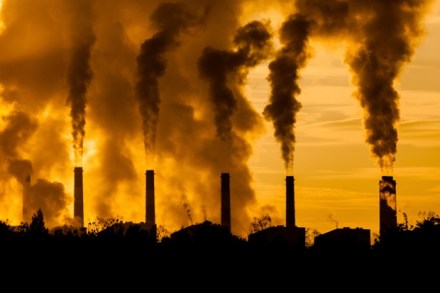
Despite the offer of joy proposed in the subtitle, this is a deeply troubling book by one of Britain’s foremost journalists on the politics of nature. Michael McCarthy was the Independent’s environmental editor for 15 years, and his new work is really a summation of a career spent pondering the impacts of humankind on the world’s ecosystems. The case he lays bare with moving clarity in the opening chapters is compelling stuff. Essentially he argues that the world of wild creatures, plants, trees and whole habitats — you name it — is going to Hell in a handcart as a consequence of what he calls ‘the human project’.
Beautiful, bedevilled island

From our UK edition

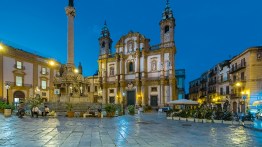
The Arabs invaded Sicily in the ninth century, leaving behind mosques and pink-domed cupolas. In the Sicilian capital of Palermo, Arab rule was generally tolerant, its dolce far niente evocative of sultans, minarets, concubines and other jasmine-scented delights. Walking round Palermo today, however, one is assailed by less lovely smells. Parts of the city remain unreconstructed since the Allies bombed it in 1943: fire-blackened palazzi and rubble-strewn slumlands speak of the Mafia’s systematic ransacking of the public coffers. A still darker side of Palermo finds expression in the 19th-century catacombs of the Capuchin friary, situated near the Arab-Fatamid pleasure palace of La Zisa (‘the magnificent’).

Nasty piece of work

From our UK edition

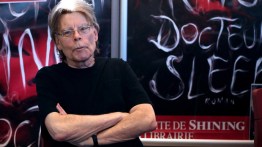
Finders Keepers is a sort-of sequel to last year’s Mr Mercedes, Stephen King’s first foray into what he called ‘hard-boiled detective fiction’. The new book is not so much hard-boiled as slowly poached, Heston Blumenthal style, in a sous-vide water oven, then finished on a violently hot grill. King has the popular novelist’s gifts in spades — a flawless sense of pace, an ear for dialogue, an eye for the telling detail, a no-mess-no-fuss approach to characterisation. He also has special insights into the uncanny: his frequent forays into the supernatural are wrenchingly plausible, while his rendering of ‘ordinary’ things — a face, a doorway, the hollowed-out roots of a tree — is steeped in mystery and threat.

Lulzfags v. moralfags

From our UK edition

It is almost a century since the Michelin brothers had the brainwave of supplementing their motorists’ guide with information about fine-dining establishments. Their star-rating system had become a mainstay of lifestyle reviews long before the Internet came along. In the digital age, this work has been comprehensively crowd-sourced: the immense success of review sites such as Yelp and Amazon has been built on the voluntary input of users. In theory, it should have been a consumer rights utopia. But product reviews are big business — and where there is lucre, there are shenanigans.

Something sensational to read on the train

From our UK edition

Readers who have put in some time on the railways may remember the neat, brush-painted graffiti that appeared in 1974 on a wall facing the line just outside Paddington station: FAR AWAY IS CLOSE AT HAND IN IMAGES OF ELSEWHERE. Not until Banksy took up his spraycan did a piece of London graffiti make such a stir. The Telegraph’s Peter Simple column attributed the long-lasting inscription to the shadowy ‘Master of Paddington’ and the Oxford commuter-poet Roger Green mused on the hauntingly unspecific slogan in his journal Notes From Overground, a minor publishing hit of 1984. Another 20 years passed before the perpetrators were outed; it turned out that their declaration was a mash-up of the words of two other poets, Robert Graves and Ruth Padel.

A triumphant failure

From our UK edition

I must be an idiot for pointing out the failings of a novel that’s so screamingly, self-denouncingly about failure. Steve Toltz’s Quicksand is a nutty, occasionally hilarious, flaccid carrier bag of a comic romp, all dazzling one-liners and no comic paydirt. Like his debut novel, A Fraction of the Whole (about a misfit philosopher and his troubled son), it is narrated by a pair of human catastrophes: a New South Wales police constable, Liam Wilder, who’s a failed novelist; and his best friend, Aldo Benjamin, who’s a failed husband, entrepreneur, everything. Toltz probably intended this novel to be a failure. It’s that difficult beast, his second book, after all (his first made the shortlists of the Man Booker and the Guardian First Book Award).

Lost in the telling

From our UK edition

This is a thriller, a novel of betrayal and separation, and a reverie on death and grieving. The only key fact I can provide without giving away the plot is that Caroline, the film-making wife of Michael, the novel’s main protagonist, is killed in the badlands of Pakistan by a drone controlled from a facility near Las Vegas. Caroline is filming Taleban leaders when they and Caroline are killed. Michael, who is ‘an immersive journalist’, has spent some years on a project with gangs in the Upper West Side of Manhattan. It is dangerous but rewarding work, and after a few years his findings are published to some acclaim under the title of BrotherHoods. Now back in London, he falls in with Josh and Samantha, neighbours in the adjoining house and flat on Hampstead Heath.

There’s no substitute for human intelligence

From our UK edition

Spying may be one of the two oldest professions, but unlike the other one it has changed quite a lot over the years, and continues to do so. During the quarter-century since the end of the Cold War, the main preoccupation of our intelligence agencies has not been with classic espionage by the Soviet Union, or with identifying new Philbys operating on their behalf. Espionage still goes on, but it is small beer compared to the terrorist threat that commands no less than 75 per cent of our agencies’ time and resources. Stephen Grey takes us through the transformation in the recent past experienced by MI6, MI5 and GCHQ, as well as their counterparts in the United States.

When we were very young

From our UK edition

Few monarchs could become novelists. They wouldn’t be able to develop the practice, or possess the necessary temperament. No monarch could sit in the corner of a room observing, or walk the streets unnoticed. They don’t have much of a chance of a long morning working quietly, without interruption, or of seeing what ordinary people are like at their most natural and unselfconscious. (Imagine what changes would have had to take place in Edward VII’s life before he could have thought of writing fiction.) If they are never going to have the chance to observe and to write, they are also unlikely to have the disposition to do so. The future monarch will be assured from birth that his is the existence that matters.

Romance of the old kitchen garden

From our UK edition

Considerable areas of our memory are taken up with food: it might be the taste of Mother’s sponge, the melting texture of an aunt’s buttery pastry or something recent, like the flavour of the first spoonful of a sour and nutty south-east Asian dish. Especially good meals are recalled with the same clarity as revolting school dinners and the stench of stale fish — we can conjure aromatic memories with ease thanks to the olfactory nerve, the brain’s cache of stored eating experience that helps us to tell good from bad when choosing what to eat. Jennifer A. Jordan, an associate professor of sociology at the University of Wisconsin, believes we should be remembering more than just the sensual pleasures of eating, however.

The strangest objects we know of

From our UK edition

The idea of black holes sounds so quintessentially modern and 20th-century that it may come as a surprise to learn that it originated over 200 years ago; John Michell, a natural philosopher and clergyman, used Newtonian physics to conceive of a star massive enough to prevent even light from escaping its gravitational pull. Marcia Bartusiak’s lively and readable account of the history of black holes kicks off with an account of Michell’s 1784 paper. There’s a lull in the story after that, because a proper formulation of the physics had to wait until Einstein’s general theory of relativity in 1915.

A 50-year infatuation

From our UK edition

The subject of the least characteristic essay in this engrossing collection of meditations on painters, painters’ lives, painting and reactions to painting is René Magritte — whose best work David Sylvester rather rashly claimed induces ‘the sort of awe felt in the presence of an eclipse’. Julian Barnes discusses what he calls the artist’s doctrine (doctrine?) of ‘elective affinities’, which proposes the antipodes of Lautréamont’s ‘chance encounter on a dissecting table of a sewing machine and an umbrella’. Thus in the painting of that name a birdcage is filled not with a random safety razor or knuckleduster but with a giant egg.

Funny things happen on the way to the Scillies

From our UK edition

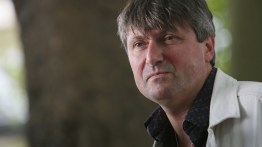
It’s a real skill, writing about a journey where nothing ever happens. We shouldn’t be surprised that Simon Armitage is so good at it: he’s a poet, and therefore used to reporting on nothing happening, or rather spotting the little things that are always happening but the rest of us are too busy to notice. His chosen route this time — the South West Coast Path through Somerset, Devon and Cornwall and on to the Scillies — is normally praised because it gets you away from everything. Yet while he’s there Armitage discovers … well, maybe not everything, but certainly a very entertaining book’s worth of stuff.

Kultural icon

From our UK edition

The almond eyes that rise towards their outer edges. The cheekbones that curve down to the corners of those upholstered lips. The dark strands of hair that fall wisplike on to her chest. The hourglass extremities that will exercise your ciliary muscles until they snap. Dear me! After looking at this book, you’ll be more familiar with the particulars of Kim Kardashian’s body than with your own lover’s. For this is her hardback collection of selfies. It contains almost 500 photographs of Kim, by Kim. Six of them include her daughter; 60 of them feature at least one of her siblings; 100 have Kim in a bikini, in her underwear or completely naked. The book’s title, Selfish, might be the most knowing of all time. But who is Kim Kardashian?

The elite who tried to save Russia

From our UK edition

The veteran Russian historian Dominic Lieven’s new study of Russia’s descent towards the first world war is deeply researched, highly valuable in its focus on Russia, and unfailingly well-written: more proof of Lieven’s profound knowledge of the Russian empire. One of his earlier works, Russia’s Rulers Under the Old Regime (1989), focused on the 150 men who ran Russia until 1917. Towards the Flame shares that work’s careful attention to a tiny elite of well-educated, cosmopolitan, mostly aristocratic men. With breathtaking directness, he says that fewer than 50 men (and it was all men) in Europe in 1914 took the decisions that led their countries into war.

Pursuing the perfect scoop

From our UK edition

Paradise City, Elizabeth Day’s third novel, comes with an accompanying essay on The Pool — an online magazine for the Instagram, iPhone woman. Day, a feature writer for the Observer, discusses the novel’s male protagonist (you couldn’t call him hero) Sir Howard Pink, an East End Jewish boy turned rag-trade multimillionaire. Day urges women to stop being so self-effacing, people-pleasing, and permanently apologetic and instead to ‘Be More Howard’. ‘He sprung on to the page as unashamedly male and blessed with a defiant sense of his own entitlement,’ she writes. ‘He saw money, sex and power as his due. He took what he could, where he could get it and the world rewarded him for it.

A nation in trauma

From our UK edition

Albania is a small country of 2.7 million people, wedged within the Balkan peninsula. Separated from both Greece and Italy by mere kilometres of seascape and shoreline, it borders the European Union, and, with official candidate status as a member country, strongly hopes for closer ties. As Fred C. Abrahams describes it, the country’s transition from cultish Stalinist dictatorship to functioning democracy in only three decades should be a source of debate, intrigue and pride. The principal protagonists in the ‘drama’ of transition are ‘a paranoid dictator, an ambitious doctor, a scheming economist and an urban artist’.

Striking Middle Sea

From our UK edition

With summer on its way, thoughts turn south to olive groves and manicured vineyards, to the warm water and hot beaches of the Mediterranean. But this sea that is a place of rest and beauty for some of us is the scene of drama and often despair for many others, among them people trying to cross from North Africa. So which is it, a place of calm and beauty, of refinement and culture, or one of drama and much tragedy, buffeted by the consequences of geo-political shifts? The Mediterranean has long been used to reconciling opposites, as two new books make abundantly clear. To ancient Greeks and Romans, the Mediterranean and its neighbouring seas was literally the ‘middle earth’, the centre from which everything radiated.