Book review

An admirable but flawed new biography of George Eliot

From our US edition

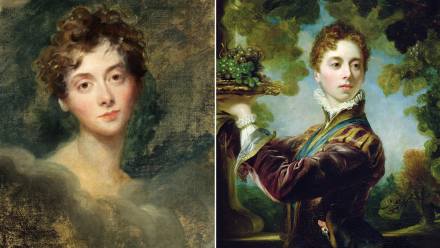
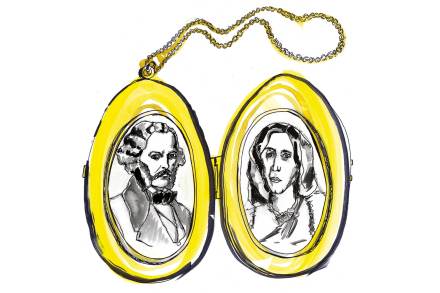
What to call her? The question troubled George Eliot, and challenges Clare Carlisle, her latest biographer. Even this book’s indexer plays along, providing more than one entry for its shapeshifting but steadfast subject. The Marriage Question shows us a woman fragmented, attempting to understand in her various existences how — and if — personal freedom can be achieved when your life is bound to another. Mary Ann (or Anne) Evans was born in Warwickshire, in the West Midlands of England, in 1819. On moving to London in 1850, hoping to make her living as a writer, she became Marian Evans.
Eliot
taupin

Bernie Taupin is more than just ‘Elton John’s lyricist’

From our US edition

It takes only a couple of hours by train from the southern reaches of rural Lincolnshire to central London. But for seventeen-year-old Bernie Taupin, leaving home in June 1967 to try his luck in the big city, the journey might as well have been to a distant planet, such was the gulf between his life as a casual farm-laborer and his ambitions to become an internationally acclaimed songwriter like his heroes Hank Snow or Merle Haggard.

astor

A diverting but unsurprising new history of the Astor clan

From our US edition

Mention “Astor” to most people and you immediately conjure up tales of fabulous wealth, the sort of Gilded Age beauty and excess expressed to perfection in the paintings of John Singer Sargent. The family name became synonymous at times with luxury and good taste, at others with greed, power and extreme snobbishness. The founder of the dynasty, John Jacob Astor, was a German immigrant and one-time fur trader who came to America in 1783 after the Revolutionary War. His descendants swiftly capitalized on his substantial achievements, creating a Manhattan property empire of unrivaled wealth. There was also plenty of Astor philanthropy and involvement in political and cultural life along the way but then, in the early twenty-first century, came a fall from grace as dramatic as the rise.

Zadie Smith’s latest novel is glittering, grand and powerful

From our US edition

Zadie Smith’s ambitious latest novel, The Fraud, is loosely based on the life of the little-known nineteenth-century novelist William Harrison Ainsworth. He was, at one point, as popular as Charles Dickens, his novel Jack Sheppard even outselling Oliver Twist. But Ainsworth’s fortunes and talents declined, and his forty-odd novels vanished, going out of print soon after his death. Throughout The Fraud, as he sits groaning at his desk, he is an arch reminder not only of the vagaries of literary fame, but the pains of fiction-writing. As his cousin Eliza Touchet observes: “God preserve me from that tragic indulgence, that useless vanity, that blindness!” Ainsworth’s actual writing is redolent of educated middle-class male privilege. (“‘Zounds!

fraud

How missing persons cases work in the wild

From our US edition

The Pacific Crest Trail is one of the world’s great long-distance hikes, running 2,650 miles from Mexico to the Canadian border. It's a chance to see some of North America’s most majestic scenery, encompassing desert and mountain, and millions of people visit parts of it each year, to hike or run. But only a very few ever walk the whole thing. Completing the entire trail — a “thru-hike” — takes five months. The challenge breeds a kind of camaraderie among hikers, who acquire “trail names” (the 2022 finishers included individuals known as “Sparkle Lizard,” “Milkshake” and “Squiggles”) and become part of a select group. Like its Eastern counterpart, the Appalachian Trail, it is a badge of honor for those who make it through.

Lankford

Maureen Ryan exposes the Hollywood horror show

From our US edition

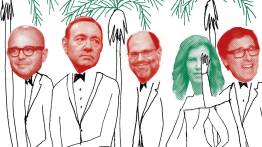
In late July, the actor and director Kevin Spacey was acquitted of a range of sexual offenses against young men, some dating back the best part of two decades. Spacey’s acquittal was greeted with a mixture of relief by his admirers, who are now keen to see a great actor resume his career, and dismay by those who believe that Spacey, and others like him, are powerful figures who have not been held to sufficient account. It is salutary to look at the court case — and indeed the media frenzy surrounding it — and ask what it’s saying about contemporary Hollywood mores, which, in the post #MeToo climate, show few signs of becoming more socially acceptable.

Ryan

Drew Gilpin Faust, a rebel with a cause

From our US edition

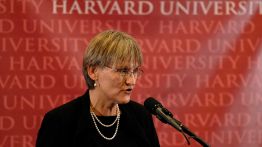
In 1957, when Drew Gilpin Faust was nine years old and growing up in the Shenandoah Valley, she learned from the car radio that in Virginia, black children were forbidden by law from going to school with white children. Disturbed by this egregious instance of Jim Crow segregation, she sent a letter to the president. “Please Mr. Eisenhower,” she wrote, “please try and have schools and other things accept colored people.” Young Drew’s sense of what was and wasn’t fair lay at the heart of her childhood rebelliousness, as well as her battle, as a young woman coming of age in the 1960s, against unjust social hierarchies.

faust

William Boyd’s latest novel is immense fun

From our US edition

William Boyd is perhaps best known for his novel Any Human Heart, which charts the adventures of Logan Mountstuart throughout the twentieth century. Mountstuart marries well, divorces, annoys the Duke of Windsor, is imprisoned, becomes an art dealer in America and has sundry diverting escapades. It’s a warm, impassioned and involving narrative, and Boyd winningly returns to a similar formula in his latest book, The Romantic. The prologue presents The Romantic as a fictionalized biography, reconstructed from notes and maps left behind by its subject. All biography, says Boyd, is by its nature fictional.

Boyd
mirski

Visiting a forgotten chapter in American history

From our US edition

Nowadays few Americans could identify what the Monroe Doctrine signifies. Named for the fifth US president, the point of the 1823 policy had been succinctly stated fifteen years earlier by the third, Thomas Jefferson: “The object... must be to exclude all European influence from this hemisphere.” Sean Mirski terms the Doctrine “revolutionary” in his impressively erudite We May Dominate the World, an astonishingly comprehensive and stylishly written account of US foreign policy in the Western Hemisphere during the years 1860 to 1945. Calling the period a “missing chapter” in American history, he rightly asserts that “the story of the United States’s rise to regional hegemony has not received anywhere near the attention it deserves.

page

Elliot Page’s memoir is a tale of tragic self-destruction

From our US edition

In 2010, the twenty-three-year-old actress Ellen Page appeared on the British talk show Friday Night with Jonathan Ross. Plonking herself down on the guest couch, and noticing there was a lot of room left, she announced: “I’m petite.” The affable Ross seized on this new avenue of conversation. “Do people comment on your height when you first meet them?” “They often comment on how incredibly short I am.” “And is this something you welcome or would you rather they didn’t?” “Oh, it’s just fine. I’m used to being short. It’s been a part of my life. And it’s something that I’ve begun to accept.” Back then, Page came across as confident and resilient. But according to Page, this was an act, carefully constructed for her by homophobes.

Why is George Orwell so difficult to pin down?

From our US edition

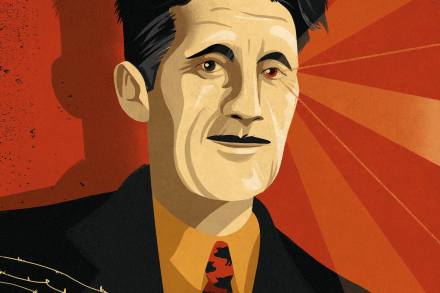
Outside Broadcasting House, the BBC’s main center in London, is an imposing, eight-foot-high statue of a man. He leans over slightly, as if to accost passersby, and holds a cigarette. A sign behind him declares, “If liberty means anything at all, it means the right to tell people what they do not want to hear.” The man is the author and critic George Orwell and the statue was intended as a permanent commemoration of his writings and values, as well as his short-lived stint at the BBC during World War Two.

orwell
Moore

Lorrie Moore explores the thin veil between life and death

From our US edition

Very few of us could evade accusations of pretension if we quoted Faulkner in everyday conversation. The characters conjured up in Lorrie Moore’s fiction are granted an exception, though not always solely by virtue of their earnestness. In her novel I Am Homeless If This Is Not My Home, which traces a journey toward a final burial in the American South, allusion to As I Lay Dying is particularly apt. Moore has made a name for herself as one of America’s masters of the short story, with her inimitable style on display ever since her first work of fiction, “Raspberries,” was published in 1977. In this, her first novel for fourteen years, she once again wields her wordplay playfully and powerfully, striking a balance between levity and gravity.

ciano

The troubled relationship between Mussolini and his son-in-law

From our US edition

Like those of his wartime ally Joseph Goebbels, the diaries of the Italian fascist foreign minister Count Galeazzo Ciano (1903-44) have proved a mainstay of academic research into the frequently banal inner workings of the Axis dictatorships. Both men were entirely aware of their journals’ historical and commercial value. In 1937, Goebbels struck a lucrative deal with Max Amman, the Nazi Party publisher, for the release of his warped musings on race and politics twenty years after his death, which in the event came sooner than he might have imagined. Ciano in turn used his diaries to barter unsuccessfully for his life when arrested on charges of treason.

war

Men at War examines homosexuality among World War Two soldiers

From our US edition

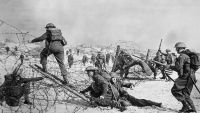
As a little boy, Luke Turner, like so many other little boys, was fascinated by World War Two. He used to spend hours carefully making Airfix models of warplanes, and his favorite haunt was the Royal Air Force Museum in Hendon, a suburb of North London. Men at War, his second book, is an attempt to explore and explain both this interest and his own sexuality (he is bisexual, with a female partner), in response to what he sees as the dominant, jingoistic attitude propagated via general British cultural discourse. He claims that we do not see those who fought as individuals, but as clipped, heroic avatars, like Captain Sir Tom Moore, who raised millions of pounds for NHS charities during the lockdowns: dignified, silent, brave.

The king and queen who saved the British monarchy

From our US edition

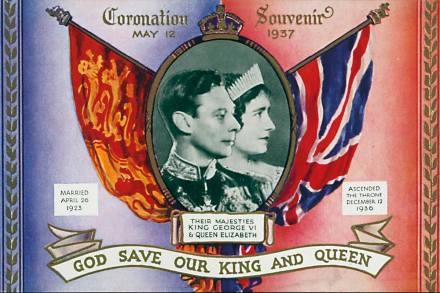
In some ways, the world of George VI and his consort Elizabeth, the future Queen Mother, from 1936-52 was very different from how we envision that of today’s British royal family; its rituals seem to belong to an era of Jurassic antiquity. In George’s day, Britain was still a global power, and its monarch ruled over both an empire and an elaborate court system with a “Page of the Backstairs” and a “Yeoman of the Pantry” — not to mention a fully staffed, oceangoing yacht — at his disposal. His coronation in May 1937 was as protracted as that of any maharajah. The Edwardian braid and sashes on display during more recent military pageantry look sadly Ruritanian by comparison. In other ways, their lives resonate more clearly with our own.

George queen

How refugees saved a town in upstate New York

From our US edition

Utica was once home to the American Nightmare. In the 1960s, the upstate New York city was a vibrant manufacturing hub, home to 100,000 people. Then the great unwinding began. General Electric pulled out in the early 1990s, and shortly after that the Air Force base closed. Entire streets burned as fleeing residents tried to claim insurance payouts. Families moved out as gangs from New York City moved in. Walking through the rubble in 1999, the mayor joked to an interviewer he had been having a nightmare of his own: “I dreamed I was the mayor of the city of Utica.

refugees

Inside the world of multilevel marketing

From our US edition

Emily Paulson felt lost. A young mother with several small children, she’d stepped away from the career ladder and found herself stuck juggling childcare alone when her husband traveled for his corporate job. She was trapped in a circuit of sweatpants and Spongebob. So when an old high school acquaintance invited her out for wine, she was thrilled at the chance to get dressed up, go somewhere swish and feel like herself again. It turned out to be a trap. Although she wasn’t swept into the back of a van by kidnappers, she was propelled into the world of Multilevel Marketing (MLM), also known as a pyramid scheme. The drinks invitation was a lure, first to be wowed by the fabulous cosmetics she could buy (at a discount!! And didn’t her friend’s skin look amazing?

multilevel marketing

Tom Hanks should stick to acting

From our US edition

The French novelist Michel Houellebecq recently appeared in a pornographic film. As one does, of course, although he claims that it was by accident. Nevertheless, there aren’t many authors-turned-actors, even by design. (Graham Greene had a small cameo in Truffaut’s Day for Night; Maya Angelou pops up dispensing folksy wisdom in How to Make an American Quilt.) You will, however, lose count of the thespians who clamor to adorn the printed page; I will not mention any, but you can look them up, should you wish to. Tom Hanks (the actor) has produced his debut novel, The Making of Another Major Motion Picture Masterpiece. The title is, I think, supposed to be arch, in a David Eggers, Heartbreaking-Work-of-Staggering-Genius kind of way.

hanks

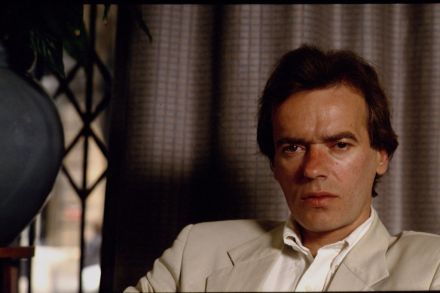
Martin Amis: 1949-2023

Over the next few days, people will be reaching for certain set phrases about Martin Amis. That he was ‘era-defining’ (though he defined more than one era); that he was ‘genre-defying’ (he defied more than one genre); that he was an ‘enfant terrible’ (it will be wryly noted that he remained an enfant terrible, somehow, into his eighth decade). It's poignant, I think, that a writer who vigilantly waged the career-long battle he called ‘the war against cliché’ will go to his grave heaped with the garlands of the old enemy.  Still, he deserves the content of those tributes if not their form. And it’s not much of a surprise that nobody can write as well about Martin Amis as, in life, he could write about anything else.