Book review

Black mischief among the Medicis

From our UK edition

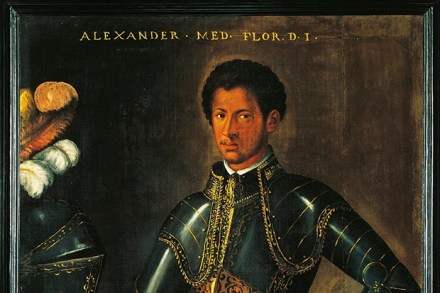
In a recent interview, the African American actor Wendell Pierce revealed he had once been told by the head of casting at a Hollywood studio: ‘I couldn’t put you in a Shakespeare movie, because they didn’t have black people then.’ The story was repeated on social media with a mixture of horror and hilarity, many responding — as Pierce himself did — ‘You ever heard of Othello?’ Yet the head of casting’s comments represent a common misconception and a significant gap in historical memory. Black Africans have been a visible presence in European life for centuries — and not only as slaves. In the 16th century, there were black musicians, such as Henry VIII’s trumpeter, John Blanke.

Mao devours his foes

From our UK edition

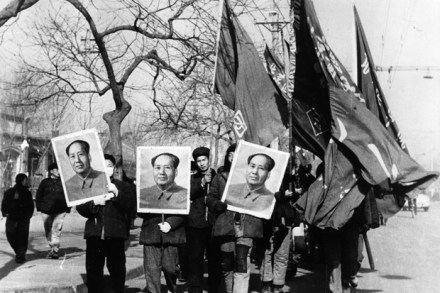
Frank Dikötter, professor of humanities at the University of Hong Kong and winner of the Samuel Johnson prize in 2011, is the author of many studies on China, most notably two on Mao’s dark rule. This new book completes the trilogy. The first volume, The Tragedy of Liberation, made plain, more exhaustively than previous accounts, that from the beginning of his time as Chairman, Mao was paranoid and murderous, and that Zhou Enlai and Deng Xiaoping egged him on. The second volume, the prize-winning Mao’s Great Famine, examined, in characteristic detail, the Chairman’s responsibility for the 1959–1961 famine, which killed 30 to 50 million Chinese. Now we are shown that millions continued to starve for years after 1961.

Broken and mad

From our UK edition

In the final months of 1914, medical officers on the Western Front began seeing a new kind of casualty. Soldiers who had no physical injury were displaying a wide range of alarming symptoms. Some appeared to be completely dazed or were shaking uncontrollably, others had lost their sense of taste or smell, or were suffering from blindness, mutism and various kinds of paralysis. It was not until February 1915 that the term ‘shell shock’ first appeared in print, in the Lancet. It was originally intended to describe a physical condition in which the brain had been damaged by the percussive effects of high explosives, but was subsequently adopted to describe many different forms of battle trauma.

Reclaiming Nietzsche

From our UK edition

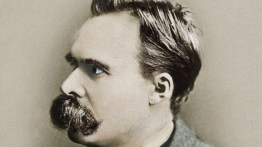
Had you been down at Naumburg barracks early in March 1867, you might have seen a figure take a running jump at a horse and thud down front first on the pommel with a yelp. This was Friedrich Nietzsche, midway through his 23rd year and, thanks to a sickly childhood, no stranger to hospitals. Nietzsche lost part of his sternum, leaving him not so much pigeon-chested as angle-grinded. Once recovered, he celebrated by having his picture taken in full uniform, sabre at the ready, glaring at the ‘miserable photographer’ like a warrior set for battle. Daniel Blue regards the photo as ‘unflattering’ — though it's nowhere near as unflattering as the picture Elisabeth Förster-Nietzsche painted of her brother after his death in 1900.

The death of the author

From our UK edition

The ‘journey’ — at least the one played out in public — begins with an announcement that you are incurable. Patient waiting follows, described in monthly essays written for a respected publication. Jenny Diski (non-small cell adenocarcinoma, London Review of Books) calls this personally singular but culturally familiar experience the race from ‘the Big C to the Big D’. Surely the hope is not to reach the end in the fastest time. But if you take too long, your audience’s sympathy might tinge with suspicion, as Clive James (B-cell lymphocytic leukemia, the Guardian) recently described, now a survivor of several years. Claiming a title for your cancer memoir has also become competitive.

The horse from hell

From our UK edition

There were moments while reading this sprawling, ambitious novel when I thought I was reading a masterpiece. But at other times, it felt as if the author was convinced that she was writing one. The Sport of Kings is the story of the Forge family of Kentucky. They’re a brutal lot. In the opening scene, John Henry Forge ties his son Henry to a post and whips him. A black employee, Filip, caught with John Henry’s wife, is lynched. As well as violence, John Henry instils a fierce sense of destiny in his son. Against his father’s wishes, Henry turns the family farm over to raising racehorses. Through some severe inbreeding, Henry creates the horse from hell, the aptly named Hellsmouth, an immensely strong but fragile filly.

Inside of a dog

From our UK edition

Before I read this book, I thought I knew what a dog was. It barks, it wags its tail, it fetches sticks, it craps on the carpet. However, now that I’ve finished this learned tome, I realise there’s a bit more to it than I thought. As well as the domestic dog (Canis familiaris), the genus Canis also includes wolves, jackals, dingoes and coyotes. They all seem very different, yet domestic dogs can breed with all of them. According to Darwin, this makes them all members of the same species. Now can you see why I’m confused? Raymond and Lorna Coppinger don’t want you to make a snap decision about what a dog is — or what it isn’t. They want to make you think about how zoologists classify things: why we decide to call an animal one thing and not another.

Reading the waves

From our UK edition

Water accounts for 70 per cent of your planet, and 60 per cent of your body. Yet when do you ever stop to consider it? The quirks and habits and secrets of good old H2O were crying out to have a book written about them. That said, it had to be written by the right person. A subject like this could have attracted a complete dullard, the sort of person you dread getting between you and the door at a party. Fortunately, the job went to Tristan Gooley. His previous books include The Walker’s Guide to Outdoor Clues and Signs and The Natural Navigator. There’s more of the same here, like the trick to getting your bearings from the puddles on a path: there will be more of them on the path’s south side, as the undergrowth at the edge shields that half from the sun.

The mother of all crimes

From our UK edition

During the heatwave in the summer of 1895, the Gentlemen v. Players match at Lords Cricket Ground on 8 July attracted more than 12,000 spectators. Among the crowd that sunny day were two little boys from the East End of London, brothers Robert and Nattie Coombes, aged 13 and 12. That morning they had got themselves up and prepared their own breakfast. Their mother was in the house, but she wasn’t able to see to her boys, because during the night Robert had killed her. He had stabbed her with a knife bought expressly for this purpose and then, just to be sure she’d perished, put a pillow over her face. In the days that followed, Robert and Nattie had a fine old time. They went again to watch the cricket, where they saw W.G. Grace score his seventh century of the season.

The spaces in between

From our UK edition

The unfinished is, of course, something which tells us about the history of a work of art’s creation. A work of art may have been interrupted by the artist’s death, as with the paintings that Klimt left behind in his studio. Or it may simply have been abandoned when a patron failed to fulfil his obligations, or the painter had grown bored with the subject and moved on to something else. These spaces and gaps give us a glimpse of an artist at work and invite us to speculate about what Mondrian, for instance, was doing abandoning the 1934 ‘Composition with Double Lines’ or Cézanne the 1898 ‘Bouquet of Peonies’. Did something better come along? Did the painting present too many problems?

Symbols of eternity

From our UK edition

On the banks of the River Thames in central London, an ancient Egyptian obelisk, known as Cleopatra’s Needle, reaches towards the sky. Carved from a single slab of red granite, it is 69 feet tall, weighs a substantial 224 tonnes, is decorated with hieroglyphs, and was made for the Pharaoh Thotmes III in 1460 BC. In 1877, six sailors lost their lives transporting the obelisk from Alexandria. Mohammed Ali, Viceroy of Egypt, gave it to the Prince Regent in thanks for the British victories over the French at the Battle of the Nile and Battle of Alexandria. The Cleopatra, a specially designed iron cylinder container, was used to carry it, towed by a steam-ship. A hurricane off the Bay of Biscay resulted in the brief disappearance of the Cleopatra and the drowning of half the crew.

Thetans under threat

From our UK edition

At last! It has taken over two years, but a British publisher has summoned up the nerve to bring out Going Clear, an astonishing exposé of the Church of Scientology by Lawrence Wright of the New Yorker. Wright — who won the Pulitzer Prize for The Looming Tower, his investigation of 9/11 — is the journalistic equivalent of a virtuoso musician: he can race us through the most complicated narrative because he has done unimaginable amounts of homework. Wright conducted hundreds of interviews for Going Clear, then had a team of fact-checkers crawl over the text. Even so, none of our big publishing houses would touch it.

More blood and tears

From our UK edition

Irvine Welsh’s 1993 debut novel Train-spotting flicked a hearty V-sign in the face of alarm-clock Britain. ‘Ah choose no tae choose life,’ crows its giro-cheating antihero Mark Renton, proudly enslaved to heroin instead of mortgage repayments. But when Welsh revisited his native Leith for a 2012 prequel, Skagboys, he threw over this bourgeois-taunting amorality for blunter politics: Renton, it transpired, first turned to heroin for pain relief after police beat him up on a picket line during the 1984 miners’ strike. In Welsh’s latest novel, it’s the turn of Renton’s psychopathically violent frenemy, Francis Begbie, to get an origin story involving the abuse of state power. As a boy (we now see) Begbie struggled with dyslexia.

Not so bird-brained after all

From our UK edition

What is it about birds? They are the wild creatures we see most often, their doings and calls a daily reassurance that humans are not isolated in our sentience. They descend from the first reptiles, while we come from the first mammals. Across a gulf of evolution we contemplate a parallel life which has evolved exhilaratingly different answers to the same questions that existence asks of us. Cross-referencing allows us to address the fundamentals. Darwin and his finches revealed how we came to be. What else might birds teach us? Addressing questions because we can conceive them is the spirit of The Most Perfect Thing: Inside (and Outside) a Bird’s Egg by Tim Birkhead, author of the acclaimed Bird Sense.

When in Rome…

From our UK edition

‘Now I am a mother and a married woman, but not long ago I led a life of crime,’ begins this really very short book (assisted here, in its lumpen-ness, by the ingenious placement of two or three blank pages in between each of its 16 very short chapters). But it is not something scratched together posthumously from Roberto Bolaño’s papers, or resurrected out of early-career obscurity (as valuable as those kinds of books, appearing in English in recent years, have also been). Written near the end of his life, this was the last of his books that Bolaño saw into print — it bears, in this free-standing form, however tiny, the author’s definitive executive seal.

Get thee to a notary

From our UK edition

Given this year’s 400th anniversary of Shakespeare’s death, there was always going to be a slew of new publications; few, I suspect, will have as long-lasting an effect as John Kerrigan’s. His field of inquiry is both straightforward and complicated. It is almost retrospectively obvious that Shakespeare’s plays contain a great amount of vows, oaths, swearing both covenantual and vulgar, pledges, promises and imprecations. The same might be said for a great many playwrights’ works; but the depth of subtlety which Kerrigan finds in the handling of these specific rhetorical forms is compelling.

A mirror to the world

From our UK edition

[audioplayer src="http://feeds.soundcloud.com/stream/260046943-the-spectator-podcast-obamas-eu-intervention-the-pms.mp3" title="Lloyd Evans and Dr Daniel Swift discuss how Shakespeare died" startat=1008] Listen [/audioplayer]Who’s there? Shakespeare’s most famous play opens with this slightly hokey line, and the question remains for his countless audiences, biographers and scholars. Who was this man? What makes his works so apparently endless? Like the plays, his life is studded with riddles. Even the basic facts are slippery and over-determined. We do not, for example, know the date of Shakespeare’s birth. His baptism was recorded at Stratford on 26 April 1564, and since it was customary to baptise newborns quickly, it has been accepted that his birthday was 23 April.

The last word

From our UK edition

Nicola Barker is both prodigiously talented and admirably fearless. I have loved her books. But for some time I had little or no idea what the point of the story of Sri Ramakrishna was. In fact he was one of the outstanding men of 19th-century India. Characteristically of Barker, the narrative of her latest book is interlaced with little jokes and haikus and sly references to contemporary language and manners. (There is even an excursion to the Camargue.) At first I found the whole enterprise repetitive and wilfully quixotic, but it is well worth persevering. Barker describes her book as ‘truly little more than the sum of its many parts’.