Book review

Lost in a time capsule

From our UK edition

On her arrival in Russia in 1914, Gerty Freely finds it refreshingly liberal compared to her native Britain: here servants are treated well, parents encourage self-expression in children, poor students are given support, and intellectual discourse flourishes. Gerty comes to Moscow as the governess to a rich aristocratic family and stays through the war, the revolutions and the Red Terror. A free spirit, she embarks on her adventure with an enthusiasm which only grows in the face of the dramatic events she comes to witness. Gerty falls for the futurist of the title, Nikita Slavkin, an aspiring physicist, and both become ardent supporters of the revolutionary cause.

There’s no escape

From our UK edition

Patricia Highsmith was an accretion of oddities — a woman who doted on her pet snails and carried a selection of them in her handbag, who abandoned her native America for a restless life in Europe, and who turned a habitual paranoia into literature. Now, 20 years after her death, her reputation has been substantially increased by film versions of her Ripley novels and, most recently, Carol (an adaptation of The Price of Salt, her extraordinarily bold novel of a lesbian love affair). For all that, she is generally classed as a crime writer, albeit a very superior one. As one contemporary reviewer commented, ‘Patricia Highsmith is often called a mystery or crime writer, which is a bit like calling Picasso a draftsman.

Why Juan Villoro is the best football writer you’ve never heard of

From our UK edition

Football, unlike cricket, has for the most part been ill served by its writers. For every Brian Glanville and Ian Hamilton (the latter having employed his critical authority to become a first-rate reader of the game), the purveyors of hackneyed analysis are legion. In recent years there has been a propensity to celebrate tactics and formation (i.e. pedantry) over poetry. Latin Americans, however, have always fared slightly better with their writers — as they do with their players — who tend not to make the distinction between literature and sports writing. Gabriel García Márquez and Mario Vargas Llosa, both Nobel laureates, took to writing about the game early on in their careers. Juan Villoro is one of Mexico’s foremost men of letters.

Great halls, last balls

From our UK edition

Contrary to popular myth, the exuberant flame of life in the English country house was not extinguished by tears at the end of the Great War. And in his deliciously jaunty and wonderfully knowledgeable book, Adrian Tinniswood, social historian and country house authority, also upturns the story that huge numbers of Britain’s loveliest houses disappeared in the 1920s and 1930s, either through lack of heirs, despair, neglect or the stranglehold of taxation. He describes how instead, with ‘new aesthetics and new social structures’, the clubby, elitist, joyful prewar way of life adapted and became even more vibrant after the Armistice. In part, the yearning for a sense of rootedness had become more urgent than ever.

The elegiac and the exuberant

From our UK edition

Discussions about the short story too often fall into a false dichotomy that can be characterised, in essence, by a quibble over a consonant. Carver or Carter? On the surface, it would be easy to present Philip Hensher as the Raymond Carver-like elegiac naturalist, giving glimpses of disappointed lives and misunderstood epiphanies, and Helen Oyeyemi as the Angela Carter-ish exuberant fabulist, all giddy metamorphoses and yarns within tales within stories. It would be a disservice to both collections to read them in such a manner. All the stories in Tales of Persuasion have an exquisitely tweezer-y feel to them.

Principles of heredity

From our UK edition

Darwin came tantalisingly close to understanding them, 20th-century eugenicists obsessed over them, and with modern science, we are poised to control them as never before. Genes are a constant source of fascination, yet ignorance and misunderstanding plague almost every public discussion of their effects on our health and behaviour. How useful it would be, then, if there was a clear, accurate, and up-to-date pop science book on genetics, a book that recounted the history of genetic science and reflected on its implications for the future of medicine and society. This is the goal of the new book by oncologist-biologist Siddhartha Mukherjee. It is a lofty goal, and Mukherjee attempts it with lofty language.

The feast before the famine

From our UK edition

If you had the resources, Georgian Ireland must have been a very agreeable place in which to live. It was certainly more prosperous and peaceful than it would be after the 1848 famine. This idyllic world is captured in Patricia McCarthy’s scholarly and highly entertaining work, which stretches from the start of the building of Castletown House, Co. Kildare, in 1722, to the 1848 famine.

The Feelgood factor

From our UK edition

When I wrote for the NME as a schoolgirl in the 1980s, it was recognised that there were musicians who deserve derision — those whose egos and clothes’ bills dwarfed their talent — and those who commanded respect. Wilko Johnson, one-time guitarist of Dr Feelgood, was of the latter. Whether pacing moodily on stage, hammering out choppy refrains on Feelgood classics such as ‘Roxette’, or touring and recording with subsequent bandmates, he was a dedicated grafter with attitude and ability in spades. More recently, Johnson has been in the news for very different reasons. In 2012, he was diagnosed as having inoperable terminal pancreatic cancer.

Fleeing Mother Russia

From our UK edition

‘Ah! Scrubbing the deck! My childhood dream! As a child I had once seen a sailor hosing the deck with a large hose while another sailor scrubbed away with a stiff, long-handled brush with bristles cut at an angle. I had thought at the time that nothing in the world could be jollier.’ This is Russian writer Teffi accepting her enforced labour on board a refugee ship fleeing Bolshevik Russia. Moments before, a dispossessed landowner has proclaimed his right to idleness — ‘Hire someone! Do whatever is necessary! If you prefer all this socialist nonsense, then what are you doing on this ship?

… and sense and sensibility

From our UK edition

Book reviews, John Updike once wrote, ‘perform a clear and desired social service: they excuse us from reading the books themselves’. It’s a theory, I’m afraid, that doesn’t apply to this review — but it certainly does to this book: an impeccably wide-ranging collection of Ferdinand Mount’s own non-fiction reviews, including for The Spectator, over three decades. Find yourself unaccountably vague on the premiership of Lord Rosebery? A little rusty on the life of George Gissing? Embarrassingly patchy on the history of Methodism? Thanks to Mount, there’s no need to plough through 500 pages on any of them — nor the more than 50 other subjects he covers.

Elizabeth alone

From our UK edition

If you’ve been watching Game of Thrones recently, you’ll have seen an old folkloric fantasy in which a bewitching young prophetess, a charismatic war leader, slips alone into her private chambers and removes an enchanted necklace. Beneath it, she’s just one more withered crone. We, the viewers, having happily feasted on her naked body, now congratulate ourselves on seeing it for what it is: another whore’s trick. This moralistic antipathy towards the over-preserved female body haunts popular studies of the last years of Queen Eliza-beth I. Nearly a century ago, Lytton Strachey kick-started the grotesquerie genre with Elizabeth and Essex: ‘As her charms grew less, her insistence on their presence grew stronger.

Wars on drugs

From our UK edition

‘Of all civilisation’s occupational categories, that of soldier may be the most conducive to regular drug use.’ The problem with this statement — the first words of this book — is the problem with the book as a whole: it may be correct, and there again it may not be. Even the captionless cover photograph is ambiguous: of an American soldier, in Vietnam perhaps, with a corncob pipe which may or may not contain a banned substance, though we are obviously meant to infer that it does. Then there is the inconclusiveness: ‘One may say that to a lesser or greater degree drugs shaped warfare.’ Yes, one may; but to a lesser or greater degree one may say that about almost everything.

The cryonics game

From our UK edition

Cults, the desert, natural disasters. Artists, bankers, terrorists. Cash machines, food packaging, secret installations. Mediaspeak and scientific jargon. Crowds and capital. Language and death. Just as it used to be possible to play Ballard Bingo with the work of the late 20th century’s other great literary monomaniac, so Don DeLillo’s themes have remained astonishingly consistent in the 45 years since Americana, his first novel, appeared.

Strategies for seduction

From our UK edition

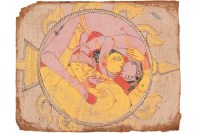
The rough English translation of Kamasutra is pleasure (kama) treatise (sutra). In the West, since it was first (rather surreptitiously) translated and published back in 1883, the book has generally been associated with a series of beautiful, ancient illustrations of a couple determinedly coupling in a variety of fascinating — and often utterly improbable — positions; as essentially ‘the erotic counterpart to the ascetic asanas of yoga’. But there is so much more to it than that, as Wendy Doniger doggedly contends in this, her fine collection of frank, brief, clear-eyed essays.

Dante’s egomania

From our UK edition

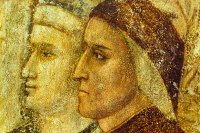
Unlike Shakespeare, who kept himself out of all his works, except the Sonnets, Dante was endlessly reworking his autobiography, even when supposedly writing on politics or arranging love poems to his dream-women. The core of this new book about him can be found in a sentence following Dante’s banishment from Florence, and his setting out as a poverty-stricken exile, deprived of all power, separated from his wife and family and stripped of his wealth. Marco Santagata writes: One of the typical features of Dante’s personality, which qualifies him as an ‘intellectual’ in the modern sense of the word, is his endless reflection on what he is doing, both as an author and as a man.

Wishful thinking | 19 May 2016

From our UK edition

Deirdre McCloskey has been at work for many years on a huge project: to explain why the world has become so much richer in the past two centuries, and at an accelerating rate since 1945. This is the third and final volume in the series. In it she argues that ‘our riches were not made by piling brick on brick, bank balance on bank balance, but by piling idea on idea’. The Great Enrichment, which she dates from 1800 to the present, depends on the spread of ideas of liberty, seeded in a series of ‘egalitarian accidents’ in European politics between 1517 and 1789.

Recent children’s books | 19 May 2016

From our UK edition

Martin Stewart’s Riverkeep (Penguin, £7.99) has a list of books and writers on the cover: Moby-Dick, The Wizard of Oz, Ursula Le Guin, Charles Dickens and, less ambitiously, Neil Gaiman, Philip Pullman and Skellig. And, right in the middle, Riverkeep. Pff, you think: they wish! But you know what? Having read the book, there are elements of all these authors in it: Moby-Dick for the quest for a great sea monster; The Wizard of Oz for a homunculus who retains his self, even when he loses his stuffing; Ursula Le Guin for the creation of a coherent other world where magic is part and parcel of things; and perhaps Dickens for a dank, watery atmosphere.

Laws that changed the world

From our UK edition

One of the things Philippe Sands clearly remembers from his grandparents’ Paris apartment — a rather sombre, silent place — is the lack of family photographs. There’s a single, framed, unsmiling wedding photo, and that’s all. There is no mood of bittersweet nostalgia, there are no nods to memory or history. Where did his grandparents come from? How did they end up as these people, whom he knew only towards the end of their lives? Retrieving that history, that deliberately unremembered story, is the beginning of Sands’s task in this remarkable book. Generically speaking, the story is familiar enough. Leon Buchholtz — Sands’s grandfather — was born in what was then Lemberg, in the very heart of Europe.