Book review

Masa Son: the world’s most reckless investor

For a few days in February 2000, Masayoshi Son was the richest person in the world. A risk-taker and showman, universally known as Masa, he had long been disdainful of Japan’s staid "salaryman" business culture and was riding the wave of dot-com mania. His company SoftBank, founded in 1981, had bet big on the growth of online shopping. The bullish mood didn’t last, and Masa slunk away from the limelight — but only for a while. A techno-optimist, the now sixty-seven-year-old has repeatedly reinvented himself, urging doubters to see beyond the immediate: "You’re limiting your field of vision to thirty years… Start bold and think 300 years ahead.


Masa

Ali Smith’s latest novel falls flat

"Gliff" is a word which can mean "a short moment," "a wallop," and "a post-ejaculatory sex act;" to "dispel snow," "to frighten," and to "escape something quickly." It’s "really excitingly polysemous," says one of Ali Smith’s characters. It’s certainly an apt title for a book which can’t seem to define itself. At its center are two children, Briar and Rose, who have been abandoned. Their mother is absent, caring for a sick sister, and their other responsible adult leaves to find her. The children exist in a stock dystopian world (people are surveilled by CCTV cameras and zombified by screens) with a twist: they repeatedly wake up to find that a red line has been painted around their house or camper van. They are on a list of "Unverifiables.

Gliff

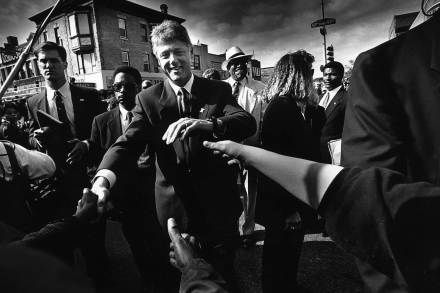
Bill Clinton’s latest memoir sees him at his chirpiest — and most combative

In February 1974, the British prime minister Edward Heath, then facing one of his country’s cyclical economic crises, called a snap general election. The result was close; Heath’s Conservative Party won the popular vote but secured fewer parliamentary seats than the Labour opposition. After power-sharing discussions broke down, Heath resigned from office. A fifty-seven-year-old bachelor without a London home of his own, he lodged for the next several months at a small Westminster flat owned by his political secretary Timothy Kitson. The man who had served as his nation’s head of government for the previous four years was left with a typist, a single daytime detective and a part-time driver at his disposal.

Clinton

Will science lead us back to God?

After generations of treating the universe as mere matter to be bent to our will, it seemed inevitable that the future of humanity would be to merge with machines. Billionaires and tech utopians now predict a near future in which the human mind itself might be “downloaded” or transferred into a digital realm, allowing us to overcome death itself by slipping the bonds of our physical existence altogether. Modern-day prophets like Yuval Noah Harari proclaim that we have embarked on a second industrial revolution, though the product this time will not be machines or vehicles or powerful new weapons but human beings themselves. There’s a certain logic to this way of thinking.

science

Wrestling with Jordan Peterson

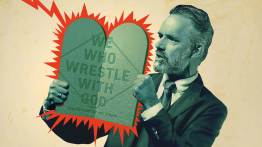
Jordan Peterson is one of those curious figures who has, thanks to the mysterious operations of the internet, been thrust into the limelight, willingly or not. While he has become a locus of hatred for certain left-wingers, thanks to his implacable attitude toward “woke” phenomena, in reality his supposedly controversial advice amounts to little more than that young people should work hard and take responsibility for their actions. Even the bolshiest socialist couldn’t really disagree. His 12 Rules for Life is a bestseller on both sides of the Atlantic, and he has a large and adoring fanbase.

Peterson

Cher should stick to what she knows best

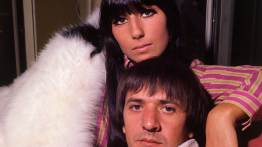
The worst celebrity memoirists write first-person Wikipedia pages. Like Michelangelo carving a beautiful posterior out of Italian Carrara marble, the best celebrity memoirists edit their lives into tawdry yet moving epics. When they work, celebrity memoirs are the Warhols of American literature. When they fail, they’re the literary equivalent of a CVS receipt: boring and destined for the trash. Cher: The Memoir, Part One falls somewhere in between. It takes a miracle to reach Cher’s narrative peak. For more than a hundred pages, she details her childhood criss-crossing America as her mom marries and divorces man after man. I lost track of how many jerks Cher’s mother married, but according to Google, she married six different men (Cher’s heroin-addict biological father twice).

Cher

James MacMillan, Sebastian Morello, Amy Wilentz, Sam Leith and Lloyd Evans

From our UK edition

32 min listen

This week: composer James MacMillan reads his diary on the beautiful music of football (01:11); Sebastian Morello tells us about the deep connection between hunting and Christianity (07:17); Amy Wilentz explains how Vodou fuels Haiti’s gang culture (16:14); The Spectator’s literary editor Sam Leith reviews The Virago Book of Friendship (22:38); and – from the arts pages – The Spectator’s theatre critic Lloyd Evans writes about a new play on the last days of Liz Truss and also about Bette and Joan, which includes 'brutal' and 'brilliant' portraits of Bette Davis and Joan Crawford (26:37). Presented by Oscar Edmondson. Produced by Patrick Gibbons and Oscar Edmondson.

An insightful account of America’s decline

I wouldn’t have thought a book about America’s decline would cause me to laugh out loud, but having enjoyed its author Matt Purple’s work for years now (full disclosure: he’s a personal friend and former Spectator colleague), I should not have been the least bit surprised that his debut book is as funny as it is insightful. Decline from the Top: Snapshots from America’s Crisis and Glimmers of Hope is a veritable joy to read. Though he declares himself to be a “cranky conservative,” Purple’s humor and wit offer a diagnostic examination of the American condition that exudes warmth and obvious heartfelt concern for our nation’s wellbeing.

Purple
Lisa Marie

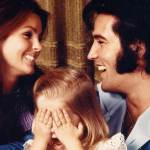
Lisa Marie Presley’s posthumous book exposes the horrors of celebrity

The title of this book may offer a clue to its prevailing tone. There’s a certain amount of showbiz gossip involved, but it is essentially a protracted rumination of the “What’s it all about, Alfie?” variety, with plenty of unflinching discourse on matters such as spirituality, depression, addiction and the precariousness of the human condition. “I wondered how many times a heart can break,” the authors write near the end of their tale of untold material privilege and wrenching emotional grief. All too often, is the inescapable answer. The book is freighted with a certain amount of woe from the start, because its principal author, Elvis Presley’s only child, herself tragically died in January 2023, aged fifty-four, due to weight-loss surgery complications.

Boyd

William Boyd’s latest novel is a smoothly gripping read

Gabriel’s Moon is William Boyd’s eighteenth novel, swiftly following last year’s The Romantic, which delightfully described the adventures of a man living through the nineteenth century in Europe. Though Boyd relates a smaller section of his new hero’s life here, many of his characteristic themes are fully at play: surveillance, deception, honor, love, art, fraud, real historical characters jostling with fictional ones, and relationships between mothers and sons. Essentially, this new book is a spy story, well within the lineage of John le Carré (complete with liberal ambivalence about duty to one’s country), and with skillfully handled layers of double-dealing.

Pat Barker dives into the first part of Aeschylus’ Oresteia

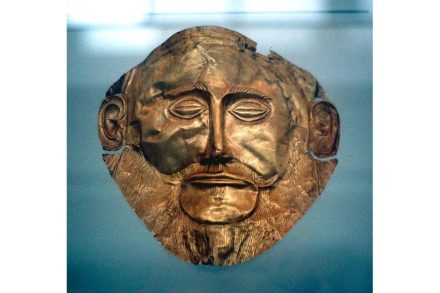
Emily Wilson, the distinguished translator of Homer, has remarked that Pat Barker’s The Silence of the Girls about the Trojan War is a distinctly feminist book. Renowned for her first world war Regeneration trilogy, Barker has now written The Voyage Home, a powerful novel about the first part of Aeschylus’ Oresteia. She takes the infrastructure of legend and invests it with brutal realism. Agamemnon’s return home to Mycenae after ten years of war is told entirely from the points of view of women. The narrator is Ritsa, Cassandra’s maid, her intimate “catch-fart.” (There is no reticence throughout about the use of crude colloquialisms.) Agamemnon the victor becomes the victim.

Barker
wood

Imperfections in wood lead to perfection in carvings

I am married to a wood snob. When we bought our house in 1999, my husband insisted that all the shelves (he is an antiquarian book dealer, so there are miles of them) should be made of “real” wood, with not an inch of Medium Density Fibreboard. The price made me squeal. But a quarter of a century on, while friends’ MDF shelving droops like cables between telegraph poles, ours remains beautifully strong and straight. Callum Robinson would understand why this matters, and he demonstrates it in his new book, Ingrained.

John le Carre’s son resurrects George Smiley

Anyone reading this review will know a few fundamentals of the Smileyverse: spymaster George Smiley is podgy, spectacled, middle-aged, soft-spoken, wears ill-fitting clothes, can vanish in a crowd and is routinely cuckolded by his wife over the course of all “his” novels. Thanks to the success of John le Carré’s novels about him, the Smiley canon is now (we might assume) unchangeable: so, making a virtue of necessity, novelist Nick Harkaway has gone back to his Golden Age. Karla’s Choice opens in 1963, the year after the Cuban Missile Crisis, the era when the Berlin Wall went up, the aftermath of Suez, the “candle-end days” of Empire. In East Berlin, a charismatic young man is carted away by the Stasi.

Harkaway

The powerful, brutal story of Polish resistance fighter Elżbieta Zawacka

In May 1942, Agent Zo was in the home stretch after a long and risky mission that had placed her in Berlin, at the heart of Nazi Germany. As usual, she picked up a small stone and threw it at the second-floor window of her sister’s apartment in a grimy industrial city in occupied Poland, south of Warsaw. But no one in the flat turned on a light, the agreed signal. She threw another. Nothing happened. With a mounting sense of unease, she knocked at the door of a first-floor apartment, and a pallid face appeared. The terrified neighbor told her that the Gestapo had appeared two days ago and arrested the occupants. “Get away, by God. They are here!” she urged.

Zo
Levy

The Position of Spoons is flawed but fascinating

"When you take a flower in your hand and really look at it, it’s your world for the moment. I want to give that world to someone else.” The final installment of Deborah Levy’s “Living” biographies, Real Estate, begins with this quote from the artist Georgia O’Keefe. It would be neat — oh, so neat! — for me to remark that if her memoirs were each a single flower — the world of the writer unfurling between its papery leaves — her latest book, The Position of Spoons, is a bouquet: a collection of variously published and unpublished letters, essays, short stories and poems spanning her entire life as a writer. But The Position of Spoons is not neat. Instead, reading it feels rather like rummaging through Levy’s desk.

Shakespeare

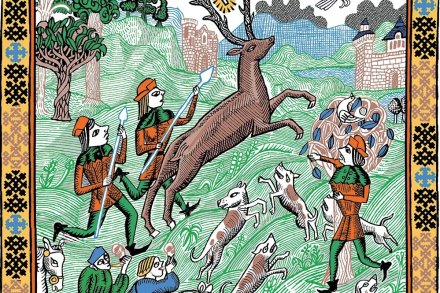
Why Shakespeare remains the great playwright

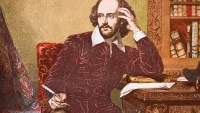
William Shakespeare’s tragedies stand apart. Their impact is profound and lasting, in cultural, artistic, emotional and psychological terms. Who could forget the ghost’s first appearance in Hamlet, or Lear bearing the dead Cordelia? No other dramatist has achieved what Shakespeare did: in subject matter, emotional heft, innovative usage of source material, character development and startling deployment of language Shakespeare is (and there is no other word for it) extraordinary. He surpasses both his predecessors (sorry, Thomas Kyd!) and those that came after him. He built on the foundations the classical playwrights established, and then, almost casually, bettered them, too.

Kennedy

The real Kennedy men

Long before the #MeToo movement shattered the careers and reputations of people like Harvey Weinstein and Kevin Spacey; long before Jeffrey Epstein and R. Kelly were locked up for committing heinous sex crimes; and long before we’d become familiar with names like Monica Lewinsky and Virginia Roberts Giuffre, there were the Kennedys. In very basic terms, that’s the premise of Maureen Callahan’s book Ask Not — a title that riffs on JFK’s inaugural address — which salaciously chronicles how men from three generations of one of America’s most exalted families spent their lives perpetrating violent misogyny and psychological abuse without suffering so much as a polite slap on the wrist.

Catherine Nixey’s Heresy is a joy to read

What people tend to forget about Jesus Christ is that he killed children. As a five-year-old, Jesus was toddling through a village when a small boy ran past, knocking his shoulder. Taking it like any five-year-old would, Jesus shouted after him "you shall not go further on your way," at which point the boy fell down dead. Later, when the boy’s parents admonished Joseph and Mary for failing to raise their son properly, Jesus blinded them. Something to bear in mind next time you ask yourself: "What would Jesus do?" If this story is unfamiliar, that is because it doesn’t appear in any of the Bible’s traditional Gospels.

Heresy

Michael Richards’s memoir is heavier on introspection than laughs

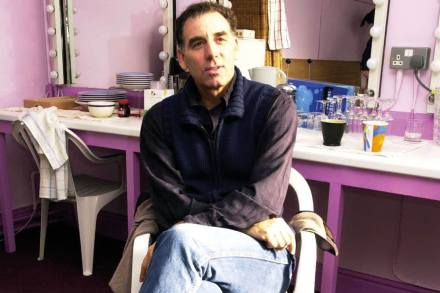
An unusual disclaimer greets the reader on the title page of this memoir of an actor chiefly known for starring as the lovable goofball Cosmo Kramer on the hit TV sitcom Seinfeld. “Neither the US Army nor any other component of the Department of Defense has approved, endorsed, or authorized this book,” it notes. But in the event the Pentagon probably needn’t have worried. Drafted into the army in 1970, the actor in question, Michael Richards, seems to have avoided any Sergeant Bilko-like shenanigans and instead separated from the service with a heightened appreciation for the punctuality, discipline and meticulous preparation that characterized his later career.

Richards