Christopher Hawtree

Journey to the Moon: The Things We’ve Seen, by Agustín Fernández Mallo, reviewed

From our UK edition

‘Peace — slept for 14 hours. The roar of the sea slashing the rocks — is there any more soothing sound in the solar system?’ Although this observation was made by Chips Channon at Sandwich after the rigours of electioneering in 1935 it could be aptly cited in this novel by the radiation physicist Agustín Fernández Mallo. These past 15 years he has evolved a method in which, owing something to Borges and perhaps early Nicholson Baker, troubled narrators’ outlandish events draw seamlessly upon everything around them; on the page, advertising hoardings, the screen or mind, these fragments are shored against their ruins, catching our world in its present flux.

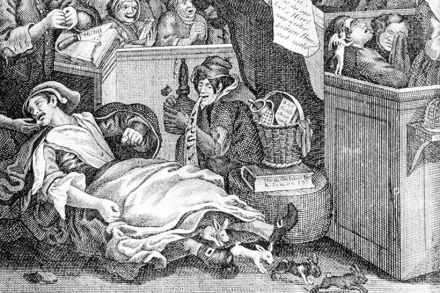
How could enlightened 18th-century Britain have believed that a woman could give birth to rabbits?

From our UK edition

Does a practical joke differ from a hoax? It could be a matter of scale. Anyone can deploy a whoopee cushion, but it takes rather more — as Virginia Woolf and others did, long before Ali G — to kit oneself out as Abyssinian royalty for a 1910 state visit by train to the deck of a dreadnought in Weymouth harbour. There was nothing in it for them, but that hoax brought questions in the Commons. Monetary gain, as with the Hitler Diaries, certainly sours claims for hoaxes as a pure art form. Where does this leave the humble,twentysomething mother-of-three Mary Toft, and those around her? The question is raised by Karen Harvey’s brief but amply detailed study of a woman who, in 1726, brought the Surrey market town of Godalming publicity it had not known before.

Sheen of authenticity

From our UK edition

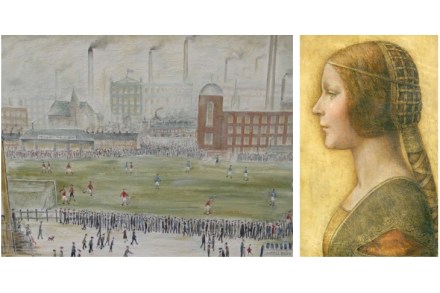
In 2006, after five decades, Shaun Greenhalgh lost his enthusiasm for the British Museum. From a very early age, he had been inspired by its contents to a profitable and diverse career in art forgery from his Bolton garden shed. A teenage talent for faking Victoriana had led him on to make an array of millennia-traversing art works, in all media, which he sold with the help of his ageing parents and which came to rest in eminent quarters both private and public. His work was taken by one American president to be that of the distinguished neoclassical sculptor Horatio Greenough. Others took him for Leonardo, Lowry, Gauguin, Moran or Hepworth. Among the few to acquire a genuine Greenhalgh was none other than Barbara Hepworth herself.

Ripeness is all

From our UK edition

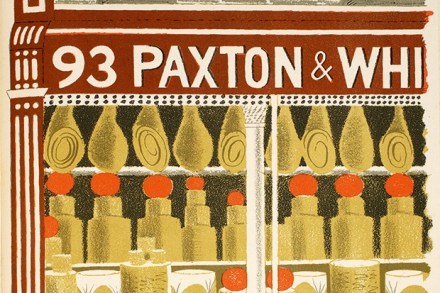
‘Blessed are the cheesemakers.’ The line from Life of Brian is followed by: ‘It’s not meant to be taken literally. It refers to any manufacturer of dairy products.’ In fact, cheese animates the Bible and — building on Job’s searing image of the womb — its coagulation became an emblem of the Immaculate Conception, endorsed by no less than Hildegard of Bingen. This is just one of innumerable thoughts prompted by this Oxford Companion’s elegant, double-columned, well-illustrated pages. Here is a strong, pleasingly ripe case for cheese’s global role in social, political and economic history. It all makes for many ‘cheese adventures’.

Park life

From our UK edition

Petrichor. Coined as recently as 1964 but redolent of Eden onwards, the word appears in neither of these volumes but they are suffused with it. In denoting that tang which arises after rain has fallen upon dry ground, petrichor can make a stroll through park or hillside headier than any parfumier’s establishment. Down the centuries, as people moved into populous cities, such relish of open, green space has become all the more acute, with one man’s wild meadow another’s ‘development opportunity’. With a steadily lengthening shelf of books that are threnodies for seaside holidays, the Routemaster bus, vinyl records, the transplanted London Bridge and now public parks, Travis Elborough is becoming a latter-day Alan Bennett.

The great inscape

From our UK edition

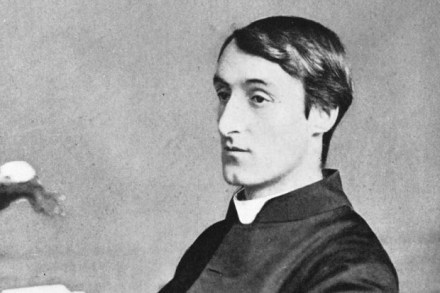
‘I am 12 miles from a lemon,’ lamented that bon vivant clergyman Sydney Smith on reaching one country posting. He was related to Gerard Manley Hopkins, a priest who, in the popular imagination, would quite possibly balk at the offer of a lemon. After all, 30 years before Prufrock, Hopkins did not dare to eat a peach, fearful of its delicious savour when offered one by Robert Bridges in a Roehampton garden. Hopkins was a complex man who delighted in simple things. Our sense of his view of the world has been complicated by the circumstances of his publication. Forbidden to publish his great ‘The Wreck of the Deutschland’, he largely squirrelled away, or burnt, his work.

The nature of belonging

From our UK edition

‘I nauseate walking; ’tis a country diversion. I loathe the country and everything that relates to it... Ah l’étourdie! I hate the town too.’ Millamant’s expostulation about the unresolved pull between rural and urban life has echoed down three centuries since The Way of the World. With Melissa Harrison’s second novel this quandary brings all the splendid, closely observed exposition that it did in her first, Clay. Set around a small London park over the course of a year, Clay featured several parallel, disparate lives which met some while before infinity, along with a telling eye for flora and fauna which created a metropolitan pastoral. At Hawthorn Time, too, comes with a tantalising prologue which anticipates three strands one May.