Book review

Time to lighten up

From our UK edition

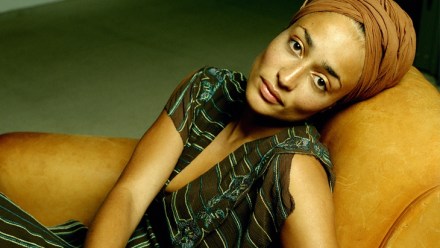
In parts of Africa and the West Indies women are so anxious to ‘whiten up’ that they use skin-lightening creams. The British writer and broadcaster Afua Hirsch sees this as a regrettable consequence of the aristocracy of skin colour as instituted by British merchant-capitalists during slavery. (Skin must first be bleached before it can be considered beautiful.) Of mixed Jewish-African parentage, the 36-year-old Hirsch is proud to call herself black. In this much-hyped book she sets out to question lingering obeisance to the idea of colonial Britain and to that ghost of the British Empire, the Commonwealth. Why does it persist so? Affection for Britain remains surprisingly strong in Commonwealth countries.

Wise old birds

From our UK edition

Owls, frontally eyed and nose beaked, look the most human of birds. Accordingly, they have for millennia been prominent in mythology and literature and their image continues to be commercialised beyond compare. They offer an author rich pickings, but in a competitive market a strong personal subtext is helpful. That improbable bestseller H is for Hawk told of a bird consoling and inspiring a daughter grieving for her father.Owl Sense has a mother finding a healing source in owls for herself and her worryingly ill son Benji. His Non-Epileptic Seizure Disorder (NEAD) took a disconcerting time to diagnose and is frighteningly unpredictable. Just how frightening is illustrated by his collapse on a bus as a 6ft, 16st student.

Women on the warpath

From our UK edition

When Westminster Council granted planning permission for a statue of Millicent Fawcett in Parliament Square to mark this year’s centenary of women getting the vote, many people were puzzled. Few had heard of this feminist campaigner, and even fewer knew about the suffragist movement which she led. The suffragette Emmeline Pankhurst seemed a far more appropriate candidate for a statue. Not only was she famous, but some feminist historians claimed that her role in gaining the vote was more important. These two books stand on different sides of the debate. Diane Atkinson has written a collective biography celebrating Mrs Pankhurst and the suffragettes, while Jane Robinson makes the case for Millicent Fawcett and the suffragists. The two leaders were very different.

Return of the infamous five

From our UK edition

It has become fashionable since the fall of the Soviet Union to diagnose communist fellow travelling as a form of Freudian neurosis. Where class resentment exists it is said to emanate less from angry young proletarians than from well-spoken youths intent on garrotting their dividend-drawing fathers. Most contemporary accounts of the Cambridge spy ring, which passed top secret information to the Soviet Union during the Cold War, draw heavily on this cliché. Kim Philby, Donald Maclean, Guy Burgess, Anthony Blunt and John Cairncross are typically portrayed not only as highly privileged men who rebelled against their upbringings, but as an upper-class clique who got away with what they did because they were sheltered under the protective wing of the establishment.

Short and bitter-sweet

From our UK edition

The death of Denis Johnson last May marked the loss of a great original who catalogued the lives of junkies, social misfits and minor criminals from an insider’s perspective — which is not surprising, considering his own history of drug and alcohol abuse. Certainly his most celebrated work, the hilarious yet profoundly moving story collection, Jesus’ Son, reinforced that image, offering us characters like the narrator of ‘Steady Hands at Seattle General’, who can, in all seriousness, ask a man with a recent gunshot wound: ‘When you were shot right through your face like that, did the bullet go on to do anything interesting?’ (The other replies, ‘How would I know? I didn’t take notes.

Blind into battle

Early every morning through the spring of 2002, US troops at Bagram airfield on the Shomali plains north of Kabul assembled on a makeshift parade ground. After the daily briefing, an officer announced the number of days since 9/11, read a short obituary of a victim of the attack and reminded the troops of their mission: to capture or kill those responsible for the worst terrorist strike ever in the US. Only a year previously, Bagram had been captured by the Taliban, who then exercised nominal control over 80 per cent of Afghanistan. Reduced to bombed-out buildings and a potholed, unusable airstrip, it was of limited strategic importance. Within weeks of the US-led invasion the runway was in constant use. Helicopters rotored throughout the night.

Reeling and spinning

From our UK edition

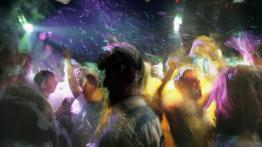
It was approximately 4.50 a.m. in Ibiza: peak time on the dance floor. I was on the decks in one of the many sumptuous rooms of the superclub Pacha, spinning breakbeat on vinyl (early Noughties) and warming up for a live broadcast back to the UK. Without warning, a Pacha henchman burst into the DJ booth, grabbed the record I was playing and pulled it off the deck. Then he yanked the headphones off my head. ‘Hey, what are you doing?’ was my astonished response. ‘We are going live on radio in ten minutes!’ This did not cut any ice. Pandemonium ensued. There was a fight on the dance floor between differing factions of the club’s management. I was bustled ‘for my own safety’, live mic in hand, to the basement kitchens for the rest of the night.

The way to dusty death | 1 February 2018

From our UK edition

In the words of Dad’s Army’s Private Frazer: ‘We’re all doomed.’ Life remains a dangerous business whose outcome is always fatal. Despite all kinds of medical progress, the death rate is stubbornly fixed at 100 per cent, while the ways in which we die remain unchanged. At the same time, in a magnificent demonstration of cognitive dissonance, abetted by medical science, the human animal continues to cherish the fantasies of immortality that enable us, in Churchill’s stoic formula, to ‘keep buggering on’. This thrilling tension between the forces of life and death has always inspired two basic attitudes to mortality. First, a realistic, even forensic, fascination with the sensations and protocols of that last exit.

No stone left unturned | 1 February 2018

From our UK edition

Alan Bennett once defined a classic as ‘a book everyone is assumed to have read and forgets if they have or not’. The Victorian nature writer Richard Jefferies 1848–1887 is in the peculiarly unfortunate position of having produced a whole library that falls pretty much into this category. His novels such as Bevis (1882) or the apocalyptic After London (1885) have cult status for some who, almost 70 years ago, had cohered into an active Richard Jefferies’ Society.

Crime and puzzlement

From our UK edition

Tony White’s latest novel begins for all the world like a police procedural, following the delightfully named sleuth Rex King as he investigates the grisly murder of man in a Covent Garden theatre. Rex, who has a penchant for fish and chips, laments the tedium of police bureaucracy and frets over a cover-up relating to a death in custody.There is collegial bonhomie, conspiratorial winking and sardonic banter aplenty. The novel then cuts away to an altogether different setting. In an obscure rural enclave in southern France in the mid-1980s, a young Englishman on his gap-year fraternises with a gang of charismatic dissidents in a bohemian commune.

Boxing not so clever

For Horace Hopper, the half-breed protagonist of Willy Vlautin’s bleak new novel, essential truths come slowly, and usually too late to do him any good. Abandoned by his Native American mother and Irish American father, he has exiled himself from the only people who love him, an elderly couple on a sheep ranch in deepest Nevada. His one idea for becoming ‘somebody’ is to transform himself into a world-champion lightweight boxer with a wholly fabricated Mexican identity. ‘Mexican boxers are the toughest... true warriors who never quit,’ he believes. Only well into the novel does it dawn on him that his self-inflicted loneliness is ‘a sort of disease’, not a manly test of character that will redeem his young life.

Has the bubble burst?

From our UK edition

I always suspected I disliked Jeff Koons, until I saw one of his monumental pieces at Frieze London a few years ago. Then it was confirmed. Cynicism seemed to ooze out of every millimetre of his vast, shiny sculpture. It was vividly apparent that this artwork wasn’t about beauty or transcendence or emotion. It was about money. Don Thompson’s The Orange Balloon Dog (the title is taken from the name of a Koons piece) is ostensibly about the contemporary art market. He details recent auctions, using the autumn 2014 sales — where buyers spent $1.7 billion in two days at Sotheby’s and Christie’s — as his starting point. But, as the subtitle would suggest, this is really a book about money: who has it, where they spend it, how they hide it.

Love becomes a duty

From our UK edition

The story, as it emerges, feels both familiar and inevitable. A bored 19-year-old student, on his university holidays in mid-century Metroland, joins the local tennis club, where he dismisses all the girls his age as wholesome ‘Carolines’ but falls for Mrs Susan Macleod, a spirited, sarcastic woman in her forties. Paul shocks the village by taking her for drives (both are soon barred from the tennis club) and then starts taking her to bed in her marital home. Here he manages to become a familiar presence. Though Susan’s husband mocks Paul as her ‘fancy boy’, he also teaches him to do the crossword and only occasionally lashes out at him with peculiarly sudden moments of physical violence.

The ‘Pope’ must answer to God

From our UK edition

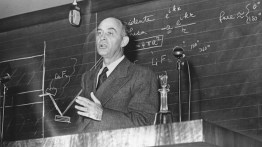
Enrico Fermi may not be a name as familiar as Einstein, Feynman or Hawking, but he was one of the greatest figures of 20th-century physics, with a reputation for infallibility. In Rome, pioneering atomic science under Mussolini, he was nicknamed ‘the Pope’. Escaping to America where he created the world’s first nuclear reactor, he was dubbed ‘the last man who knew everything’. Yet he was no Renaissance man: he knew everything about physics, and didn’t care much about anything else. It is testimony to David N. Schwartz’s excellence as a biographer that he can reveal the workaholic Fermi to have been such a fascinatingly complex figure. He was, we are told, a gifted teacher and natural leader.

Hopes and dreams

From our UK edition

Twenty-odd pages into Michelle de Kretser’s The Life to Come, I pounded the table and bellowed an Australian-accented ‘fuck yeah!’ This startled my wife, who startled the cat, which startled my gin and tonic into my lap. But it was worth it, and remains my unvarnished critical opinion. To varnish it a bit: The Life to Come is de Kretser’s sixth book, her first full-length novel since her 2013 Miles Franklin Award, and for my money one of the best to have been published in Australia in the past decade.

Running for her life

From our UK edition

Françoise Frenkel was a Polish Jew, who adored books and spent much of her early life studying and working in Paris. Her passion for French literature led her to open the first French bookshop in Berlin in 1921, a resounding success in spite of the predominantly Francophobe sentiment in Germany following the first world war. She happily reminisces over its ‘curiously mixed clientele’: ‘Famous artists, celebrities and well-heeled women pore over the fashion magazines, speaking in hushed tones so as not to disturb the philosopher buried in his Pascal.’ It soon became a place of readings, lectures, plays and parties and an essential stop for any French writer passing through Berlin.

Fairy tales for feisty girls

From our UK edition

This being the centenary of women’s suffrage, there’s an unmissable feminist aspect to children’s books right now. Stories about strong girls, fictional and historical, are everywhere. (The worst example of the genre, I may say, was Goodnight Stories for Rebel Girls.) Well, if it’s feisty girl stories you’re after, you could do much worse than Hilary McKay’s Fairy Tales, which are written with terrific brio and have umpteen resolute heroines. If you like your fairy stories as you remember them, this may not be for you, but these retellings of the classics are done in an affectionate spirit. ‘If I ever wrote a book with love, it’s this one,’ says the author.

Fear of little men

From our UK edition

When this survey of British fairydom arrived I turned to the chapter on Dorset to read about the little people of my county. After a survey of place names referring to the ‘puca’, which may or not connect with Shakespeare’s Puck, I received the disheartening news that Dorset wasn’t very good for fairies, and that there was even ‘something surprising about the absence of elves’. So I did what I was supposed to have done first, and read the introduction. Magical Folk is a collection of folklore essays, topographically arranged, and its editors welcome ‘the digitisation of millions of pages of British and Irish newspapers,’ which has allowed researchers to Google fairies from ‘200-year-old pages of ephemera’.