Book review

A long way home

From our UK edition

Until recently, it seemed we were living in an age of Iliads. Since 2007, the ancient Homeric epic has been translated into English at least seven times (including by Caroline Alexander, the first woman to do so). Yet the Iliad’s sequel, the Odyssey — about war’s aftermath, the home front and the difficult return to civilian life — is just as topical. And with its greater emphasis on female characters and different walks of life, it should appeal to a broader audience. Until now, it has not been translated into English by a woman. Does this make a difference? Emily Wilson, in the introduction to her sleek translation, argues that it does.

The Mutiny and the bounty

From our UK edition

Sullying the glorious sunshine, sand and sea, Miami in the 1940s, when I first ventured there, was already overcrowded, vulgar and exorbitant. It got a lot worse. By the early 1980s, the period to which this sensational criminal history is devoted, it had become the capital of Cubans in exile and America’s most prosperous cocaine entrepot, where the annual murder rate was more than 300. Attempts to impose law and order were handicapped by corrupt police, a corrupt judiciary and corrupt juries.

Figures in a landscape | 25 January 2018

From our UK edition

Martin Caiger-Smith’s huge monograph on Antony Gormley slides out of its slipcase appropriately enough like a block of cast iron. In its beautiful rust-coloured linen covers it looks a bit like a block of cast iron, too. Open it to the endpapers, ‘Bodies in Space’, and black splatters across a white ground. Turn a couple of thick, silky pages and a frail human figure, photographed from behind, is silhouetted on a rocky precipice facing an abyss of roiling water, cloud and spray. Keep turning and the developing story of Gormley’s life’s work reveals itself in image after remarkable image.

The house on the hill

From our UK edition

‘True crime’ is a genre that claims superiority over imagination, speculation and fantasy. It makes a virtue of boredom and detailed accounts of procedure and paperwork, and characteristically narrates two things: the process of investigation and discovery, and the events that set them off. But what happens if those procedures can’t be narrated? What becomes of the genre’s claims of full and complete truth? Owing to legal strictures, Thomas Harding has written a book which, I feel, falls frustratingly short of the book he wanted to write. The murder of an 87-year-old semi-derelict, Allan Chappelow, in Hampstead in 2006 was followed by the trial of a Chinese crook and liar named Wang Yam.

The maker and the monster

From our UK edition

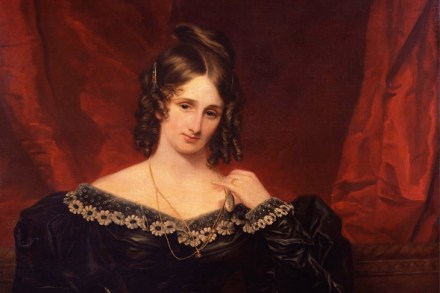
There are few more seductive figures for biographers than Mary Shelley. The daughter of the radical philosopher and novelist William Godwin and the great feminist thinker Mary Wollstonecraft (who died a few days after giving birth to her), she ran away with the poet Percy Bysshe Shelley at 16; wandered through Europe with him; bore their four children; married him; became the friend and companion of the other Young Romantics and their lovers; and at 18 wrote the classic Gothic novel Frankenstein, or The Modern Prometheus.

A friend in need

From our UK edition

The title of Jenny Erpenbeck’s Go Went Gone, and the autumnal tone of its beginning — a classics professor retires, leaving him at home raking leaves, mulling over memories of his wife and wondering about the body in a nearby lake — suggests that this will be a book of endings, something akin to Anita Brookner’s stories of self-absorbed people in the twilight of their lives. But Richard, now professor emeritus, proves to be a more unpredictable character. Unlike many of Brookner’s loners, there is the strong force of history in him. A precarious beginning under fascism and war, then a life shaped by the GDR and its abrupt cessation in 1989, has left him and his circle of friends adrift in the new Germany.

The call of the Wren

From our UK edition

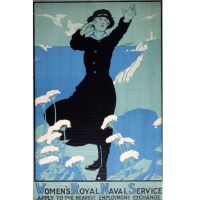
This book is a thoroughly researched account of the parts played by women in the service of the Royal Navy from the Middle Ages to the present. What it lacks in anecdotes and personal accounts it makes up for in its comprehensive documentation of official attitudes and measures. Women have served in — or, more accurately, with — the Royal Navy for longer than we might think. There are medieval references to women accompanying their husbands on voyages, including the Crusades, and to women serving as launderers, cooks, nurses and prostitutes (possibly all four). Ladies of the Cinque Ports — Hastings, Dover, Sandwich, Romney and Hythe — were the most likely to sail. One source claimed that older women ‘washed the clothes and heads [of the sailors]….

Massacre of the innocents

From our UK edition

I thought I knew the history of the years 1914 to 1945: the first world war and the terrible casualties in the trenches; the second world war and the German conquest of Europe; day and night bombing; Stalingrad and the Holocaust. But I’m embarrassed to say that I knew nothing about the tragedy in Galicia in Eastern Europe. Unlike the Nazi genocide, much of the killing took place between neighbour and neighbour: Jews, Poles and Ukrainians destroyed each other with increasing ferocity and brutality between 1914 and the 1940s. The beautiful city of Buczacz in Eastern Galicia, with its Roman Catholic, Greek Orthodox and Jewish shrines, ended as a gigantic ruin.

Poison in Paradise

From our UK edition

Eton turns out prime ministers of various stripes and patches, but it also forges fine explorers. It seems to prepare its alumni perfectly for flying snakes, scorpions so large you can put leads on them and leeches in waving battalions; titanic drinking and dancing ceremonies (our explorer, Robin Hanbury-Tenison, suffers repeated blistering on the dance floor); the friendship of head-hunters; and for the exacting business of leading world-protecting, people-nurturing expeditions into the planet’s wild and vulnerable regions. In the school’s natural history museum, pupils can now see a parang, presented to Hanbury-Tenison by his tribal friends, its handle shaped like a hornbill, its razor-sharp edge responsible for hacking off more than 100 heads.

Fast or feast

‘Tell me what you eat and I shall tell you what you are.’ The best known adage in food literature, penned by the French politician and gastronome Jean Anthelme Brillat-Savarin, divides all of us generally: the gourmands from the picky, the greedy from the careful, one nation from another, one culture from the next. Laura Shapiro’s book about six famous women and their ‘food stories’ made me want to re-read a few biographies for those food moments. Shapiro claims that food in life stories is undervalued as a subject, considering how much time people spend eating.

Satire and self-deprecation

From our UK edition

If you’re Jewish, or Jew-ish, or merely subscribe to the view that Jews should be trusted to recognise anti-Semitism rather than be accused of making false allegations to further their own malign agenda, the chances are you could do with a laugh right now. The resurgent far right’s threat feels frightening but expected, whether from torch-waving American mobs or European ethno-nationalists directing the restive masses’ anger towards the traditional target, presently embodied by George Soros.

Not for the fainthearted

From our UK edition

In 2014 Michael Alig, impresario, party promoter and drug provider, was released on parole after 17 years in prison for the manslaughter of Angel Melendez. Alig, leader of New York’s Club Kids during the 1980s and early 1990s, features as a minor character in Jarett Kobek’s breakneck, crazed ride through NYC’s nightlife from 1986 to 1996. Although the novel is set in the club and drug scene, filled with addicts, gays, trans, queens and freaked-out weirdos, its main themes are serious and compassionate. Repeated constantly is the mantra that history repeats itself; but most important is the theme of enduring friendship. Despite the decadence, Kobek is optimistic.

Riddles wrapped in a mystery

From our UK edition

His Bloody Project, Graeme Macrae Burnet’s previous novel, had the sort of success that most authors and creative writing students can only dream of. A psychological crime novel set in 19th-century Scotland, it became a surprise bestseller — and it was also shortlisted for last year’s Man Booker Prize. It is not an easy act to follow. Perhaps wisely, Burnet has chosen to make his next novel, his third, very different in both setting and tone. The A35 in question runs through north-eastern France between Strasbourg and Basel. One evening, at some point in the 1970s, a wealthy lawyer named Bertrand Barthelme is killed when his Mercedes goes off the road as he is driving home to the town of Saint-Louis. The death seems accidental.

Another Eden

From our UK edition

In December 1996 Martin Amis told listeners of the BBC’s Desert Island Discs what would relieve his solitude were he to end up cast away in paradise with one piece of music, a luxury and a book for company. He chose Coleman Hawkins’s version of the jazz standard ‘Yesterdays’ as his only record — seduction music, he suggested — and opted for the luxury of an unlimited Sky Sports subscription package. Amis’s preferred book, in this company, sounded similarly butch: John Milton’s Paradise Lost as edited by Alastair Fowler for the Longman Annotated English Poets series in 1968.

Sex and the city | 23 November 2017

From our UK edition

‘I should like,’ Edgar Degas once remarked, ‘to be famous and unknown.’ On the whole, he managed to achieve this. Degas is after all one of the greatest names in European art, but there is much about him that remains enigmatic. Some of his works seem secretive, even surreptitious — the extraordinary monotypes he made in Parisian brothels, for example, or the many wax sculptures he created but neither cast nor exhibited. These and many other aspects of this curiously sympathetic man are explored in Degas: A Passion for Perfection by Jane Munro (Fitzwilliam Museum, £40), a fine book accompanying the current exhibition at the Fitzwilliam Museum, Cambridge (until 14 January 2018) marking the centenary of his death.

Listen with Auntie

From our UK edition

The camouflage-painted, smoke-blackened entrance to London’s 1940s Broadcasting House, moated with sandbags and battered by bombs, provided its staff with a refuge from attack. Inside, a gender-segregating blanket divided the employees’ emergency dormitory in two. But such propriety masked the energy, idiosyncrasy and influence that ballooned within the Portland Place walls during the wartime years. From the morning of 3 September 1939, when Neville Chamberlain used the wireless to announce that Britain was at war with Germany, the same day that the Alexandra Palace indefinitely shut down all television broadcasting, radio became the nation’s indispensable source of up-to-the-minute information.

Mother of the nation

From our UK edition

It can sometimes seem — unfairly but irresistibly — as if the sole function of the myriad Lilliputian German statelets of the Holy Roman Empire was to provide the royal families of Europe with some of their most dismal consorts. In the century and a half after George I came to the throne in 1714 Britain imported more than its fair share, but if in Caroline of Brunswick we drew quite possibly the rummest of the whole lot, in another and largely forgotten Caroline, Wilhelmine Karoline of Ansbach, the wife of George II, 18th-century Britain and Matthew Dennison struck, if not quite gold, then at least a good solid lump of iron.

In cold blood

From our UK edition

If you search Google Images for Ted Lewis, the results show an American jazz-age band-leader in a battered top hat, or the determined features of the world champion boxer Ted ‘Kid’ Lewis, the ‘Aldgate Sphinx’. In between falls a picture of the crime writer Ted Lewis perched on a stool at a cable-strewn film location in 1970, portable typewriter on his knees, cigarette on his lip, and a sardonically knowing look which says that after years of struggle, overnight success has finally arrived. The film was Get Carter, anote-perfect transcription of Lewis’s hardboiled masterpiece Jack’s Return Home, published in February that year.