Book review

Suits you, sir

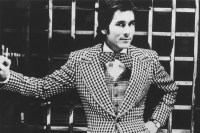
The tailor’s art is a triumph of mind over schmatte. Not just in the physical cutting and stitching, but in the faith that style makes content. This, not the question of which way you dress, is the secret compact between tailor and client. ‘Every faculty of his soul, spirit, purse and person is heroically consecrated to this one object, the wearing of clothes wisely and well, so that as others dress to live, he lives to dress,’ Carlyle wrote of the dandy in Sartor Resartus. Tommy Nutter was one of Tommy Carlyle’s dandies, a ‘clothes-wearing man’ and a ‘poet of the cloth’. From 1969 to 1976, Nutter bestrode the world of tailoring like a Narcissus. Though he could barely manage a backstitch, his designs rewrote the book on male style.

Rough justice

From our UK edition

Asked how he achieves the distinctive realism for which his novels and screenplays are famous, Richard Price, that sharp chronicler of the American underbelly, tends to cite Damon Runyon’s biographer Jimmy Breslin, who said that Runyon ‘did what all good journalists do — he hung out’. Set in the brutal confines of the Stanville Women’s Correctional Facility, and, through flashback, in the equally unforgiving milieu of San Francisco’s Tenderloin, Rachel Kushner’s third, extraordinarily accomplished novel, The Mars Room, glows with the kind of authentic hyper-detail only a good deal of hanging out can capture. Whether she’s describing the ‘clammy fingers of fog...

Been there, done that

Lucky bastard. Such are the words that come constantly to mind while you’re reading Clancy Sigal’s two volumes of posthumously published autobiography. Blacklisted as a (self-confessedly lousy) actor for refusing to name names in the McCarthy era, working as the agent for the likes of Peter Lorre, Rod Steiger and — sigh — Barbara Stanwyck in 1950s Hollywood and freelancing on Fleet Street in countercultural London (including reviewing films for The Spectator), Sigal was at the centre of every piece of action going. Should Black Sunset and The London Lover ever be gathered into a single volume (perhaps taking Sigal’s earlier memoir, Going Away, along for the ride), ‘Been there, done that’ would make a good catch-all title.

Lone and level sands

Here’s a treat for desert lovers. William Atkins, author of the widely admired book The Moor, has wisely exchanged the dank, wind-lashed chill of Britain’s moorland for eight of the world’s fieriest deserts, from the Empty Quarter of Oman and Egypt’s Eastern Desert to the Taklamakan in China and an unlikely stint at Burning Man in America’s Black Rock Desert. It’s not entirely clear what prompted these particular journeys or this specific quest. We learn in the second sentence that a long-standing girlfriend has gone to live and work abroad and Atkins is not going with her; so perhaps a retreat into the desert is the wholly appropriate response in a travel writer searching for new territory to furrow.

Romancing the stone wall

From our UK edition

We all tell stories about ourselves, every one of us. ‘I’m a useless cook.’ ‘Spiders don’t scare me.’ Not all these stories are true, but then self-perception has never held much truck with truth. Our stories are our own,to hold, repeat and believe in. But what if your story isn’t your own? What if you start out on life’s journey and discover that your story is, in fact, someone else’s? This deeply unsettling scenario provides the driving narrative to this confessional, heartfelt, if somewhat scatty memoir. Whitney Brown was, as we’re frequently reminded, an A-star student, a valedictorian. Growing up in small-town South Carolina, she was the kid deemed ‘most likely to succeed’. But at what? There’s the rub.

Wells of silence

From our UK edition

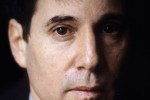
Someone has gone to a lot of trouble choosing the jacket cover of Robert Hilburn’s authorised biography of Paul Simon (reproduced right). It is both flattering and enigmatic, which is entirely appropriate, given its contents. Half of Simon’s features are lost in a shadow cast across his face — again, entirely appropriate, as Simon wrestled with Hilburn for more than two years, determined to ensure his true self remain partly or wholly in the shadows. One can’t help wondering why thesinger-songwriter even agreed to sit for what the jacket copy assures us was 100 hours of interviews; or, indeed, what happened to the other 99.

The stuff of life

From our UK edition

‘I didn’t realise we were carbon,’ said a friend to whom I mentioned this book. She was the first of several. It’s odd to think of clever and educated people not knowing that we are made of such stuff. But The Many Lives of Carbon is an odd book to come to grips with. Its title promises plain speaking about carbon, which the book then delivers. Nothing to lose sleep over. Yet one does. This is partly because it mines a rich seam. I fell asleep thinking about the carboniferous period, and dreamt I was one of the seven dwarfs, trapped underground with a pickaxe and a vile hod, and woke myself up with a sepulchral groan of horror, which woke the dog, and there was nothing for it but to go downstairs and put the kettle on.

All their wits about them

From our UK edition

From Aphra Behn to Virginia Woolf, women who make a living by their pens have frequently felt the need to announce their singularity; to be, as Mary Wollstonecraft announced, ‘the first of a new genus’. Each of the women in Michelle Dean’s survey of mostly American essayists, reviewers and novelists had to defend her right to debate, critique and observe. The lives of Sontag, Arendt, Parker, West, Didion, Ephron and others are woven into a thick braid running the length of the 20th century and into ours. It’s not quite a group biography, but more a study of how their lives and work dovetailed with each other and with the major political and cultural movements of the era.

The murderous past

From our UK edition

How can you defend a man you hate? John Fairfax, in his Blind Defence (Little Brown, £16.99), explores this dilemma. Diane Heybridge is found dead in her London flat. She was poor, working-class, without much of a future to look forward to. But did she take her own life, or was she murdered by her callous, jilted partner, Brent Stainsby? Into the fray steps William Benson, an ex-con, a murderer himself, now turned maverick barrister, a person the press and the public love to hate. With his legal partner Tess de Vere, he takes on Stainsby’s case and finds himself defending a man that nobody likes, and that Benson himself despises. As the true and hidden nature of the victim’s life is uncovered, the moral fog turns even murkier.

Our cloth-eared nation

From our UK edition

Jacob Rees-Mogg and Rab C. Nesbitt excepted, it has become quite difficult to infer much from people’s appearance. In these democratically dressed and coiffed times, we usually have to wait until people start to speak before we get a bead on them. Voice has become the best, and often only, signifier we can rely on. A flat vowel here, a glottal stop there, a hint of sibilance about an ‘s’ — ahah: northern, possibly Yorkshire, probably lower-middle-class-ish background and, going by the ‘s’, gay. We make such judgments with great confidence. And, it transpires, little justification — it’s the great insight of this study of human conversation that our voice-interpreting skills, on which we often set much store, are actually pretty poor.

The forerunner of Google

From our UK edition

On 9 May 1502, a young Spaniard joined the fleet setting sail for the newly discovered Americas. The boy, Hernando, was 13 and his father was Christopher Columbus, ‘Admiral of the Ocean Sea’. Although Columbus père had already crossed the Atlantic three times, this would nevertheless be a journey of almost unimaginable privation. Hernando would witness hurricanes, shark attacks and brutal battles, both with the tribes of the northern Panamanian coast and with mutineers from his own ship. He would suffer fevers, see his father denied entry into the port he had founded a decade earlier, and he would be shipwrecked, for more than a year, on the southern coast of Cuba.

Smart, sardonic, delightful

From our UK edition

Is there anything more depressing than the prospect of reading a writer’s collected essays, journalism and occasional pieces? Most of it is sheer dross, the work of the left hand, written under the cosh in double-quick time and for easy money. There are of course exceptions: Orwell, though even then you have to wade through a terrible lot of dreck; the late, great, much-missed Gilbert Adair; the New Yorker’s ever-so-sweet E.B. White; the definitive bouncing Czech Karel Capek (whose journalism was translated into English some years ago, published as Believe in People); and Marianne Moore, whose reviews are almost as astonishing as her poetry.

Ancient success story

From our UK edition

The age of dinosaurs is a perennial favourite on any time traveller’s wishlist. Even though we’re technically still in it — birds carry on the legacy of Velociraptor and company — there’s an irresistible urge to visit the time when towering, scaly, feathery, toothy saurians stomped around the planet. Since backwards time travel is impossible and DNA degrades too fast for us to have any hope of creating a real Jurassic Park, however, what we know of the ‘terrible lizards’ is written in bone and fossil footprints, and paleontologist Steve Brusatte’s The Rise and Fall of the Dinosaurs weaves together these prehistoric pieces into a vibrant view of how dinosaurs originated and what happened to our Mesozoic favourites.

Who needs Jordan Peterson when we have Ferdinand Mount?

You will by now doubtless be familiar with the University of Toronto academic Jordan Peterson. He’s the unlikely YouTube star and scourge of political correctness whose book 12 Rules for Life: An Antidote to Chaos has become a worldwide bestseller, beloved of serious young men seeking intellectual challenge and good old-fashioned fatherly advice. Summary: ‘Sort yourself out, bucko.’ We don’t really need the likes of Peterson here: we’ve got Ferdinand Mount. The book we should all be reading to sort ourselves out, buckos, is Prime Movers. Mount is, admittedly, an unlikely intellectual hero.

Knickerbocker glories

From our UK edition

One September day the 16-year-old Tessie Reynolds got on her bike. In a homemade suit, she pedalled from London to Brighton and back, in eight and a half hours. It was 1893. The intrepid velocipedienne made the 190km journey in record time in an age of masculine heroics. But it was not her derring-do that scandalised the press into conniptions but her clothes: she was in short trousers. This was an era when women were shunned for egregious displays of ankle, meaning that Tessie’s dress was both revolutionary and overtly political. Behind the public tutting, her ‘rationals’ ignited women’s imaginations, showing a new way of moving and being in the world. She was inundated with pattern requests. Cycling fever peaked in the 1890s.

School of Soho

From our UK edition

This is an important, authoritative work of art criticism that recognises schools of painters, yet displays the superior distinctions of individual geniuses. Martin Gayford, The Spectator’s art critic, concedes that the identification by R.B. Kitaj, an American painter, of a ‘substational School of London’ was ‘essentially correct’, though in London there was no ‘coherent movement or stylistic group’.The only characteristic shared by London painters has always been merely that they live in London. There have been some influential personal relationships, even cases of a sort of cosiness, especially in the French Pub, the Colony Room and other drinking venues in Soho and Fitzrovia.

Look back, face forward

You will by now doubtless be familiar with the University of Toronto academic Jordan Peterson. He’s the unlikely YouTube star and scourge of political correctness whose book 12 Rules for Life: An Antidote to Chaos has become a worldwide bestseller, beloved of serious young men seeking intellectual challenge and good old-fashioned fatherly advice. Summary: ‘Sort yourself out, bucko.’ We don’t really need the likes of Peterson here: we’ve got Ferdinand Mount. The book we should all be reading to sort ourselves out, buckos, is Prime Movers. Mount is, admittedly, an unlikely intellectual hero.

Make or break?

From our UK edition

My husband started reading Diana Evans’s third novel, Ordinary People, the day after I’d finished it. Three days later, I asked him how he was getting on. He said: ‘I’ve just got to the knifing.’ I said: ‘What knifing?’ I’d already forgotten about the knifing. A whole knifing in south London, complete with innocent dead boy and devastated mother. The incident’s strange forgettableness was a sign of the flaws of a novel so nearly very good, and admirable in many ways. It’s sprawling (like the suburbs of south London in which it’s set), and many of its extended scenes, though beautifully and richly imagined, lack the vital element of plot-forwarding relevance that would make them memorable.