Book review

Hollywood’s invisible man

From our UK edition

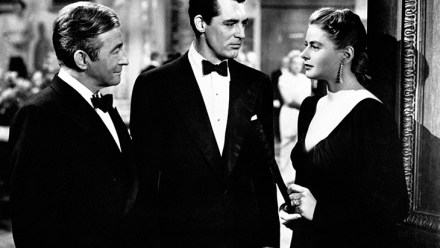
What do the following filmmakers have in common: Victor Fleming, John Ford, Henry Hathaway, Howard Hawks, Alfred Hitchcock, Ernst Lubitsch, Lewis Milestone, Otto Preminger, Josef von Sternberg, George Stevens, Charles Vidor, King Vidor, Orson Welles and William Wyler? I know, it’s a toughie — and it isn’t much less tough if you consult IMDb. But the answer is that all of them made pictures from scripts that had been worked on by the same man. His name was Ben Hecht and, even today, 125 years after his birth, he’s regarded as the greatest screenwriter the movies ever had.

Muzak, not Mozart

From our UK edition

What is creativity? Marcus du Sautoy, a mathematician and Oxford professor for the public understanding of science, offers this pert definition in his introduction: ‘Creativity is the drive to come up with something that is new and surprising and that has value.’ This, he argues, is possible in mathematics (he himself invented a new kind of symmetrical object) as well as the arts in general, or what he describes as ‘the outpourings of what I call the human code’. The question he sets himself in this book is: can Artificial Intelligence do as well, or even better?

Witness for the prosecution | 17 April 2019

From our UK edition

Vasily Grossman’s novel Life and Fate (completed in 1960) has been hailed as a 20th-century War and Peace. It has been translated into most European languages and also into Chinese, Japanese, Korean, Turkish and Vietnamese. There have been stage productions, TV series and an eight-hour BBC radio dramatisation. And Grossman himself — like Leo Tolstoy, Osip Mandelstam, Alexander Solzhenitsyn and several other Russian poets and novelists — is now venerated not only as a writer but also as a moral exemplar. His life story is indeed remarkable.

Stormy sees

From our UK edition

There are more than 100 cathedrals in England, Scotland and Wales of many different denominations (although I for one had been previously unaware of the Belarus Autocephalous Orthodox Church). But, wisely, Christopher Somerville focuses on those great galleons with which we are most familiar: the cathedrals that first rose up above the plains of England after 1066. The metaphor which Somerville uses, of these cathedrals as ‘ships of heaven’, runs before the wind throughout this book. If the early cathedrals were blunt old battleships, built as foursquare as castles to show that the conquering Normans were here to stay, later Gothic ones were as elegant as grand and beautiful yachts.

Swarms of pestilence

From our UK edition

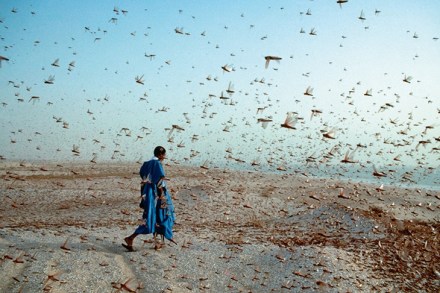
Carried on monsoon winds across the Red Sea, vast swarms of desert locusts have posed a deadly threat to the people of the Horn of Africa for millennia. One swarm can number billions of insects, cover a 1,000-square-mile area and consume 30–40,000 tonnes of food per day — all of which makes the desert locust well deserving of its collective noun ‘plague’. Much brain-power has been dedicated to the controlling of these insects, whose swarms can lead, and have led to, famines. Methods of control have included the digging of trenches to catch hoppers (juvenile locusts) and, later, the aerial spraying of chemical and fungal insecticides. In the early 1950s, however, laying poison-laced bran in the path of marching hoppers was the method most commonly used.

The message in the blossom

From our UK edition

Between 1639 and 1853, seeds and scions of flowering cherry trees travelled across Japan to Edo (present-day Tokyo). Each came from the most beautiful specimens of varieties of tree from the different principalities of Japan. From mountainous regions came the light pink yama-zakura; from the chilly climates of Hokkaido and northern Honshu came the crimson Ohyama-zakura; Mame-zakura, with their neat skirt-like white petals, came from Mount Fuji; and the rainy Izu islands produced Oshima cherries, with large, white flowers. This was an era of peace. For centuries before, the various families of Japan had fought for power. Now, they all answered to a single family, the Tokugawa family, in Edo, where each lord was required to have a residence.

Making Brexit thrilling

From our UK edition

The long gestation period of Brexit has allowed authors to plan and write and publish novels in time for the big day. Alan Judd’s Accidental Agent (Simon & Schuster, £12.99) is a spy thriller set during the EU negotiations. Charles Thoroughgood is the head of MI6. The secret service is forbidden from spying on the EU, but when an EU official volunteers information about the negotiations, it seems too good an opportunity to miss. The trouble is, the mole — known only by the code name Timber Wolf — might not actually be real. Thoroughgood investigates the veracity of the source, taking the place of Timber Wolf’s usual contact, and what he discovers unsettles and surprises him.

The voices of the victims

From our UK edition

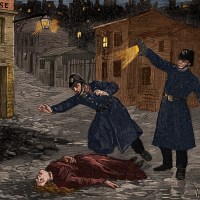
Before she was the subject of true-crime mythologising, Catherine Eddowes made her living from it, selling ballads based on real-life murders to avid Victorian audiences. The historian Hallie Rubenhold suggests that Eddowes may have written them too; unusually for a working-class woman, she was literate. Still, the possible example of her work that Rubenhold reproduces in The Five shows no sign that female authorship led to incipient feminist consciousness. Typically for the 19th century (and still often seen in reporting today), Verses on the Awful Execution of Charles Christopher Robinson, for the Murder of his Sweetheart, Harriet Segar focuses attention on the femicidal man, investing sympathy in him rather than the woman he killed.

Writing as exorcism

From our UK edition

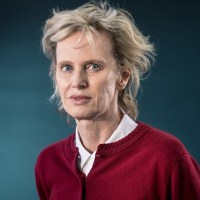
Why are people interested in their past? One possible reason is that you can interact with it, recruiting it as an agent of the present and the future. Siri Hustvedt’s novel, masked as a memoir, suggests you should rely not so much on your recollection of particular events as on your ability to interpret them, which can produce something truer than bare facts. ‘Yes, it is a memoir,’ the narrator says, ‘but memory is not fixed… memory and imagination are a single faculty.’  The outcome of Hustvedt’s attempts to commit the past to the page depends on memory acting as her editor. The book is centred on one year in the heroine’s life, beginning in 1978, when the 23-year-old S.H.

Conversations between truth and power

From our UK edition

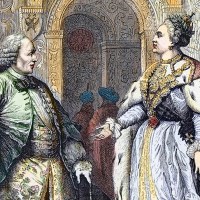
Denis Diderot (1713–84) is the least commemorated of the philosophes. Calls for his remains to be moved to the Panthéon on the tricentenary of his birth in 2013 were ignored. He has not taken his place alongside Rousseau and Voltaire in the Parisian vaults of fame, even though he was no less radical or progressive. Instead, his name has been given to a metro stop in the 12th arrondissement: Reuilly-Diderot. Even here, he comes second, tacked on by a hyphen, one of history’s and philosophy’s also-rans. The injustice done to Diderot can partly be explained by the fact that he was a collaborative writer and thinker.

The strange birth of liberal England

From our UK edition

If the road to hell is paved with good intentions, the one to heaven may be surfaced with bad ones. We like to imagine otherwise. We are rational, sensible, moral creatures. If we only think scientifically and apply ourselves, we can achieve anything. Hence the recent secular historiography of the Enlightenment and modern world, which, at least according to Steven Pinker’s latest offering, can be explained straightforwardly by the emergence of science, reason and humanism. Alas, history is not so neat, as real historians know. Good things often come from bad intentions.

Running on empty, and on and on

From our UK edition

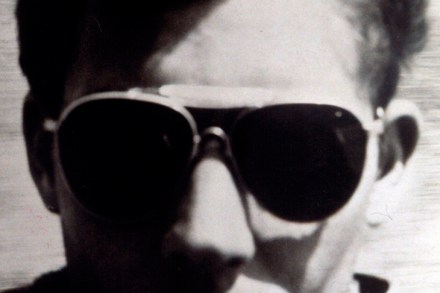
Hunter Stockton Thompson blazed across the republic of American arts and letters for too short a time. When in February 2005 Thompson, 67, killed himself with a .45 at home in Woody Creek, Colorado, freethinkers and lovers of his savage, beautiful words grieved the world over — and we still do. Thompson was a Southern boy from Louisville, Kentucky, whence comes F. Scott Fitzgerald’s Daisy Fay, later Buchanan. After a sally into higher education and military service, both marked by varying degrees of brilliance and insubordination, Thompson moved to New York City and worked as a reporter. His specialty was, initially, sport, and his forte was observation.

Mocking the mandarins

From our UK edition

Stendhal likened politics in literature to a pistol-shot in a concert: crude, but compelling. When that politics largely consists of machinations within the European Commission in Brussels, readers may fear that the writer who pulls the trigger wields no more than a pop-gun. Yet the Austrian author Robert Menasse has scoured these corridors of power — and powerlessness — to furnish a thoroughly entertaining fiction that serves both as a sort of campus satire and a novel of ideas. For sure, Menasse has an agenda. His nicest characters tend to believe in the ‘post-national democracy’ of EU integration. Still, their efforts to sell the Brussels system as ‘the moral of history’ pass through enough comically convoluted byways to give succour to sceptics too.

Dialogue with the dead

From our UK edition

When Yiyun Li first became a writer, she decided that she would leave behind her native language, Chinese, and never write or be published in it again. She has described this decision as being like a suicide. In languages, she suggests, we form our identities. Leaving one behind is a death of a version of our self; and starting afresh in a new language is a kind of rebirth. In Where Reasons End, the English language, in which Li has made her name as a Chinese-American author, has transformed into something the narrator can no longer depend upon.

A man of great magnetism

From our UK edition

Chances are, you are reading these words in some room or other. Build a wall down the middle of it, and in the middle of the wall, insert a tiny shutter. Conjure up a tiny critter who can open and shut this little door at will. When a hotter-than-average air molecule careers towards it, the creature opens the shutter and lets the molecule pass to the other side of the room. Colder-than-average molecules are allowed to pass in the other direction. Soon enough, one half of the room is sweltering, while the other half is distinctly nippy. Magic? Not yet. A fridge performs exactly this trick, pumping heat out of its interior through that dinky radiator at the back. The refrigerator only becomes magical if it carries on running after you unplug it. Fighting entropy is expensive.

Ninety degrees north

From our UK edition

Having spent too much of my life at both poles (writing, not sledge-pulling), I know the spells those places cast. Michael Bravo promises to reveal something of that enigma, claiming at the outset of his book: ‘I will treat the mysterious power and allure of the North Pole in a way you will not have seen before.’ The volume is one of an interesting series on the cultural history of natural phenomena, that includes a title on Fire, and another on Swamp. Bravo structures his book around the struggle of navigators and philosophers to make sense of the strange powers of the North Pole, beginning with the ancients of Greece, Egypt, India and Persia.

Moving images of Christianity

From our UK edition

The Italian film director Federico Fellini was not known for his piety (far from it), yet towards the end of his life in around 1990 he determined to film Dante’s Inferno for national television. The brimstone poem appealed to Fellini for its comico-grotesque scenes of mass writhing human nudity amid firecracker detonations. He was not the first filmmaker to take on the work of the medieval Florentine poet. In the early 1970s, Fellini’s compatriot Franco Zeffirelli persuaded Dustin Hoffman to star as Dante Alighieri in his own version of the Inferno. Hoffman, dressed in a medieval coif hat and Tootsie-red robe, was supposed to wander through a sulphurous underworld accompanied by the Latin poet Virgil. Nothing came of either Zeffirelli’s or Fellini’s Inferno.

Only connect | 14 February 2019

From our UK edition

At the time of his death in 1900, John Ruskin was, according to Andrew Hill, ‘perhaps the most famous living Victorian apart from Queen Victoria herself’. He was a landmark — more or less literally. You could visit Brantwood, where he had his Lake District home in later life, and buy postcards of him. There were ‘Ruskin ceramics, Ruskin linen and lace products and Ruskin fireplaces’ available. In New Jersey, undismayed by the great man’s loathing of tobacco, there was a company that sold ‘John Ruskin’ premium cigars. Postmortem you could get Ruskin souvenir brassware or toasting forks and a scale model of the Ruskin monument near Keswick. But that, Hill also says, was about the peak of his fame.