Book review

The kiss of death

From our UK edition

I once threw Tony Parker’s Lighthouse across the fo’c’sle of a ship at sea when I read that his characters were composites. Oral history should be historical, or it goes into the ocean. So it is a shame that I sometimes question Xinran’s authenticity in this account of the loves and lives of four generations of Chinese women. I question conversations recalled verbatim when they clearly weren’t recorded; and perfectly rendered speech when only notes were taken. Is this too severe? Then it is appropriate, because severity is something you must get used to, though this is a book about the Chinese concept of ‘talk love’, defined as ‘the process of cultivating love or interacting on the basis of love’, possibly leading to marriage.

A violent, surrealist world

From our UK edition

Kristen Roupenian’s debut collection, You Know You Want This (Cape, £12.99), comes hotly anticipated. Her short story, ‘Cat Person’, went viral when the New Yorker printed it in December 2017, becoming the second most read article published by the magazine that year. Told in an apparently simple, confessional voice, it recounts 20-year-old Margot’s courtship with 34-year-old Robert, beginning when she flirts while selling him sweets at an art-house cinema, building via text messages, culminating in a night of terrible (for Margot) sex from which she can’t quite be bothered to extricate herself, and continuing in the nasty afterlife of Robert’s increasingly aggressive texts. Everyone read it and everyone argued about it.

The land beneath the sea

From our UK edition

Somewhere deep in the water-thick layers of Time Song, Julia Blackburn says, funnily, that in Danish, ‘the word for book is bog’.And Time Song itself is a kind of beautiful bog, a memoir-cum-meditation focusing on the stretch of land that once connected Britain to the Continent but was drowned by the rising waters at the end of the Ice Age. It is a subject for now — where for God’s sake would Brexit be if Essex and Yorkshire were still parts of the lower Rhineland? — but Blackburn’s thoughts run deeper than that, to the long and subtle conversation between the present and past, to the preservations of time and its erosions.

Kazakhstan is about the size of Europe — but we know almost nothing about it

From our UK edition

Kazakhstan, say signs by the side of the road in this vast Central Asian country, is ‘a land of unity and accord’. Few outside pay a great deal of attention to a state that is almost as large as Europe, and home to eye-popping natural resources, chiefly — but not only — oil. One who does is Joanna Lillis, who used to work in Russia and then for the BBC Monitoring Service in neighbouring Uzbekistan, and knows the region as well as anyone. Her book, Dark Shadows, is astute, refreshing and revelatory; it is also surprisingly tender, showing not only her affection but her care in trying to make sense of a country that needs to be understood warts and all.

The healing art

From our UK edition

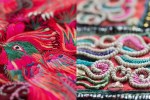
In this unusual book, part memoir, part history, Clare Hunter offers a personal meditation on the textile arts. Sewing and its associated skills have been coded as female, and the expertise required to master them has been trivialised. Hunter describes how when women demonstrate intricate embroidery or stitching, a man can be guaranteed to crack a joke about how his trousers need hemming or a button needs sewing on. But embroidery was not always so devalued. Royal families commissioned it for clothing and wall hangings to demonstrate their wealth and power. During the high point of medieval English embroidery (Opus Anglicanum), it was desired all over Europe. Gold thread created shimmering effects, and meant that each piece was worth a fortune.

Heavies in a new light

From our UK edition

Let’s hear it for the heavies, the unsung heroes of noir crime fiction on page and screen. The genre would collapse without them. Without the threatened or actual violence they so selflessly provide, the streets would not be mean and a private eye’s career would be only slightly less risky than an estate agent’s. Yet we rarely glimpse the private lives of these men (heavies are almost invariably male), or explore their hinterland of secret traumas and guilty pleasures. Alan Trotter, then, gets bonus points for originality, from his choice of title onwards: this novel is all about the muscle who supply the heavy weaponry of the criminal world.

Daydreams in the outback

From our UK edition

Gerald Murnane is the kind of writer literary critics adore. His novels have little in the way of plot or even character, and it is hard to tell the narrator from the writer, so that all his stories might be essays; his sentences are weirdly flat but interrupted occasionally by wild visions. Try this, for example: There in a room with enormous windows a man with a polka-dotted bow tie broadcasts radio programmes to listeners all over the plains of northern Victoria, telling them about America where people are still celebrating the end of the war. Where are we? Who can see the bow tie on the radio announcer, and did the war end recently or long ago? At the risk of a little racial profiling, this all sounds so odd that it has to be Australia, and Murnane himself is a perfect Australian type.

The biggest story on the planet

From our UK edition

One of my vanities is that all my novels are different. Yet one astute journalist identified a universal thread: ‘Too many people,’ she said. From among the many other piquant factoids in Paul Morland’s The Human Tide, I was unnerved to learn that ‘Hitler was obsessed with demography’ too. Whether you also suffer from this unhealthy preoccupation or are simply shopping for a new way of looking at the world, this is a readable, trenchant, up-to-date overview of the biggest story on the planet — one in which we’re all actors. The author has a moderate bent, and doesn’t claim that population — its surging, contraction and migration — explains all of human history. But it comes awfully close. After all, the long view is astonishing.

Singular narrative voices

From our UK edition

The large number of novels written in the first person would suggest it’s an easy voice to pull off: that the closeness of ‘I’ to ‘me’ means it can be accessed by the novelist without much difficulty. But in fact, the writer must come up with a legitimate reason for why a character is giving a first-hand account of their experience. For fiction to thoroughly convince the illusion needs to be seamless — and if for a second the reader is jolted out of the narrative by wondering why this person suddenly decided to tell me this story, then the author has failed. It is a voice that must justify its own existence. Why else are so many first-person narrators writers themselves?

The great Chinese power grab

From our UK edition

Five years ago President Xi Jinping gave a speech in Kazakhstan, launching the ‘Silk Road Economic Belt’, a wildly ambitious set of Chinese-backed infrastructure projects stretching through the steppes of central Asia to the Baltic Sea. Hundreds of billions of dollars later, this project more than any other has come to define China’s radical ambitions to upend a world order long dominated by Americans and Europeans. In 2015, Peter Frankopan, a dashing Oxford academic, wrote The Silk Roads, a weighty and widely acclaimed history of the ancient trading routes that once linked China to the world. It became a bestseller, partly because Frankopan, unusually for an academic, knows how to tell a yarn.

Courage and conviction

From our UK edition

When Britain finally lowered the flag in the Iraqi city of Basra in 2007, the army’s top brass valiantly claimed that they were leaving it to ‘self-rule’ rather than all-out anarchy. Despite the militiamen in the streets and the mortars in the skies, this was what success looked like in Iraq they told the invited press pack. Nobody really believed them, of course; but only Marie Colvin of the Sunday Times could actually prove them wrong. Ignoring the ceremony invites, she donned an abaya and went into Basra to report unembedded, the first western correspondent to dare to do so in nearly two years.

In a vale of tears

From our UK edition

Shakespeare’s Rape of Lucrece is a puzzling and often terrible poem. Lucrece, the devout wife of Collatine, is raped by Tarquin, the son of the king of Rome. Her suffering inspires a revolution led by Brutus, and this is the beginning of the first Roman republic. It’s a rich myth of sex and politics, and Lucrece’s (or Lucretia’s) story was told by Ovid and painted by Rembrandt. Shakespeare returns to the episode in several plays, notably Cymbeline. But in the poem, written in early 1594, he apparently struggles to find the emotion and drama. Perhaps he was simply young; this was early in his career, and he is still learning. Perhaps it was too pragmatic; the poem is an attempt to secure aristocratic patronage from the Earl of Southampton.

A chain, but no barrier

From our UK edition

On 26 August 1880 Henry Russell consummated his marriage in an unusual way. He was, to his own mind, married to the Vignemale, the highest French peak in the Pyrenees, and, wishing to spend the night with his beloved, he climbed to the 10,820ft summit and got his servants to dig a trench, bury him under earth and stones, wrapped in his sheepskin sleeping-bag, and leave him to the darkness. He survived and wrote of this night: ‘It seemed as though I had left the earth.’ Russell is one of the oddballs with whom Matthew Carr’s book teems. Another is Sabine Baring-Gould, the author of ‘Onward, Christian soldiers’, who in 1848 visited the Algerian emir Abd-el-Kader, imprisoned by the French in the château at Pau.

The threat of the Black Shorts

From our UK edition

In 2016, inspired by reports that Donald Trump’s butler had recommended the assassination of Barack Obama, Ben Schott wrote a scintillating squib, published in these pages, about Trump meeting Bertie Wooster. As he later noted in a diary column, it gave him the idea of writing a new Jeeves and Wooster novel. Predictably, reassuringly, soothingly, Jeeves and the King of Clubs returns us to such idyllic haunts as Bertie’s flat in Berkeley Mansions, the Drones Club and Brinkley Court, Aunt Dahlia’s pile in Worcestershire, and to the company of the furious Sir Watkyn Bassett and his whimsical daughter Madeline, who is yet again engaged to Roderick Spode, 7th Earl of Sidcup. It would appear to be the summer of 1939.

Pure and mostly simple

From our UK edition

A long and messy business is how the chef Rowley Leigh explains his preferred way of eating. Picking at a crab, for example, or eating raw young broad beans straight from the pod. He applies the same phrase to cooking. That too is messy, but not all the recipes in his new book take ages to make. Long, I thought as I gratefully lapped up Leigh’s wisdom, applies more to the time needed to become not just a fount of knowledge but also a man of very good tastes. You could include grumpy in the title of A Long and Messy Business (Unbound, £25); but I trust the advice and judgment of grumpy (not angry, mind) cooks. It is a great cookbook, as much for what irritates Rowley as what doesn’t.

All heart, trust and gut feeling

From our UK edition

‘To me, he was sort of like a unicorn,’ writes Mrs Obama, looking back on her courtship days with Barack. He was affectionate, loving, secure and brainy. Very brainy. ‘He consumed volumes of political philosophy as if it were beach reading.’ He was laid back but his sense of purpose was strong. ‘Barack was serious without being self-serious. He was breezy in his manner but powerful in his mind. It was a strange, stirring combination.’ In a languid late-night moment, she asks a penny for his thoughts. ‘Oh, I was just thinking about income inequality.’ This book takes you right back to those days when we all fell in love with Obama.

Tudor England’s other Bess

From our UK edition

Bess of Hardwick — who died Elizabeth Talbot, Countess of Shrewsbury — was a remarkable and fascinating woman. The wife of four men, builder of four houses, and by her death the second richest woman in the country, the exceptional Bess has attracted many biographers. Kate Hubbard’s new book differs from these by examining Bess’s life as a ‘builder within the context of the Elizabethan building world’. It is, consequently, part biography and part building history, considering along the way the erection of Elizabethan prodigy houses, such as Longleat, Theobalds, Wollaton (‘a monstrous building, heavy and hectic, overcrowded with ornament, overwhelmed with glass’), and, above all, Bess’s Hardwick New Hall.

Lost cities in the sands

From our UK edition

The main attraction in the Kenyan port of Mombasa is Fort Jesus, a vast, ochre-coloured bastion overlooking the Indian Ocean. Dominating a dusty skyline of palm trees, minarets and tower blocks, it was erected during the opening cannonade of European empire. In 1505 a Portuguese armada sacked and torched Mombasa, shortly after its ‘discovery’ by Vasco da Gama. The fort stamped the city as theirs. The coming of the Portuguese is sometimes considered the beginning of African history — a story not about Africa itself, but about bemused Europeans exploring and taming a ‘dark’ continent. And if we look at Africa before 1505, we find a world as blank as one of da Gama’s maps. This has led many to believe, as G.W.F.