Book review

If only Georges Simenon had been a bit more like Maigret

From our UK edition

Georges Simenon, creator of the sombre, pipe-smoking Paris detective Jules Maigret, pursued sex, fame and money relentlessly. By the time he died in 1989, he had written nearly 200 novels, more than 150 novellas, several memoirs and countless short stories. His demonic productivity and the vast sales and fortune it brought him were matched by a vaunted sexual athleticism. Simenon claimed to have slept with 10,000 women. (‘The goal of my endless quest,’ he explained, ‘was not a woman, but the woman’ — which is French for wanting lots of it, very often.) It was not love-making, but a desire for brute copulation that drove Simenon to demand sex at least once daily of his wives, secretary and housemaid-mistresses.

Taking pride in household chores really can ease depression

From our UK edition

There are many books about what it’s like to live with mental illness and the aftermath of child sexual abuse. Most of them, though, fall into that deeply off-putting category of ‘misery memoir’: greyscale covers and cloying titles such as ‘The Child Who Everyone Hurt’ and ‘When the Darkness Never Lifts’. You’re unlikely to want to read 300-odd pages of pain porn when healthy, let alone find yourself looking forward to the next page if, like me, you end up reading the book when you’re depressed too. I Never Said I Loved You isn’t like that. It’s funny.

Did Christianity make the western mind — or was it the other way round?

From our UK edition

Nobody can accuse Tom Holland of shying away from big subjects. Dominion is nothing less than a history of Christianity with an underlying theme. The subtitle says it all. It is dedicated to the idea that Christianity has formed the western mind, not just in its moral and intellectual conventions but in their opposites, such as atheism or the natural sciences. An argument so paradoxical provokes thought, whether one agrees with it or not. This one is sustained with all the breadth, originality and erudition that we have come to associate with Holland’s writing. The technique is a sort of literary pointillism. An incident, an image, an individual, a place are presented as capturing the spirit of an epoch.

A hazardous crossing: The Man Who Saw Everything, by Deborah Levy, reviewed

From our UK edition

Serious readers and serious writers have a contract with each other,’ Deborah Levy once wrote. ‘We live through the same historical events, and the same Pepsi ads. Writers and readers, nervously sharing this all too fluid world, circle each other to find out what the hell is going on.’ Figuring out what the hell is going on within the fluid worlds of Levy’s fiction is not always straightforward. While other authors are increasingly drawn to autofiction, for Levy, uncertain times, it seems, call for uncertain realities. The characters in The Man Who Saw Everything shape-shift, and time bends back and then twists upon itself again.

We should all share the blame for the Rohingya tragedy

From our UK edition

My local shop in Yangon was owned by a retired army officer and his wife and guarded by their handsome coal-black dog. When I asked the name of the hound the man smiled and said ‘Kalar’, before enquiring if I knew the meaning of the word. I did. Kalar is a racial slur, employed originally by the Burmese to describe the darker-skinned immigrants from India brought to Burma by the British as cheap labour in the colonial era. More recently, the word has come to be used as a derogatory reference to Burma’s Muslims, and especially the reviled Rohingya minority in the far western state of Rakhine.

Novel explosives of the Cold War

From our UK edition

One autumn night in 1991, I stood on the rooftop terrace of a tacky villa in Saranda once owned by Albania’s Stalinist dictator Enver Hoxha, beside three elderly former SOE officers who were returning to Albania for the first time since 1945. In an image that summed up the waste and the horror of the Cold War, David Smiley stared out over the dark water at the lights of Corfu, from where, on a similar night in October 1949, he had sent a group of dissidents, code-named the ‘Pixies’, to launch an insurgency — and wiped his eye in silence. Smiley’s men had been ambushed as they landed, and then killed, on the tip-off from Kim Philby, the highest Russian agent to infiltrate British Intelligence, and in charge of anti-communist espionage.

Can’t anyone travel for fun any more?

From our UK edition

There was a time when travel writers would set off with a spring in their step: Coleridge knocking the bristles from a broom in his impatience to make it into a stick; Laurie Lee walking out one midsummer morning; Patrick Leigh Fermor singing as he headed down the lane. To travel was an expression of freedom and exploration; to step out of the front door the beginning of a grand  adventure. Not any more. Travel writers now come troubled and weary before they’ve even begun. A journey can no longer be a jeu d’esprit. It has to be undertaken to expiate some trauma. It is almost as if, in today’s new puritanism, it has to be painful. One thinks of the old nursery rhyme: ‘Wednesday’s child is full of woe, Thursday’s child has far to go.

A single man of no fortune must be in want of a job: younger sons in Jane Austen’s England

From our UK edition

Readers of Jane Austen gain a clear idea of the task facing the daughters of gentlemen. They need to secure a husband who can enable them to keep or even improve their social and economic status. But what about their opposite numbers? How did the younger sons of gentlemen face up to the challenges and responsibilities of adulthood? Primogeniture meant that even those from a wealthy background often had to earn their living. While for girls marriage and career tended to be synonymous, for many of their brothers a profession came first, and then with luck a marriage would follow, since ‘a single man in possession of a good fortune must be in want of a wife’. How young single men went about achieving such good fortune is the question that Rory Muir sets out to answer.

From bitter loss to sweet relief: baking as therapy

From our UK edition

This is a gentle, lovely book. It will, I’m sure, appeal to many an aspiring cook and baker, and should be read by anyone grieving for the loss of someone they loved. It is a memoir — each chapter ending with a recipe — covering a few years, from the sudden death of a beloved mother, through the author’s bleak, enveloping sorrow to a change of career, retraining as a pastry chef, and a love affair. At first, I found it unengaging. The stages of grief — denial, anger, resentment of other people’s happiness, manic displacement activity, exhaustion, sudden outbursts of either wracking sobs or unsuitable laughter — are well-written and honest, but too familiar, too predictable. (Though what did I want? Originality in grief?

Back to basics | 1 August 2019

From our UK edition

Anyone picking up a book by Wendell Berry, whether it be fiction, essays or a collection of his lucid and engaged poetry, will quickly find themselves in the company of one who is unafraid to tackle the larger subjects (time, place, environment, community) in terms familiar to Virginia Woolf’s ‘common reader’, a creature who seems scarcer by the year, but is not yet wholly extinct. Stand by Me is no exception and, by the time we reach the second of these 18 linked stories, we know just where we are, if not where we are going, as Berry sets out a history of everyday life in a small Kentucky town over 100 years of growth, loss and relentless change.

Closure at last | 1 August 2019

From our UK edition

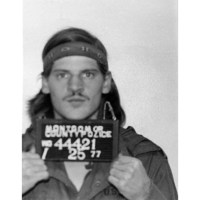
This is horrible. But it’s a book by Mark Bowden, who wrote Black Hawk Down and Killing Pablo, so it’s compelling: an almost perfect true crime story. Two sisters, aged ten and 12, disappeared from a shopping mall in 1975 and were never seen again. What happened to them was a mystery for 40 years. In The Last Stone, Bowden tells you about two things. He tells you how the mystery was solved, and he tells you what happened to the girls. The first thing is compelling. The second will make you sick. The girls, Kate and Sheila Lyon, went to the Wheaton Plaza shopping mall in Montgomery County, Maryland on 29 March. They were supposed to be home by 4 p.m. They weren’t. They vanished. The police interviewed lots of people. They searched the surrounding area.

Gluttons for punishment

From our UK edition

Do you regard fat as a noun, a food substance all humans eat and need? Or as an adjective, denoting something you want to avoid being? Though the subtitle seems to indicate that this disturbing, closely argued book has the olive oil vs lard culinary axis as its subject, Christopher Forth dispenses with the food attributes of fat in his first few chapters. For the ancient Hebrews, fat was usually olive oil. But for ritual sacrifices, Yahweh seemed to prefer animal fat, as do the Ashkenazi remnant of His chosen people, with their relish of salt beef and schmaltz. Much the same was true of the Greek and Roman religious rites, whose gods were offered not much more than the mouth-watering aroma of roasting meat.

Light and dark | 1 August 2019

From our UK edition

Few biographies are quite as impressive as Yukio Mishima’s. One of Japan’s most famous authors, he wrote 80 plays and 25 novels, starred in movies, directed theatre and produced his own film. He was nominated three times for the Nobel Prize in Literature. He founded a right-wing militia to defend the emperor from Marxists and, in 1970, committed ritual suicide, aged 45, after the failure of his coup to overturn the constitution. Life for Sale is one of his lesser-known achievements. Though it’s littered with corpses, it seems almost humdrum when compared with its creator’s CV. Originally written for Japanese Playboy and published in 1968, this is, I think, the first time it has appeared in English. Hanio is young, solvent and single.

Cautionary tales

From our UK edition

It is bad enough when we learn that Santa Claus doesn’t exist. But later in life there comes another trauma, deeper still: when we discover that the beloved books of our childhood were in fact thinly veiled political theses, laden with economic metaphors and turgid intellectual ideas. My youngest child is not yet two. How long will it be until some clever clogs blunders into the nursery and tells her that The Wonderful Wizard of Oz must be read as an allegorical representation of the debate surrounding late 19th-century US monetary policy — or that The Very Hungry Caterpillar is an ode to Karl Marx? Fierce Bad Rabbits sells itself as ‘an eye-opening journey through our best-loved picture books’ — a prospect some readers might, like me, resist.

Thrills and trills

From our UK edition

In a sense, the song of the bird in the title of this short, hugely thoughtful and fascinating book is a measure of the gap between nature and human culture. On the one hand stands the most mythologised, celebrated and interrogated maker of natural sound on earth: the nightingale. On the other, the most densely populated metropolitan area in western Europe: Berlin. One might expect our light-winged dryad, in honour of its place in poetry, art, folktale and fiction, to sing in a sylvan glade by a brook full of beaded bubbles. Not a bit of it. It’s by traffic lights in a Berlin park. The bird itself is quite indifferent to the three millennia of cultural churn it has inspired. It is drawn to the German capital by insect biomass and the right vegetation density.

The great betrayer

From our UK edition

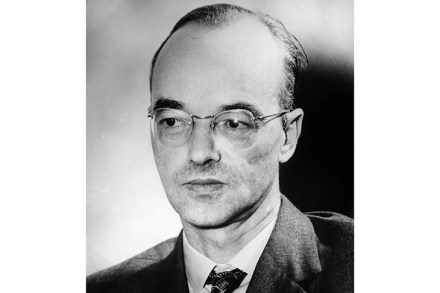
When Klaus Fuchs started passing atomic secrets to the KGB, he changed the course of world events. Forget about Philby and the Cambridge Five, that preening group of loudmouths that still dominate our national history of Soviet treachery. In his own quiet, devastating way, Fuchs proved more significant than all of them put together. A brilliant but unassuming German refugee who found sanctuary in Britain, Fuchs rose to become one of the leading theoretical physicists of the Allied nuclear bomb project. As Frank Close, himself an Oxford nuclear physicist, writes: ‘By 1946, Fuchs knew more about the construction of the atomic bomb and the conception of the hydrogen bomb than anyone in the UK and all but a handful in the world.

Guns and poppies

From our UK edition

My uncle Edward did not like talking about his service in Burma during the second world war. When I asked him what fighting in the jungle was like, his response was brief. ‘Grown men were crying for their mothers,’ he said, and would say no more: the worst combat theatre of that war was not a subject for children. Meanwhile, in India, my grandparents were taking in British refugees from Burma who had little to say either, being sick and traumatised after fleeing the Japanese over high mountain passes during the monsoon. Before 1939, Burma was one of Asia’s most prosperous countries. Yangon was the second busiest port in the world (after London) and the country the largest rice exporter. But after the war, its cities were mostly destroyed and its economy ruined.

They just keep rolling along

From our UK edition

At the end of 1969, teenage Rolling Stones fans reading the new Fab 208 annual could be forgiven for thinking that time wasn’t on their side: After five years as Britain’s most controversial group, how much more moss can they gather before they call it a day? Will we ever see the world’s most exciting group ‘live’ again, and where do wicked Mick and Co. go from here on? Mick Jagger himself spoke of the dietary measures he had adopted to fortify his supposedly ancient 26-year-old body: ‘If you eat any old rubbish like lots of potatoes and take no exercise, then you end up looking like a potato — all knobbly knees and bloated.