Margaret Drabble

Marriage Material, by Sathnam Sanghera – review

From our UK edition

Sathnam Sanghera, in his family memoir The Boy with the Topknot, heaped much largely affectionate contempt and ridicule on his home town (now a city) Wolverhampton, with its shabby factories and shimmering new gurdwaras — ‘Wolverhampton, the arse of the Black Country, in itself the bumcrack of the West Midlands, in itself the backside of Britain’. In Marriage Material he returns to the same rich and little explored multicultural terrain, in a novel that ingeniously ‘shoplifts’ (his word) characters and elements of plot from Arnold Bennett’s The Old Wives’ Tale.
Her fighting soul

From our UK edition

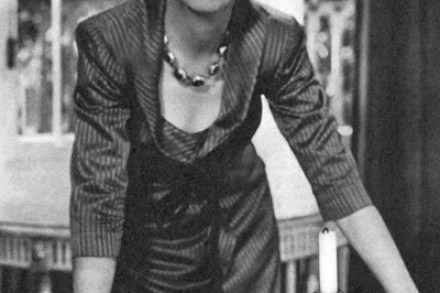
The subtitle of Deirdre David’s life of Olivia Manning, ‘A Woman at War’, has a resonant double meaning. She was, as we are repeatedly informed, a unique example of a woman novelist who wrote as well about war and battles as a man. But she was also at war with herself, with her colleagues, and, most enduringly and curiously, with her husband, the legendary R. D. Smith, known to all as ‘Reggie’. Manning is rightly best remembered for her largely autobiographical novels describing the second world war, The Balkan Trilogy and The Levant Trilogy, which gained an afterlife in a memorable 1987 BBC television series.

The usual suspects | 3 May 2012

From our UK edition

It is disconcerting to discover that a novelist a generation older than oneself has been trying to write ‘a sort of Margaret Drabble effort’, even if the book ‘hadn’t turned out like that at all’. This is how Barbara Pym described her then unpublished campus novel An Academic Question in 1971 to her friend and admirer Philip Larkin. Naturally I was intrigued to know what she meant. Pym’s publishing history is well known: between 1950 and 1961 she published six  highly praised novels, and then ran up against a solid rock of refusals. Jonathan Cape dropped her, and she was told her work was out of fashion. Puzzled and down-hearted, she went on writing, somewhat hopelessly, because she couldn’t help it.

Mysteries and hauntings

From our UK edition

Javier Marias’s elegant new volume is a collection of ghost stories, but its alluring dust jacket, illustrating the first tale, shows us a sunny midsummer image of a woman in a bikini admiring herself on a beach. Javier Marias’s elegant new volume is a collection of ghost stories, but its alluring dust jacket, illustrating the first tale, shows us a sunny midsummer image of a woman in a bikini admiring herself on a beach. All is not as pleasant as at first it seems, of course, and we soon enter his characteristically darker world of voyeurism, jealousy, revenge, doppelgängers and crime passionel.

Absurdly grandiose – and splendid

From our UK edition

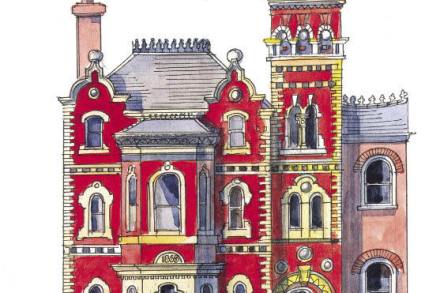
The Potteries are one of the strangest regions in the British Isles, and Matthew Rice’s The Lost City of Stoke-on-Trent celebrates their extraordinary oddity. The Potteries are one of the strangest regions in the British Isles, and Matthew Rice’s The Lost City of Stoke-on-Trent celebrates their extraordinary oddity. Much of his text reads more like a diatribe than a celebration, for words like tawdry, grimy, unlovely, brutish and lumpen scatter his pages, and he sometimes soars to the height of invoking the term ‘tragic’. Yet for all that, this generously illustrated book makes you long to revisit this bizarre wonderland of post-industrial dereliction.