Book review

Who needs money?

From our UK edition

I was racking my brains, trying to understand money, trying to grasp exactly what it is, when I came across these two books. One is written by Aaron Brown, who is the risk manager of a large Wall Street hedgefund. The other is by David Graeber, the anarchist who has been called the leader — and, sometimes, the anti-leader — of the Occupy Wall Street movement. Both have written brilliant books about the history of money. As you’d expect, Brown thinks that money, in its various forms, has made the world a prosperous and interesting place, and Graeber thinks that money has divided the world into two tribes — a tiny, and shrinking, number of very rich people (like Brown), and a vast, and growing, army of debtors. In a way, they’re both right. So what is money?
Bookends: Prep-school passions

From our UK edition

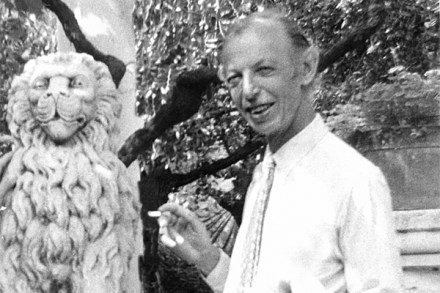
In his introductory eulogy, Peter Parker calls In the Making: The Story of a Childhood  (Penguin, £8.99) G. F. Green’s masterpiece, which, though not popular, attracted the admiration of E.M. Forster, Christopher Isherwood, Stephen Spender, J.R. Ackerley, John Betjeman, Philip Toynbee, C.P. Snow, Pamela Hansford Johnson, Frank Tuohy and Alan Sillitoe. According to Elizabeth Bowen, he was ‘the most neglected writer of his generation’. Explaining the title to his friend Michael Redgrave, Green (pictured above) said: ‘The theme is unequivocally that of the conditioning of a homosexual and the foreshadowing of his future love pattern.

Method in her magic

From our UK edition

Bring Up the Bodies, as everybody knows, is the sequel to Wolf Hall, Hilary Mantel’s fictional re-imagining of the life and times of Henry VIII’s most effective servant, Thomas Cromwell. We have long been banging our spoons and forks for it. Speaking for myself, I finished the first with an almost unbearable curiosity to find out what was going to happen next — a strange result, when you think of it, because we all know perfectly well what is going to happen. Mantel is comprehensive with her sources. Every scene is secured, like a piano key to its hammer, to the corresponding page of the great 21-volume Calendar of State Papers of Henry’s reign.

Fatal entrapment

From our UK edition

I am no great fan of spy thrillers and positively allergic to conspiracy theories, but I found this book difficult to put down. In an earlier study, Edward Lucas examined Russia’s use of energy as a weapon against the EU and the Atlantic alliance. In this one, he dives below the surface into the murky waters of the country’s security apparatus and demonstrates that, while it has shed the old KGB image, it remains as pervasive and just as menacing. Before the fall of the Berlin Wall, the battlelines were clear cut and so was the role of the Soviet Union’s defenders. At home, they silenced any criticism of the system. Abroad, they carried on an ideological struggle for dominance with the United States and its allies.

The courage of their convictions

From our UK edition

HHhH is a prize-winning French novel about a writer writing a novel about the plot to kill the Gestapo boss Reinhard Heydrich. A lot of people reckon it’s a big deal — Martin Amis, Mario Vargas Llosa, me — so naturally there’s a backlash afoot. In a fit of territorial pissing disguised as an interview, Michael Burleigh revealed that Laurent Binet ‘does not even read German’ (which HHhH admits on page 28) and professed surprise that his research failed to take in a Heydrich biography published (as Burleigh didn’t say) almost two years after HHhH first came out. I suppose part of the problem is that Binet asks for trouble with clever-dick lines like this one: ‘This scene is not really useful, and on top of that I practically made it up.

Trouble at mill

From our UK edition

I have some sympathy with the pioneering incomers who moved to the Yorkshire mill town of Hebden Bridge in the 1970s. At the time Hebden was in a near terminal decline, its factories closing in rapid succession. As a result, the town suffered one of the fastest depopulations ever seen in Britain, as the more animated locals left to find work elsewhere. The incomers, called ‘offcomers’ locally, sought to reverse this with a strong dose of middle-class culture, although being for the most part liberal Guardian readers they would probably baulk at the idea they ever sought to engineer working-class Hebden into something more bourgeois. Nonetheless, that is what they did, and it worked.

Mission accomplished

From our UK edition

Two shots killed Osama bin Laden, one in his chest and one in his left eye. ‘Two taps’ is standard practice for close-quarter shootings — firing twice takes virtually no longer than firing once and you increase (without quite doubling) your chance of an instant kill. He was in his top-floor bedroom, in the dark, and his killers wore night-vision goggles. He died 15 minutes after the first sounds of attack — the roaring of helicopters, the crash-landing of one outside the compound, the blowing of a steel door in the wall. During those fateful 15 minutes he waited with one of his wives in the pitch black of that small room, paralysed perhaps by fear or indecision and hampered by the design of his house.

They’re all in it together

From our UK edition

However often rehearsed, the facts remain eye-popping. Inequality has bolted out of control over the last three decades. Democracy has proved increasingly powerless to check the unaccountable runaway oligarchy that fails even to pay its taxes. Ferdinand Mount gives a lucid account of political decay alongside all this looting, a disengaged electorate and a cult of leadership in hock to overmighty media oligarchs, all ominously suggestive of the decline and fall of the Roman empire. When a Tory tells the story, it’s far more compelling than any left-winger. Mount was head of Margaret Thatcher’s Policy Unit from 1982 to 1984 and a director of the then most influential Tory think-tank, the Centre for Policy Studies.

Putting the fun in fundamentalism

From our UK edition

Turnaround Books, the publishers of Timothy Mo’s remarkable Pure, are revealed to operate from Unit 3, Olympia Trading Estate, Coburg Road, London N22. From this we may deduce that the publishing history of the three times Booker-shortlisted Anglo-Chinese novelist continues on its maverick way. Imagine if Mo had approached a conventional publisher with a proposition: this is a novel about jihad in south-east Asia, as seen through the eyes of a Muslim ladyboy. Mo’s perversity and boldness apply in equal measure to his hero/heroine.

Femmes du monde

From our UK edition

At the end of Dreaming in French, in ‘A Note on Sources’, Alice Kaplan terms her narrative ‘this pièce montée’, which is the only time she neglects to supply an English translation. From a scholar of her eminence — she is a historian and critic of French modernity, a professor at Yale, and the acclaimed author of The Collaborator, The Interpreter and French Lessons — such neglect must surely be deliberate. The term was new to me, and the best I could manage was ‘assembled piece’, which in the context seems to be just a pretentious way of saying ‘book’. So I looked it up, as Kaplan probably hoped her more ignorant readers might, and I am glad I did.

Bookends: Pure gold

From our UK edition

Even nowadays, a 50-year career in pop music is a rare and wondrous thing, and for a woman triply so. And yet Carole King’s golden jubilee passed a couple of years ago without a murmur, let alone a box set. You get the impression from A Natural Woman (Virago, £20) that that’s the way she likes it. After writing hit after hit with her first husband Gerry Goffin in the early 1960s, and selling 25 million copies of her second solo album, Tapestry, in the early 1970s, she has enjoyed a steady rather than stellar career, which has given her time to bring up four children and go back to the land and milk goats in Idaho for a few years, because that’s what she wanted to do. Her memoir, unghosted, is as female as Keith Richards’s was unequivocally male.

Family get together 

From our UK edition

Mark Haddon is in what must sometimes seem like the unenviable position of having written a first (adult) novel which was, and continues to be, a smash hit. Drawing in part on his own experiences of working with the autistic, The Curious Incident of the Dog in the Night Time has become one of those books that anyone who claims to be a reader must know. His second novel, A Spot of Bother, did not receive the same acclaim, perhaps partly because the subject was a man in mid-life crisis who convinces himself he is dying. It too was wonderful, though — funny, perceptive and moving. His latest book, The Red House, is in the same mode as the second.

Reading the runes

From our UK edition

Martin Palmer is without doubt one of our leading authorities on the subject of Nature and sacred writing today — among his previous publications being Sacred Gardens and The Sacred History of Britain. One of the primary aims of his latest book is to teach us how to ‘read’ our surroundings; for, he believes, like all sacred art, Nature can be read as a book, if only one understands the language. Thus, through ‘decoding’ the towns, villages and countryside of Britain, we may come to see that ‘we are caught up in a part of something much greater and grander than ourselves’.

A moth to the flame

From our UK edition

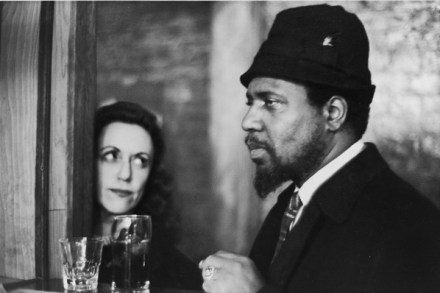
When Hannah Rothschild first met her great-aunt Nica it was 1984. Hannah was 22, and Nica, then 70, had asked her to come sometime after midnight to a basement jazz club in an area of pre-Giuliani downtown Manhattan ‘known for its crack dens and muggings’. She was able to find the venue, as promised, by the pale blue Bentley parked erratically outside and inhabited by a couple of drunks. Inside, her aunt, ‘the Baroness’, was easily identifiable as the only white person: a wizened old doll in a fur coat with a a long black-filter cigarette, drinking whisky out of a teapot.

Out of sight, out of mind

From our UK edition

Arthur Newton and Peter Gavuzzi, long-distance interwar runners, are two of the most extraordinary British athletes. They are also the most forgotten. This is because the distances they favoured were too long to be accommodated by any athletics event: to them a marathon would have been a mere warm-up jog, their distances were 100 miles, and, in one case, a run across the whole of the United States, when they completed 40 miles a day for 80 consecutive days. Mark Whitaker has thus set out to write a poignant account of unrecognised achievement. The only thing is, in the process he has written the most bizarre and bleakly humorous book there will probably ever appear on athletics.

It concentrates the mind wonderfully

From our UK edition

It’s odd, but we mostly go about as if death were optional, something we could get out of, like games at school. Philip Gould, in When I Die, admits that he never gave it much thought. Then he got oesophageal cancer. He had a horrible operation, got a bit better. Then the cancer came back. He had chemotherapy, more surgery, a lot of pain. And it came back again: ‘I knew then that the game was up.’ Having worked as Tony Blair’s strategist, Gould at first imagined his illness as another kind of campaign. But once his death became certain, he underwent a remarkable change: The unvarnished certainty that you are going to die within a certain period of time is an immensely powerful thing.

Going to the fair

From our UK edition

Why would anyone want to buy this dreadful book? The frightful Simon Cowell appears to have co-operated with the author, and it is littered with repellent photographs — chiefly of a smirking Simon surrounded by beautiful ‘ex-girlfriends’. (Cowell is keen to inform us that he has had lots of girlfriends. He is not gay. Not. Gay.)    Surely, if one wanted to read about Cowell and gaze at pictures of his over-indulged, hairy body, why not just browse the internet? The websites featuring comments such as, ‘Simon Cowl is reelly horibel and rood’ are far more amusing than Tom Bower’s repetitive biography.