Book review

The Broken Road, by Patrick Leigh Fermor – review

From our UK edition

Sound the trumpets. Let rip the Byzantine chorus of clattering bells and gongs, the thunder of cannons, drums and flashing Greek fire. Raid cellars and let champagne corks fly. Eighty years after Patrick Leigh Fermor’s epic trudge across Europe, 20 years after the death of his long-suffering publisher Jock Murray, ten years after the passing of his wife Joan, and two years after his own death, the elusive third volume that so tormented him is published at last. The travel trilogy is complete. It is, as John Murray reminds us, the literary event of the year. But for those who admire Paddy’s densely beautiful prose, can this awkward, unformed orphan live up to its billing?

Chaplin & Company, by Mave Fellowes – review

From our UK edition

The unlikely heroine of Mave Fellowes’s Chaplin & Company (Cape, £16.99) is a highly-strung, posh-speaking, buttoned-up 18-year-old with the unhelpful name Odeline Milk. Utterly friendless, she dislikes both humans and animals, but she has one huge, far-reaching private passion. She wants to be a mime artist — like the great Marcel Marceau. To launch her career, she has sold her mother’s house in Sussex and bought a scruffy old canal boat called Chaplin & Company, currently moored in Little Venice. In the flashbacks that follow, we learn about Odeline’s miserable childhood — albeit lit up by a few eureka moments — along with the history of her new floating home and the past lives of her immediate neighbours on the canal.

Francois Truffaut, by Anne Gillian – review

From our UK edition

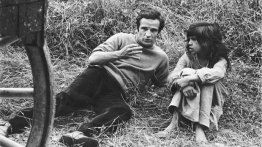
Almost 30 years after his death, François Truffaut remains a vital presence in the cinema. Terrence Malick and Wes Anderson are among maverick directors who have acknowledged their debt to him, while Noah Baumbach’s recent Frances Ha is in part an hommage à Truffaut in a way the French director would have appreciated: for example, the quick succession of scenes establishing the friendship of Frances and Sophie is borrowed from Jules et Jim (1962), Jean Constantin’s music from Les Quatre Cents Coups (1959) appears on the soundtrack, and a poster for L’Argent de poche (1976) is glimpsed on a wall just in the way significant posters and pictures appear in the backgrounds of Truffaut’s own films.

Raymond Carr by María Jesús Gonzalez – review

From our UK edition

This is an unusual book: a Spanish historian writes the life of an English historian of Spain. In doing so, as the historian in question is the extraordinary Raymond Carr, still with us at 94, María Jesús González also writes about the rural West Country of his childhood, the English class system, educational opportunities in the 1930s, social mobility, Wellington College, the Gargoyle Club, Rosa Lewis at the Cavendish, four Oxford colleges, Giraldo and his orchestra, G.D.H. Cole, John Neale, Hugh Trevor-Roper, A.J. Ayer, John Sparrow, A.L. Rowse, Oswald, Diana and Nicholas Mosley, Isaiah Berlin, Margaret Thatcher and even the Queen. In academia and society — mostly high — here comes everybody.

The Rocks Don’t Lie, by David R. Montgomery – review

From our UK edition

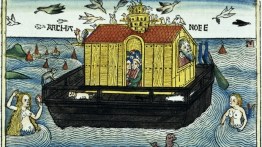
This is a book about the clash of faith and reason over the truth or otherwise of a catastrophic, world-shaping flood — and it doesn’t once mention climate change. The debate here is much less stale. David Montgomery is a prize-winning geology professor at the University of Washington, Seattle, and he recounts the history of his discipline from Aristotle to plate tectonics, showing how geological thinking has always been shaped by the great narrative of Noah’s flood. It is a grand tale, and told with verve and excitement. Montgomery also entertainingly surveys the archaeological and literary evidence for ancient Middle Eastern floods — each of which has been acclaimed, in turn, as ‘Noah’s’.

MaddAddam by Margaret Atwood – review

From our UK edition

The two opening volumes of Margaret Atwood’s trilogy have sold over a million copies. One of them managed to be shortlisted for the Man Booker prize in the nadir year that D.B.C. Pierre’s Vernon God Little won. Entitled Oryx and Crake (2003) and The Year of the Flood (2009), they depict planet Earth after humankind has been obliterated by a pandemic triggered by a newly devised pharmaceutical that arouses sexual rapture and retards ageing. A bioengineered humanoid species, the Children of Crake, however, survive: ‘free from sexual jealousy, greed, clothing and the need for insect repellent and animal protein’.

There and Then: Personal Terms 6, by Frederic Raphael – review

From our UK edition

Frederic Raphael is forensic in his description of the failures of successful people. He is enviously superior and he is partial to the clever oxymoron: ‘predatory caution’, ‘reticent curiosity’, ‘intimidating reassurance’. It is as though he cannot see an abstract noun without qualifying it with a contradictory adjective. It is a kind of shorthand cleverness, but a cleverness nonetheless. For Raphael is undoubtedly clever, and intelligent, and knowledgeable and smart (and, we learn, good at football, tennis and bridge). It is hard not to envy his certainties. This is a thoroughly enjoyable read. Diaries promise indiscretions, and the joy of gossip.

The Red Road by Denise Mina- review

From our UK edition

Denise Mina’s 11th crime novel, The Red Road (Orion, £12.99), is one of her best, which is saying a good deal. Set in Glasgow, it marks the return of Detective Inspector Alex Morrow, mother of twins, sister of a gangster and equipped with too many sharp edges to prosper in her career. She’s a key prosecution witness at the trial of Michael Brown, one of the city’s nastier criminals. The only trouble is, Brown’s fingerprints have turned up at the scene of another murder, committed while he was in custody. Simultaneously, a lawyer connected with Brown dies, and the corrupt and murderous organisation of which he was a part begins to disintegrate. Meanwhile, on a castle in Mull, the dead man’s son waits for the killers who he knows are coming for him.

Russian Roulette, by Giles Milton – review

From our UK edition

Had Onan not spilled his seed upon the ground, he might have invented invisible ink. The possibility had not occurred to me until I read this account of the start of Britain’s intelligence services. Even then the implications seemed so startling as to be barely credible — that the entire trade in espionage, including the serried ranks of Cheltenham’s GCHQ, the massed battalions at Fort Meade’s National Security Agency, the MI5s, 6s and other shadowy digits, not to mention literature’s denizens, from Ashenden and Greenmantle to James Bond and George Smiley, owed its origin to solitary sex. Yet the source given on page 48 of Russian Roulette appears impeccable.

Lion Heart by Justin Cartwright – review

From our UK edition

Justin Cartwright is famously a fan of John Updike — and here he seems to owe a definite debt to one of his hero’s lesser known novels. In Memories of the Ford Administration, Updike interwove the sexual adventures of a 1970s history professor with substantial chunks from the professor’s notes on President James Buchanan, a man whose life Updike had earlier researched for his only play. In Lion Heart, Richard Cathar, an Oxford postgraduate and somewhat solemn philanderer, provides similarly lengthy extracts from his investigations into Richard I and the fate of the True Cross — which were also the subjects of a 2001 TV documentary by Justin Cartwright.

Tangier, by Josh Shoemake – review

From our UK edition

This may sound a little orientalist, but Tangier has some claim to being the most foreign city in the world. Back in the day, its position at the northernmost tip of Africa was regarded as the edge of civilisation — more than that, as the edge of what was known, the edge of everything. Here were the Pillars of Hercules, which in addition to performing the important function of holding up the sky, were said to be engraved with the words ‘nec plus ultra’: beyond this, nothing. Since its foundation in the 5th century BC, the city has been variously controlled by the Carthaginians, the Phoenicians, the Romans, the Arabs, the English (for a couple of decades in the 17th century) and the Spanish.

The Huguenots, by Geoffrey Treasure – review

From our UK edition

France’s early 21st-century Protestants are eco-friendly, gender-sensitised and respectful of the Fifth Republic’s laïcité. But their ancestors were a less accommodating lot. La réforme in the France of the 16th century was well-educated, predominantly urban and organised as part of a pan-European Protestant movement which set out to subvert the territorial sovereignty of Catholic princes. Its leaders included some of the French aristocracy’s boldest spirits, whose dynastic ambitions to exercise an earthly dominion blended easily with the dogmatic confidence of Protestantism at its most driven and alluring.

Red or Dead by David Peace – review

From our UK edition

The last time David Peace wrote a novel about football he got his publishers sued for libel, which may help explain why his new one avoids invention wherever it can squeeze interest out of such stony matters of record as team sheets and attendance figures. Red or Dead follows the legendary manager Bill Shankly from his arrival at Liverpool — second-division stragglers in 1959 — to his death in 1981, seven years after retirement, having built a league-winning team that went on to rule Europe. Seldom does a novel, dedicated at such length to a single life, venture so scarcely into the mind of its subject; the gamble is that Peace’s biblically iterative method is strong enough to sustain but not overwhelm you. All the novel’s effects depend on repetition.

This Town, by Mark Leibovich – review

From our UK edition

Many books have been written about the corruption, venality and incestuousness that characterise Washington DC, but none has been as highly anticipated or amusing as This Town. Written by Mark Leibovich, the senior national correspondent for the New York Times magazine, it has been on the minds of Washington’s chattering classes for at least two years before its release. Sparking that interest was the revelation that a young, ambitious Capitol Hill press aide, whom Leibovich had been cultivating as a source, was secretly forwarding him emails that provided an insight into how Washington really works.

The Rainborowes, by Adrian Tinniswood – review

From our UK edition

Adrian Tinniswood, so gifted and spirited a communicator of serious history to a wide readership, here brings a number of themes from his previous books together. The Verneys recounted the individual experiences of 17th-century members of a leading Buckinghamshire family. The Rainborowes, set in the same period, applies the same technique to a less substantial family of Londoners. As in his study of the great fire of London in 1666, By Permission of Heaven, Tinniswood takes us into the daily life of the capital, though here his emphasis is on the suburban world of commercial enterprise and religious dissent from which the Rainborowes emerged. Tinniswood’s previous book, Pirates of Barbary, showed Europeans doing battle with the corsairs of the Mediterranean.

A Rogues’ Gallery, by Peter Lewis – review

From our UK edition

Like Mel Brooks’s character the Two Thousand-Year-Old Man, Peter Lewis has met everyone of consequence. Though he doesn’t mention being an eyewitness at the Crucifixion, he was told by T.S. Eliot that working in a bank was quite nice (‘I never thought about poetry in the day’). Frankie Howerd wanted Lewis to give him a massage (‘I have this trouble, a hernia, you see. Gives me a lot of discomfort’); Diana Dors confessed to him that she’d rather watch television than go to orgies (‘but I had to become a sex symbol on tiger rugs and in mink bikinis’); and Samuel Beckett made his excuses and fled (‘Sorry, I just have to go to the lav’).

The Coronation Chair and the Stone of Scone, by Warwick Rodwell – review

From our UK edition

The Coronation Chair currently stands all spruced up, following last year’s conservation, under a crimson canopy, by the west entrance to Westminster Abbey. The sovereign has used this throne during the actual ceremony almost continuously since the coronation of Henry IV (1399). The oldest dated piece of English furniture (1297-1300) made by a known artist (Walter of Durham) to survive has been given the comprehensive study it deserves by Warwick Rodwell, with supplementary chapters on its most recent conservation by Marie Louise Sauerberg and its current display by Ptolemy Dean.

Migration Hotspots, by Tim Harris – review

From our UK edition

Consider for a moment the plight of the willow warbler. Russian birds of this species fly between eastern Siberia and southern Africa and back every year of their short lives, a distance of nearly 7,500 miles in each direction. Each weighs roughly as little as two teaspoons-full of sugar. But at least these tiny birds can refuel on their journey. Southern bar-tailed godwits are unluckier. These fly the 7,000 or so miles between New Zealand and Alaska over the immense Pacific Ocean — hence non-stop — twice each year. Moreover, Arctic terns migrate from the Antarctic to the Arctic and back again: a fledgling of this species, born on the Farne islands off the Northumberland coast, was recorded only three months later near Melbourne, Australia.