Book review

The Windsor Faction, by D.J. Taylor – review

From our UK edition

In both his novels and non-fiction, D. J. Taylor has long been fascinated by the period between the wars. Now in The Windsor Faction, he brings us a counterfactual version. What would have happened in 1939 if Mrs Simpson had conveniently died three years earlier, leaving Edward VIII free to stay on the throne?  Would he have prevented war with Germany — perhaps even by treacherous means? Taylor explores these questions from a variety of perspectives. In big London houses, groups such as the Nordic League and the White Knights of St Athelstan meet to campaign against Britain’s involvement in a ‘Jewish war’, convinced that they have the king’s unspoken support.
The Prince of medicine, by Susan P. Mattern – review

From our UK edition

In the first draft of the screenplay for the film Gladiator, the character to be played by Russell Crowe (‘father to a murdered son, husband to a murdered wife’, etc) was named not Maximus, but Narcissus. Which might have made for a slightly different movie. One can imagine the emperor Marcus Aurelius (Richard Harris) telling the beefy hero, ‘I’m entrusting the empire to you, Narcissus, because you’re loved by the soldiers, more gifted than my son Commodus, and also because you take better care of your skin than any general I’ve ever known.’ The reason for the original choice of praenomen was that the character was loosely based on a real-life athlete named Narcissus, believed to have killed Commodus in 192 AD.

Why does Max Hastings have such a hatred for the British military?

From our UK edition

One of the great problems for any historian writing of 1914 and the slide into conflict is that everyone knows the causes of the first world war and those of us who don’t still imagine that we do. It is clear that no historian can simply ignore the causes and get straight down to the fighting, but with the best will in the world it is hard not to feel like some poor Easyjet passenger, stranded on a Gatwick runway and sadly watching the precious take-off slot slipping further into the distance while the cabin crew go though the familiar old pre-flight safety instructions that they know perfectly well nobody is listening to.

Olivier, by Philip Ziegler – review

From our UK edition

Philip Ziegler is best known for his biographies, often official, of politicians, royalty  and soldiers. They include Harold Wilson, Edward VIII and Louis Mountbatten, whose correspondence he also edited. What has driven him to write about an actor — and one whose life has been fully covered in so many biographies, the most recent being Terry Coleman’s in 2005? I take it he knows little of theatre on the inside and has had to base his book on the notoriously unreliable gossip of actors, not the least of whom was Olivier himself, a supreme fantasist. I am not even sure that Ziegler is a theatre buff.

419 by Will Ferguson – review

From our UK edition

The term ‘419’ is drawn from the article in the Nigerian penal code that addresses fraud. However, it has transcended its origins in statute and become shorthand for trickery across West Africa. When I worked as a correspondent in Sierra Leone, 1,400 miles from Nigeria’s capital Abuja, the phrase was in widespread use. Deception is fertile ground for fiction, and Will Ferguson has produced a fine novel from the West African variant. He takes 419 in its purest form: the email scam. Nigerian hustlers persuade foreigners to part with their savings, often with the promise of a tranche of a fortune that just needs a western bank account to park in.

Almost English, by Charlotte Mendelson – review

From our UK edition

Novels about growing up have two great themes: loss of innocence and the forging of identity. With this sparky, sharp-eyed and  often painfully funny novel, her fourth,  Charlotte Mendelson (winner of the Somerset Maugham and John Llewellyn Rhys prizes and now on the Man Booker longlist) explores both through the story of a girl and a family openly based on her own experience. Marina Farkas is a small, round, dark-haired half-Hungarian girl of 16 (as the author was in 1988 when the novel is set).

Danubia, by Simon Winder – review

From our UK edition

Why do we know so little about the Habsburg empire, given that it is the prime formative influence on modern Europe? Its pomp gave us the art, music, literature and pageantry of our high culture; its relationship with the Ottoman East and burgeoning European protestantism drew our religious and our political maps; its collapse fomented the nationalisms that shaped the 20th century across Europe. A popular abbreviation on the internet is ‘tl; dr’. It stands for ‘too long; didn’t read.’ There’s space for another one that would come in especially helpful for the Habsburg empire: ‘tc; du’ — ‘too complicated; didn’t understand’.

E.O. Wilson has a new explanation for consciousness, art & religion. Is it credible?

From our UK edition

His publishers describe this ‘ground-breaking book on evolution’ by ‘the most celebrated living heir to Darwin’ as ‘the summa work of Edward O. Wilson’s legendary career’. As emeritus professor of biology at Harvard, Wilson, now 84, is revered across the world as the doyen of Darwinists. And in announcing that he will offer a new answer to those three cosmic questions scrawled in the corner of a Gauguin painting — ‘Where have we come from? Who are we? Where are we going?’ — he leads us to expect some profound new insight into how a billion years of evolution have made us a species unique on earth.

Salinger, by David Shields – review

From our UK edition

This biography has somewhat more news value than most literary biographies. Its subject worked hard to ensure that. After 1965, J.D. Salinger, having published one novel, a volume of short stories and two pairs of novellas, withdrew permanently from public life. His last publication, a long story entitled ‘Hapworth 16, 1924’, was never printed in hard covers. Subsequently, he went to some effort to control what was known, and could be written, about him. He retired to Cornish, New Hampshire, living comfortably on the immense, ongoing sales of his single novel, The Catcher in the Rye. From there, information occasionally leaked out. A fan might extract a couple of rebarbative sentences from his idol.

The Broken Road, by Patrick Leigh Fermor – review

From our UK edition

Sound the trumpets. Let rip the Byzantine chorus of clattering bells and gongs, the thunder of cannons, drums and flashing Greek fire. Raid cellars and let champagne corks fly. Eighty years after Patrick Leigh Fermor’s epic trudge across Europe, 20 years after the death of his long-suffering publisher Jock Murray, ten years after the passing of his wife Joan, and two years after his own death, the elusive third volume that so tormented him is published at last. The travel trilogy is complete. It is, as John Murray reminds us, the literary event of the year. But for those who admire Paddy’s densely beautiful prose, can this awkward, unformed orphan live up to its billing?

Chaplin & Company, by Mave Fellowes – review

From our UK edition

The unlikely heroine of Mave Fellowes’s Chaplin & Company (Cape, £16.99) is a highly-strung, posh-speaking, buttoned-up 18-year-old with the unhelpful name Odeline Milk. Utterly friendless, she dislikes both humans and animals, but she has one huge, far-reaching private passion. She wants to be a mime artist — like the great Marcel Marceau. To launch her career, she has sold her mother’s house in Sussex and bought a scruffy old canal boat called Chaplin & Company, currently moored in Little Venice. In the flashbacks that follow, we learn about Odeline’s miserable childhood — albeit lit up by a few eureka moments — along with the history of her new floating home and the past lives of her immediate neighbours on the canal.

Francois Truffaut, by Anne Gillian – review

From our UK edition

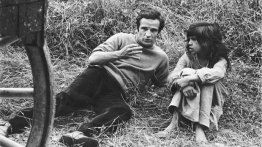
Almost 30 years after his death, François Truffaut remains a vital presence in the cinema. Terrence Malick and Wes Anderson are among maverick directors who have acknowledged their debt to him, while Noah Baumbach’s recent Frances Ha is in part an hommage à Truffaut in a way the French director would have appreciated: for example, the quick succession of scenes establishing the friendship of Frances and Sophie is borrowed from Jules et Jim (1962), Jean Constantin’s music from Les Quatre Cents Coups (1959) appears on the soundtrack, and a poster for L’Argent de poche (1976) is glimpsed on a wall just in the way significant posters and pictures appear in the backgrounds of Truffaut’s own films.

Raymond Carr by María Jesús Gonzalez – review

From our UK edition

This is an unusual book: a Spanish historian writes the life of an English historian of Spain. In doing so, as the historian in question is the extraordinary Raymond Carr, still with us at 94, María Jesús González also writes about the rural West Country of his childhood, the English class system, educational opportunities in the 1930s, social mobility, Wellington College, the Gargoyle Club, Rosa Lewis at the Cavendish, four Oxford colleges, Giraldo and his orchestra, G.D.H. Cole, John Neale, Hugh Trevor-Roper, A.J. Ayer, John Sparrow, A.L. Rowse, Oswald, Diana and Nicholas Mosley, Isaiah Berlin, Margaret Thatcher and even the Queen. In academia and society — mostly high — here comes everybody.

The Rocks Don’t Lie, by David R. Montgomery – review

From our UK edition

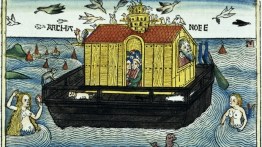
This is a book about the clash of faith and reason over the truth or otherwise of a catastrophic, world-shaping flood — and it doesn’t once mention climate change. The debate here is much less stale. David Montgomery is a prize-winning geology professor at the University of Washington, Seattle, and he recounts the history of his discipline from Aristotle to plate tectonics, showing how geological thinking has always been shaped by the great narrative of Noah’s flood. It is a grand tale, and told with verve and excitement. Montgomery also entertainingly surveys the archaeological and literary evidence for ancient Middle Eastern floods — each of which has been acclaimed, in turn, as ‘Noah’s’.

MaddAddam by Margaret Atwood – review

From our UK edition

The two opening volumes of Margaret Atwood’s trilogy have sold over a million copies. One of them managed to be shortlisted for the Man Booker prize in the nadir year that D.B.C. Pierre’s Vernon God Little won. Entitled Oryx and Crake (2003) and The Year of the Flood (2009), they depict planet Earth after humankind has been obliterated by a pandemic triggered by a newly devised pharmaceutical that arouses sexual rapture and retards ageing. A bioengineered humanoid species, the Children of Crake, however, survive: ‘free from sexual jealousy, greed, clothing and the need for insect repellent and animal protein’.

There and Then: Personal Terms 6, by Frederic Raphael – review

From our UK edition

Frederic Raphael is forensic in his description of the failures of successful people. He is enviously superior and he is partial to the clever oxymoron: ‘predatory caution’, ‘reticent curiosity’, ‘intimidating reassurance’. It is as though he cannot see an abstract noun without qualifying it with a contradictory adjective. It is a kind of shorthand cleverness, but a cleverness nonetheless. For Raphael is undoubtedly clever, and intelligent, and knowledgeable and smart (and, we learn, good at football, tennis and bridge). It is hard not to envy his certainties. This is a thoroughly enjoyable read. Diaries promise indiscretions, and the joy of gossip.

The Red Road by Denise Mina- review

From our UK edition

Denise Mina’s 11th crime novel, The Red Road (Orion, £12.99), is one of her best, which is saying a good deal. Set in Glasgow, it marks the return of Detective Inspector Alex Morrow, mother of twins, sister of a gangster and equipped with too many sharp edges to prosper in her career. She’s a key prosecution witness at the trial of Michael Brown, one of the city’s nastier criminals. The only trouble is, Brown’s fingerprints have turned up at the scene of another murder, committed while he was in custody. Simultaneously, a lawyer connected with Brown dies, and the corrupt and murderous organisation of which he was a part begins to disintegrate. Meanwhile, on a castle in Mull, the dead man’s son waits for the killers who he knows are coming for him.

Russian Roulette, by Giles Milton – review

From our UK edition

Had Onan not spilled his seed upon the ground, he might have invented invisible ink. The possibility had not occurred to me until I read this account of the start of Britain’s intelligence services. Even then the implications seemed so startling as to be barely credible — that the entire trade in espionage, including the serried ranks of Cheltenham’s GCHQ, the massed battalions at Fort Meade’s National Security Agency, the MI5s, 6s and other shadowy digits, not to mention literature’s denizens, from Ashenden and Greenmantle to James Bond and George Smiley, owed its origin to solitary sex. Yet the source given on page 48 of Russian Roulette appears impeccable.