Book review

Read any good crime fiction lately?

From our UK edition

No Exit Press is not a large publisher but it has the knack of choosing exceptionally interesting crime fiction. Brother Kemal (translated from the German by Anthea Bell, £7.99, Spectator Bookshop, £7.59) is the fifth of Jakob Arjouni’s novels about Kemal Kayankaya, a German private investigator whose family origins are Turkish. Kayankaya operates in the resolutely unglamorous surroundings of Frankfurt. He’s on the verge of settling down to semi-respectability with his partner, a former prostitute who owns a bar, when he’s retained by the French wife of a Dutch painter to track down her 16-year-old daughter, who has been lured away by a pimp with an immigrant background.

Slow Train to Switzerland, by Diccon Bewes – review

From our UK edition

In 1863, the pioneering travel agent Thomas Cook took a group of British tourists on the first package holiday to Switzerland. One of them, a jolly young woman called Jemima Morrell, kept a diary — and 150 years later, English émigré Diccon Bewes has followed in her footsteps. His Slow Train to Switzerland (Nicholas Brealey, £18.99) is a fascinating survey of how that country (and ours) has changed. The main thing that strikes you about this charming book is how gung-ho those early tourists were. The trains were rickety, the hotels were spartan, and the toilet facilities virtually non-existent. Yet rather than moaning about these hardships on TripAdvisor, Jemima rose before dawn every day to hike up endless Alps and glaciers.

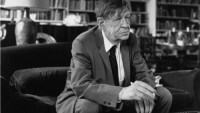
What would Auden have deemed evil in our time? European jingoism

From our UK edition

‘Goodbye to the Mezzogiorno’ was the first Auden poem that Alexander McCall Smith read in his youth. He discovered it in an anthology, and it puzzled him because he had not then visited Italy. A little later, Smith found Auden’s elegy to Sigmund Freud, and was enthralled by its promise that psychoanalysis frees people ‘to approach the future as a friend/ without a wardrobe of excuses, without/ a set mask of rectitude or an/ embarrassing over-familiar gesture.’ When Smith began his careful, systematic reading of Auden while living under civil war conditions in Belfast, he found the hostility, menace and anxiety of Auden’s pre-1939 poems attuned to his environment. The poet’s hold on Smith’s imagination and intellect has not slackened.

Why do we pounce on Wagner’s anti-Semitism, and ignore that of the Russian composers?

From our UK edition

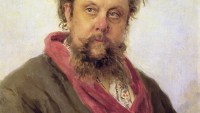
Before ‘nationalism’ became a dirty word, it was the inspiration for all sorts of idealistic and reform-minded people. This was never more true than in the history of music. Clearly, subsequent events have discredited some of those 19th-century ideals. It is striking, however, that we have become uncomfortable with Wagner’s German nationalism while continuing to regard Smetana’s Czech nationalism as an admirable, even inspiring quality. At times one feels that some musical nationalists are given too easy a ride — as if what happened in the opera house couldn’t conceivably affect anything outside it.

The imitable Jeeves

From our UK edition

For as long as I can remember — I take neither pleasure nor pride in the admission — I have been one of those people who feels an irresistible curling of the lip at reviews of the ‘I laughed till I cried’ variety. Something about that hackneyed claim, invariably trumpeted in bold letters outside West End theatres, inspires absolute scepticism. No longer. At two memorable moments in Jeeves and the Wedding Bells I did indeed laugh until I cried. To readers unfamiliar with his role as a team captain on Radio 4’s The Write Stuff, the literary quiz which culminates each week with a pastiche of an author’s style, Sebastian Faulks, still best known for his novels Birdsong and Charlotte Gray, may appear an unlikely candidate for donning the mantle of P.G.

Hogarth and the harlots of Covent Garden were many things, but they weren’t ‘bohemians’

From our UK edition

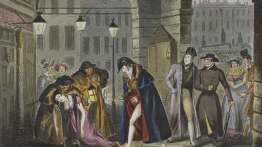
It was Hazlitt who said of Hogarth that his pictures ‘breathe a certain close, greasy, tavern air’, and the same could be said of this book. It describes the fermenting stews of 18th-century Covent Garden, and the pungent work of the artists who lived and worked among them, Hog- arth and Thomas Rowlandson in particular. You could read it as a baggy prequel to Vic Gatrell’s marvellous, Wolfson Prize- winning study of post-1780 caricaturists, City of Laughter. The ‘ring of antique courts and alleys that laid siege to the Piazza’ of Covent Garden covered no more than a quarter of a square mile of London but, according to Gatrell, they brewed up a uniquely rich artistic culture.

Carlos Acosta, the great dancer, should be a full-time novelist

From our UK edition

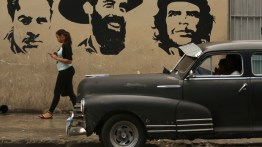
Carlos Acosta, the greatest dancer of his generation, grew up in Havana as the youngest of 11 black children. Money was tight, but Carlos won a place at ballet school, and before long he was enthralling audiences at Covent Garden as a half Jagger, half Nureyev figure with a twist of the moon-walking Jackson in the mix. Now Acosta is about to leap into the world of literature with a debut novel, Pig’s Foot, written over a period of four years during rehearsal breaks. For all its manifest debt to Latin American so-called ‘magic realists’ (Marquez, Borges, Vargas Llosa), the novel stands triumphantly on its own. In pages of salty-sweetprose, it traces five generations of a black family through Cuba’s tumultuous recent history.

Why did Penelope Fitzgerald start writing so late? 

From our UK edition

‘Experiences aren’t given us to be “got over”, otherwise they would hardly be experiences.’ The opening sentence of the first draft of The Bookshop, published in 1978 when Penelope Fitzgerald was 62, didn’t survive in the finished version, but its author had found her voice, and, in a way, her subject. She had learnt how to look back. She had begun publishing only four years earlier, with a life of Edward Burne-Jones. There followed a thriller, written to amuse her husband as he lay dying, and a second biography, The Knox Brothers. This was about her father, ‘Evoe’ Knox, editor of Punch and author of light verse, and his three brothers, two of whom became priests in different denominations.

Village life can be gripping

From our UK edition

Black Sheep opens biblically, with a mining village named Mount of Zeal, which is ‘built in a bowl like an amphitheatre, with the pit winding gear where a stage would be’. It is divided into Lower, Middle and Upper Terrace, the last-mentioned known by the locals as Paradise. If, like many bookshop browsers, you judge a novel by its first page rather than by its cover, you might think, at this early point, that Susan Hill’s fairly recent theological studies sit heavily on the structure. You might expect (not necessarily with wild excitement) a familiar tale of stock characters and their moral failings. But it’s not like that. The opening page or two mislead benignly, giving a generalised feel to what is, in fact, a personal and moving novella.

Christopher Howse takes the slow train in Spain — and writes a classic

From our UK edition

This is probably not a book for those whose interest in Spain gravitates towards such contemporary phenomena as the films of Pedro Almodóvar, Barcelona Football Club or the fashion retailer Zara. Nor, as far as trains go, is it a volume for people fascinated by the engineering feats of Spain’s new high-speed AVE train system, which means that you can travel from Madrid to Seville in just over two hours, or from Madrid to Barcelona in less than three (rather amazing, when you recall that the old service used to take nine hours). Christopher Howse does not like high-speed trains. Even moderately paced express trains are too fast for him, for one cannot really observe the landscape from them.

How we beat Napoleon

From our UK edition

It feels the height of ingratitude to blame Jane Austen for anything, but it probably is her fault that most people seem to think that the only impact that the Napoleonic War had on British life was to bring Mr Wickham and the militia into the lives of the Bennet girls.

‘If I can barely speak, then I shall surely sing’

From our UK edition

A few weeks ago, I was wandering with a friend around West London when our conversation turned to the reliable and inexhaustible topic of Morrissey. We were discussing his gestures, in particular when he augments the percussive spondee that opens ‘Sheila Take a Bow’ with two magnificent jabs of his right elbow. So back we went to my friend’s flat to study it again. In goes the DVD; bang go the drums; jab goes the elbow, and my dear friend gives a small cheer of delight, dancing his dance of Rumpelstiltskin glee. ‘Genius!,’ he declares. And he is right. It is a small moment, one of those preposterously arcane details beloved of a devotee of the Smiths, but it somehow seems to say everything about our artistic hero.

Clash of the titans

From our UK edition

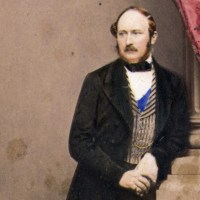
This is an odd book: interesting, informative, intelligent, but still decidedly odd. It is a history of the Victorian era which almost entirely eschews wars and imperial adventures and concentrates instead on the social, political and intellectual climate of the times.  This is still a vast spectrum. Simon Heffer concludes that he must decide which facets deserve attention and picks out those which interest and entertain him most; hence the occasional oddity. Can the building of the Albert Memorial really be worth 30 pages? Or the conflict over the style of architecture to be adopted for the new government buildings in Whitehall be worth 20?

Hitler didn’t start indiscriminate bombings — Churchill did 

From our UK edition

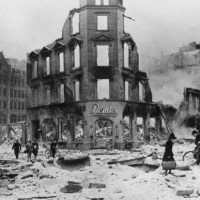
‘I cannot describe to you what a curious note of brutality a bomb has,’ said one woman who lived through the initial German raids on London during the second world war. This woman’s ambivalent reaction to having a bomb rip through her bedroom typified the shocking reality of a different type of war to any that had ever been fought before. For as Richard Overy makes eminently clear in his extraordinary and far-reaching history of Europe’s bombing war, this was the first time civilians actually became a part of the front line. The cause of this was the advent of aerial bombardment, which, Overy says, exposed ‘the democratic nature of total war, which insisted that all citizens had a part to play.

Malala’s voice is defiant — but how much can she change Pakistan? 

From our UK edition

In 2012 a Taleban gunman, infuriated by Malala Yousafzai’s frequent television appearances insisting that girls had a right to education, shot her in the face. She survived and is now an inspirational symbol both of defiance and of the love of learning. As you might hope in a memoir by a 16- year-old, full acknowledgment is given to parental influence and particularly to the role of her father. Ziauddin Yousafzai is himself a long-standing champion of girls’ education who, until the Taleban forced the family into exile in Birmingham, ran girls’ schools in the famously beautiful Swat valley in northern Pakistan. And yet, as his daughter reveals, his life so nearly took a different path.

Italo Calvino’s essays, Collection of Sand, is a brainy delight

From our UK edition

The Japanese are sometimes said to suffer from ‘outsider person shock’ (gaijin shokku) when travelling abroad. Recently in London we had a lodger from Hiroshima who wanted to practise his karate routines in our back garden. Concerned to see him chopping at our apple tree in full combat gear, a metropolitan police helicopter hovered in close to take a look. Afterwards Mr Kinoto admitted to me that he was lost in London amid alien signs and habits. ‘The object of my time in England is not sightseeing’, he told me ruefully, ‘but home-staying.’ I thought of the Japanese lodger while reading Italo Calvino’s wonderful essays, Collection of Sand, published in Italy in 1984, a year before Calvino died at the age of only 62.

#Onyourmarks! What is the formal name for the hashtag? 

From our UK edition

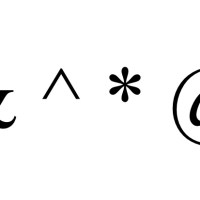
One day there simply won’t be any strange byways of the English language left to write quirky little books about. Happily that day hasn’t arrived yet. Keith Houston’s Shady Characters (Particular Books, £16.99, Spectator Bookshop, £13.99, Tel: 08430 600033)) ventures into the previously untrodden territory of punctuation marks, and not the obvious ones either. Full stops and commas are as nothing to him. Semi-colons are scarcely worth his attention. No, he’s in pursuit of asterisks and daggers, hyphens and ampersands. Why is a hash sign (#) formally called an octothorpe? (No one is quite sure.) Why didn’t the interrobang (‽) take off? (It did, in the 1960s, but it crash-landed soon after.