Book review

How many positions are there in the Kamasutra?

From our UK edition

Numbers, as every mathematician knows, do odd things. But they’re never odder than in the human context. Ever since we crept out of the swamps, we’ve been making numbers lucky, fearsome, ominous and even sacred. Across the cultures, we’re nuts about numbers, with little thought for logic. Take 23, for example. In 1960, William Burroughs met a sea captain who, after exactly 23 years at sea, was lost with all hands. The same day, Flight 23 was reported lost in Florida. After that, Burroughs became obsessed by the portentousness of 23, and others followed. At last, 23 was exposed; it’s the psalm of choice at funerals; in ancient Chinese tradition, it meant ‘breaking apart’. There were plenty of other ominous 23s.

The most important gardening book of the year

From our UK edition

I’ll own up at once. Tim Richardson and Andrew Lawson, the author and photographer of The New English Garden (Frances Lincoln, £40, Spectator Bookshop, £30), are friends of mine — no very unusual circumstance in the small world of garden writing. Moreover, I wrote this book’s forerunner, The English Garden, also in collaboration with Andrew Lawson. However, my reputation would falter if I sold you an expensive pup so, if I tell you that The New English Garden is one of the more important and interesting gardening books published this year, you may believe me. The book looks at 25 innovative gardens or public spaces that have either been made, or re-made, since 2000.

The Briton whose achievement equals that of the Pharaohs’

From our UK edition

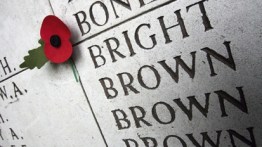
We constantly need to be reminded that the consequence of war is death. In the case of the first world war it led to death and destruction on an inconceivably vast scale. To convey the enormity of what the industrialised slaughter that supposedly civilised governments unleashed between 1914 and 1918, film-makers like to pan the camera over a vast sea of white crosses. But if they do, that cemetery will probably be French or American. It will certainly not be British. The only cross in a cemetery maintained by the Commonwealth War Graves Commission will be a free-standing one with a bronze sword attached, a rather ‘Onwards Christian Soldiers’ symbol designed by Reginald Blomfield.

Blonde, beautiful — and desperate to survive in Nazi France

From our UK edition

Around 200 Englishwomen lived through the German Occupation of Paris. Nicholas Shakespeare’s aunt Priscilla was one. Men in the street stopped to gaze at this blonde with the careless allure and raw beauty of Grace Kelly. Some fell instantly in love. Her second mother-in-law thought her face showed truth and sincerity, and the reader shares this impression of integrity under duress. She was a reckless driver, yet was also shy, gentle and biddable. She had a beguiling habit of stroking your arm to show affection. She was not vain. Born in 1916, hers was a rackety childhood. Her self-engrossed parents, imprisoned within a failed marriage, then in new partnerships, rejected her.

One Leg Too Few may be one biography too many

From our UK edition

It’s no joke, writing about comedians. Their work is funny, their lives are not. Rightly honouring the former while accurately relaying the disasters of the latter is a challenge few writers can well meet. Peter Cook and Dudley Moore have been extensively studied before. Harry Thompson published his excellent biography of Cook in 1997, Barbara Paskin her authorised biography of Moore the same year; Alexander Games’s joint biography Pete & Dud followed in 1999. There have been memoirs of Peter Cook by his first and second wives, Wendy and Judy, and his third wife, Lin, has edited Something Like Fire: Peter Cook Remembered. What’s to add?

Did Leonard Bernstein do too much to be a great artist?

From our UK edition

Nigel Simeone’s title for his edition of Leonard Bernstein’s correspondence rings compellingly, novellistically, through the force of the definite article, as in The Aspern Papers, or The Scarlet Letter. The reality, though, is more diffuse. Bernstein was a man of enormous endowments. One correspondent, after listing his talents as a composer, orchestrator, pianist, conductor, lecturer and general all-round musical functionary, ends by enquiring ironically, ‘Can you cook?’ The list might have been extended. It could have included a wild diversity of sexual activity, a seemingly limitless gift for affection and friendship, an inexhaustible capacity for work, and a genius for self-promotion. What it could hardly have included was focus.

Why do the British love cryptic crosswords?

From our UK edition

Everyone loves an anniversary and the crossword world — if there is such a thing — has been waiting a long time for this one. December is the 100th anniversary of the publication of what is generally recognised as the first crossword — although back then it was called a ‘word cross’. It was set by Arthur Wynne and appeared in the New York World. The first solution to the first clue was ‘fun’ and it is perhaps no coincidence that Alan Connor begins his journey through the rich history of crosswords thus: ‘This is a book about having fun with words.’ It would take a stony-hearted reader to ignore such a siren’s call. But beware the rocky shores of crosswordland. All sorts of dangers await.

Look! Shakespeare! Wow! George Eliot! Criminy! Jane Austen!

From our UK edition

Among the precursors to this breezy little book are, in form, the likes of The Story of Art, Our Island Story and A Brief History of Time and, in content, Drabble’s Oxford Companion to English Literature and Johnson’s Lives of the Poets. Other notable precursors are How to Read a Novel by John Sutherland, How to be Well Read by John Sutherland, 50 Literature Ideas You Need To Know by John Sutherland, Lives of the Novelists by John Sutherland and more in that vein. The tireless and compendious Dr Johnson — ‘the first great critic of English literature’ — deserves and receives a chapter to himself here, and it’s no great surprise that the tireless and compendious Professor Sutherland entirely sees the point of him.

How the Romantics ruined lives

From our UK edition

It is perhaps the most celebrated house-party in the history of literary tittle-tattle: a two-house-party to be precise. Byron and his doctor/companion/whipping-boy John Polidori in the grand Villa Diodati overlooking Lake Geneva. The Shelleys (Percy and Mary) and Mary’s stepsister Claire Clairmont a short walk away in the modest Maison Chapuis. The cat’s cradle of sexual crossed lines. The dark and stormy nights. Byron’s proposal that they should each write a ghost story. The creation, by Mary Shelley, of Frankenstein. The conception of poor, short-lived Allegra, child of nonchalant Byron (‘When a girl comes prancing to you at all hours there is only one way’) and bold, silly, self-deluding Claire.

Is Northamptonshire not scenic enough to visit?

From our UK edition

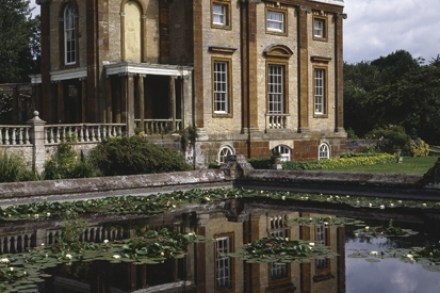
I don’t know whether Bruce Bailey, a proud Northamptonshire man, agrees with the late Sir Nikolaus Pevsner that no one would visit his county for its landscape. In the introduction to the first edition of this architectural guide, published in 1961, Pevsner wrote that although Northamptonshire bordered on more counties than any other in England (nine in all), it lacked ‘any of the memorable scenic qualities one may connect with some of them’. ‘Its beauty spots are few,’ he said. ‘There is no coast, nor a spectacular range of hills.’ Pevsner was, of course, German-born and therefore perhaps of the German romantic view that landscape without rocks and peaks and waterfalls is not really worth bothering with.

The thrill of the (postmodern neo-Victorian) chase

From our UK edition

Charles Palliser’s debut novel The Quincunx appeared as far back as 1989. Lavish and labyrinthine, this shifted nigh on a million copies, while more or less inaugurating the genre of ‘neo-Victorian literature’, whose ornaments are still clogging up the bookshop shelves a quarter of a century later. There have been three other novels since, at least one of them set in the here- and-now, but Palliser’s fifth outing straightaway returns us to the world of creaking lawsuits, high-grade subterfuge and lickerish kitchen-maids in which he made his reputation. In fact the territory occupied by Rustication is so familiar as to make the case-hardened reader of A.S.

The man who shared a bed with D.H. Lawrence and Dylan Thomas (though not together)

From our UK edition

Rhys Davies was a Welsh writer in English who lived most of his life in London, that Tir na nÓg in the east, the place of eternal youth and beauty to which in the mid-20th century many Welsh writers in English, adulterers and homosexuals ran. There were few chapels in London, but many bedsits. Also publishers. And guardsmen. Here Davies followed a career unique by Welsh standards, for he did not sell milk or teach. For 50 years he just wrote.

Portobello’s market mustn’t be allowed to close

From our UK edition

After reading Portobello Voices, I feel more strongly than ever that the unique Portobello market mustn’t be allowed to close. It gets over a million visitors a year and is one of London’s most frequented sites. Blanche Girouard interviewed a cross-section of people involved with the market and has written up their recorded interviews verbatim, using their own voices. This has the effect of making the market feel very immediate and alive. And what a rich cross-section is here.

The best funny books for Christmas

From our UK edition

Books do furnish a room, and quirky books for Christmas do furnish an enormous warehouse somewhere within easy reach of the M25. There are more of them than ever this year, some purportedly comic, some wilfully trivial, a few of them uncategorisable in their oddness, but all of them have one thing in common: they will be outsold by the Hairy Bikers’ diet book. Anyone who tells you that the world is a just and fair place has never written a quirky book for Christmas. In the still popular trivia category — which has survived the stark retraction of the Ben Schott empire — two books stand out. The Unbelievable Truth (Preface, £16.99, Spectator Bookshop, £13.99) is a spin-off from the Radio 4 panel show, where hard-to-believe facts vie with easy-to-believe lies.

Can virgins have babies?

From our UK edition

Mrs Christabel Russell, the heroine of Bevis Hillier’s sparkling book, was a very modern young woman. She had short blonde hair which she wore in two large curls on the side of her head, she was wildly social and she was a fearless horsewoman. In 1920 she set up a fashionable dress shop, Christabel Russell Ltd, at 1 Curzon Street. At the end of the first world war she had married John Russell, known as ‘Stilts’ (he was 6’5” tall), the heir to Lord Ampthill, a cousin of the Duke of Bedford. His snobbish and crusty parents disapproved furiously of the marriage. The young couple spent little time together. Christabel, who adored dancing, went out night after night with one of her many admirers.

Mary Killen: Sandi Toksvig is wrong about the placement of the pudding fork

From our UK edition

Sandi Toksvig, as this book’s cover declares, ‘makes Stephen Fry look like a layabout’. The broadcaster, author, comedian, actress and mother of three has also had time to churn out 20 books in 20 years. This one, a guide to modern manners, although dedicated to ‘Mary’, an eight-year-old girl whom she addresses regularly throughout, is said to be aimed at adults, or Mary when she grows up. There is no snobbery within, but Toksvig makes the point early on that The fact is you will do better in life if other people like you and find you are a pleasure to have around; if you know how to behave.

How much can you tell about E.E. Cummings from this photo?

From our UK edition

Do you think you can tell things about writers from the way they look in a painting or photograph? A more demanding test: from their books can you predict how authors look? It sounds unlikely, yet, upon seeing a photograph of an author, we do find ourselves exclaiming: ‘That’s not how I thought he’d look!’ In Portrait of the Writer there are 250 photographs with a potted biography opposite each. ‘In the best instances,’ says Goffredo Fofi in the foreword, ‘we can see in the photograph that the writer (although not just the writer) has discovered something about himself or herself that he or she was unaware of or had not reflected upon sufficiently.’ Can we, though? Take E.E.

Bill Bryson’s ‘long extraordinary’ summer is too long

From our UK edition

Hands up Spectator readers who can remember the American celebrities Charles Lindbergh, Babe Ruth, Al Capone, Jack Dempsey, Zane Grey, Edgar Rice Burroughs and the  adulteress and husband-killer Ruth Snyder  who all, in 1927, lit up what Bill Bryson calls ‘one hell of a summer’. Born in America only five years later, I knew about most of these characters. Lindbergh, in particular, whose flight across the Atlantic from the east coast to Paris made him for some years the most famous man ‘on the planet’ (one of Bryson’s favourite phrases), attracted vast crowds; once, in a welcoming frenzy, they almost tore his plane apart — an easy feat considering that it was covered in fabric.