Book review

Village life can be gripping

From our UK edition

Black Sheep opens biblically, with a mining village named Mount of Zeal, which is ‘built in a bowl like an amphitheatre, with the pit winding gear where a stage would be’. It is divided into Lower, Middle and Upper Terrace, the last-mentioned known by the locals as Paradise. If, like many bookshop browsers, you judge a novel by its first page rather than by its cover, you might think, at this early point, that Susan Hill’s fairly recent theological studies sit heavily on the structure. You might expect (not necessarily with wild excitement) a familiar tale of stock characters and their moral failings. But it’s not like that. The opening page or two mislead benignly, giving a generalised feel to what is, in fact, a personal and moving novella.

Christopher Howse takes the slow train in Spain — and writes a classic

From our UK edition

This is probably not a book for those whose interest in Spain gravitates towards such contemporary phenomena as the films of Pedro Almodóvar, Barcelona Football Club or the fashion retailer Zara. Nor, as far as trains go, is it a volume for people fascinated by the engineering feats of Spain’s new high-speed AVE train system, which means that you can travel from Madrid to Seville in just over two hours, or from Madrid to Barcelona in less than three (rather amazing, when you recall that the old service used to take nine hours). Christopher Howse does not like high-speed trains. Even moderately paced express trains are too fast for him, for one cannot really observe the landscape from them.

How we beat Napoleon

From our UK edition

It feels the height of ingratitude to blame Jane Austen for anything, but it probably is her fault that most people seem to think that the only impact that the Napoleonic War had on British life was to bring Mr Wickham and the militia into the lives of the Bennet girls.

‘If I can barely speak, then I shall surely sing’

From our UK edition

A few weeks ago, I was wandering with a friend around West London when our conversation turned to the reliable and inexhaustible topic of Morrissey. We were discussing his gestures, in particular when he augments the percussive spondee that opens ‘Sheila Take a Bow’ with two magnificent jabs of his right elbow. So back we went to my friend’s flat to study it again. In goes the DVD; bang go the drums; jab goes the elbow, and my dear friend gives a small cheer of delight, dancing his dance of Rumpelstiltskin glee. ‘Genius!,’ he declares. And he is right. It is a small moment, one of those preposterously arcane details beloved of a devotee of the Smiths, but it somehow seems to say everything about our artistic hero.

My dear old thing! Forget the nasty bits

From our UK edition

There can be a strong strain of self-parody in even the greatest commentators. When Henry Blofeld describes the progress of a pigeon in his inimitably plummy tones, or greets a visiting Ocker to the commentary box with a jovial ‘My dear old thing!’, he is impersonating himself as surely as Rory Bremner has ever done. Just where ‘Blowers’ ends, though, and the man behind the act begins, can be tricky to judge. In Squeezing the Orange he does occasionally show us behind the scenes. He reveals, for instance, the advice which led him to his obsession with describing buses, and cheerily explains how he came by that ‘silly’ catchphrase, ‘My dear old thing’. What Blofeld does not do, though, is to explore anything so untoward as depths.

Clash of the titans

From our UK edition

This is an odd book: interesting, informative, intelligent, but still decidedly odd. It is a history of the Victorian era which almost entirely eschews wars and imperial adventures and concentrates instead on the social, political and intellectual climate of the times.  This is still a vast spectrum. Simon Heffer concludes that he must decide which facets deserve attention and picks out those which interest and entertain him most; hence the occasional oddity. Can the building of the Albert Memorial really be worth 30 pages? Or the conflict over the style of architecture to be adopted for the new government buildings in Whitehall be worth 20?

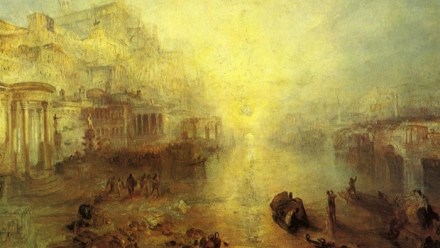
Hitler didn’t start indiscriminate bombings — Churchill did 

From our UK edition

‘I cannot describe to you what a curious note of brutality a bomb has,’ said one woman who lived through the initial German raids on London during the second world war. This woman’s ambivalent reaction to having a bomb rip through her bedroom typified the shocking reality of a different type of war to any that had ever been fought before. For as Richard Overy makes eminently clear in his extraordinary and far-reaching history of Europe’s bombing war, this was the first time civilians actually became a part of the front line. The cause of this was the advent of aerial bombardment, which, Overy says, exposed ‘the democratic nature of total war, which insisted that all citizens had a part to play.

Italo Calvino’s essays, Collection of Sand, is a brainy delight

From our UK edition

The Japanese are sometimes said to suffer from ‘outsider person shock’ (gaijin shokku) when travelling abroad. Recently in London we had a lodger from Hiroshima who wanted to practise his karate routines in our back garden. Concerned to see him chopping at our apple tree in full combat gear, a metropolitan police helicopter hovered in close to take a look. Afterwards Mr Kinoto admitted to me that he was lost in London amid alien signs and habits. ‘The object of my time in England is not sightseeing’, he told me ruefully, ‘but home-staying.’ I thought of the Japanese lodger while reading Italo Calvino’s wonderful essays, Collection of Sand, published in Italy in 1984, a year before Calvino died at the age of only 62.

#Onyourmarks! What is the formal name for the hashtag? 

From our UK edition

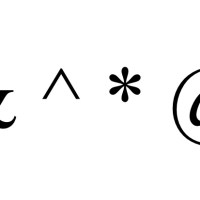
One day there simply won’t be any strange byways of the English language left to write quirky little books about. Happily that day hasn’t arrived yet. Keith Houston’s Shady Characters (Particular Books, £16.99, Spectator Bookshop, £13.99, Tel: 08430 600033)) ventures into the previously untrodden territory of punctuation marks, and not the obvious ones either. Full stops and commas are as nothing to him. Semi-colons are scarcely worth his attention. No, he’s in pursuit of asterisks and daggers, hyphens and ampersands. Why is a hash sign (#) formally called an octothorpe? (No one is quite sure.) Why didn’t the interrobang (‽) take off? (It did, in the 1960s, but it crash-landed soon after.

Does the world need 17 volumes of Hemingway’s letters?

From our UK edition

‘In the years since 1961 Hemingway’s reputation as “the outstanding author since the death of Shakespeare” shrank to the extent that many critics, as well as some fellow writers, felt obliged to go on record that they, and the literary world at large had been bamboozled, somehow.’ So wrote Raymond Carver in the New York Times in 1981. My, how times have changed.

Was Bach as boring as this picture suggests?

From our UK edition

What, one wonders, will John Eliot Gardiner be chiefly remembered for? Perhaps, by many who have worked with him, for his notorious rudeness to performers and colleagues. At one point in his marvellous new book on Bach he refers to the master ‘losing his rag with musicians’ (as a corrective to the ‘Godlike image’ of Bach that posterity has tended to prefer), and one senses a not entirely veiled sympathy: one struggling director excusing another, admittedly greater, but in that respect at least no different. For while Gardiner doesn’t, as far as I know, compose, he has been and remains beyond question one of the most influential performing musicians of our time.

A is for Artist, D is for Dealers

From our UK edition

‘S is for Spoof.’ There it is on page 86, a full-page reproduction of a Nat Tate drawing, sold at Sotheby’s in 2011 for £6,500. A sum which, it is added, with all due respect to [William] Boyd’s ability as an artist, probably proves the point about promotion being more important than talent. It’s always something of a shock to encounter in a serious book the artist I invented and it’s a measure of the huge frame of reference encompassed in Breakfast at Sotheby’s that even Nat Tate and his drawing can make a salutary appearance. Philip Hook has realised and brilliantly exploited the peculiar advantages of the A-Z format. Using the alphabet as a template forces you to think laterally.

George Orwell’s doublethink

From our UK edition

This is the most sensible and systematic interpretation of George Orwell’s books that I have ever read. It generously acknowledges the true stature of the great works — most notably, Animal Farm, Down and Out in Paris and London and The Road to Wigan Pier. It rightly sees the second world war as having brought forth some of Orwell’s finest writing. Yet it does not deify him, and it acknowledges that this strange, drawling, gawky Etonian, who wore common sense like a carapace, was occasionally as capable as the next journalist of writing undiluted tosh. Witness his claim in an article of 1940 that if he thought a victory in the present war would mean a new lease of life for British imperialism, he would be inclined to ‘side with Russia and Germany’.

The Rothschilds, the Spenders, the Queen…

From our UK edition

The novelist David Plante is French-Québécois by ancestry, grew up in a remote Francophone parish in Yankee New England and came to London half a century ago when still an avid young man. For 38 years he lived there with the late Nikos Stangos, a cosmopolitan of the Greek diaspora, whose father had been expelled from Bulgaria and his mother from Istanbul. Displacement and asylum were so much part of Stangos’s imagination that whenever he saw an old person in the street carrying a suitcase, tears came to his eyes. Stangos’s sensibility, zest and physical grace provide many of the richest moments in his lover’s diaries. Plante began keeping this diary in 1959.

How to get old without getting boring

From our UK edition

When one notices the first symptoms of senile dementia (forgetting names, trying to remember the purpose of moving from one room to another, and so on), books can be wonderfully helpful. At the age of 80, Penelope Lively, the prolific, generally esteemed, novelist, has written an encouraging guidebook for the ageing: For me, reading is the palliative, the daily fix. Old reading, revisiting, but new reading too, lots of it, reading in all directions, plenty of fiction, history and archaeology always, reading to satisfy perennial tastes, reading sideways too — try her, try him, try that.

A badger eats, squats, thieves. But should we cull them?

From our UK edition

Lord Arran was responsible for the bill to legalise homosexuality and a bill to protect badgers from gassing and terrier-baiting. One, he said, had stopped people badgering buggers; the other stopped them buggering badgers. The Homosexuality Act had an easier passage through the Lords. ‘Not many badgers in the House of Lords,’ he observed. The badger, Meles meles, a chunky member of the weasel family, is our largest native carnivore, with huge, powerful claws and a ridge on its skull. Familiarly known as ‘Brock’, its history in these islands is chequered.

How to avoid bankers in your nativity scene

From our UK edition

In the vast Benedictine monastery of Monte Oliveto Maggiore between Siena and Rome, the cycle of frescoes depicting the life of St Benedict by Giovanni Anionio Bazzi includes a charming self-portrait of the artist standing with a couple of pets at his feet, for all the world a 16th-century Italian Dorothy with a brace of Totos. (A detail of the painting is reproduced overleaf.) Bazzi did not earn his popular soubriquet of ‘Sodoma’ for nothing — though Vasari is not always reliable — but if his life was the scandalously licentious and dishonourable thing that Vasari would have us believe, then this only places him in the mainstream of the world described in Alexander Lee’s fascinating new book.

The Empress Dowager was a moderniser, not a minx. But does China care?

From our UK edition

For susceptible Englishmen of a certain inclination — like Sir Edmund Backhouse or George Macdonald Fraser — the Empress Dowager Cixi was the ultimate oriental sex kitten, an insatiable, manipulating dominatrix who brought the decadent Manchu empire to its knees. While all seems lost, as foreign troops burn the Summer Palace in Peking, she is to be found, thinly disguised, in the pages of Flashman and the Dragon, locked in our hero’s rugged embrace. More recently, it has suited communist historians to concur with Flashman that she was ‘a compound of five Deadly Sins — greed, gluttony, lust, pride and anger — with ruthlessness, cruelty and treachery thrown in’.

What a coincidence

From our UK edition

If you are going to read a novel that plays with literary conventions you want it written with aplomb. In Three Brothers we are not disappointed, as Peter Ackroyd shows a deftness of touch that comes from being a real master. Here his theme is families. Or rather, it is London. Or rather, it is the use of coincidence as a plot device. In fact it is all three, but perhaps the most important is coincidence. As a literary device, coincidence is the presence of the author in the novel acting like an ancient Greek god directing events. This is apparent from the start when, in almost fairytale fashion, Ackroyd tells us that the brothers of the title, Harry, Daniel and Sam, were all born on 8 May, but each a year apart, in the 1950s.