Book review

‘Here’s looking at you, kid’ —  the best lines from the movies

From our UK edition

Many of us, I get the feeling, don’t go and see as many films as we used to, or want to. Instead we spend all our time complaining that we don’t have enough time to watch films any more. Speaking purely as a hard-working freelance, I also miss all those old black-and-white movies BBC2 used to show in the afternoon, to fill in the yawning hours between lunch and teatime. You would see things you hadn’t seen before, you would see things you had seen a million times before, and you would doze happily through all of them, while characters walked around wearing hats and talking and talking and talking more than anyone would be allowed to in the cinema of today. George Tiffin’s All the Best Lines is a grand hardback trawl through the Golden Age of Cinema Dialogue.

Famous female cooks, a juicy salmon recipe from 1664 — and the only interesting thing about Mrs Beeton

From our UK edition

In Cooking People  Sophia Waugh describes, with dash and wit, the personalities of five important women cookery writers: two Hannahs (Woolley from the 17th century and Glasse from the 18th), Eliza Acton and Isabella Beeton from the 19th, and Elizabeth David from the 20th. And she illustrates their merits with recipes for the home cook that are (mostly) still usable today: Woolley’s ‘To Boyl a Salmon’ of 1664 would produce a juicy, perfectly cooked fish, despite the lack of quantities, cooking time or ingredients list. Acton, a proper cook who laboured for ten years on her book, is Waugh’s darling. David is a vivid writer but ‘upper- class, opinionated and direct, with a feeling of entitlement that was bred in her’.

If only Craig Raine subjected his own work to the same critical scrutiny he applies to others’ 

From our UK edition

It’s important not to be too immediately dismissive of poor Craig Raine. Book reviewers and editors like him, who invent rigid literary principles and then dismiss anything that fails to embody them, have been on the decline since the 1970s. It’s true that one would probably sooner go for guidance to a generous reader who tries to discover what an interesting book is seeking to do, and how it achieves it. But the principle-wielder is an endangered species, and however ill-founded the principles themselves may be, as readers we might welcome the existence of one or two. The trouble is, no one is really interested any more.

What family life — and love — was like in East Germany

From our UK edition

Historians still argue over whether the regime of the GDR can be called a totalitarian one. Some say that the definition reduces the difference between the Socialist Unity Party and National Socialism —that the Nazis left millions dead while the SED left millions of Stasi files. It’s a loaded question, and one that will occur frequently to the reader of Maxim Leo’s startlingly powerful Red Love, a memoir of his childhood in the GDR. But as the political theorist Hannah Arendt observed, ‘storytelling reveals meaning without committing the error of defining it’. In this case the story is real, and is not one but many, running back and forth over the lives of Leo’s family as they form and re-form their relationship with their country.

A book that’s inspired by a movie (for a change)

From our UK edition

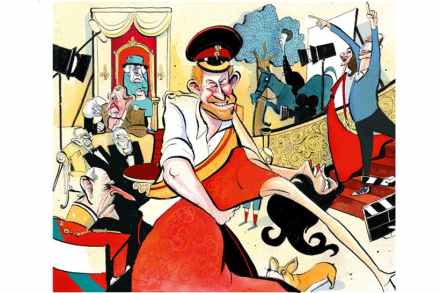
Books become films every day of the week; more rarely does someone feel inspired to write a book after seeing a film. Peter Conradi’s Hot Dogs And Cocktails tells the story of King George VI and Queen Elizabeth’s visit to North America in the summer of 1939 and specifically the couple of days they spent at President Roosevelt’s country retreat at Hyde Park on Hudson. In the film of that name, Bill Murray played FDR with a characteristic twinkle in his eye, and the story was fleshed out with a did-they-or-didn’t-they illicit romance with his distant cousin, played by Laura Linney. For reasons of professional integrity Conradi can’t play quite so fast and loose with events, but his is an entertaining tale even so.

The Last Knight, by Robert O’Byrne – review

From our UK edition

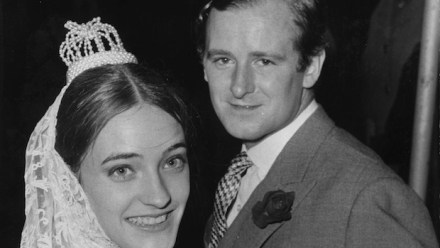
I have to declare an interest: for many years the Knight and I were the closest of friends until a sequence of his unpredictable and volcanic rages drove us apart. Robert O’Byrne explains how the Knight suffered for most of his life from the illness and strong medication of manic depression. It is a tribute to him that I never knew of this medical diagnosis until much later and that, despite it, he achieved so much in his life, drawing international acclaim to Irish pictures, architecture and furniture and producing so many learned books on their quality and beauty. In fact there is a photograph in this book of the Knight and I dancing a jig to the melodious tin-whistle music of Paddy Maloney. But in the caption I am described as someone else, albeit a cousin.

When Francis Davison made me judge — and burn — his art

From our UK edition

In 1983, Damien Hirst saw an exhibition at the Hayward Gallery of the collages of Francis Davison which ‘blew him away’. He spent the next two years trying to emulate them, in vain. As he discovered, although Davison’s works might look casually thrown together, they are in fact immaculately crafted orchestrations of colour, shape and tone.  In the light of this experience, Hirst’s subsequent output can be regarded as his dispiriting revenge on all genuine artistic creation.

‘God has given me a new Turkish colleague called Mustapha Kunt…’

From our UK edition

Under normal circumstances, Simon Garfield’s chatty and informative excursion into the history of letter-writing would be a book to recommend. In recent years this author has produced eloquent and witty accounts of his fascination for maps and for typefaces: To the Letter makes a nice companion piece. Part of the book is a gentle lamentation about the end of letters; a death hastened, Garfield believes, by the digital age.

Angel, by Elizabeth Taylor – review

From our UK edition

‘She wrote fiction?’ Even today, with the admirable ladies at Virago nearly finished reissuing her dozen novels, Elizabeth Taylor remains mostly unknown except to fellow novelists, literary journalists, worthier publishing types, and a handful of dedicated readers. Even Nicola Beauman felt obliged to call her wonderful 2009 biography The Other Elizabeth Taylor so as to avoid confusion with the overrated actress whose debut film, National Velvet, was released only a few months prior to the publication of Taylor’s first novel. It cannot help her reputation that she had a majority of her papers burned, produced no journalism and kept her distance from literary London, writing only to friends such as Ivy Compton-Burnett and Barbara Pym, kindred spirits of sorts.

The best children’s books for Christmas

From our UK edition

Animal stories for children are always tricky; as J.R.R. Tolkien observed in his essay on fairy stories, you can end up, as in The Wind in the Willows, with an animal mask on human form. Watership Down has been described as a nice story about a group of English public schoolboys with occasional rabbit features. But if you get too true to nature, the animals don’t have much to say to us, and no reason why they should. Admittedly, The Wind in the Willows does try to capture some of the mole-ness of Moley (he perks up underground) and the water-rattiness of Ratty (restive away from the River). And, as we all now know, Ratty is no water rat but a water vole. Which makes all the braver a new story about these very creatures.

Ann Patchett’s new book will win you over, in spite of yourself

From our UK edition

Ann Patchett’s novels revel in the tightly constructed ecosystems imagined for their characters: an opera singer besieged among diplomats in the Orange Prize-winning Bel Canto; State of Wonder’s pharmacologist in the Amazon; a fugitive wife hiding in a home for unwed mothers in The Patron Saint of Liars. In this new collection of personal essays collated from publications including the New York Times, Vogue and Granta, Patchett maps out her own life, her own constructed universe. From a post-divorce stint at TGI Friday’s and an early writing career in women’s magazines (a world where some of the greatest writers cut their teeth, not least Jorge Luis Borges), we move towards bestseller lists and the recent opening of her own independent bookshop.

You’ll probably find this book about the ruthlessness of Amazon at a sharp discount on Amazon

From our UK edition

Do you love Amazon? I have to admit that I do, and that I buy books from it far more often than I buy them anywhere else — or bought them in the pre-internet era — and sometimes music, and occasionally kitchen items, and even bedding. I particularly like the ‘1-Click’ payment system, and the choice of price offers down to as little as a penny plus the postage. I’m not offended by emails telling me what else I might like to buy, and the software’s so smart that they’re quite often right. And yet as an author, and a shareholder in a publishing venture, I can see what a monster Amazon has become since it fulfilled its first order (for a copy of Fluid Concepts and Creative Analogies by Douglas Hofstadter) in Seattle on 3 April 1995.

Margaret Drabble tries to lose the plot

From our UK edition

Halfway through her new novel, Margaret Drabble tells us of Anna, the pure gold baby of the title, ‘There was no story to her life, no plot.’ That statement is partly true. It is also a challenge, a gauntlet cast by this very knowing writer at the reader’s feet; in terms of Drabble’s narrative, it is something of a mission statement. Seven years after her last novel, and despite suggestions (by herself) that her fiction-writing days were over, Drabble has written a novel that consistently resists readers’ simplest assumptions. The Pure Gold Baby is a fiction apparently based on fact, which works hard to suggest that it has no pattern, no plot and will reach no neat ending.

In the steppes of a warlord

From our UK edition

I suspect travel writing was once a fairly simple business: the author travelled somewhere, the reader did not; the author explained what the place was like and the reader was duly informed and even entertained. Dr Uno von Troil, for example, went to Iceland in 1772 and served up lurid descriptions of the devil holes and lairs of Beelzebub (geysers). None of his readers had been to Iceland; no one was inclined to argue with Uno von Troil. Later, with the advent of mass travel in the 19th century, Uno von Troil’s former audience could go by steamer to Iceland (or ‘Hell’) and witness the infernal pools themselves.

Should Elizabeth Jane Howard have brought back the Cazalets?

From our UK edition

Some years ago, a woman wrote to Dear Mary, at the back of this periodical, with an unusual problem: she was a keen follower of new fiction but felt guilty to be seen lying around on sofas reading novels in the presence of her domestic staff. Mary advised that she should let it be known she had taken up fiction reviewing. If there is anything in publishing to melt the realities of book reviewing into this delicious scene it’s the prospect of a new Cazalet novel. Not only do I get to read it in plain sight, but the 19-year break since the last one necessitates a re-read of the whole lot. Days and days, that means, immersed in the lives of that many-petalled flower of the home counties, the Cazalet family.

The pirate myth

From our UK edition

Hear the word ‘pirate’ and what picture springs to your mind? I see a richly-bearded geezer in a tricorne hat and a frock coat, with a notched cutlass and bandolier stuffed with pistols. Never mind the real-life pirates of our present day, the maritime robbery-and-kidnap specialists of Somalia and West Africa — they are all too recent to have generated sufficient fiction for us to draw on. Our common pirate is like the zombie, the vampire, the robot — a creature of the imagination, coming to us via Robert Louis Stevenson, J.M. Barrie and Johnny Depp. But where did he come from, really? He or she, that is.

The best cookery books of 2013

From our UK edition

Nigel Slater’s books lead the field in cookery book design, but his latest, Eat: The Little Book of Fast Food (Fourth Estate, £26, Spectator Bookshop, £20), is the most beautiful yet. The size of a large paperback and twice as thick, the single word Eat is embossed in black on a mustard-yellow cloth cover. The book is very easy to use. In the front is a list of recipes, organised by main ingredient; in the back a good index. The chapters are grouped by cooking method, and the recipes written in shortened form, with ingredients in bold type in the body of the text.

The vengeance of Alex Ferguson

From our UK edition

For a quarter of a century Sir Alex Ferguson bestrode football’s narrow world like a colossus. Like his predecessor knight-manager, Sir Matt Busby, he ensured that it was England’s third city that was home to its top football club. His avowed aim in this reminiscence is to explain ‘some of the mysteries in my line of work’. In that he certainly succeeds. One does not need to know anything about football to recognise that Sir Alex knows everything about it. It is no more necessary to have been a great advocate to become a great judge than it is to have been a great player to become a great manager.