Book review

The one-man spy factory who changed history

From our UK edition

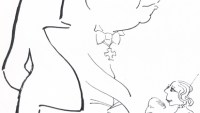
With two new biographies of Kim Philby out, an espionage drama by Sir David Hare on BBC2, and the recent revelation that the aristocrat superspy John Bingham was the model for George Smiley, there is little doubt that Britain is currently going through one of its fitful bouts of spy fever, and this book can only add to the excitement. Philby has a walk-on role in Jason Webster’s gripping and stylish new account of the extraordinary career of Juan Pujol, aka Agent Garbo — and a multiplicity of other monikers — arguably the second world war’s most successful double agent apart from Philby himself.

Oriel: the college that shaped the spiritual heart of 19th century Britain

From our UK edition

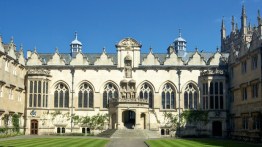
Oriel was only the fifth college to be founded in Oxford, in 1326. Although it has gone through periods of relative obscurity in the intervening seven centuries, it has also, at other times, been at the very centre of the intellectual life, not only of the university but of the nation. In the early 19th century, the Senior Common Room was dominated by the Noetics. These broad churchmen, who included Thomas Arnold, a fellow of the college before he became a famous head-master, believed in the acceptance of utilitarian economics, but also an application of Christian principles to society at large. Against them, and in the same common room, were the high churchmen or Tractarians, the most hypnotic of whom, John Henry Newman, was the closest Oxford ever got to possessing a guru.

White, blue-collar, grey-haired rebels

From our UK edition

In the 2010 general election, Ukip gained nearly a million votes — over 3 per cent — three times as many as the Greens, and nearly twice as many as the SNP. Unlike those parties, it won no seats, but its intervention almost certainly cost the Conservatives an overall majority at Westminster. The paradoxical consequence was to hand the balance of power at Westminster to the most pro-European party in British politics, the Liberal Democrats. In the local elections last year, Ukip won 24 per cent of the vote, and is well placed to win the European parliament elections in May. Its impact in next year’s general election is likely to be even greater than in 2010. So far, explanations of the Ukip phenomenon have been long on assertion but short on evidence.

Brains with green fingers

From our UK edition

‘Life is bristling with thorns,’ Voltaire observed in 1769, ‘and I know no other remedy than to cultivate one’s garden.’ This is the remedy espoused by Candide at the end of Voltaire’s satirical novel, published ten years earlier, and the literal and metaphorical cultivating of gardens is the subject of Damon Young’s sprightly and stimulating little book. Young examines the relationship between gardening and philosophy in the life and work of 11 writers, from the 18th to the 20th century, topping and tailing these individual essays with a consideration of the Ancient Greeks.

Mortar fire, weddings, camels, the French revolution: all kind of things get in the way of cricket

From our UK edition

It isn’t just the elk, either. Also bringing proceedings to a halt in this wonderful anthology are camels (Bahrain), cows and donkeys (Botswana), unexploded landmines (Rwanda, silly mid-on), people learning to drive (East Timor), punch-ups (Bermuda), low cloud (Christmas Island, 300 metres above sea-level), mortars (Iraq, though not during the game held by coalition forces in the ballroom-sized anteroom of Saddam’s abandoned North Palace) and weddings (the ground on Ascension Island has a church inside its boundary). For the record, the elk (Finland) was twice the size of a horse. Even when play is possible, life can still be tricky.

How did revolution become Istanbul’s new normal?

From our UK edition

On a recent weekend I was thinking of taking my sons to downtown Istanbul to do some bazaar browsing. ‘Bad idea’,  a fellow expatriate warned me, ‘revolution on Taxim Square. Again.’ Revolt has become the new normal in Istanbul, a constant of urban life to be followed like the weather. Every few months the ritual dance erupts, chanting crowds on one side and sinister and well-drilled riot police on the other, followed by water cannon and the artillery-like noise of tear-gas canisters being fired into the crowd. How has Turkey come to this? Twelve years ago, Turkey’s then-new prime minister Recep Tayyip Erdogan promised to be an ‘Islamic Democrat’ in the sense that Germany’s Christian Democrats were Christians.

Sex and squalor in San Francisco

From our UK edition

Frog Music begins with a crime against a young mother, committed in a tiny space. Unlike Emma Donoghue’s bestselling novel Room, however, the setting is not present-day America but that of 1876. Blanche is travelling on a train with her new friend Jenny. She hears several loud cracks and feels something hot and wet fall on her face. When she collects her senses, Jenny lies dead. Like Kate Atkinson, Donoghue straddles the literary and the crime genre. Room, inspired by the discovery of a number of women abducted and impregnated by their captors, should have won the 2010 Orange Prize and didn’t — perhaps because its subject matter was simply too controversial. Frog Music, like Donoghue’s The Sealed Letter, is a return to a historical setting.

War is good for us

From our UK edition

At the heart of this work is a startling and improbable statistic and the equally surprising and counterintuitive thesis that flows out of it. We are used to looking back on the 20th century as comfortably the most violent in all human history — the silver medal usually goes to the 14th — but if Ian Morris(a fellow at Stanford University) is to be believed, the century that could wipe out perhaps 50 million to 100 million in two world wars and throw in the gulags, the Cultural Revolution, civil wars, government-orchestrated famine, trench-stewed pandemics and any number of genocides for good measure was, in fact, the safest there has ever been. If sometime around 7a.m.

When Mussolini came knocking on Hollywood’s door

From our UK edition

John Ford was the first of the five famous Hollywood film directors to go to war. He went expecting to get given a sword, which he could then brandish. After all, he knew about swords; they were things that came out of props baskets in his cavalry epics, but that was in films. Unfortunately in real life he found he had an arthritic thumb, which meant that having once drawn one he needed help to put the sword back in its scabbard. It had not been like that in his films, where he had only to say the word for anything to happen. There he could put a coal mine on top of a mountain in How Green Was My Valley, and farm the desert in his Westerns. But the first film he made in the navy was real life with a vengeance.

‘A dandy aesthete with visions of sacrificial violence’

From our UK edition

Eschewing the biblical advertising of ‘the promised land’ or indeed ‘a land of milk and honey’, the Conservative colonial secretary William Ormsby-Gore presented a far grislier picture of Palestine on the eve of the second world war when he described it as ‘full of arms and bitterness, and there are few who do good and many that do evil’. That précis is proved sadly accurate many times over in Patrick Bishop’s gripping The Reckoning, about the fatal shooting and subsequent martyrdom of the Zionist freedom fighter (or terrorist — take your pick), Avraham Stern. As characters go Stern is compelling in a car-crash kind of way.

When posters told us our place

From our UK edition

As a sign of the way things have changed, nothing could better this. Hester Vaizey, Cambridge history don and ‘publishing co-ordinator’ at the National Archives, has collated this splendid collection of posters issued by various government agencies in the 30 years or so after the second world war. This was, of course, the heyday and highwater mark of what furious red-faced men of my acquaintance now call ‘the nanny state’ — a phrase, incidentally, first used by an editor of The Spectator (Iain Macleod) in the pages of this magazine back in 1965. Although I never had a nanny myself, I know from repeated childhood viewings of Mary Poppins that Nanny Knows Best, and so these posters confirm.

Civilisation’s watery superhighway

From our UK edition

The clue is in the title: this is not about the blue-grey-green wet stuff that covers 70 per cent of our planet’s surface. Rather, it’s about how the sea and our use of it have influenced us economically, culturally, religiously and politically: Much of human history has been shaped by people’s access, or lack of it, to navigable water .... Life on the water — whether for commerce, warfare, exploration or migration — has been a driving force in human history. Admitting that he wants to ‘change the way you see the world’, Lincoln Paine also claims that ‘The past century has witnessed a sea change in how we approach maritime history.

Samuel Beckett walks into a nail bar

From our UK edition

It isn’t very often that a writer’s work is so striking that you can remember exactly where and when you were when you first read it. I was in a parked car in a hilly suburb of Cardiff last summer when I first became aware of George Saunders, from reading a speech he’d addressed to his American students printed in that day’s edition of the International Herald Tribune. Within the first two or three lines it was evident that this was someone quite out of the ordinary, someone of unusual intelligence, curiosity and compassion. This speech — an exhortation to be kind — is wonderful. And so are these short stories, which have lately won the first Folio prize. That said, they will not be to all tastes.

Whistling is a bloody nuisance

From our UK edition

Paul McCartney says he can remember the exact moment he knew the Beatles had made it. Early one morning, getting home from a night on the tiles, he heard the milkman whistling ‘From Me to You’. This incident isn’t recounted in A Brief History of Whistling. The record in question was a huge pop hit, and these authors prefer to concentrate on working-class culture, folk songs, music hall and the like. They also cover whistling at work (two blasts to your sheepdog for ‘go left’, one for ‘go right’), whistling in science fiction (it’s the one human skill that stumps an android in Star Trek) and whistling as language (the messages of the Guanch people of La Gomera in the Canary Islands can be heard five miles away).

Was Roy Jenkins the greatest prime minister we never had?

From our UK edition

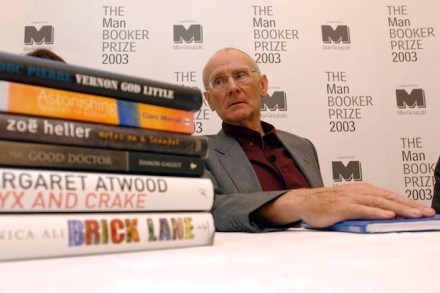
In any list of the-best-prime-ministers-we never-had, the name of Roy Jenkins is likely to be prominent. He was intelligent, moderate, courteous, thoughtful: he was exactly the sort of man whom any civil servant would wish to see installed in No.10. That, no doubt, is why he never got there. John Campbell makes no bones about the fact that he is a fan of Jenkins. He was, writes Campbell, ‘the first public figure I was aware of and always the one I most admired’. Campbell is far too sensible a man and good a biographer, however, to allow his book to degenerate into a paean of praise. Jenkins’s frailties are unsparingly exposed, his occasional failures recorded, his more extravagant pretensions ridiculed.

Memoirs of an academic brawler  

From our UK edition

It’s a misleading title, because there is nothing unexpected about Professor Carey, in any sense. He doesn’t turn up to parties uninvited, like some of his less organised colleagues. As for his appointment, he was tailor-made for the job. Right class (middle); right school (grammar); right military service (guarding sand); right religion (books). An unsullied record of diligence as undergraduate, graduate, lecturer and tutor was combined with engaging resilience: ‘Teaching at St John’s was so enjoyable that I felt it was wrong to be paid for it.’ His outlook was just right for 1974; he was against ‘Old Oxford’, public schoolboys, compulsory Anglo-Saxon and all manifestations of waste, idleness and privilege.

Caught between a New Age rock and a theory junkie hard place

From our UK edition

Siri Hustvedt’s new novel isn’t exactly an easy read — but the casual bookshop browser should be reassured that it’s nowhere near as punishing as the opening pages might suggest. In the ‘editor’s introduction’ we’re told that what follows is an anthology of writings by and about the late artist Harriet Burden — known to friends as Harry — with her own contributions taken from a series of notebooks labelled by letters of the alphabet: Notebook H, on Edmund Husserl, has pages on Husserl’s idea about ‘the intersubjective constitution of objectivity’ and the consequences of such an idea on the natural sciences… Q is devoted to quantum theory and its possible use for a theoretical model of the brain.

The selfie from Akhenaten to Tracey Emin

From our UK edition

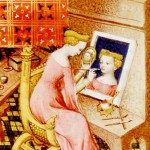
If ever there was a time to write a book about self-portraits, this must be it.  ‘Past interest in the genre,’ James Hall tells us in his introduction to this cultural history, ‘is overshadowed by the obsession with self-portraiture during the last 40 years.’ What he could not have foreseen was that self-portraiture would feature in the mainstream news as never before over the last six months or so. Firstly, the Oxford English Dictionary announced that ‘selfie’ was their word of the year for 2013, spawning a noisy debate about photographic self-portraiture. Next, David Cameron, Barack Obama and Helle Thorning-Schmidt were spotted taking a selfie at Nelson Mandela’s memorial service — an act that merited global news coverage.