Book review

An escape from New South Wales

From our UK edition

Thomas Keneally has constructed his latest novel around a framework of true events: the mass break-out of Japanese PoWs from a camp in New South Wales. This intrinsically thrilling incident, triggered by a fascinating clash between mutually uncomprehending cultures, is an obvious gift to a writer. There may be some who claim that any novelist could therefore have produced an interesting fictional version of it; but this is like saying that anyone could have made a landscape out of the fine park at Blenheim. Keneally spotted both the tale and its possibilities, which in itself is a truly enviable talent. His imagination is fired by the incongruities of the camp in the small town of Cowra, here fictionalised as Gawell.

Recent crime fiction | 24 April 2014

From our UK edition

Louise Welsh rarely repeats herself, a quality to celebrate in a crime novelist. Her latest novel, A Lovely Way to Burn (John Murray, £12.99, Spectator Bookshop, £10.99) is a dystopian thriller set in an all-too-plausible version of contemporary London. Three members of the establishment have shot dead innocent bystanders. The weather is broiling. A plague-like virus known as ‘the sweats’ spreads, bringing panic in its train. Stevie Flint, a cynical TV presenter on a shopping channel, is one of the few survivors. She contracts the disease shortly after stumbling on her boyfriend’s body. The boyfriend, a surgeon who apparently died of natural causes, had concealed a laptop in her loft shortly before his death.

The gambler’s daily grind

From our UK edition

Lord Doyle is a shrivelled English gambler frittering away his money and destroying his liver in the casinos of Macau. Aptly, since he is in a place filled with mock-Venetian canals and poor reproduction paintings, he himself is a fake: the man is not a real lord, and the money is not his own. He is a disgraced solicitor of modest origin, who ran off with a client’s savings after befriending her. Lawrence Osborne’s novel is a bleak and enjoyable account of someone who, perhaps through unacknowledged guilt, finds bitter solace in losing and in driving himself towards extinction.

What most imperilled country houses in the 20th century was taxes and death duties, not requisition

From our UK edition

Servicemen used paintings as dartboards.   Schoolchildren dismantled banisters and paneling for firewood. Architects from the Ministry of Works acted like pocket Stalins. Sarcophagi were dumped in gardens beside beheaded statues. And overhead, Luftwaffe Dorniers droned with menace. Such hazards ravaged requisitioned country houses during the last war. Yet nothing imperilled them more, in the 20th century, than super-taxes and the rattle of death duties. When the country houses were handed back, the majority were defiled as well as decaying from leaking roofs and dry rot. Cash-poor owners, already penalised by towering taxation, could not afford to carry out major repairs to their caves of ice — to borrow from Coleridge and James Lees-Milne.

Up close and personal | 24 April 2014

From our UK edition

What should a writer write about? The question, so conducive to writer’s block, is made more acute when the writer is evidently well-balanced, free of trauma and historically secure. It is made still more urgent when that writer is solipsistic in tendency and keen to write, not about the world, but about perceptions of the world. Two American authors of the same period arrived at different solutions to the problem. Sylvia Plath, in her husband Ted Hughes’s assessment, first found nothing worth writing about, and then deliberately encouraged demons and hitherto controlled minor difficulties until they flared up and killed her. John Updike, on the other hand, had an immensely long and sustained writing career, with few troubles to cope with other than psoriasis.

Beauty in beastly surroundings

From our UK edition

The vast majority of books written about British gardens and their histories are concerned with large ones, made and maintained, sometimes over several centuries, by people with money. ’Twas ever thus. In this country, recognisable gardens began in monasteries, as well as the surroundings of palaces and noblemen’s houses, and it is only in the last couple of centuries that the middle classes have got into the act. As for the poor and dispossessed, theirs has been a very different story, too rarely told.

Sudan was always an invented country. Maybe we should invent it again

From our UK edition

Sudan — a country that ceased to exist in 2011 — is or was one of the last untouristed wildernesses on earth. And for good reason: while it still existed it was the biggest country in Africa, a mainly flat and uninhabitable wasteland, mostly brown, with barely a mountain or a bosky valley to its name, unbearably hot, unhealthy, poor, and full of every sort of trouble. And yet … The author of this new book on what are now the two Sudans — the country has voluntarily split into two lesser states — says that this is one of the world’s most interesting places. That is true. As anyone who has spent time there will tell you, the Sudans (as we must now call them) both north and south exert a fascination.

From Göring to Hemingway, via Coco Chanel – the dark glamour of the Paris Ritz at war

From our UK edition

In Midnight in Paris, Woody Allen did a good job of showing how foolish it is to be obsessed by previous generations who’ve passed through Paris. Going back through the years, each group of geniuses turns out to be just as drunk and silly as the next, albeit with longer cigarette holders. Tilar Mazzeo, who has written biographies of Coco Chanel and the woman behind Veuve Clicquot, has done a similar service with this history of the Ritz. Focusing on the hotel is partly a device to write about the German occupation, but it’s mainly a way of gathering all the old Paris icons under one roof. Marcel Proust, Ernest Hemingway, Marlene Dietrich and Coco Chanel all drank cocktails there, and no one comes out of it well.

Tea with Greta Garbo’s decorator

From our UK edition

Many people write, or at least used to write, fan letters to their film favourites. Usually all they received in acknowledgement was a 10 x 8 glossy with a mimeographed signature. A little persistence sometimes resulted in another, with a brief ‘personal’ message written by the ladies toiling in the fan-club HQs. Not so for the two authors of this riveting book. The Mutti-Mewse twins, early on, became obsessed with all things Hollywood, firing off missives not just to the major stars but to every man Jill they saw or heard was connected to that once fabulous industry. They must have had a magic formula in their letters. Replies flowed back hand over fist.

A Mughal Disneyland and a ripping yarn

From our UK edition

Mysore, once the capital of a princely kingdom in South India, has lost its lustre. In Mahesh Rao’s darkly comic novel, grandiose futuristic visions are being floated: in a city desperate to reinvent itself for today’s brave new world, ancient temples and palaces are no longer enough. With India’s space programme about to send a man to the moon, Mysore must make its own giant leap. All hopes are pinned on what is destined to be a global tourist attraction: HeritageLand, planned as Asia’s largest theme park (think Mughal Waterworld — the Disneyland of south India!) And Mysore needs a new marketing slogan — ‘The Geneva of the East?’  suggests a desperate PR person. Well, at least there’s a lake.

Start with a torpedo, and see where you go from there

From our UK edition

Sebastian Barry’s new novel opens with a bang, as a German torpedo hits a supply ship bound for the Gold Coast. We experience everything through the senses of ‘temporary gentleman’ Jack McNulty — an Irish officer in the British army with a short-term commission. Brimful of whiskey, his racing winnings jingling cheerily in his pocket, McNulty stands on deck ‘somewhat in love with an unknown coastline’, and the reader is, instantly, somewhat in love, and completely bound up with, this red-haired chancer. In the seconds that follow the torpedo, McNulty, almost a medieval Everyman, experiences a vision of heaven and hell and all stages between.

A thriller that breaks down the publishing office door

From our UK edition

Like teenage children and their parents, authors and publishers have a symbiotic relationship characterised by well-justified irritation on both sides. Judith Flanders’s career bridges this divide. She is now best known as an author of innovatory and formidably detailed books on Britain’s social history in the 19th century. But she also has worked as a publisher, which gives her an insider’s knowledge of the murkier byways of literary London. Hence the setting for her first novel, Writers’ Block, an entertaining thriller whose narrator, Samantha, is ‘a middle-aged, middlingly successful editor’ in a publisher’s Bloomsbury offices. One of her authors delivers a biography of a recently deceased fashion designer.

Ladies’ hats were his waterlillies – the obsessive brilliance of Edgar Degas

From our UK edition

Lucian Freud once said that ‘being able to draw well is the hardest thing — far harder than painting, as one can easily see from the fact that there are so few great draughtsmen compared to the number of great painters — Ingres, Degas, Van Gogh, Rembrandt, just a few.’ Christopher Lloyd’s new study of Degas’s drawings and pastels, with over 200 beautifully reproduced illustrations, demonstrates that Edgar Degas (1834–1917) deserves his place on that list. And more than that, it shows that for him there was no distinction between painting and drawing. In his art these categories so blur together that it is hard to say whether certain pictures — pastels with tempera paint additions, for example — are one or the other.

Churchill was as mad as a badger. We should all be thankful

From our UK edition

Land sakes! Another book about Winston Churchill? Really? Give us a break, the average reader may think. Actually though, as title and subtitle suggest, this isn’t just another biographical study. It’s at once odder and more conventional than that. More conventional because, in some ways, it is just another biographical study. Odder because — instead of being a straightforward discussion of Churchill’s literary work — it sees literature as the key to his biography. More than that, its author seems to think he has hit on a ‘new methodology’ in which ‘we can write political history as literary history’. Well, perhaps.

Wonders written on the wall

From our UK edition

‘Take away, utterly extinct and destroy all shrines … pictures, paintings and all other monuments of feigned miracles, pilgrimages, idolatry and superstition so that there remain no memory of the same in walls, glass windows...’. These were the instructions handed down to churches in the reign of Edward VI, the death-knell for medieval church wall paintings following the wholesale destruction of the monasteries in his father’s time. That any church art survived this state-sponsored barbarism some five centuries ago seems extraordinary, and its rarity makes it all the more precious.

Why don’t we have statues of Michael Oakeshott?

From our UK edition

Who or what was Michael Oakeshott? How many of our fellow citizens — how many even of the readers of this journal — could confidently answer the question? I guess, not many. One of the paradoxes of Britain’s intellectual history is that a country which, alongside the Greeks and the Germans, has contributed more than any other to philosophical inquiry is extraordinarily uninterested in its own philosophers. A million people are said to have crowded the streets of Paris to see the funeral procession of Jean-Paul Sartre. In Scandanavia, Kierkegaard is a household name. In Germany, Heidegger is as well known as Thomas Mann. But in Britain no one has heard of Oakeshott — a philosopher who ranks with Sartre, Kierkegaard and Heidegger.

There was good art under Franco

From our UK edition

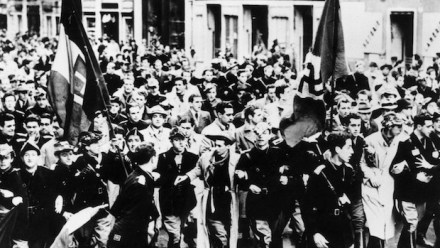
Everyone knows about the Spanish civil war, first battlefield in the struggle that broke out in 1936 and ended nine years later in the ruins of Berlin. It has been immortalised in the work of Hemingway, Orwell and Koestler and commemorated in the heroic deeds of the International Brigades. This is how it is remembered by Camilo José Cela, the conservative novelist and Nobel Prize winner: To the conscripts of 1937, all of whom lost something: their life, their freedom, their dreams, their hope, their decency. And not to the adventurers from abroad, Fascists and Marxists, who had their fill of killing Spaniards like rabbits and whom no one had invited to take part in our funeral… In my copy of the French translation of Cela’s San Camilo, that dedication does not appear.

Pompeii’s greatest gifts are not all archeological

From our UK edition

The first visitor to take a break on the Bay of Naples was Hercules. He had just defeated some rebellious giants and buried them beneath Mount Vesuvius. To celebrate, he staged a procession across the mountain’s slope — in Greek, a ‘pompe’. He also founded two cities: one named after the procession, the other after himself. To this day, visitors from across the world still beat a trail to Pompeii and Herculaneum. The popularity of the two cities as tourist destinations owes everything, of course, to the restless thrashing of the giants imprisoned beneath Vesuvius. In AD 79, a particularly violent spasm resulted in an eruption so devastating that both cities ended up entombed in ash. The memory of the disaster never entirely faded.