Book review

Faeries and queens

Flint and Mirror, John Crowley’s engrossing and elegant latest book, is set in a sixteenth century where angels and demons watch over human quarrels and sometimes even intervene. History and magic entwine, and yet are opposed. There is the ongoing conflict between Catholicism and Protestantism, as the Catholic Spaniards eye up invading England. The novel is also about the beginnings of modernity. As the reign of Queen Elizabeth I of England comes to an end, we progress gradually toward exploration of the globe and the Enlightenment. Farewell rewards and fairies, indeed. Elizabeth, serpentlike, broods in her English fastness, sending spies both physical and metaphysical throughout the land. Her personal magician, Dr.

crowley
paradais

Paradais City

The Chilean poet and novelist Roberto Bolaño passed away in 2003, but his specter still haunts the literary world. Bolaño, a singular Latin American genius beloved by the literati, left a massive vacuum after his untimely death, and publishers have been trying to fill it ever since. This has been a great boon to Spanish-language authors whose work was plucked from the provincial world of Latin American letters and now reaches a wide readership in translation. The search for Bolaño’s literary heir has also been a blessing for American readers, as brilliant contenders such as Valeria Luiselli and César Aira are now published by major American presses, adding some much-needed spice to year-end reading lists.

rozzo

You had to be there

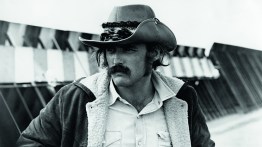
Do you worship Dennis Hopper? Do you get your kicks from sagas dedicated to the lives of the rich and famous? And do you eat up rehashed accounts of the far-out West Coast zeitgeist in the 1960s? If so, Mark Rozzo’s Everybody Thought We Were Crazy is the book you’ve been waiting for. Rozzo starts in medias res: it’s November 1961, and Bel Air is burning. As the firestorm approaches, Hopper and his unlikely wife, blue-blooded poor-little-rich-girl Brooke Hayward, grab her kids and abandon their house — but not before Hopper grabs a Milton Avery painting and throws it in the back of the car.

Fit to print

In January 1936, Harold Nicolson, the British politician and author, reviewed Inside Europe, by the Chicago-born journalist John Gunther. He praised the “American type of wandering or perambulatory foreign correspondent” such as Vincent Sheean, H.R. Knickerbocker (known as Knick), the Mowrer brothers, John Gunther and (the only woman) Dorothy Thompson, as “one of those improvements to modern life that the British would do well to imitate.” According to Nicolson, the virtue of the book, which famously described Adolf Hitler as a “blob of ectoplasm,” was not merely that it was exciting but “so personal that it may seem dramatic and at the same time educative.

reporters

Diversifying democracy

In 1790, George Washington wrote that “the establishment of our new Government seemed to be the last great experiment, for promoting human happiness, by reasonable compact, in civil Society.” Today, Yascha Mounk has reassessed Washington’s words. He proposes in his new book The Great Experiment that many Western nations are now conducting their own experiments. Never have so many nations tried to establish such diverse democracies, regimes that grant citizens of so many colors and creeds the same freedoms, opportunities and responsibilities. Mounk, a professor at Johns Hopkins University and the founder of the Substack publication Persuasion, is both hopeful and pragmatic about the experiment’s outcomes.

mounk

A private life

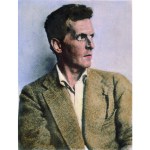
When Ludwig Wittgenstein died in 1951, he had only published one book — the Tractatus Logico-Philosophicus, which was first translated into English in 1922 (with an introduction by Wittgenstein’s former professor and mentor Bertrand Russell, to which Wittgenstein strongly objected). Philosophical Investigations, which Wittgenstein was working on at the time of his death, was published in 1953. His wartime notebooks, which he kept between 1914 and 1916, appeared in 1961. These are important. The Tractatus is famously dense, being composed of a series of statements on the relationship between words and objects and the nature of knowledge. The notebooks provide a clearer sense of the problem Wittgenstein was trying to solve and the progression of his thought.

wittgenstein

Beautiful and damned

Natalie Standiford’s latest novel, Astrid Sees All, captures the bohemian world of New York in the late 1970s and early 1980s in acutely elegant prose. It charts the fortunes of a young suburban girl, Phoebe Hayes, in elegiac but unsentimental fashion. Phoebe longs to live in the “golden world,” as she sees it, of parties and socialites, where John-John Kennedy rubs monied shoulders with the Shah of Iran’s niece, and cocktails, champagne and cocaine flow undimmed until morning. There are hints of Gilbert Adair’s Parisian youths in The Dreamers and Jonathan Dee’s novel about the effects of great generational wealth, The Privileges.

astrid

Imagining Rimbaud

The life of poète maudit and gunrunner Arthur Rimbaud is a puzzle to nearly everyone who knows it. A precocious student who won a regional concours académique for a poem in Latin, Rimbaud left school at fifteen, shortly after the start of the Franco-German War. After two attempts to escape home for Paris, he finally moved in with the poet Paul Verlaine in the fall of 1871, where he succeeded in insulting all the literary lights of Paris in three months. The two men began an affair, which ruined what was left of Verlaine’s marriage to Mathilde Mauté (whom Verlaine regularly beat). They made two debauched trips to London and eventually fell out in Belgium, where Verlaine shot Rimbaud in the wrist.

rimbaud noguez

A gay fandango

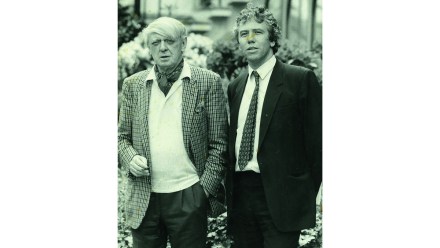
Usually, it’s poets who chance their arm with a novel. Rare is the established novelist who switches to verse. This could be because, while poetry is technically daunting with its rhyme and meter, the novel is apparently the easiest of all forms, without even the conventions and directions of the most basic screenplay. In the nineteenth century, Thomas Love Peacock was the most successful poet to turn to fiction, but in our own times poet-novelists rank among the most talented: Sylvia Plath, Ben Lerner, Vikram Seth, Craig Raine, Grace Nichols. Now, after half a century of writing superb novels, the English author Paul Bailey, well into his eighties, is publishing his second book of poems.

Bailey

Fall and decline

In December 1921, a twenty-two-year-old Ernest Hemingway, then the European correspondent for the Toronto Star, came across the oddest group of immigrants in history — the White Russians who had fled the Bolshevik Revolution. “Paris is full of Russians,” Hemingway told his readers. “They are drifting along in Paris in a childish sort of hopefulness that things will somehow be all right, which is quite charming when you first encounter it and rather maddening after a few months. No one knows just how they live, except by selling off jewels and gold ornaments and family heirlooms that they brought with them to France.” Hemingway neatly summarized the meat of this gripping latest book by Helen Rappaport, the author of The Romanov Sisters and Caught in the Revolution.

russian

Our enemy’s enemy

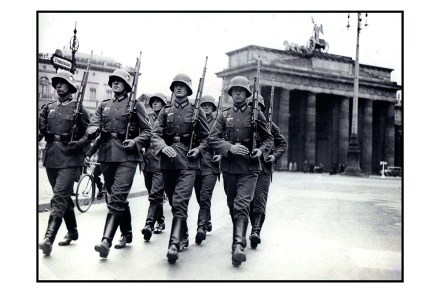
After Nazi Germany attacked the USSR, Winston Churchill had no qualms about entering into an alliance with Stalin, whose regime he understood all too well: “If Hitler invaded Hell, I would make at least a favorable reference to the Devil in the House of Commons.” Similar thinking does much to explain the enlistment of former (and not so former) Nazis by the Western allies in intelligence work against the Soviets after 1945. With the Red Army in the heart of Europe, co-opting suitably qualified veterans of the fallen Reich — some of whom had very dirty hands indeed — made some sense, according to that Churchillian logic, but mainly when those selected were anti-Communist and now aligned with a democratic Germany.

fugitives

For whom the bell tolls

Close your eyes and imagine you’re married to Ernest Hemingway. Now, imagine it twice as bad, and you’ll be approaching the life story of Mary Welsh Hemingway. Hemingway was married four times: to Hadley Richardson in 1921, to Pauline Pfeiffer in 1927, to Martha Gellhorn in 1940 and to Mary Welsh in 1946. In every swap, he divorced his current wife for her successor. Mary wrote her own memoir, How It Was, after Hemingway’s death in 1961. Now Timothy Christian has written a well-researched and intensely detailed look at the life of a fascinating woman who became the steward of Hemingway’s literary estate and reputation long before he died. Mary Welsh was born in 1908 and raised in rural Minnesota.

hemingway

Working out isn’t so new after all

One of the things I did during my nine-month hiatus from Prufrock, the email newsletter I send three times a week (if you aren’t a subscriber, why not give it a try?) was to cycle the Blue Ridge Parkway twice. I started in Cherokee, North Carolina, rode to the start of Skyline Drive, Virginia, and back. It took two weeks — one at the beginning of the summer and one at the end — and I clocked over 900 miles and 100,000 feet of climbing. It was something I had wanted to do for a long time. I loved it and will never do it again. Cycling is an ideal way to experience a landscape. You feel the ups and the downs. Walking has a pleasure of its own, but with cycling you can experience an entire region — in all its subtle variety — in a single day.

Reality bit

If a single television genre defines the twenty-first century so far, it is the reality show. These relatively low-budget and therefore lucrative unscripted programs often feature people competing to survive in the most hostile environments imaginable — and those are just the series about the Kardashian family. Many such shows are lowbrow entertainment at its most bingeable, the visual equivalents of a bag of potato chips: “I can’t believe I watched the whole thing.” Danielle J. Lindemann, a sociology professor at Lehigh University and an avid reality television fan, would probably agree with at least some of that description, but she would add that these shows are also quite instructive.

reality
argument

Picking a fight

Lee Siegel’s defense of argument in the latest volume of Yale’s “Why X Matters” series is original, provocative and frustrating, which isn’t bad for a book on argument. Siegel is less interested in what argument does than in what it is. An “expression of a universal longing for a better life” is how he puts it initially. It is also a justification for “ways of living,” something that“ flows from our intuitive certainty that our right to exist is the most fundamental truth,” and an expression of our “unique, particular existence.” Albert Camus stated in The Myth of Sisyphus that the only serious philosophical question is suicide, “whether life is or is not worth living.” Siegel therefore writes “To exist is to argue your existence.” You get the idea.

Mellors

Sex and the city

Coco Mellors’s lively, involving debut novel begins on New Year’s Eve in New York, with Cleo and Frank meeting in a descending elevator. It’s a sure sign that their future relationship will not end well. Cleo is British, young, golden and an artist; Frank is American and old (well, he’s in his late thirties), and he has taken the devil’s dollar by working in advertising. Cleopatra and Frankenstein deals primarily with the indistinct boundaries between commerce and art, set against a backdrop of neurotic New Yorkers, glitter, drugs and booze. As Frank walks Cleo home through streets full of hedonists, swapping one liners and teasing each other, they fall in love (or at least, into a clinch on the stairs of her dingy apartment).

heiresses

Poor little rich girls

But why did she marry him? That is the question so often asked of heiresses who have, it would appear, the chance to marry anyone on whom their fancy alights yet so often make bad choices. And it’s the question reverberating through this funny, insightful and extremely modern look at an age-old problem by the British author Laura Thompson. “Why, when one had the power of near-limitless choice, would one choose so badly?” she asks. Taking this as her challenge, she examines dozens of (mostly ghastly) marriages over the last four centuries before concluding that it was a rare heiress who triumphed over her ordained fate as a victim, but it was indeed possible.

Who killed Bambi?

It never occurred to me that one day, I would review Bambi (the novel). If it had, I would not have expected that its story and backstory would, among other surprises, include the Nazis, a communist, pornography and talking leaves. In fact, I didn’t even know that the film had been preceded by a novel. Felix Salten wrote Bambi: Eine Lebensgeschichte aus dem Walde in Vienna, where it appeared as a newspaper serial in 1922 before being published in book form in Germany the following year. It debuted in America in 1928 as Bambi, a Life in the Woods, translated by none other than Whittaker Chambers, already a communist, but not yet in the Soviet agent phase of his astoundingly protean career.

bambi
maid

The invisible hand

Few of us like cleaning our own homes, so it’s scarcely surprising that the cleaner, or maid, occupies a particular place in our imagination. To those who resent the imposition of domestic hygiene as an intrusion on privacy, cleaners can be sinister and even vengeful presences — as famously depicted in Jean Genet’s play The Maids. For those who feel guilt over the structural inequalities of capitalism, Kathryn Stockett’s The Help added an extra dose of racism and feminism. But to those who see only the relief of having their dirt lifted by someone else, the cleaner is a bringer of joy who deserves everything from a Dior dress (Paul Gallico’s Mrs 'Arris Goes to Paris) to a rich husband (the J.Lo vehicle Maid in Manhattan).