Book review

Porn again

The virtue of chastity is often confused with the state of virginity, or the practice of abstinence. For the Christian man or woman, chastity is more a frame of mind, an integrated approach to love and sex. While virginity or abstinence can result from chastity, they are themselves beside the point. Naturally, these distinctions are lost on the “sex-positive” movement, which tends to reject religious views of sex out of hand as repressive and weird. In her memoir Rated X: How Porn Liberated Me from Hollywood, Maitland Ward tells the story of how she went from being a struggling, miserable actress to a successful, “happy” porn star.

porn

A.M. Homes’s state of paranoia

When reading A.M. Homes’s fiction, you’re never quite sure what to expect. In 1996, she made waves with the publication of her “vile and perverted” novel The End of Alice: a none-too-edifying tale narrated from the perspective of an imprisoned pedophile and child-killer, who spends the book in correspondence with a nineteen-year-old girl about how to seduce a twelve-year-old boy. In a rare instance in which the UK was more prudish than the United States, a large chain of British booksellers refused to stock the work. More recently, her 2012 novel May We Be Forgiven — for which she won the 2013 Baileys Women’s Prize for Fiction — features a fatal car accident, a psychiatric hospital, an extramarital affair and a homicide. And that’s all within the first chapter.

bunch

The faulty towers of higher education

One of the few issues about which the American left and right agree is that higher education is, as Orwell would say, in a bad way. But even in that source of agreement lurk countless points of dispute, regarding the sources of dysfunction (corporate greed, grade inflation, libezoomers?) and possible solutions (ending tenure, forgiving debt, creating safe spaces?). In After the Ivory Tower Falls: How College Broke the American Dream and Blew Up Our Politics — and How to Fix It, Will Bunch, a columnist for the Philadelphia Inquirer, argues that the cause of the higher-education crisis is conceptual: we see higher education as a personal privilege rather than a public good, something to be earned rather than a right that is owed.

conservatism

Frank Buckley’s right direction

You think life is complicated enough now? Try factoring in the arguments and counter-arguments that adorn — or something like it — the drive to define conservative instinct and policy. I mean, once upon a time, a true conservative subscribed to National Review and wore an “AuH2O in 64” lapel pin to tout the presidential aptitudes of Senator Barry Goldwater. (Pssst: I did both.) Ah, well. Today, as everyone presumably knows, we have libertarian conservatives; we have common-good conservatives; we have constitutional conservatives; we have integralist conservatives — all generally identified with the Republican Party. Amid this mélange of the outspoken, as well as the agreeably entertaining, the law professor Francis H.

Henry Kissinger’s likely last book is on leadership

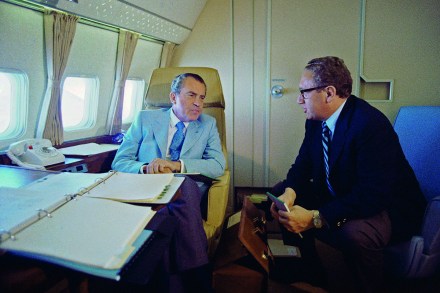
Leadership, Henry Kissinger writes in his latest book, is a medium by which a society moves from the past of its memory to the future of imagination. It is “indispensable.” As Kissinger says, “Decisions must be made, trust earned, promises kept, a way forward proposed.” Without leadership, ordinary people are, he argues, incapable of “reach[ing] from where they are to where they have never been and, sometimes, can scarcely imagine going.” But leadership is also, in Andrew Roberts’s phrase, “a ‘protean’ thing with little fixed definition.” Leadership is ultimately what leaders do; it goes in whatever direction they choose.

kissinger
berlin

Berlin as the unreal city

"Berlin has too much [history]." Sinclair McKay cites this rueful observation in the preface to his new book about the city. Given that he is not simply discussing Berlin between the wars, or during the second of those wars, or in the Cold War that followed, but all of it, this may come off as a cry for help. History may — in those words attributed to, well, take your pick — be “one damned thing after another,” but when it came to Berlin, those things hurtled through time in a horde, colliding, overlapping and refusing to form an orderly line. And, in Berlin’s case, they had a way of mattering. Not for nothing does this book’s subtitle refer to Berlin as “the city at the center of the world.” Bad news for a writer aiming, presumably, at a degree of concision.

The rise of gay Washington

Anyone under fifty may be unaware of how largely invisible gay Americans were until at least the 1980s. James Kirchick’s incredibly rich and impressively thorough Secret City does not mention Bowers v. Hardwick, the notorious 1986 Supreme Court ruling that upheld the criminalization of gay sexuality, but only post-Bowers did the push for gay equality, and eventually same-sex marriage, rapidly become what he rightly calls “the most successful social movement in American history.” In 1992, a Gallup poll indicated that 43 percent of Americans said they knew a gay person — double the figure from just seven years earlier — and across all of America it was that growing knowledge of the presence of gay people that allowed such a dramatic political transformation to take place.

gay
original sins

How not to live a life

When Thomas de Quincey wrote Confessions of an English Opium-Eater in 1821, he could not possibly have guessed what he would set in motion. Over two hundred years later, the addiction memoir looks different: less subversive, more sentimental, undeniably more commercial. Since the advent of Alcoholics Anonymous in Akron, Ohio, in 1935, the formula of the recovery memoir now yokes the moral to the medical: alcoholism may be a moral disorder, but it is underwritten by a chemical condition marked by incessant craving — in recovery parlance, an “allergy,” a state of “dis-ease.” For Matt Rowland Hill, the two are inextricably combined. Original Sins is the debut memoir from a writer whose two great loves, “Jesus and heroin,” never quite slip out of one another’s grasp.

yimby

NIMBYs to the left of me, YIMBYs to the left

First disclosure: I do not appear in this book. I say that only because — second disclosure — I consider myself a YIMBY, and I am familiar, at least online, with many of the characters and figures quoted or interviewed. However, I learned a lot about this loose movement and found it fascinating to read a book on a phenomenon that I would have trouble viewing with a detached, scholarly distance. Yes to the City, by the cultural sociologist and urban policy scholar Max Holleran, must have been a difficult book to write, not least because YIMBY (“Yes in my backyard”) is as much a rallying cry or a slogan as it is a movement, let alone an organization. The YIMBY nemesis, NIMBY (“Not in my backyard”), is equally amorphous.

dewitt

Helen DeWitt’s brilliance and unsuccess

No one ever expects an author simply to minuet her way into a book deal and, if lucky — merely “talented” doesn’t usually do the trick — into commercial success. But the publishing jukes and vaults that have earned Helen DeWitt the title of “America’s Great Unlucky Novelist” rather resemble the vertiginous motions of a mazurka on pogo sticks. Disagreements with her editors led DeWitt to attempt suicide twice. Her first novel, The Last Samurai, remained out of print for eleven years after its publisher went bankrupt. Before DeWitt was able to publish her second novel, Lightning Rod, another ten years lapsed.

A royal affair

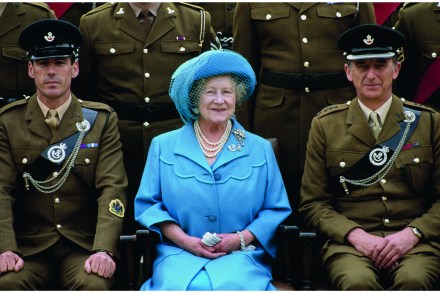
The cover blurb, from “Lady Anne Glenconner” on this huge book proclaims: “Brilliant. Tina Brown has inside knowledge and writes so well.” The credit for the author of the 2019 bestseller, Lady in Waiting: My Extraordinary Life in the Shadow of the Crown should in fact be “Lady Glenconner”. You might not think it matters much these days that, over and over again, Tina Brown gets the titles wrong in this book. But this is supposedly the ultimate insider’s look at the royal family over the last forty years or so. And titles are at the heart of the Firm — think of the agony of Prince Harry and Prince Andrew at no longer being able to use their HRH titles and having to give up their honorary military roles.

royal brown
friends

Forever young

Long before publishing dreamt up the category of Young Adult fiction to try to persuade adult children and childish adults to keep reading, there were novels that described what it felt like to be young. Catcher in the Rye was one such, as were The Bell Jar and Bonjour Tristesse; these books coincided with the invention of the teenager circa 1950 and have enjoyed lasting critical and commercial success. Though British writers reign supreme in the field of children’s literature, American authors have always written outstandingly about teenagers. But the changeover from fiction describing the condition of being young to the YA genre, with its accounts of first love, high-school hell and so on, has not necessarily served every reader well.

limón

A quiet delight

What would you do if you looked out of your window expecting to see the neighbor’s cat, and instead were presented with a groundhog in its place, “waddle-thieving” your tomatoes and “taking such/ pleasure in the watery bites”? Ada Limón’s speaker, in the opening poem of her new collection, The Hurting Kind, is not angry at this “all muscle and bristle” tomato-thief. The groundhog is an embodiment of all she cannot have: an animal, natural freedom that inspires her to ask, “Why am I not allowed/ delight?” ...A stranger writes to request my thoughts on suffering. Barbed wire pulled out of the mouth, as if demanding that I kneel to the trap of coiled spikes used in warfare and fencing.

herzog

Carry on regardless

The director Werner Herzog’s first novel, The Twilight World, occupies quintessential Herzogian territory. Those familiar with his films will recognize the themes: man’s insignificance in the face of a totally implacable nature and his overweening ambitions to surmount this failure. Futility and pride are locked together in hallucinatory, self-destructive cycles. His film Fitzcarraldo, for example, demonstrated the real-life attempts of a rubber baron to transport a steamship over a mountain in Peru. Grizzly Man, meanwhile, documented the sad life of a man who had made his home among bears. It doesn’t end well. (Those readers who haven’t the time to get to know his work may wish to find “Werner Herzog” reading Curious George on YouTube — a delightful parody of his style.

dyer

A grand slam

The majority of us who aren’t touched by genius come to terms with our mediocrity in late adolescence, once our dreams of sports superstardom are dashed or that bumbling first attempt at a novel sets us straight. You won’t be the next Jordan or Hemingway, after all. Getting over the initial shock of one’s dreams being dashed without suffering some kind of crack-up is the mark of high character and perhaps the first sign a man will settle solemnly — but not joylessly — for a well-adjusted life of invisible, middling victories. The best-adjusted man will embrace the comfort of mediocrity and live vicariously through the great men he admires, which is to say that he’ll become a fan.

Dave Rubin’s lazy new book

I didn’t want to review Dave Rubin’s Don’t Burn This Country. One Dave Rubin book seemed like enough — arguably too many — for a lifetime. Yet like a burglar who retires from his life of crime only to pass a mansion with its doors wide open and the glint of jewels beyond the hallway, I was pulled in again. Just one more job. In case anyone has never heard of Mr. Rubin, he is an interviewer and commentator who began as a mildly left-wing contributor to the Young Turks and then drifted towards the “anti-woke” realms of the “Intellectual Dark Web,” where his talk show became a hub of the phenomenon as he interviewed anyone and everyone who didn’t like “safe spaces” and blue-haired transsexuals.

The imperfect spy

On one level, Lis Wiehl’s enthralling and grimly astonishing A Spy in Plain Sight is simply the story of Robert Hanssen, an FBI agent whose espionage activities were described by the Department of Justice as “possibly the worst intelligence disaster in US history,” a crowded field even at the time of his arrest in February 2001. “Over twenty-two years,” explained the DOJ in a 2002 report, Hanssen had “given the Soviet Union and Russia vast quantities of documents and computer diskettes filled with national security information of incalculable value.” And his betrayals had cost lives.

spy