Book review

Pain passed down: a portrait of Russia and the war that dare not speak its name

From our UK edition

Long before Asne Seierstad arrived at the bookseller’s house in Kabul, she studied in Moscow. ‘I tried to be one of them,’ she says, gently scathing of her young self. ‘In all earnest, I sought out the Russian soul.’ Decades spent writing about the post-Soviet world have stripped away her early romanticism. Her new book on Russia has an antihero as its central figure: Andrei Medvedev, a thief, alcoholic, hired thug and mercenary who fought in Ukraine then defected, escaping over the border to Norway. As she follows his story across Russia in 2023-24, encountering the full gamut of oligarchs, angels, monks and drunks, it’s Russians’ own self-image that often feels wilfully blind.
Too much and much too long: The Rouse by China Miéville, reviewed

From our UK edition

China Miéville’s new novel is 1,264 pages long. Following his breakthrough ‘New Weird’ masterpiece Perdido Street Station (2000), Miéville was a productive writer: eight big novels in a decade. Then after 2011’s Embassytown he seemed to fall quiet: a couple of novellas, a history of the Russian Revolution, little else. There were rumours that he had retired from authorship altogether. But not so. We can now see what he’s been doing over the past decade and a half: writing a very, very long novel. The first 190 pages of The Rouse tells the story of Maur (short for Maureen: though why she doesn’t go by ‘Mo’ like every other Maureen in history isn’t made clear), who gets pregnant as a teenager.

Worried about masculinity: from turrets and gargoyles to the state of men

From our UK edition

In 2023, the author Jon Ronson woke one Sunday in upstate New York, where he lives, to a string of alarming messages from his son. Joel, in his mid-twenties, had gone with some friends to a party in Connecticut that they’d been told about by a guy on a dating app. ‘Castle party Saturday!’ was the message that had lured them all in. ‘3pm to whenever. Dress code: Formal. Tell your friends.’ When Joel and his pals arrived, they found what looked like a castle – turrets, gargoyles, a drawbridge – but no party. Instead there were a few bemused party-chasers like them, a bitey guard dog named Cerberus and a man in his mid-sixties, Chris Mark, the owner of the castle. ‘I’d like you all,’ Mark announced, ‘to take part in my reality show.

Curiouser and curiouser: The Strangers by Naomi Alderman, reviewed

From our UK edition

This aptly titled novel might be Naomi Alderman’s strangest book yet – a work of fiction about a writer called Naomi Alderman who, after her mother’s death, discovers an odd new species in her parents’ garden. The first image ever taken of this creature is captured on a camera she set up in the garden for her father to watch the foxes. It is about the size of a badger and flat-faced, with a long trunk-like nose: It was a mammal, going by the nipples, womb and ovaries. Its fur was thick, soft and waterproof. Its eyes were perhaps a little unusual, with a secondary inner eyelid whose purpose could not be determined. Its four feet were padded and it had three toes on each foot, each one with a long, sharp claw.

Mind the gaps: a far-from comprehensive life of Hannah Arendt

From our UK edition

In 1975 – the year of her own death – Hannah Arendt published a heartfelt memorial essay about W.H. Auden in the New Yorker. It ranks, I think, as one of the finest tributes ever paid to the poet, that ‘expert in the infinite varieties of unrequited love’: a moving, tender harvest of 15 years’ warm friendship. The loveless Auden even wanted to marry Arendt after the death of the writer--philosopher’s second husband, Heinrich Blücher. Now turn to Hannah Arendt: A Life of the Mind: a much-acclaimed German ‘biography’ of the Jewish exile from Königsberg who, from her apartment at 370 Riverside Drive in New York, became one of the most influential, and sturdily independent, political and social thinkers of the postwar decades. Auden appears just once, in passing.

In with the new: Julie Christie, Mary Quant, Up the Junction – the decade that changed Britain

From our UK edition

This glorious historical monument slows, expands and luxuriously stretches to encompass one of the defining moments of change in our history. When David Kynaston began, in 2007, to publish his Tales of a New Jerusalem, of which this is the sixth volume, each book covered a much longer stretch. His chronicle of the postwar Attlee settlement started with six years; the last two volumes have slowed to less than a year, then three years, and now less than 18 months. They are marvellous volumes, but if the excellent Professor Kynaston, who is 75, is to reach his terminal point of 1979, I recommend that he take his iron pills in the morning and altogether get a little bit less Zeno-and-the-tortoise about the project.

How Miles Davis and John Coltrane changed jazz forever

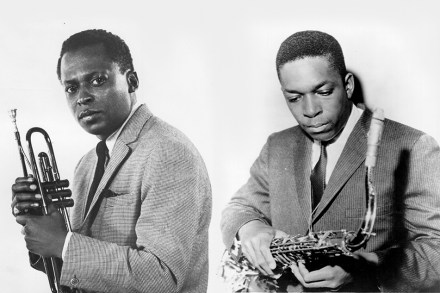
Why does the jazz world still feel so bedazzled by trumpeter Miles Davis and saxophonist John Coltrane? This year marks the centenary of their births, and even those who consider jazz marginal to their interests are likely to know Davis classics such as Sketches of Spain and Kind Of Blue, while Coltrane has almost become deified: there’s even a fully functioning Saint John Coltrane African Orthodox Church in San Francisco. The jazz industry, meanwhile, is gorging on their centenaries with recordings, new and reissued, and books, new and repackaged.

Where is liberalism heading?

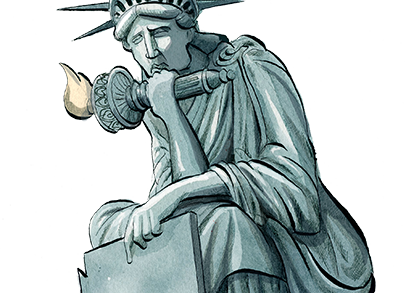
“The Republic divides us least.” So said Adolphe Thiers, a shapeshifter of 19th-century French politics in the Marco Rubio mold. By the early 1870s, the various factions in French society had exhausted themselves fighting. Since 1814 there had been two restorations of the Bourbon dynasty, a liberal Orléans dynasty, a socialist commune, waves of clericalism and anti-clericalism, two periods of military dictatorship and a second Bonaparte. Out of this exhaustion came the Third Republic, the creation of Thiers and Léon Gambetta. The Third Republic was a triumph of liberalism: the recognition that France was now a plural society over which no one social force could gain a permanent mastery.

How a young inventor with no printing experience revolutionized the newspaper world

Here’s a quiz for you. On the third floor of the New York Public Library is a vast mural painted by Edward Laning in the 1930s. It’s called “The Story of the Recorded Word” and it’s divided into four scenes, each one a pivotal stage in the development of writing. Can you guess what they are? I daresay you managed to picture something resembling the third scene: a bearded Johannes Gutenberg showing off a page of type from his new invention, the printing press. I think you might have got the second one, too: a medieval monk, with quills and inkpot, copying out a manuscript in his scriptorium. Perhaps, if you’re religiously inclined, you even guessed the first: Moses receiving the Ten Commandments carved into stone. But what about the fourth scene?

type

What lists of our greatest novels get wrong

“Where are all my favorite parts?” Arnold Schoenberg asked, on being presented with a severe academic analysis of the Eroica symphony. “Oh, there they are. In the tiny notes.” The tendency of many people, presented with the overwhelming abundance of an art form, is to exclude as much as possible. Reduce the wonderful life of incidental invention to the tiny notes; erect walls excluding the fascinating curiosity, the eccentric, the madly idiosyncratic. Produce a list of the 100 Best Books, sticking to declared Greatness. People have been producing lists of the Best Books for a hell of a long time. When copyright law was reformed in 1774, it enabled publishers to produce collections of novels for the first time.

novels

The fate of the British teenager who posed as a Russian oligarch’s son

This story is little more than a brutal anecdote, which Patrick Radden Keefe has chosen to tell at excessive length. It has the kind of fact-checked gravity that indicates a star American journalist bent on perpetrating an entire book. (“Built in 1923 and originally known as the Empire Stadium, Wembley was the most iconic sporting ground in Britain.”) But it occurred to me more than once as I read it that it has the hallmarks of a particularly black London comedy by Charles Dickens or Ben Jonson or Joe Orton. A violent knave, his activities previously limited to cheating the police, murdering his equally appalling criminal rivals, doing underhand deals and ripping off the rich, acquires an associate.

zac brettler russian london

Carl Jung, the man behind the psychobabble

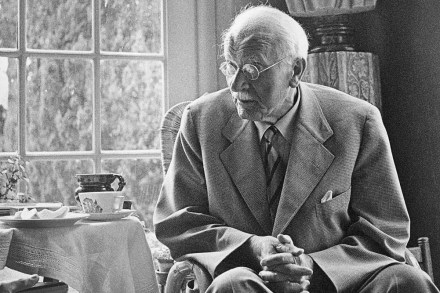
A surefire way to alienate people is to talk about the dream you had last night. In polite society, we’re generally told nobody cares about the goings-on of our subconscious and that it’s probably best to keep quiet. Nothing, then, quite prepares one for the oneiric delights to be found in Jung’s Life and Work, a new edition of the collected interviews between Professor Carl Gustav Jung, the renowned Swiss psychiatrist and founder of modern analytic psychology, and his former student, Aniela Jaffé. The tone is set in the very first interview, where Jung recalls a childhood dream involving a gigantic “erect phallus” reaching “almost to the ceiling” equipped with an all-seeing eye and seated on a plush golden throne.

carl jung

Inside the Murdoch family fallout

Terrific scripts, marvelous acting and glamorous locales – plus that haunting theme song – made HBO’s Succession superlative television. The show also took the sheen off being a billionaire. Who among us, watching Logan Roy (a barely veiled stand-in for media mogul Rupert Murdoch) mess with his children’s psyches, didn’t think “Isn’t it perilous to be quite so loaded?” Journalist Gabriel Sherman’s new book prompts a similar, aversive recoil. Every family has squabbles, but the Murdochs have fallen out with shocking animosity. Though it’s hyperbolic to claim, as the author does, that the struggle for control of News Corp broke the world, his gruesomely detailed account reveals how shattering the battles have been to those who fought them.

Coppola, Lucas and Spielberg’s outsized impact on 1970s cinema

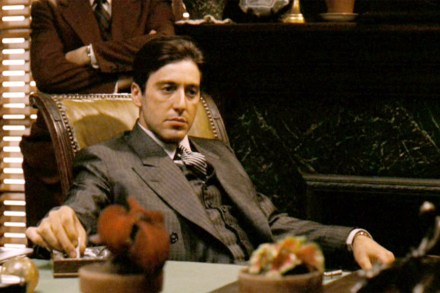
For any serious lover of cinema, the 1970s were both a golden decade and the beginning of the end of film as an art form. After the permissiveness and countercultural impact of the 1960s, a whole generation of new filmmakers emerged, many of whom remain household names. These men – and they were almost exclusively men – produced work that shook up expected norms and took the medium in new, thrilling directions. It is impossible to list all the pictures and their directors who made this difference, but there are good reasons why they remain celebrated today. And then Star Wars came along in 1977 and changed the trajectory of the industry forever.

coppola

The inside story of how America got to the Moon

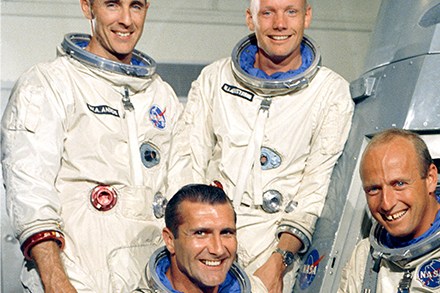
On March 16, 1966, Neil Armstrong and David Scott became the first astronauts ever to dock with another spacecraft when they linked their Gemini 8 capsule to the uncrewed Agena target ship. However, the cheers had barely died down at Mission Control Houston when Scott realized they had a problem. The conjoined spacecraft had begun a gentle leftward pitch. Armstrong and Scott watched in horror as the capsule’s gentle pitch became a tumbling motion that increased, turning the craft into a centrifuge. In desperation, Scott undocked the two ships before gravity ripped them apart. But Gemini 8 continued to spin faster. At 60 revolutions per minute, the astronauts began to slip into unconsciousness.

This Tucker Carlson biography is a chronicle of an era

Tucker Carlson may be the most divisive man in America, a human tuning fork vibrating at frequencies that delight half of the country and drive the other half demented. Few public figures inspire such simultaneous loyalty and loathing. To his admirers, he’s a truth-teller with a preternatural instinct for cultural anxiety. To his critics, he’s a fabulist with a talent for setting fires and selling the smoke. This tension – this strange mix of menace and magnetism – is what Jason Zengerle captures in Hated by All the Right People, a biography that becomes, almost inevitably, a portrait of the contemporary conservative movement itself.

How Fatima Bhutto’s dog saved her from a toxic relationship

Americans who are concerned with heightened levels of political violence should understand that we are fortunate compared with Pakistan, whose most visible political family, the Bhuttos, have a history that makes even that of the Kennedys look tame. One survivor, journalist Fatima Bhutto, born in 1982, encapsulates the family tragedies. Her grandfather, the charismatic prime minister Zulfiqar Ali Bhutto, was executed under trumped-up charges by the government serving the man who deposed him, army chief Zia-ul-Haq. Her uncle, Shahnawaz Bhutto, died in mysterious circumstances, possibly murdered, at the age of 26.

How the West can win

It is no overreaction to look at the current state of western culture, through academia and the arts alike, and to feel that Rome has fallen all over again. Whether it’s a crowd chanting in support of terrorists at Coachella, or a horrific political assassination on a university campus, cheered by some, we are witnessing something far more sinister than a mere surge in political violence. We are watching the collapse of the fundamental preconditions that make civil society possible, as a civilization tears itself apart. Many are of the opinion that it is already too late: that the unique and unprecedented advances in western culture over the past three millennia cannot be furthered.

Jon Fosse’s Scandi-lit revival

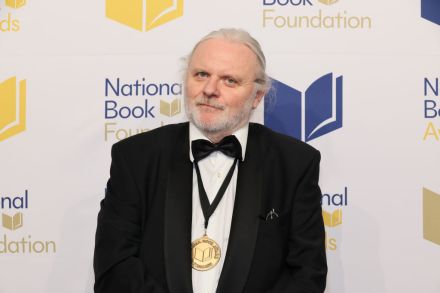
Jon Fosse, the Norwegian novelist who won the 2023 Nobel Prize in Literature, has sat center stage in the recent revival of interest in Scandinavian literature. Fosse’s one-time creative-writing student Karl Ove Knausgård became the very definition of a publishing sensation when the first volume of his six-part memoir Min Kamp (“My Struggle”) – in which he dragged all his family skeletons out of the closet for all to see – was published in 2009. Danish novelist Solvej Balle’s seven-part On The Calculation of Volume, of which only the first three parts have been published in translation, has caused a similar stir in the past two years.