Birds

Made me buzz like an electron: Science – Clear+Vivid with Alan Alda reviewed

Given my affection for M*A*S*H, I can’t think why I haven’t listened to Alan Alda’s podcasts before now, besides the fact that they look quite uninviting. There is Clear+Vivid, on the power of communication, and Science: Clear+Vivid, on the power of scientific research. As someone who used to fall asleep listening to cassettes for A-Level physics, I am not easily excited by protons, and was prepared to give the latter particularly short shrift. Five hours on, however, Alda is still in my ears, and I am buzzing like an electron. Unlike many presenters, Alda, 85, doesn’t pretend not to know something just so that his interviewee will explain it to the audience, but nor does he strive to reveal how much he knows.

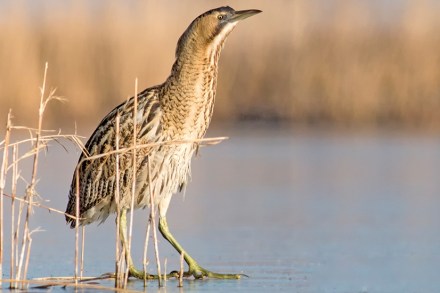
Why it’s boom time for bitterns

Bitterns are booming, both literally and metaphorically. These handsome brown birds from the heron family make a noise quite unlike anything else in Britain and we are lucky to be able to hear it. If there is such a thing as a birding bucket list then hearing a bittern’s ‘boom’ — the loudest bird call in the country — should be on it. Before the bittern starts booming he performs a warm-up ritual called grunting. He strengthens his throat muscles, which expand to turn his gullet into an echo chamber. His powerful muscles make up a fifth of his body weight and can propel the sound of his boom for more than three miles.

Letters: China has peaked

China has peaked Sir: Niall Ferguson makes some good points about the nature of Xi Jinping’s imperial aspirations but misses two important parts of the picture (‘The China model’, 8 May). First, the Chinese Academy of Science predicts that China’s population will peak at 1.4 billion in 2029, drop to 1.36 billion by 2050, and shrink to as few as 1.17 billion people by 2065. They even forecast that China’s population might be reduced by about 50 per cent by the turn of the next century. And second, China’s economic rise is stalling.

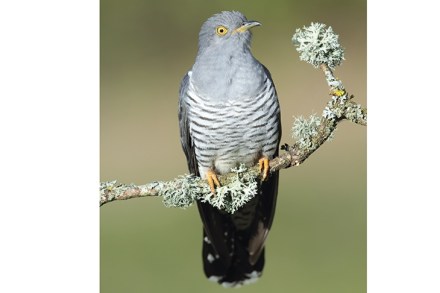
The cruelty and cunning of the cuckoo

St Tiburtius’ Day, on 14 April, is traditionally when you will hear the first cuckoo. Since at least the Middle Ages, cuckoos have been seen as heralds of spring. They are also often associated with romance, and yet they are some of the cruellest birds found in Britain. The adults arrive in this country at the end of March or the beginning of April and depart in late July or August. They return to central Africa and fly, either via Italy, resting near the River Po and continuing over the Sahara, or stopping in Spain before entering Africa from the far western end. They live mainly in and around the Congo rainforest and in similar habitats as far south as Angola. They come to Britain merely to mate.

Helen Macdonald could charm the birds out of the trees

When Helen Macdonald was a child, she had a way of calming herself during moments of stress: closing her eyes, she would imagine and count through the layers of the earth that lay beneath her, and then the layers of atmosphere above her. ‘It had something of the power of incantation,’ she writes in Vesper Flights, an essay originally published in the New York Times Magazine and now the title piece in this new collection of essays. Much like her previous book H Is for Hawk, this volume sees Macdonald weave together personal reflections, natural and human histories and fragments of autobiography to create nature writing that is at once intimate and expansive. Some of the essays in Vesper Flights take Macdonald to extraordinary places.

Even the owl in my garden is self-isolating

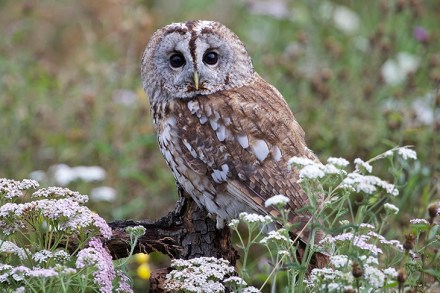
My tawny owl has been self-isolating. I say mine but in truth she chose the nest box in my neighbour’s garden rather than the one I almost killed myself to install, balancing it on my head as I scaled a rickety old ladder. A couple of months ago I spotted the owl, happily sitting in the box’s entrance in the weakening sun. A pattern was established. Every evening as day drained away, I went into the garden, balancing my old Zeiss binoculars alongside a glass of white. The owl would fly in silently from the south, sit around for a while and then disappear into the box. These regular sightings stopped six weeks ago, and I have been worried since. But early this morning I saw her again.