Birds

Letters: arise, Sir Rod!

Keeping their promises Sir: Matt Ridley is right to assert the conservation role of gamekeepers (‘Ruffled feathers’, 30 May). They, like farmers and crofters, know wading birds are integral to Britain’s rich cultural landscapes. All ground-nesting birds benefit from culling generalist predators. I do this on my croft at my own expense because I love waders and passerines. Where costs cannot be borne by individual goodwill or taxpayer-funded grants, shooting provides a sound economic case for funding the vital combination of predator control and habitat management. A keeper’s livelihood depends on his ability to prove consistent competence in these two skills.
Save the curlew!

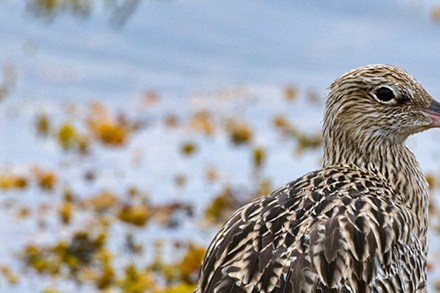
Unlike last year, when drought caused many curlews in the Durham dales to delay breeding, this has been a great spring for them. Last week, wherever I walked, anxious curlew parents were whinnying above me like aerial ponies. At one point I stepped carefully aside as a day-old chick, clumsy on its oversized blue legs, tried to hide in the cotton grass. The Pennines, North York moors and eastern Scotland are the world stronghold of the curlew, or ‘whaup’, a bird whose bubbling aria fills the sky over these moors in spring so fully that you cannot find a one-minute gap of silence between their songs in a typical April dawn (I’ve tried).

How many people undergo security vetting?

Balls to that Why are elections called ‘ballots’?  — The word ballot comes from the Italian, pallotta, meaning a small ball. In Venice in the 16th century voters deposited a pallotta in a pot. The same system was used in an election in Barnstaple, Devon, in 1689, where voters were given a ball and asked to deposit it in one of two pots. The system allowed people to vote secretly by concealing the ball in one of their fists. They would hold each fist over a pot and discreetly drop it. No one watching could tell which fist had contained the ball. Heavy vetting How many people undergo security vetting?

How John Egan has stayed in the saddle

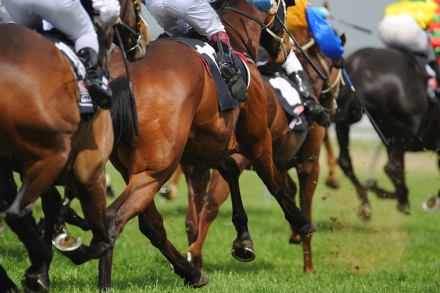
Pop stars rock on nowadays into their seventies. And jockeys too – despite the physical dexterity and instant-decision-making required – are lasting longer. Jimmy Quinn and Franny Norton only quit the saddle in their mid-fifties; Joe Fanning is still going strong at 55. On a sweltering Ascot day recently I enjoyed a chat with John Egan, who was handling the heat better than much younger rivals and is still in demand at 56. Remembering past successes, including the Irish 2000 Guineas on Indian Haven, July Cups on Les Arcs and Passive Pursuit and an Ebor Handicap on 100-1 shot Mudawin, I asked if there was a particular race he still hankered after winning. Egan smiles easily but the answer was a pistol shot: ‘I want to win them all.

Labour is risking the future of racing

The only political party with a serious chance of winning office I will ever vote for again is the one which acknowledges that in all probability and at least for a while it will increase taxes. Every party piles up promises that they will be the ones to get Britain working again. But building power stations, reservoirs and schools costs money. So does hiring doctors and nurses, filling potholes and getting trains to run on time. Some claim they will finance their plans by creating growth, some by taxing the rich. Then voters discover that the growth fairy remains elusive and the rich have been re-defined to include them: public regard for politicians takes another dive.

Remembering the horror of Rwanda’s genocide 

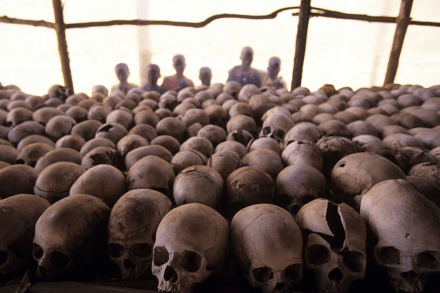
Rwanda It had been more than 30 years, yet I recognised the church and its surroundings instantly. Superimposed on the tidy green sward of today, I recalled the rags, shoes and corpses I saw here in May 1994. There are gaps in my memories of Rwanda. But the parts I do recall are explosively vivid, as if branded on my retina, like those people outside the church. They’d lost heads and limbs and every-body was dead, but the scene was alive. I could see and hear their last moments. A woman lay in my path, on her back with her gingham skirt hitched up around her thighs. Not much flesh left on her skeleton, her hair sloughing off, her face and frame frozen at the end of her rape, when her attacker shot her in the heart.

I’m losing the will to hunt

Laikipia, Kenya When I was eight I used to go fishing in the Indian Ocean beyond Vasco da Gama’s pillar with Mohamed. Once we pulled out a fish with a domed forehead and a sailfin – a filusi. In Spanish it’s known as the dorado, referring to its iridescent golden flanks. As we watched the fish suffocate in the tropical air, its pigment, sheathed with a patina of stippled green, was transfigured for a brief instant like a beam of sunshine on a church mosaic. Then the dorado’s brilliance faded, and by the time Mohamed picked up his knife and sliced open her belly, removed the guts and tossed the body to the bottom of the canoe, it had turned to tarnished lead. As a boy, my hunter’s remorse was as strong as my urge to kill.

The mystical masterpiece from Stalag VIII-A

Olivier Messiaen was a French composer steeped in the solitude and ecstasy of Catholic mysticism: everything he wrote was dedicated to the greater glory of God. He was in thrall to the liturgical works of Stravinsky, but also to the percussive cling-clang of Javanese gamelan music and other eastern sonorities. His thirst for ‘un-French’ music sometimes put him at loggerheads with the Paris old guard who found him as fandangled and foreign as a pagoda. His ability to create new possibilities in sound was of course what made him modern. Messiaen was scarcely 20 when he wrote his hauntingly strange Préludes for piano in 1929 and the no less mysterious orchestral suite Les offrandes oubliées (Forgotten Offerings).

Survival of the hottest: evolution’s fun side has been long overlooked

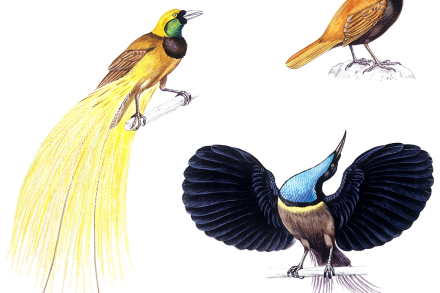
The theory of evolution is dominated by the utilitarian logic of natural selection: adapt or die, survival of the fittest. But consider that ‘fit’ has two meanings these days: ‘healthy’ but also ‘hot’. There is another evolutionary mechanism that scientists have taken a longer time to appreciate – seduction by the hottest, rather than survival of the fittest. It generates very different and much stranger outcomes. Perhaps even the big brains of human beings evolved as seduction devices more than survival aids. When an animal selects a mate, it can shape the future of its species just like breeders of dogs shape different breeds. Sexual selection through mate choice is the ‘fun’ version of evolution, able to generate random, arbitrary and bizarre innovations.

Which birds are doing best in Britain?

The last straw Farmers are threatening to strike over the government’s changes to inheritance tax in what is being described as a first in Britain. Besides France, where farmers regularly protest, India witnessed a farmers’ strike in 2020, which was eventually settled after the government dropped proposed new laws. But one of the earliest farmers’ strikes was conducted by the Farmers’ Holiday Association in Iowa in 1932, by farmers protesting at consistently low prices for their products. The idea was that farmers would go on ‘holiday’, refusing to sell any of their produce. Few, however, joined, leading to pickets blocking rural roads with telegraph poles. One policeman was killed, but in an accidental discharge of his gun. The action died down after a few months.

Who will dress Keir Starmer now?

It is worth upholding the stuffy point which should have prevailed at the start. It was always improper and unethical for Sue Gray (formerly in charge of Propriety and Ethics in government) to leave the civil service to become Sir Keir Starmer’s chief of staff. In her beginning was her end. Carrying with her all her inside knowledge, she was almost a gamekeeper turned poacher, inspiring mistrust among career officials without winning the respect of the much rougher political crowd. To understand why she was unsuited to her job, one has only to imagine how the thing would look the other way round, with Morgan McSweeney being suddenly announced as, say, cabinet secretary.

Porcelain-painting during the French revolution

People don’t accumulate stuff any more. When the late Victorian houses on our street change hands their interiors are stripped of all decorative features and the walls painted white, unrelieved by pictures: if their Victorian owners returned as ghosts, they would go snow-blind. The Victorians’ passion for accumulating stuff was close to an addiction, and no one accumulated it like the Rothschilds. But the Rothschilds didn’t stop at objects; they also collected exotic animals, especially birds. All the Rothschild chateaux and mansions boasted aviaries – and Baron Ferdinand de Rothschild’s Waddesdon Manor was no exception.

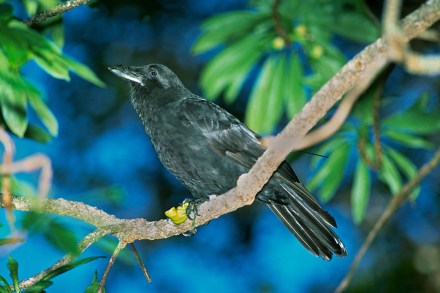
The sad history of the Hawaiian crow

Over a 40-year career, Sophie Osborn has evolved from a greenhorn volunteer for nature, doing mundane tasks in the wilds of Wyoming, to the manager of a captive-release programme for California condors in Arizona. This post placed her at the heart of perhaps the most sophisticated operation for a threatened bird anywhere in the world. Yet Osborn was as passionate in her first role as in her later one. She describes her professional arc in Feather Trails, using three bird species as separate motifs to order her story as a play in three acts. The structure not only offers a way of organising an autobiography; it supplies a sequence of lenses through which to explore the challenges faced by all those acting for birds.

Letters from Spectator readers, August 2024

From our US edition

Can the GOP do normal? I switched from Dem to Rep in 2014 after the disasters of the Obama presidency and the Dems’ loony hatred of the West and the US became clear. Since then I’ve not voted for the Rep nominee for president once, although I have voted for Reps down the ballot and have written in a Rep for president each cycle. I’m looking forward to the day when the GOP’s weird swooning over the orange one is over. - Thomas Nienow ‘Justice’ and the fall of a republic Great article and I hope you’re wrong.

letters

The American Ornithological Society’s war on the past

From our US edition

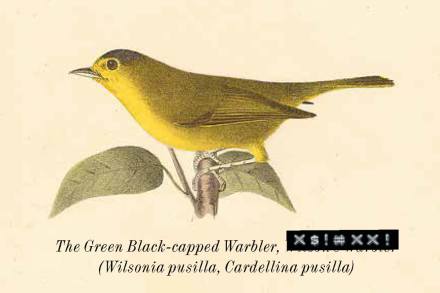
Say you’re easing along a meadow stream, upslope but not steep, somewhere in the Rockies. It’s a morning in spring, the mountains ahead still mostly snowy against a blue sky. A bird sings, giving itself away in a clump of alder. New to birding, you’re naive but full of hope, and through the binoculars you find a thing with feathers, small and olive with yellow breast and black cap. A Wilson’s warbler, says the field guide with its nifty pictures, and you feel the satisfaction of putting a name to a part of the profusion of nature. You’re out there — need it be said? — for the peace, and the bird, deftly identified, is a totem of tranquility.

ornithological

Prayer for the Day is the best thing to wake up to

As the owner of a radio alarm clock, I could theoretically start listening to the Today programme before I’m even awake, but I rarely do. I tell myself it’s too much for first thing; that it’s bound to put me in a bad mood with some interview or other; that Today can wait until tomorrow – or at least until I’ve had my breakfast and a blitz of the somewhat jollier Times Radio. The levée, I say in a Bertie Woosterish sort of way, demands something light. When you crave something thought-provoking but also comforting, nothing beats a few minutes of prayer But then I find myself waking up unintentionally early, switching to Radio 4 and discovering that Prayer for the Day is about to begin.

Where to go to hear a nightingale sing

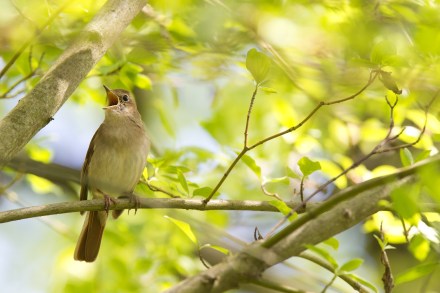
The first cuckoos are audible, skylarks are singing their hearts out, the dawn chorus is in full, joyous effect and more bitterns are booming than in decades. But the real highlight of the birdsong calendar is only now beginning in earnest: nightingale season. Nightingales have been winging their way from sub-Saharan Africa across Spain and France and into the wilder fringes of the southern part of England, where they are beginning their attempts to seduce each other by means of song. And it’s this seductive sound that has given this tiny bird such a huge place in our culture.  There are two guaranteed reference points for any discussion about nightingales. So I may as well get Keats and Berkeley Square out of the way immediately.

An avian allegory: Dinosaurs, by Lydia Millet, reviewed

Adapt or die. That brutal Darwinian dictum is too blunt to serve as the motto of Dinosaurs, Lydia Millet’s slim, quietly powerful 12th novel, but the threat of extinction, implicit in the title, hovers in the air. Bird-obsessed – our feathered friends are ‘the last of the dinosaurs’ – the novel tracks two years in the life of a ‘stricken’ character who feels ‘less than whole’. Gil was damaged in early childhood by the sudden death of both parents, and then by a second abandonment, by a long-term girlfriend who absconded, leaving a three-word note: ‘I met someone.’ Gil is rich, having inherited his grandfather’s fortune. He has few friends and no reason to be in one place rather than another.

Exploring the decline of Britain’s birds

From our US edition

You can forgive those Brits who forget they live on an island. Motorways, next-day delivery and WiFi all distance residents of the United Kingdom from the physical margins of their country, but the limitations of geography are at the heart of a rhapsodic book that traces the astonishing declines of the British Isles’ native birds. In Search of One Last Song is the debut book by Patrick Galbraith, the editor of Shooting Times, the UK’s largest-circulation hunting and shooting publication. This earthy travelogue transports readers to foggy moors and wind-blasted coastlines and gentle fields across Great Britain as Galbraith pursues leads of flocks in utter trouble.

birds

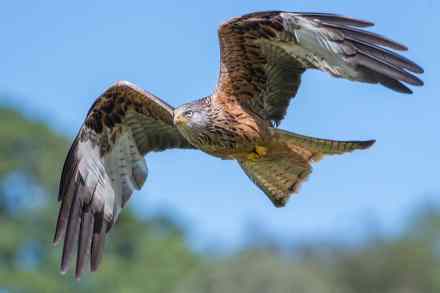
Red kites should never have been reintroduced to Britain

I own a grass farm in the Chilterns which provides grazing for horses and haymaking. It also provides habitat for hares, skylarks, lapwings and field voles (the staple diet of my resident pair of barn owls) – which is why I am so set against the red kites. Between 1989 and 1994, red kites from Spain were imported and released into the Chilterns by the RSPB and Natural England. The population here had dwindled and the RSPB describes the reintroduction programme as ‘one of the UK’s biggest conservation success stories’. But it’s only a success story if you ignore the devastating effect red kites have had on other wildlife. The RSPB assures us that red kites feed mainly on carrion and earthworms and, as opportunists, the occasional small mammal.