Berlin

The theater of Washington

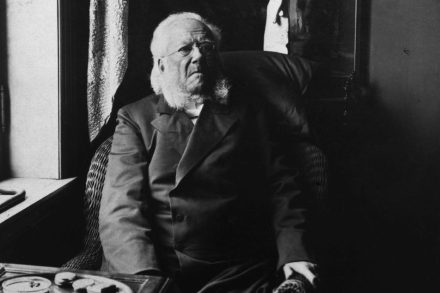
Suddenly it’s Ibsen season in Washington, DC. It’s true that only Shakespeare’s plays are performed worldwide more often than Henrik Ibsen’s. But to have two of the great 19th-century Norwegian playwright’s works running at once in the nation’s capital is unusual. And the works in question – An Enemy of the People and The Wild Duck – deliver contradictory messages. Together they say something not only about the state of the arts in Washington, but also about the state of the liberal mind. Politics is very much a presence on the capital’s stages. The city’s two main Shakespeare organizations, the Shakespeare Theatre Company and the Folger Theatre, last year presented seasons heavily influenced by the presidential election.

henrik ibsen

The Super Bowl spectacle is marketing genius

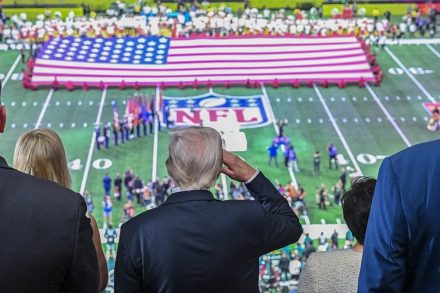
It’s easy to not quite get the Super Bowl. What exactly is it: a sporting event, a music show, a fashion parade for the world’s coolest pair of shades, a new version of the Chippendales with the hunks wearing tight trousers and skid lids? Or, in its latest incarnation, a chance for the world’s most frenetic lawmaker to sink his last putt in a round of golf with Tiger Woods, board Air Force One and say: "Fly me to New Orleans." Or is it a chance to watch several vast and amiable black guys bulging out of their suits and bantering away about a possible three-peat, while Trombone Shorty plays a touching version of "America the Beautiful" and an announcer calls for a moment’s silence to mark the importance of "faith, family and football"?

Super Bowl

Cello explains how music helped escape a certain death at Auschwitz

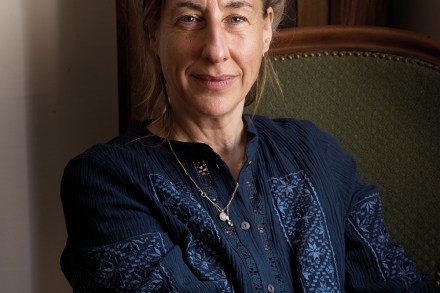
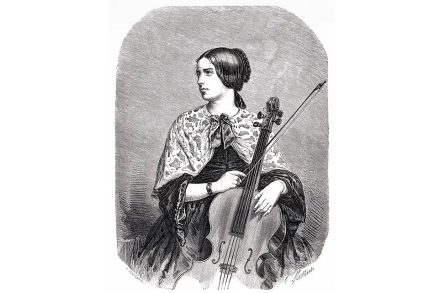
Bees and mammoth bones, a shipwreck, horse urine (preferably female), a seventeenth-century craftsman and a twentieth-century genocide. Playing an extended narrative game of Only Connect in her latest book, the musicologist Kate Kennedy takes a bird’s-eye view of four lives and five centuries as she turns her own instrument, the cello, into a prism. Part history, biography and auto-biography, with digressions into anthropology, acoustics and aesthetics and an intriguing cast of characters, Cello sings richly. But you have to be willing to lgo on the journey. Has publishing reached peak personality-stakes?

cello

John F. Kennedy’s trip worth remembering

Sloppy Joe Biden may face strong political headwinds with just seven months to go before the first presidential primary, but at least he’s in good company. Assessing the Washington landscape in mid-June 1963, when John F. Kennedy set off on a European tour designed to bolster not only the NATO alliance but his own poll numbers, the British ambassador David Ormsby-Gore cabled back to London: He will be leaving behind a disquieting domestic situation, [with] economic troubles to the fore... The Negro leaders are beginning to talk about large scale civil disobedience on a nation-wide basis... Moreover, the racial crisis is causing new difficulties for [Kennedy’s] legislative program...

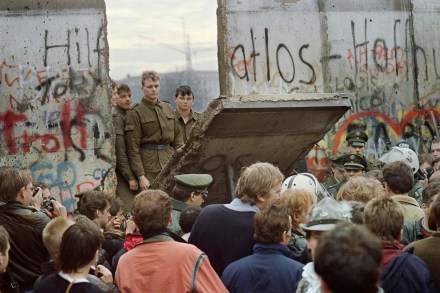
Kennedy in Berlin

Opening all the bottles at Berlin’s Nobelhart & Schmutzig

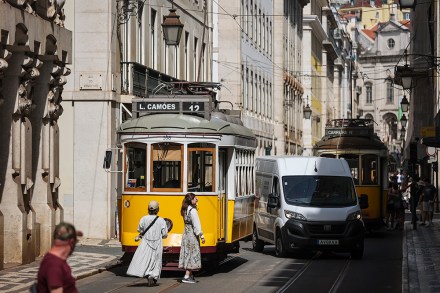
Quizzed on how best to assimilate a new culture, travel writer and celebrity chef Anthony Bourdain once uttered the famous line: “Drink heavily with locals whenever possible.” I never met the man, but still I miss him and his deft writing. The Opening a Bottle series is about getting pickled with people far cooler than I am, in whatever city I’ve washed up in. Lisbon to Berlin, December 2022. I was amazed to fly away unscathed as Storm Efraín reared its ugly head, with more than three inches of rain falling in twenty-four hours. Germany’s capital welcomed me with a cool 32 degrees Fahrenheit, dropping to a bone crunching thirteen degrees by the end of my stint. I kept my puffer coat on in techno clubs and danced in front of lit fireplaces.

(Nobelhart & Schmutzig) berlin

Germany’s Faustian entanglement with China

Back in November, German Chancellor Olaf Scholz met with Chinese Communist Party (CCP) chairman Xi Jinping. His visit to China was the first by a G7 leader in three years. Facing heated domestic and international pushback, Scholz framed his visit as an effort to “further develop” economic cooperation between Berlin and Beijing. In this context, such “further development” means further cementing Germany’s Faustian bargain with China, one in which European-based players, like Airbus and Volkswagen, claim immediate revenue — but at their long-term expense and at great strategic cost.

Berlin as the unreal city

"Berlin has too much [history]." Sinclair McKay cites this rueful observation in the preface to his new book about the city. Given that he is not simply discussing Berlin between the wars, or during the second of those wars, or in the Cold War that followed, but all of it, this may come off as a cry for help. History may — in those words attributed to, well, take your pick — be “one damned thing after another,” but when it came to Berlin, those things hurtled through time in a horde, colliding, overlapping and refusing to form an orderly line. And, in Berlin’s case, they had a way of mattering. Not for nothing does this book’s subtitle refer to Berlin as “the city at the center of the world.” Bad news for a writer aiming, presumably, at a degree of concision.

berlin

Berlin has always been a Faustian metropolis

Each time I return to Berlin, the wonderful, awful city where I spent the best days of my misspent youth, I pay a sentimental visit to Grolmanstrasse, where my German grandparents used to live. There isn’t much left to look at. Their apartment block was destroyed in 1945 in the Battle of Berlin. The site where it stood is now occupied by a children’s playground. For me, that empty space seems to symbolize the way Berlin has changed — mainly for the better, but at enormous human cost. So much has vanished — not just the buildings, but also the people who inhabited them. For my children’s generation, Berlin is a party town. For me, it’s a city full of ghosts. It is these ghosts that keep bringing me back to Germany’s battered, bombastic capital.

berlin