Berlin

Unfinished business in Berlin: The Secret Hours, by Mick Herron, reviewed

From our UK edition

During the summer, I noticed a new noise coming from the crowd whenever Ben Stokes or another English player bashed or stroked the ball to the boundary. It wasn’t quite the cheer you’d expect; more an ahhhh of appreciation, as you would deliver to someone who is offering a masterclass in how to win a game when it has, to all intents and purposes, already been won. By the time I was about halfway through The Secret Hours, that was the noise I was making in my head, as new twists kept unfolding. And they did keep unfolding, if twists can be said to unfold, right up until the last page. Never has a work of popular fiction delighted me more.

John F. Kennedy’s trip worth remembering

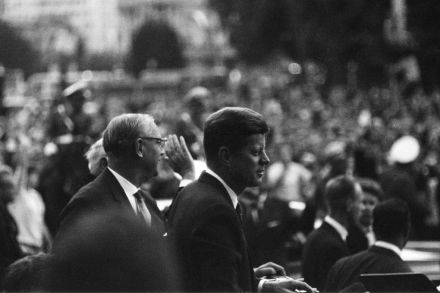
Sloppy Joe Biden may face strong political headwinds with just seven months to go before the first presidential primary, but at least he’s in good company. Assessing the Washington landscape in mid-June 1963, when John F. Kennedy set off on a European tour designed to bolster not only the NATO alliance but his own poll numbers, the British ambassador David Ormsby-Gore cabled back to London: He will be leaving behind a disquieting domestic situation, [with] economic troubles to the fore... The Negro leaders are beginning to talk about large scale civil disobedience on a nation-wide basis... Moreover, the racial crisis is causing new difficulties for [Kennedy’s] legislative program...

Kennedy in Berlin

Love in the shadow of the Nazi threat

From our UK edition

The 1930s saw Walter Benjamin write The Work of Art in the Age of Mechanical Reproduction, Marlene Dietrich rise to fame in The Blue Angel and Pablo Picasso paint ‘Guernica’. If history books mention these events, it’s usually as footnotes to the main European narrative of the pre-war decade. To shift the rise of Nazism, the Spanish Civil War, the Great Terror and other landmarks to the background, one could turn to the cultural history, or the micro-history. In his new book, the German art historian Florian Illies combines both genres to reconstruct the 1930s. Snippets from period documents, including private letters and diaries of notable figures of European and American culture, are distilled into short (between a couple of lines and a few paragraphs) episodes.

Opening all the bottles at Berlin’s Nobelhart & Schmutzig

Quizzed on how best to assimilate a new culture, travel writer and celebrity chef Anthony Bourdain once uttered the famous line: “Drink heavily with locals whenever possible.” I never met the man, but still I miss him and his deft writing. The Opening a Bottle series is about getting pickled with people far cooler than I am, in whatever city I’ve washed up in. Lisbon to Berlin, December 2022. I was amazed to fly away unscathed as Storm Efraín reared its ugly head, with more than three inches of rain falling in twenty-four hours. Germany’s capital welcomed me with a cool 32 degrees Fahrenheit, dropping to a bone crunching thirteen degrees by the end of my stint. I kept my puffer coat on in techno clubs and danced in front of lit fireplaces.

(Nobelhart & Schmutzig) berlin

Germany’s Faustian entanglement with China

Back in November, German Chancellor Olaf Scholz met with Chinese Communist Party (CCP) chairman Xi Jinping. His visit to China was the first by a G7 leader in three years. Facing heated domestic and international pushback, Scholz framed his visit as an effort to “further develop” economic cooperation between Berlin and Beijing. In this context, such “further development” means further cementing Germany’s Faustian bargain with China, one in which European-based players, like Airbus and Volkswagen, claim immediate revenue — but at their long-term expense and at great strategic cost.

Adrift in Berlin: Sojourn, by Amit Chaudhuri, reviewed

From our UK edition

Feelings of dislocation are at the heart of Amit Chaudhuri’s award-winning novels. Friend of My Youth (2017) followed a writer’s unsettling trip back to his childhood home in Bombay. Before that, Odysseus Abroad (2014) charted the day of a lonely English literature student from India as he meandered around London. Now, in Sojourn – Chaudhuri’s eighth novel – we meet a nameless first-person narrator adrift in Berlin. It is the early 2000s, and the 43-year-old, Indian protagonist has just arrived as a visiting professor at a university for four months. He doesn’t know anyone, and navigating the streets is confusing.

Berlin as the unreal city

"Berlin has too much [history]." Sinclair McKay cites this rueful observation in the preface to his new book about the city. Given that he is not simply discussing Berlin between the wars, or during the second of those wars, or in the Cold War that followed, but all of it, this may come off as a cry for help. History may — in those words attributed to, well, take your pick — be “one damned thing after another,” but when it came to Berlin, those things hurtled through time in a horde, colliding, overlapping and refusing to form an orderly line. And, in Berlin’s case, they had a way of mattering. Not for nothing does this book’s subtitle refer to Berlin as “the city at the center of the world.” Bad news for a writer aiming, presumably, at a degree of concision.

berlin

Darkness, desolation and disarray in Germany

From our UK edition

In Geoffrey Household’s adrenalin-quickening 1939 thriller Rogue Male, a lone English adventurer takes a potshot at Hitler and then runs for cover. Few Germans were brave or reckless enough to resist the Führer. Once Hitler’s lunacy had become manifest, however, the dilemma for German patriots was painful: to love the Fatherland yet desire the downfall of Nazism. On 20 July 1944 a bomb went off in a briefcase at German GHQ in east Prussia but, extraordinarily, Hitler sustained only damaged eardrums and a pair of scorched trousers. The conspirators were hanged from meat hooks and, as a final gratuitous cruelty, their widows were sent bills for ‘execution costs’.

Russian spies and the return of the Cold War

From our UK edition

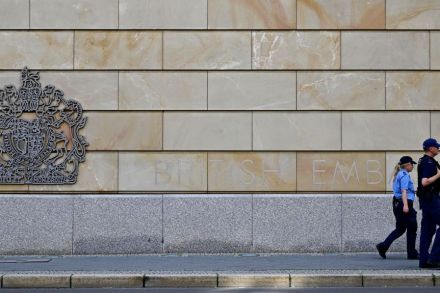
Last week’s arrest of a security guard employed at the British embassy in Berlin, on suspicion of spying for Russia, serves as a stark reminder that the UK and its allies are in the thick of a new Cold War. With the fall of the Berlin Wall in 1989 and the subsequent collapse of communist regimes, it appeared that the East-West stand-off had come to an end. Nato allies breathed a collective sigh of relief and looked to new horizons, believing their principal objective had been achieved and that Russia’s days as a superpower were consigned to the history books.

Should locals be allowed to work at British embassies?

From our UK edition

It is just short of 30 years since the collapse of the Soviet Union and suddenly there comes a reminder of how the world used to be. A member of staff at the British Embassy in Berlin has been arrested in Germany on suspicion of spying for Russia. The arrest took place in Potsdam, which used to be in East Germany, and the Glienecke Bridge separating the town from Berlin proper is where Cold War spies used to be exchanged. The suspect has been identified only as David S, and it is believed he worked in a security role at the embassy. Two details that are known, however, are that he is a British citizen and that he was what is known as a 'local hire'.

Leni Riefenstahl is missing: The Dictator’s Muse, by Nigel Farndale, reviewed

From our UK edition

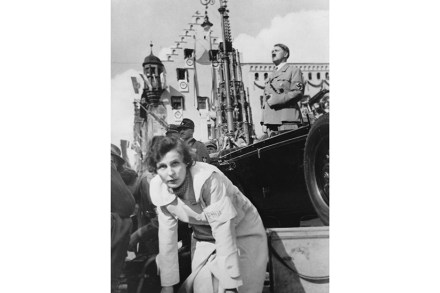
Leni Riefenstahl was a film-maker of genius whose name is everlastingly associated with her film about the German chancellor, Triumph of the Will, which won the gold medal at the 1937 Paris World Exhibition. It is an unforgettable piece of cinema, with the lonely hero descending, like one of the immortals, from the clouds. As he enters the podium at Nuremberg, we only see the back of his head as he wows the tens of thousands. In Nigel Farndale’s riveting novel, Riefenstahl remarks to one of the athletes at the 1936 Olympics that the only thing which she really cares about is film. This seems indeed to have been the case. Farndale’s story does not concern Triumph of the Will.

Billy Wilder — the making of a great film director

From our UK edition

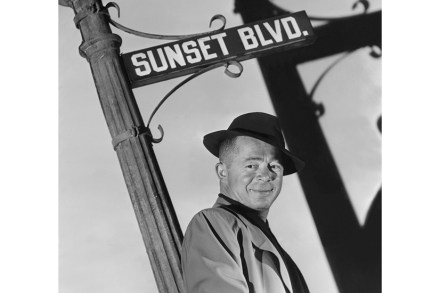
Before Billy Wilder became the celebrated director of films such as Sunset Boulevard, Some Like It Hot and The Apartment he was a busy jobbing screenwriter at UFA Studios in Berlin in the early 1930s, writing or co-writing the scenarios to more than 20 movies. And before that, he was a journalist. Starting in Vienna in the mid-1920s, where his earliest assignments included setting the crossword puzzle (a charming example is included in this volume), he quickly moved on to Berlin and became a prolific writer of occasional pieces for papers such as Der Querschnitt and the Berliner Börsen Courier. Selections of these articles have been published before but are long out of print, and were never translated into English.

Berlin has always been a Faustian metropolis

Each time I return to Berlin, the wonderful, awful city where I spent the best days of my misspent youth, I pay a sentimental visit to Grolmanstrasse, where my German grandparents used to live. There isn’t much left to look at. Their apartment block was destroyed in 1945 in the Battle of Berlin. The site where it stood is now occupied by a children’s playground. For me, that empty space seems to symbolize the way Berlin has changed — mainly for the better, but at enormous human cost. So much has vanished — not just the buildings, but also the people who inhabited them. For my children’s generation, Berlin is a party town. For me, it’s a city full of ghosts. It is these ghosts that keep bringing me back to Germany’s battered, bombastic capital.

berlin

Superbly convincing: Unorthodox reviewed

From our UK edition

When I lived briefly in Stamford Hill I was mesmerised by the huge fur hats (shtreimel) worn by the local Hasidic Jews, and the wigs worn by their wives, and the almost tubercular pallor of their children. I often wondered how such a remote, aloof and archaic sect could possibly relate to 21st-century London. The answer, of course, was that they didn’t: they were like ghosts from another age, walking the same streets but not of this world. I wished I could get a glimpse of their private lives — and now, thanks to Unorthodox (Netflix), we all can. Loosely based on a memoir by Deborah Feldman, it tells the story of 19-year old Esther ‘Esty’ Shapiro (Shira Haas) who flees her ultraorthodox Jewish sect in Williamsburg, Brooklyn, for a new life in very secular Berlin.

Berlin’s failed rent freeze offers a warning to Sadiq Khan

From our UK edition

Berlin’s rent freeze, hailed by some as a potential model for London, is already coming to an end after less than two years. In its final ruling this week, Germany’s Federal Constitutional Court struck down the rent freeze as unconstitutional. In this sorry saga, there are plenty of lessons for those who supported rent freezes in our capital – not least London's mayor Sadiq Khan. The rent freeze was passed in June 2019, and took effect in February 2020. It froze nearly all rents across the city at their 2019-level, supposedly for a period of five years. It was hugely popular in Berlin, and attracted a lot of attention beyond. Rent controls were official Labour party and Green party policy in the 2019 General Election, and some specifically referenced the Berlin example.

Ignore the activists – Humboldt’s Enlightenment project deserves celebrating

From our UK edition

‘What a loss is the excellent Humboldt. You and Berlin will both miss him greatly,’ Prince Albert wrote to his much-beloved daughter Vicky, Crown Princess of Prussia, on news of the death of the author, explorer and celebrity Alexander von Humboldt in 1859. ‘People of this kind do not grow upon every bush [‘an den Blumen’] and they are the grace and glory of a country and a century.’ After some delays and bad luck, the grace and glory of the Humboldt name flourishes once again with the opening of the Humboldt Forum.

Breakdown in Berlin: Red Pill, by Hari Kunzru, reviewed

From our UK edition

‘I was what they call an “independent scholar”’, confides the narrator of Hari Kunzru’s Red Pill, a middle-aged writer from New York of modest reputation who secures a three-month residency at the prestigious Deuter Centre in Berlin. While there, he hopes to write something about ‘the construction of the self in lyric poetry’ and escape the pressures of fatherhood. However, he soon finds the ethos of the centre — on transparency, surveillance and measurable outputs — counterproductive to his notions of artistic creation. Instead, Kunzru’s protagonist is pulled away by new distractions.

As immersive art goes, nothing can compete with Berghain

From our UK edition

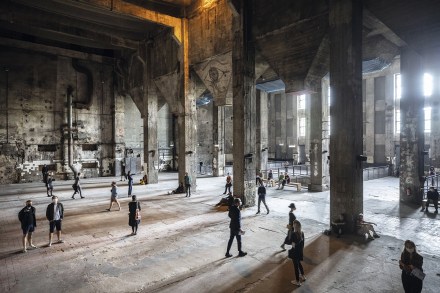
In Geoff Dyer’s Jeff in Venice, the protagonist, at the Venice Biennale, muses on installations. ‘Ideally, the perfect art installation would be a nightclub, full of people, pumping music, lights, smoke machine and maybe drugs thrown in. You could call it Nightclub, and if you kept it going 24 hours a day it would be the big hit of the Biennale.’ How right he was. For what else is Berghain — the world’s most famous techno club — if not a wild work of immersive art? Berghain is housed in the ruin of a Soviet thermal power station in Berlin. Conceived on a grand scale, it’s a fathomless black box you enter into for 12 or so hours to be pummelled by every sort of sensation, before stumbling out again, not quite sure what happened.

Frieda Vizel: ‘Unorthodox’ is nothing like the Hasidic community I know

From our UK edition

A few blocks away are hipster-dense streets with street art and coffee shops. But around Lee Avenue in Williamsburg, it’s as if time has stood still. Men in white knee socks, high hats and coats from another century rush by. Women wearing wigs or shawls on their heads. Here are kosher grocery stores, synagogues and a mikvah – a ritual Jewish bath. It is an enclave few outsiders get real insight into. In the middle of the New York City, the Hasidic community – fundamentalist ultra-Orthodox Jews – practice strict gender segregation, distancing themselves from Western modern society without television, cinema and pop music. This is the environment in which 19-year-old Esty grows up in Netflix’s new series Unorthodox.

A hazardous crossing: The Man Who Saw Everything, by Deborah Levy, reviewed

From our UK edition

Serious readers and serious writers have a contract with each other,’ Deborah Levy once wrote. ‘We live through the same historical events, and the same Pepsi ads. Writers and readers, nervously sharing this all too fluid world, circle each other to find out what the hell is going on.’ Figuring out what the hell is going on within the fluid worlds of Levy’s fiction is not always straightforward. While other authors are increasingly drawn to autofiction, for Levy, uncertain times, it seems, call for uncertain realities. The characters in The Man Who Saw Everything shape-shift, and time bends back and then twists upon itself again.