Berlin

Goodbye to Berlin | 28 March 2019

From our UK edition

Philip Kerr’s first Bernie Gunther novel, March Violets, was published 30 years ago. From the start, the format was a winner: take a cynical, wisecracking private eye modelled on Philip Marlowe and Sam Spade and transplant him to Nazi Germany. Metropolis is the 14th in the series and unfortunately, since the untimely death of its author last year, presumably the final instalment. Thirty years is also the rough fictional timespan of Bernie’s career. Emerging from the trenches of the first world war, he has served for 11 years as a homicide detective in Kripo (Berlin’s criminal police). He’s a tough, morally ambivalent but essentially sympathetic character. Naturally — it goes with the format — women find him remarkably attractive.

Out of tune with the times

From our UK edition

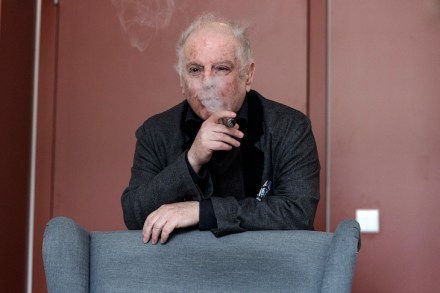
A few years ago, I hooked up with a BBC team in Berlin to record a programme with Daniel Barenboim. We were shown in to his spartan offices at the Staatsoper and, without preliminaries, I conducted an interview with him across a low table for 45 minutes. When our time was up, Barenboim rose and left. I am not even sure if we shook hands. Knowing him from previous encounters, I was not particularly bothered. What did shock me was the sight of my BBC colleagues, their faces white with stress, their limbs rendered catatonic. No one creates tension in a room like Daniel Barenboim. Last month, seven musicians in his Staatsoper orchestra complained of a threatening atmosphere at work and added charges of bullying which, in post-#MeToo times, have to be taken very seriously.

The Bruckner effect

From our UK edition

The lady behind me on Kensington Gore clearly felt that she owed her friend an apology: ‘It’s Bruckner. I don’t know how that happened.’ I felt for her. ‘It’s Nézet-Séguin and the Rotterdam Phil,’ I’d told a succession of my own musical friends. They’d seemed interested. Since the youngish Canadian conductor Yannick Nézet-Séguin took over at the New York Metropolitan Opera, he’s vaulted on to the A-list, and while the Rotterdam Philharmonic isn’t a super-orchestra, exactly, people do dimly recall that it was conducted by Valery Gergiev, back when that was still something to boast about. So, the inevitable question: what are they playing?

Trivial pursuits | 7 June 2018

From our UK edition

‘Is there an end [to this opera] that is not trivial?’ asks the Countess in her final bars of Richard Strauss’s last opera Capriccio. Given the previous two and a half hours, the answer would seem to be a decided no. It is a frothy confection even by the standards of his later operas, the better parts reminiscent of the Prologue to Ariadne auf Naxos and some of Arabella. One thing to be said in its defence is that Strauss’s writing it in 1941–2 is no criticism of him or of the work. People make a fuss about that, but do they think he should have produced an heroic piece — something he had already done, unfortunately — or another work in favour of peace, like the disastrous Friedenstag of 1938?

Nazi gamesmanship

From our UK edition

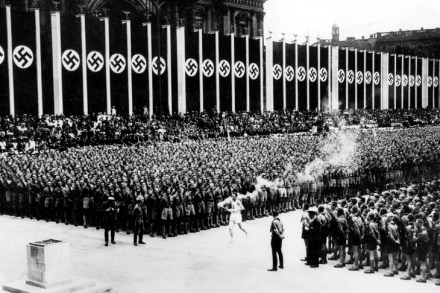
The British diplomat Robert Vansittart had been warning against Nazism for years, so it was a surprise when he and his wife showed up in Berlin for a two-week ‘holiday’ during the 1936 Olympics. ‘Van’ was impressed by German organisation. ‘These tense, intense people are going to make us look like a C nation,’ he wrote in a confidential report. The anti-appeaser had meetings with Hitler and the principal henchmen, and took a particular shine to Goebbels: ‘a limping, eloquent, slip of a Jacobin… My wife and I liked him and his wife at once.’ Van even came to think he might have misjudged the Nazis, though a lapse by the newly appointed ambassador to London, Von Ribbentrop, gave him pause.

The play’s the thing | 16 November 2017

From our UK edition

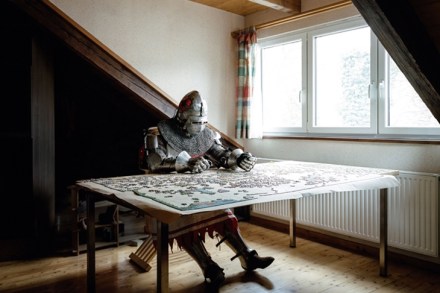
‘It’s all wizards and elves, right? Dungeons & Dragons stuff?’ Such is the general response when you mention larp, or live-action role-play — the peculiarly Scandi pastime that conjures up images of people dressed up in the forest play-fighting with sticks. Well, they wouldn’t be completely wrong. It’s a weird world and with the help of artists it’s becoming even weirder. In the past few years, larp has become more visible in mainstream culture. And in Britain, it has noticeably begun to infiltrate the art world, becoming popular among artists interested in the potential of play.

Who is Kirill Petrenko?

From our UK edition

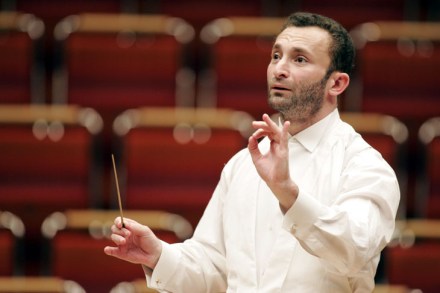
Two summers ago, the BBC were offered a Proms visit by the Bavarian State Orchestra with its music director, Kirill Petrenko. The conversation went something like this. BBC: ‘Petrenko, isn’t he the chap that conducts Liverpool?’ Munich: ‘No, that’s Vasily Petrenko. This one is Kirill.’ BBC: ‘Well, we don’t really know about him over here. He won’t sell at the Proms.’ Barely was the snub delivered than Kirill Petrenko was elected music director of the Berlin Philharmonic, the most coveted orchestra on earth, and the music biz had a good laugh at the BBC’s dumb insularity. But let’s not be too beastly to the BBC: its ignorance was universally shared.

Poor conduct

From our UK edition

Last weekend Daniel Barenboim brought the Staatskapelle Berlin to perform at the BBC Proms for a cycle of Elgar’s symphonies. As Elgar only finished two of the things, it is among the easier symphonic cycles to pull off. But the Staatskapelle played beautifully over two nights at the Albert Hall, with moments of outstanding musicianship. They were let down only, at the end of the second evening, by their conductor. Turning around on the podium to face the audience, he announced that there was something he wanted to say. ‘I don’t know whether all of you will agree with me, but I would really like to share that with you.’ And then he began to spoil the evening.

Hadyn recreated

From our UK edition

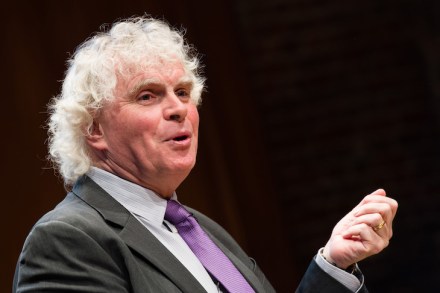
‘Rarely, rarely, comest thou, Spirit of Delight!’ wrote Elgar, quoting Shelley, at the top of his Second Symphony. He should have listened to more Haydn. Sir Simon Rattle certainly has. Rattle becomes music director of the London Symphony Orchestra in September, and for the last concert before their union becomes official, he’d trawled through Haydn’s immense back-catalogue to assemble an unbroken 55-minute sequence of orchestral movements from Haydn’s symphonies, oratorios and half-forgotten operas.

Going underground

From our UK edition

When Wireless Nights hit the Radio 4 airwaves in the spring of 2012, I was not at all sure about Jarvis Cocker’s particular, not to say eccentric, manner of presentation, butting in, making his presence felt, never letting us forget that it’s his programme, he’s in charge. His coy comments were too self-conscious for my taste. He didn’t sound natural; his after-dark meanderings felt too contrived. Now I realise I had completely missed the point. Cocker’s deliberate mannerisms, his upside-down way of looking at things, his curiosity and desire to share with us his thoughts are all very much part of who he is, and once you get used to his style of delivery it all becomes very beguiling.

Bear essentials

From our UK edition

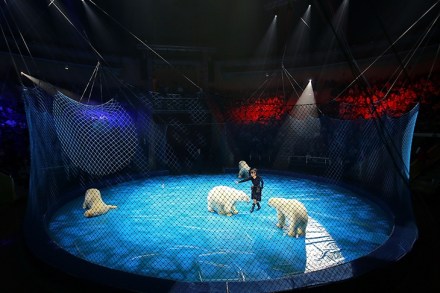
In Yoko Tawada’s surreal and beguiling novel we meet three bears: mother, daughter and grandson. But there will be no porridge or bed-testing here: these are bears with a difference. Tawada has form in animal-linked fiction: The Bridegroom Was a Dog won a major Japanese award. Writing in Japanese and German, she is a prizewinner in both countries. This three-part novel, felicitously translated from the German by Susan Bernofsky, draws us deep into the lives of her ursine trio. Transcending anthropomorphism, her beasts retain their essential ‘bear-ness’ in the human world. Mama bear, an ex-performer in a Moscow circus, is savvy, opinionated and scatty: ‘I hate making small talk about the weather, so I often miss forecasts of major changes.

Diary – 16 March 2017

From our UK edition

In the NHS clinic where I work, adults who suspect they may have Asperger syndrome wait almost a year for a diagnosis. The clinic takes referrals from all over Cambridgeshire and Peterborough (a population of 860,000), but we have to see all of them in the hours of a single full-time doctor. And the clinic is not given funds to run a follow-up support service once someone has been diagnosed. These individuals struggle to socialise, are neurologically different, and are overlooked because their disability is invisible. Many have experienced bullying in childhood, underemployment in adulthood and exploitation because of their social naivety. Many are made to feel inferior despite their often considerable talents. No surprise that many develop depression.

Bruckner by numbers

From our UK edition

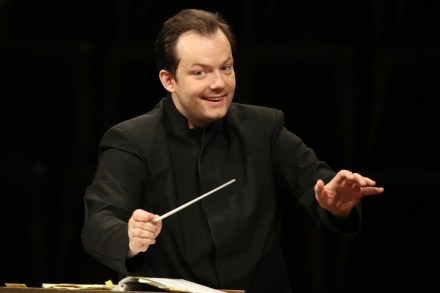
It used to be said that Bruckner composed the same symphony nine times, whereas, thanks to the comparative frequency of performances now, we know that his nine numbered symphonies are as different from one another as Beethoven’s nine. Nothing could make that clearer than the performances of the Fifth and the Ninth given by the Philharmonia Orchestra under Andris Nelsons, three days apart, at the Royal Festival Hall. The Fifth, as befits its stature and length, was given alone. It is Bruckner’s most demanding symphony both to listen to and to conduct. Nelsons is still, I think, at an early stage in his Brucknerian pilgrimage, and his account of the work was not a complete success, but then very few are.

Europe is still struggling to face up to the terror threat

From our UK edition

Europe’s unpreparedness to deal with the terrorist threat it is now facing is highlighted in two reports today. The Wall Street Journal has obtained a copy of the report prepared for the Belgium parliament on the failure of the Belgium authorities to stop the Islamic State terror cell who travelled from Belgium to carry out the 2015 Paris attacks. The report details a quite remarkable litany of incompetence, including the failure of the Belgium police to act on a warning that Salah Abdeslam had changed his social media profile picture to a picture of the Islamic State flag. The failure of Belgium’s various police and intelligence agencies to cooperate with each other is well known. But it is not just Belgium that is struggling to deal with the terrorist threat facing it.

The predictable Muslim ‘good news stories’ have arrived

From our UK edition

Since my Tuesday piece on the Berlin attack – when, as the BBC is still saying, a lorry ‘went on a rampage’ in the city – a number of readers have asked if I could give them this week’s lottery numbers. It is true that much of what I predicted has already come true. For instance, I anticipated that by Christmas Day at the very latest a group of Muslims from the incredibly small and very persecuted (by other Muslims) Ahmadiyya sect would pop up at a church in Germany and that the media would report it as ‘Muslims’ doing this. This particular ‘Muslim good news story’ actually happened faster than even I had guessed.

What the papers say: Labour’s ‘new low’, ‘meddling’ EU courts & ‘Merry Brexmas’

From our UK edition

The hunt continues for the man thought to be responsible for the attack on Berlin’s Christmas market. But despite the urgency of the situation, the Sun says Germany - and the EU - continue to get their priorities all wrong. After all, the paper says, their ‘first duty’ should be keeping ‘their people safe’. Instead, the Sun says, they have released a photo of the wanted man with his eyes censored to protect his privacy. And the European Court isn’t doing much more to help keep people safe, according to the paper. Its ruling against the so-called 'snoopers’ charter' yesterday means that security services will lose out on a vital weapon in the fight against terror.

What the papers say: Thin-skinned Theresa May and the merits of Sturgeon’s Brexit plan

From our UK edition

If any one still doubts the merits of Britain controlling its own borders, look to Germany, says the Daily Telegraph. While it’s true that we still don't know who was responsible for this week’s devastating attack on a Berlin Christmas market, ‘Germany has already suffered fatal terrorism facilitated by the EU’s failure to control its borders,’ the paper says. The Telegraph goes on to say that, after Brexit, Britain will be able to renew its commitment to the ‘first duty of a state’ - ensuring ‘people’s security’. And all the signs of Theresa May’s leadership so far suggests the country is in good hands.

Germany is facing a ticking time bomb of rage

From our UK edition

I've learned that it's best not to say anything about a terrorist atrocity on social media, especially not if it confirms one's political prejudices. It just looks crass, or it has when I've done it. Try not to say anything profound either, as it will probably look insipid; also ideally do not make any point about similar atrocities occurring in less well known parts of the world, as people will quite reasonably think you're just scoring points. And best not to bother with the tweets of solidarity, which are superfluous these days surely; France and Belgium and Germany are our close allies, friends and neighbours, and it goes without saying that when one of us is attacked we feel for them.

Twelve killed after lorry ploughs into Berlin Christmas market

From our UK edition

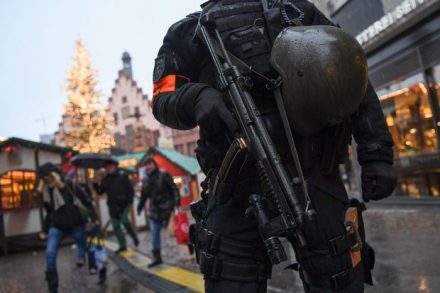
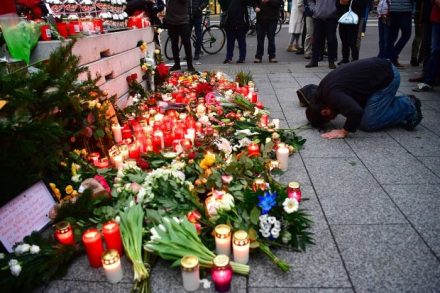
Twelve people have been killed after a truck ploughed into shoppers at a Christmas market in Berlin. Dozens more were injured, some seriously. Police were initially cautious about the motives behind the incident, describing what took place as a 'probable terrorist attack'. But at a press conference this morning, Angela Merkel said 'we must assume it was an act of terrorism'. The German chancellor also said that: This is a very difficult day. I, like millions in Germany, am outraged, shocked and deeply saddened by what happened yesterday in Berlin. Twelve people who were still with us yesterday, who were looking forward to Christmas and had plans for the holiday, are no longer among us. A horrific and incomprehensible act has robbed them of their lives.

It’s nonsense to claim that Isis benefits from Brexit. But that won’t stop some people trying

From our UK edition

While a storm has blown up between Nigel Farage and Brendan Cox this morning over the role played by Angela Merkel’s migrant policy in the Berlin Christmas market attack, the Today programme managed to find a man with a possible alternative explanation for the carnage: Brexit. Yes, really. This morning’s show ended with a man, introduced as a political scientist who has advised the French and German governments on counter-terrorism, offering the wisdom: 'Brexit isn’t helpful…I mean so-called Islamic State were celebrating Brexit…we need to grow stronger, we need to find responses which are not only security-based , we need a common foreign policy.