Barack obama

Where we are in Afghanistan

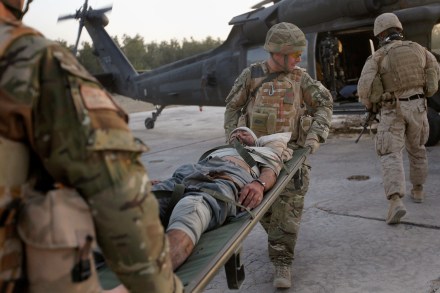
I wrote back in November that as we approached the July deadline when President Obama promised to start drawing down troops from Afghanistan, the tensions between politicians and military would re-emerge, as “the military ask for more time to get it right, and Obama tries to hold them to the deal he thought he made in late 2009”. This is now coming to pass, in London as well as Washington. I also argued that having some sort of public timetable for the troop drawdown was a reasonable solution, perhaps the only solution, to the politicians’ problem of balancing conflicting messages to different audiences in Afghanistan and at home.

Whether she runs or not, Palin won’t be President

Mitt Romney may be announcing his candidacy today, but the real buzz still surrounds Sarah Palin. Will she run for the Presidency or not? She's certainly keeping us guessing. Alex has already written about the crazy media circus surrounding Palin's "One Nation" bus tour, which she launched on Sunday. But looking at the polls, she is unlikely to win the nomination — let alone the election — however much hype she can muster. First up, here's the state of the race, according to the national polls conducted in the last fortnight: As you can see, Palin is currently running a clear second, trailing Mitt Romney by around 3 to 4 points, but 4 points ahead of the rest of the field.

Grading Obama’s visit

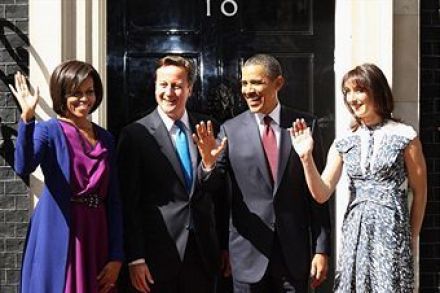
It was a good state visit. Actually, it has been an excellent visit. Much better than George W Bush's and even Barack Obama's 2009 trip to London. The US president got his photo with Wills 'n' Kate. The Prime Minister got his presidential high-fives. There were some odd points. The personal chemistry between David Cameron and Barack Obama made the ping-pong match better than it would naturally have been. For, let's be honest, table tennis is not a natural US-UK sport. There were policy differences between the two leaders too, for example on Libya and deficit reduction. In the end, though, the way to judge visits is not to think about Evening Standard covers or how much of the Today programme was devoted to the US president, but to look at strategic issues.

Obama re-affirms the special relationship

The speech was not a classic but Barack Obama's address to both Houses of Parliament covered the bases today. He started with a winning line, remarking that the previous three speakers in Westminster Hall had been the Pope, the Queen and Nelson Mandela which is either "a very high bar or the beginning of a very funny joke."   As is traditional in these kinds of speeches, Obama paid tribute to the special relationship, lauding it as the embodiment of the values and beliefs of the English-speaking tradition. He went on to say that both the British and the Americans knew that the "longing for human dignity is universal." Indeed, at times Obama sounded remarkably like the last president as he proclaimed his own freedom agenda.

Cameron and Obama’s mutual appreciation has its limits

And the Word of the Day is "we". Both David Cameron and Barack Obama deployed it liberally in their joint press conference just now, as they ran through all the mutual pleasantries and backslapping that attends these events. "We have discussed the two things we care about the most," flushed Cameron, "getting our people jobs, and keeping our people safe." From there on in it was first name terms — "thank you, David" — and claims about the strength of our two countries' special, essential, unique relationship, etc. With the sun blazing down on the garden of Lancaster House, I'm sure the photos will turn out nice. Cameron appeared to be the more eager of the two men, however.

A good day for Cameron

Today is one of those days when David Cameron gets full political benefit from being Prime Minister. He is basking in the president of the United States’ reflected glory. The papers this morning are full of him playing table tennis with Barack Obama and tonight’s news bulletins will lead on their joint press conference at lunchtime. As Cameron stands next to Obama, he’ll look both a statesman and a centrist. It’ll be hard for Labour to attack Cameron as an extremist on deficit reduction when he keeps stressing how he and Obama agree on a sensible level and pace to get their budgets heading back into balance. There are, obviously, substantive foreign policy issues for the two men to discuss. Both Libya and Afghanistan are in need of urgent attention.

The X Factor

They say power is shifting from the United States, but I'm standing outside of Westminster Abbey having joined an enthusiastic surge of people keen to see the US president. People of all ages have snuck out of their offices to catch  a glipse of Barack Obama. And here he comes: 30-odd cars, with his big-windowed limousine in front, zip pass the Speccie offices and we get a wave from the President and the First Lady. I never see the Chinese president getting this kind of rock star treatment. In fact, I don't see many people getting kind of reception, except the Queen and maybe Justin Bieber. This matters. The US may be indebted, overstretched and led by a man whose leadership is less sure-footed than his public personality. But its leader draws an impromptu crowd of well-wishers.

An especially businesslike relationship

The ash cloud nearly claimed its first victim last night: Barack Obama had to leave Ireland early in order to fly to Britain. The Palace’s insistence on protocol has been upset and the President's entourage has been advised not to risk the tap water; other than that, all is well. However, the visit has set sceptical tongues wagging. Some diplomats wonder why the President is here. Afghanistan, the Middle East, joint national security and the world economy are on the agenda, but there is no unifying theme to discussions. Some ideologues fear that the eternal bond between Britain and America is relaxing into a union of convenience.

The austerity hasn’t started yet

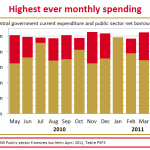
Another month, and another all-time record for state spending in Britain. The government splurged £1.8 billion a day in April — of which £332 million a day was borrowed. Up goes the national debt. All of which leaves us with the question: where is this austerity that George Osborne keeps talking about? He's been in No.11 a year now, and each month state spending has been — on average — 4.9 per cent higher than the same month under Gordon Brown. He seems to be taking the St Augustine approach to fiscal conservatism: Lord, give me spending restraint. But not yet. The below graph shows state spending, per month. The amount in red is how much the government had to bum from the City: This does not look so much different to Labour's plans.

A special relationship | 22 May 2011

The visit of President Obama on Tuesday has not yet inspired rapid British soul searching about the ‘special relationship’, not by comparison to David Cameron’s trip to America last July at any rate. After an awkward beginning, the Obama administration has been at pains to stress that America’s alliance with Britain is inviolable even in a changing world. The administration’s deputy national security adviser, Ben Rhodes, said “there’s no closer ally for the US than the UK” last week. But like all close alliances, the two parties have their differences.

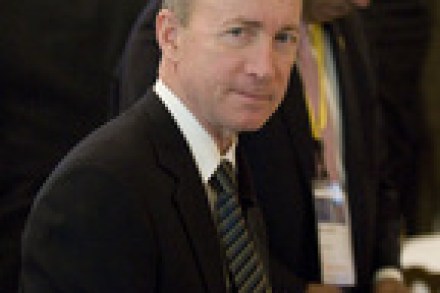
Prospects for fiscal sanity in Washington take a hit as Mitch Daniels decides not to run for president

Mitch Daniels, the governor of Indiana and the Republican establishment’s pick to take on Barack Obama, has announced that he won’t run for president. It appears that Daniels’ wife concerns about a run have prevented him from running. Explaining his decision, he said, “On matters affecting us all, our family constitution gives a veto to the women’s caucus, and there is no override provision”. It is thought that Daniels’ wife was worried that a presidential run would lead to a lot of media attention to the fact that she left him and the children and moved to California for four years during the 1990s before returning and remarrying Daniels.

How the US presidential campaign will change American foreign policy

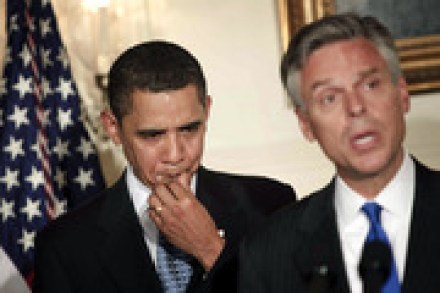
Whoever wins the Republican nomination and takes on Barack Obama in the 2012 presidential election is going to campaign hard on the issue of the US national debt and the idea that constantly running deficits is dragging the nation into decline. This is going to have a serious impact on the foreign policy debate in the US. It is striking that John Huntsman (pictured with Barack Obama), the former US ambassador to China who was governor of Utah and is running as a middle of the road Republican, has chosen to introduce himself to voters in New Hampshire with criticisms of the cost of the Libya mission. He said, ‘I think we have to be very careful about where we choose to spend our money and what we define as being important to our national security interest.

Keeping the States interested

David Cameron has a good relationship with Barack Obama, which will be on display when the US president visits Britain shortly. They speak regularly and frankly and their senior advisers are in near-constant contact. The idea that the Lib Dems would foist a more "Love Actually" policy onto the coalition has come to naught. Yet Britain's influence in Washington has waned. This is no fault of the Prime Minister. In fact, his personal diplomacy has probably slowed-down the process. Instead it has to do with structural changes in the US: the coming to power of a "pacific" President, the importance of US-China ties, the emergence of the Tea Party.

Hillary Clinton: Chinese regime can’t defy history

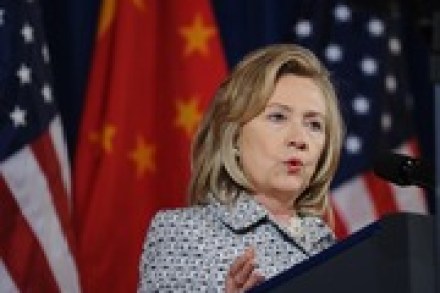
Hillary Clinton has given a fascinating interview to the Atlantic Monthly’s Jeffrey Goldberg. The main topic of it is the Arab spring but it is her comments about China that are making waves. When Goldberg comments that the Chinese have been scared by the sight of dictatorships toppling across the Middle East, Clinton replies:“They're worried, and they are trying to stop history, which is a fool's errand. They cannot do it. But they're going to hold it off as long as possible. “ As Goldberg says, it is quite remarkable to hear the US Secretary of State say so frankly that the Communist dictatorship in China will collapse at some point.

What the death of Bin Laden means for Af-Pak policy

The political and strategic implications of Osama Bin Laden’s death are legion. One of the biggest impacts of this operation could well be that it speeds up the US withdrawal from Afghanistan. Obama has long been keen to start bringing US troops home in large numbers. But a withdrawal from Afghanistan with Bin Laden not dealt with could have been portrayed as humiliating by Obama’s political opponents. Now, that Bin Laden is dead, it is much easier for Obama to scale down the US operation there, arguing that the central base of al Qaeda’s operations have now moved out of the country. The embarrassment for Pakistan of where Bin Laden was found is growing by the hour.

How the US pulled it off

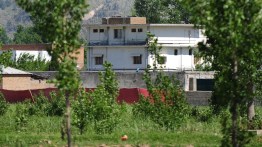
The veil is being pulled back on how the United States tracked down and killed Osama Bin Laden. The New York Times reveals that the intelligence trail started with information obtained from a Guantanamo Bay detainee about the courier that Bin Laden used to pass and receive messages to the outside world. This is proof that the public debate about the utility of Guantanamo is far too glib. This courier was then tracked down last August to the compound, in Abbottabad which was so secure and grand that the Americans realised that it could well be Bin Laden’s hide-out. These suspicions were reinforced when it became clear that this million dollar compound, built in 2005, had no telephone or internet connection and that its inhabitants incinerated their own rubbish.

What Obama said about Bin Laden and Pakistan before he became President

After the events of today, the video above has fresh resonance. It is from the first presidential debate in 2008, and features Barack Obama defending his previously stated view that "if the United States has Al Qaeda, Bin Laden, top level lieutenants in our sights, and Pakistan is unable or unwilling to act, then we should take them out." Turns out, in this case, he was true to his word.

Osama Bin Laden is dead

The manhunt is over, as is the man. After almost a decade since 11 September 2001, a decade of the Afghan conflict, Osama Bin Laden is dead. The Al Qaeda leader was shot by US forces, not in a dusty cave complex in the mountains, but at a large house north of Islamabad. Announcing the news last night, Barack Obama called it, "the most significant achievement to date in our nation's effort to defeat Al Qaeda." It will surely be remembered as the most significant achievement of his Presidency, too. Let's remember, though, that Bin Laden was not Islamist terror, just as Islamist terror is not Bin Laden. The fundamentalists are a diffuse and diverse poison. Even Al Qaeda itself has many chiefs and many bases of operation, from Afghanistan to Yemen.

The Gaddafi family should be regarded as legitimate targets

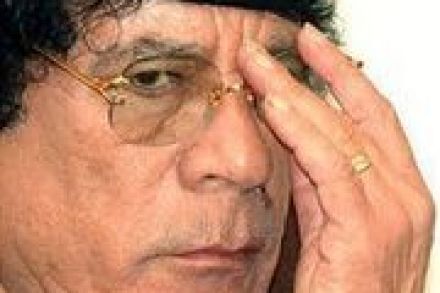
David Cameron became most animated on the Andrew Marr show this morning when the subject of Libya came up. It was clear that he remains passionately convinced that the course he has taken is the right thing to have done. The Prime Minister refused to comment on the Gaddafi regime’s claim that one of Gaddafi’s children had been killed in a Nato airstrike and wouldn’t be drawn on the question of whether the government considers the Gaddafi family legitimate targets. But given that, as Cameron himself noted, the Gaddafi family is running the military operation and ordering moves against civilians then they surely are legitimate targets.

Obama contra Trump

You thought Barack Obama had finished with Donald Trump by releasing a copy of his long-form birth certificate? Not nearly. At the White House Correspondents' Dinner last night — video above — the US Pres took every opportunity he could to bait his bouffant-haired baiter. From the tongue-in-cheek music video that kicks of proceedings — "I am a real American," it declares against clips from the Transformers and Karate Kid — to the even more tongue-in-cheek attack on Trump's credentials that follows; this was humour wielded as a weapon. And, yes, Trump was in the audience to witness it all.    Obama also runs through some of the likely Republican Presidential candidates, much as Richard Littlejohn did for The Spectator recently.