Banking

Why do bankers love techno?

Bankers and other assorted finance bros are an inescapable presence on the London nightlife scene. Industry, the British-made TV drama that follows a group of graduates on (and off) a City trading floor, begins its second series on BBC1 tonight and spares no detail of the drug-fuelled hedonism of its young bankers. One plot arc in the first series starts when the protagonist, exhausted after a long night on the powder, executes a trade in the wrong currency. Some in the field have protested that the on-screen excess is unrealistic. But much of it is apparently inspired by real-world experience. Mickey Down, one of Industry’s creators, spent just over a year working at Rothschild at the beginning of the 2010s.

The death of customer service

The ladies in the bank now wear badges telling you to Be Kind and not do anything that might upset them in any way. Be Kind is in big capital letters on this badge and beneath is a lot of small print explaining the well-known global problem of upset bank employees, which has reached such proportions that extreme measures are having to be taken to tackle customers from whom kindness does not flow in generous enough proportions as to prevent upset being incurred by agents of the high street banks in the course of them courageously risking all in order to speak to the likes of you and me about our banking issues.

‘Good’s never going to triumph’: the makers of BBC show Industry on bad bankers

Finance in screen fiction is a realm of monsters. From Gordon Gekko in Wall Street and Patrick Bateman in American Psycho to the crazed party animals of The Wolf of Wall Street, the arena of deal-making is portrayed – particularly in America – as winner-take-all without trace of empathy or redemption. Industry – the British-made television drama that follows a group of young bankers competing on a City trading floor whose second series airs on BBC1 later this month – is a more subtle example of the genre. Its characters are not monstrous but they are all flawed, ruthlessly transactional in their dealings with each other, and frankly hard to like. There aren’t any nice guys.

Is our card-only culture fuelling inflation?

Is anything anywhere getting noticeably better – economically speaking – or at least less bad? Are commodities and manufactured goods beginning to move more freely, for example, to ease the demand pressures that are stoking inflation? It’s good news that the number of container ships anchored off Los Angeles-Long Beach waiting to unload has fallen from more than 100 in January to around 20 at the latest count, but I note also that dockers there are demanding a 10 per cent pay rise. Drewry’s World Container Index – the handiest indicator of global shipping costs – has fallen 32 per cent from its peak last autumn, but remains five times higher than in the autumn of 2019.

Who’s to blame for the air travel crisis?

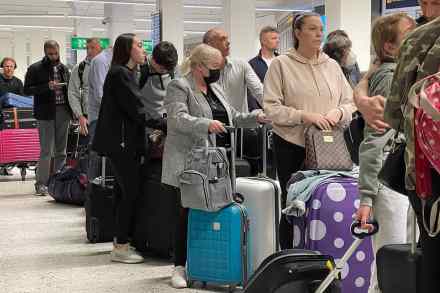
I sincerely hope you’re not reading this on a holiday flight that’s sitting on the tarmac with no indication as to when it might take off – or a sad train home after your flight was suddenly cancelled. Brace for three-hour delays at security, we’re told; don’t even try checking bags in, and at worst, as happened to Tui passengers at Manchester who thought they were going to Kos, watch out for a text after you’ve boarded telling you you’re going nowhere at all. How and why? When the pandemic set in, airlines and airports – thinking, not unreasonably, that their industry was doomed – made mass redundancies rather than keeping sufficient staff on furlough.

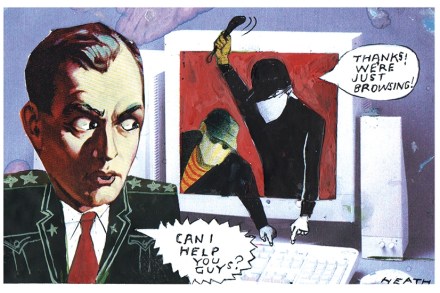
Fraud victim? Don’t bank on getting your money back

Lloyds Bank has been running a new advertising campaign which updates its long-standing black horse corporate branding. The horses no longer thunder along a beach, but interact with people who we assume are actual or potential customers. The soothing payoff slogan goes: ‘Lloyds Bank. By your side.’ The latest episode features a girl who slightly puts me in mind of our 17-year-old daughter. She happens to bank with Lloyds, but there the happy parallel ends. On a Saturday afternoon in March, a person unknown withdrew £440 from our daughter’s account via an ATM. At that precise time, our daughter was playing her clarinet during an audition for a London orchestra.

Like it or not, cryptocurrency is here to stay

There was a time when you could read a book to keep up to date about a subject. Well, that’s over. If a week is a long time in politics, in crypto it’s like a geological period. By the time a book on crypto hits the shelves it needs to be in the ancient history section. The Cryptopians is an attempt to sum up ‘the first big cryptocurrency craze’ by Laura Shin, a financial journalist who writes for Forbes and who has a successful crypto podcast. Its scope is the first decade of crypto, from the creation of Bitcoin to the current frenzy of DeFi (Decentralised Finance) and NFTs.

How men’s pants predict economic crashes

Should you happen to spot me these days lurking outside a Calvin Klein boutique, notebook in hand, I assure you I have a serious purpose. I’m applying the method of the former US Federal Reserve chairman Alan Greenspan, who relished statistical minutiae and believed that sales of men’s underpants – an item so out of sight that a chap could readily choose not to replace worn-out ones when he senses an economic pinch ahead – offer a reliable indicator of impending downturns. That’s precisely the sort of trend we need to watch right now, when the Office for Budget Responsibility tells us to expect UK growth at 3.8 per cent this year and 1.8 per cent next year despite the crippling cost-of-living surge and the fear factor of war in Ukraine.

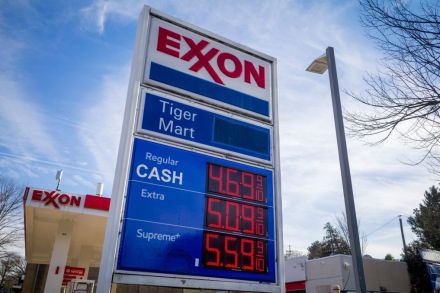
At least BP and Shell tried to teach Russia true capitalism

BP will offload the 20 per cent stake in Rosneft, the Kremlin-controlled energy giant, that is the residue of 25 years’ effort to teach true capitalism in Russia. Shell is ditching a deal with Gazprom, the other state oil and gas major, that includes participation in the stalled Nord Stream 2 gas pipeline to Europe and an LNG project at Sakhalin in the Russian far east. Western companies in many other sectors will abandon their footholds in Putin’s empire in the coming days. Russia’s one-generation dalliance with the western way of business – as opposed to lawless homegrown kleptocracy – is over. But just because Rosneft pays handsome dividends, let’s not vilify BP (or Shell) for trying.

The fall guy: Tom Hayes, Libor and a miscarriage of justice

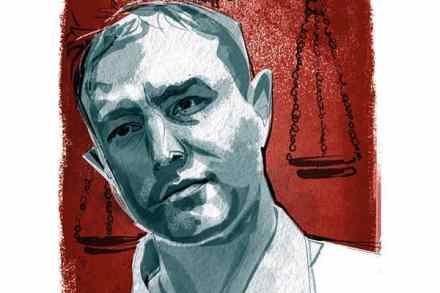
In August 2015, Tom Hayes, then aged 34, was sentenced to 14 years’ imprisonment after being found guilty on eight charges of conspiracy to commit fraud when working as a yen derivatives trader in Tokyo. Hayes was alleged by the Serious Fraud Office to be the grand ‘ringmaster’ of a group of traders who sought to enrich their banks and themselves by rigging Libor, the rate charged for interbank loans. His sentence was reduced to 11 years on appeal but it is still one of the longest--ever jail sentences handed out by a British court for a white-collar crime. A subsequent court hearing ordered the seizure of assets worth more than £800,000, while legal fees consumed the remains of his personal wealth including the proceeds from the sale of his family home.

Are banking apps luring young people into debt?

Last month, my bicycle got a flat tyre. ‘Both of those tyres are gonna need replacing and you’ve knackered your sprockets,’ huffed the bike man. The bill came to £230. It’s the kind of irritating expense that means I run out of beer money a week before payday. I’ve always assumed I’m a reasonably normal spender. Work pays me, the money gradually disappears over the month, with hopefully a bit left over for my Isa. I’m vaguely aware that something exists called a ‘credit card’, but my parents always made clear to me that if you don’t have the money for something, don’t buy it. Where I differ from older spenders is that like many under-thirties I use a Monzo card.

Why is it so hard to live without a mobile phone?

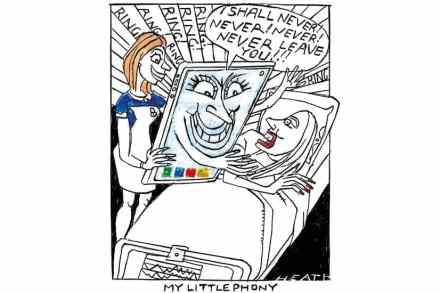
Last week, my mobile phone stopped working. No big deal you might think. If you can get emails on your computer, and you’ve got a landline and that old-fashioned thing, post, why, you’re not cut off, are you? There are, of course, people who wilfully eschew their phones so as to be more in touch with the present moment… birds, clouds, flowers etc. And I’m hardly a junkie. I don’t do social media. I’m a grown-up, so I’m not on Snapchat. Not having a phone should have been fine. But as I discovered, I was quickly cut out of society. First off, you can’t tell the time. Obviously, when you’ve got a phone you don’t need a watch. Or a clock.

From family home to mausoleum: the Musée Nissim Camondo

The potter and author Edmund de Waal revisits familiar terrain at an angle in his third book, Letters to Camondo. Ten years after the publication of his debut memoir, The Hare with Amber Eyes, he is once again in Paris, lurking about the rue de Monceau, ruminating on dust, trying to make the dead speak. He’s particularly keen to elicit a word from Count Moïse de Camondo (1860-1935), the last patriarch of a clan of absurdly rich French Jewish bankers with roots in Constantinople. The count was a friend and neighbour of de Waal’s cousin, the art historian Charles Ephrussi, whose collection of Japanese netsuke played such a large role in The Hare with Amber Eyes. The wary reader may ask: hasn’t de Waal had quite enough of the rue de Monceau?

Was Deliveroo the most embarrassing flop in City history?

The market emphatically endorsed my negative opinion of the Deliveroo share offer, which bombed from its offer price of 390p to close at 282p before Easter. The biggest London IPO since the commodity giant Glencore went public in 2011 now also stands as the most embarrassing flop in living City memory. Goldman Sachs and JP Morgan Cazenove, the deal’s bookrunners, must have known it was in jeopardy when they knocked more than a billion off their first indicative valuation after UK institutional investors lined up to say they wouldn’t touch it. But 70,000 Deliveroo app users, having failed to read that signal, bought into the ‘community offer’ — and have lost an average of £200 each.

Can John Lewis and Waitrose really remain partners?

Historians of unforeseen crises talk about ‘chaos theory’ and the ‘butterfly effect’, in which a small perturbation far away — the flapping of a butterfly’s wings in Australia, as it were — have impacts across much larger connected systems. More usually applied to weather events, the theory had its 2008 moment when the collapse of AIG, a US insurer whose name meant little over here, threatened to cripple so many banks that, without immediate bailouts, our high street ATMs (we were told) might have been switched off there and then.

The Co-op Bank isn’t worthy of its name

We’ve heard a lot this week about infrastructure spending, and how much more will be needed if the UK is to achieve the ‘Green Industrial Revolution’ that the Prime Minister seems to have sketched on the back of a pizza box. We’ve also heard that the Chancellor is looking at ways to squeeze billions for Treasury coffers out of the private pension sector. What we haven’t heard so far is a plan to join those two pieces of the economic jigsaw — by encouraging pension managers to become committed investors in infrastructure projects.

Has Monzo lost its mojo?

Not so long ago Monzo could do no wrong. Its hot coral debit card made it a must have accessory for urban millennials and it quickly attracted millions of customers. But the golden child of UK Financial Technology (FinTech) has had a bruising year. Is it experiencing the kind of growing pains we should expect after such a meteoric rise? Or has this banking unicorn transformed into a lame donkey? Having never turned a profit, Monzo now faces questions about its future direction; its annual report released in July really set alarm bells ringing. Amid the COVID-19 pandemic, its primary source of revenue - a 0.

What’s the point of trying to break up ‘big tech’?

The ‘antitrust’ law suit launched by US authorities against Google has been reported as a potential turning point in the dominance of ‘big tech’ — and an echo of the courtroom dramas that diminished the excessive power of America’s late 19th--century oil, steel and railroad barons. But I wonder how much impact it will really have. The allegation, in brief, is that Google has created an illegal near-monopoly by paying large sums to Apple and other smartphone makers to secure its position as the default search engine for billions of consumers, its grip reinforced by ownership of Android, the phone operating system, and Chrome, the popular browser — all of which also gives it a stranglehold on the digital advertising market.

Why Paris will fail in its bid to usurp the City

Looming behind the Frost-Barnier negotiations is a battle between London and Paris as financial centres. After the June 2016 referendum, the French failed miserably to seduce City institutions away from the UK. There was no exodus from London, and of those few relocations to the continent, most avoided Paris, preferring to scatter widely from Dublin to Frankfurt and Amsterdam.  After failing in the first instance, the French will now attempt to do so by force under the cover of the EU negotiations.

Is mobile banking app Monzo too good to be true?

Innovative, transparent, simple, easy, fair, open, helpful, honest, smart and caring. These are the top ten words customers use when describing Monzo’s culture on Smart Money People. It comes as little wonder then that since launching in 2015, Monzo has picked-up some two million current account customers, is valued at two billion pounds, and now has its sights set on cracking America. Young Brits have flocked to Monzo, and its bright coral card, in their droves, because carrying around a Monzo card is cool.