Banking

How I very nearly became the victim of an online scam

Please don’t suppose I’m unaware I’ve been an idiot. I recount what happened to me last week without expecting your sympathy or understanding, and this account carries only the very slightest plea in mitigation: the suggestion that it could happen to you too, even if you don’t think you’d ever be so stupid. Because I certainly didn’t think I was. I’m not IT-illiterate, I’m not particularly slow-witted, I’ve attended ‘take online security seriously’ lectures, and I do know about the new ways thieves steal from the unsuspecting these days. I’m forewarned. So I thought myself proof against such attempts when the landline phone rang on Friday morning.

Capital punishment

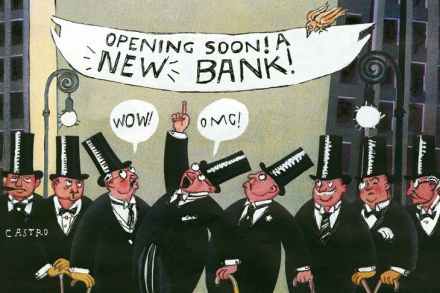
Is now a good time to talk about Jews and money? The Jewish Museum in London thinks so, and perhaps it is right. Motifs of Jewish financial chicanery that have never really gone away are back. The internet age has allowed memes about Rothschilds, rootless financiers and other thinly veiled claims of Jewish duplicity to thrive as they haven’t for several generations. A film at the start of this new exhibition at the museum in Camden gives some context, with clips of recent anti-Jewish statements from the likes of Louis Farrakhan and other conspiracy theorists. It also includes Donald Trump talking about ‘elites’ draining power from America, which strikes me as an unfair overclaim about what the contents of this poisonous cauldron really are.

Will the rise of veganism turn us into a nation of current account switchers?

We’re meant to be a nation of pioneers. Back in the seventeenth century we set sail in search of exotic bounty. This was a time when most people still believed that the earth was flat, and if you sailed too far, you’d simply fall off the edge. But as we  set sail into even choppier Brexit waters, a riddle remains at the heart of the banking industry: Why aren’t more of us prepared to switch current accounts? Over the last few years it’s been hammered home that switching is easy. The Current Account Switch Guarantee, run by Bacs, claims to make it simple, reliable and stress-free. It’s even available for most businesses banking accounts, and yet us Brits are proving rather hard to dislodge from our high street banks.

British politicians have some lessons to learn from Jersey

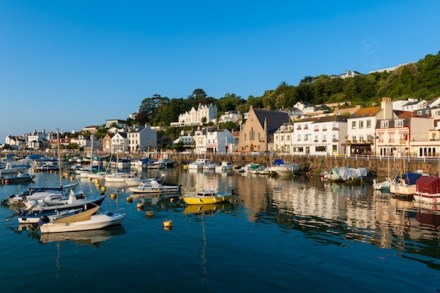
Let’s be honest: when most of us think about Jersey the words ‘tax’ and ‘avoidance’ come quickly to mind. Okay, so maybe Bergerac, cows and potatoes first, but financial chicanery certainly isn’t far behind. That was certainly my association when I got a call from Jersey Finance Limited (JFL), the financial sector’s industry body. They were looking to review how they communicated the Crown Dependency’s financial services offering and wanted a strategic partner to help share these messages. I have to admit that I knew next-to-nothing about the largest of the Channel Islands, nestled between England and France. A year on, I know a little more about the Bailiwick of Jersey, to give it its proper name.

The importance of ethical banking

When I first visited Canary Wharf in the early 1990s, I was struck by a set of black-and-white posters in the shopping concourse advertising the Co-op Bank’s ethical banking stance: essentially, no lending to arms, tobacco, gambling or oil companies, or to regimes that disrespected human rights. A cynic might have argued that it was all about virtue signalling (before we learned that phrase) in the sense that no landmine manufacturer or brutal Third World dictator had ever been known to pop into a Co-op branch, ask for a loan and be met with a polite refusal and a copy of the policy. But it was a smart exercise in market positioning that won many new customers at the time — and a bold statement to buy poster sites beneath Canary Wharf’s burgeoning towers of finance.

An amoral money world needs ethical campaigners more than ever

When I first visited Canary Wharf in the early 1990s, I was struck by a set of black-and-white posters in the shopping concourse advertising the Co-op Bank’s ethical banking stance: essentially, no lending to arms, tobacco, gambling or oil companies, or to regimes that disrespected human rights. A cynic might have argued that it was all about virtue signalling (before we learned that phrase) in the sense that no landmine manufacturer or brutal Third World dictator had ever been known to pop into a Co-op branch, ask for a loan and be met with a polite refusal and a copy of the policy. But it was a smart exercise in market positioning that won many new customers at the time — and a bold statement to buy poster sites beneath Canary Wharf’s burgeoning towers of finance.

Best Buys: Savings accounts for children

With Christmas – and its potential for gifts of money from generous Godparents – fast approaching, now is a great time for children to open up their first savings account. Here are some of the best deals on the market right now, according to data from moneyfacts.co.uk.

Murder, fraud and bankruptcy

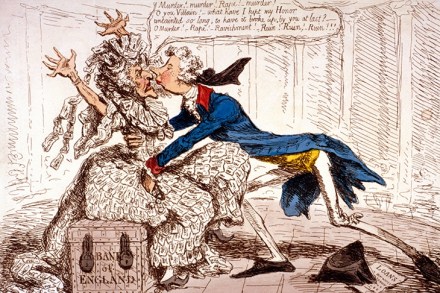
Hamilton, created by the remarkable Lin-Manuel Miranda, has brought the financial musical to the London stage: a serious biography of a great man translated into rap. What comes next? Now we know. It is the story not of one individual but of a national institution — the life and times of the Bank of England. I can’t wait for David Kynaston’s new history to reach the stage. We may have to call on Tim Rice, a revolutionary himself in the world of musicals, to generate a libretto from the long original text. But there is a wealth of material in this fascinating book. Often seen as a rather traditional and staid institution, the Bank of England’s more than 320-year life has been remarkably eventful.

Ten years after the banking crisis, the unfairness still stings

Arguably it was Robert Peston’s breathless reporting of trouble at Northern Rock on the evening of 13 September 2007 that kicked off the crisis. The next morning, depositors were queuing round the block and the drama that would almost bring down the global banking system a year later had begun. Looking back after a decade, we can be grateful for the bailout interventions that shored it all up at the moment of cataclysm — but we can also observe the lingering and deep unfairnesses of the longer-term recovery.

Ten years after the banking crisis began, the unfairness of its aftermath still stings

Arguably it was Robert Peston’s breathless reporting of trouble at Northern Rock on the evening of 13 September 2007 that kicked off the crisis. The next morning, depositors were queuing round the block and the drama that would almost bring down the global banking system a year later had begun. Looking back after a decade, we can be grateful for the bailout interventions that shored it all up at the moment of cataclysm — but we can also observe the lingering and deep unfairnesses of the longer-term recovery.

All banking should be ethical, all of the time

The Co-operative Bank, an ethical lender based in Manchester, has extraordinarily loyal customers. Why, you might wonder, is having loyal customers so extraordinary? Well, in the case of Co-op Bank, you could hardly blame them if they took their accounts elsewhere. The fact so many have stayed put, despite the bank’s spectacular fall from grace, might well have something to do with the paucity of other options on offer. There’s a screaming need for an ethical alternative to the bonus-hungry greed of the mainstream banks, who all too often treat their customers with contempt. Before it ran into the rocks, it seemed as though the Co-op Bank fitted the bill. But then it made the fateful decision in 2009 to embark on a disastrous takeover of the Britannia Building Society.

Failing to bank online could cost you dear

People who don’t bank online are more likely to face financial trouble than their more internet-savvy peers. That's according to research by the University of Bristol for investment website Momentum UK which found that those who bank by phone are five times more likely than internet bankers to miss bill payments and nine times more likely to know how much money they have in their account. While just 3 per cent of people who use a computer to bank had been unable to pay a bill at the final reminder in the last year, for those using the telephone as their main way of  banking this figure rose to 15 per cent.

Spot the endangered species: white men grab the chairs while Hogg loses her job

Tesco chairman John Allan provoked feminist fury by telling would-be non-exec directors, ‘If you’re a white male, tough: you’re an endangered species’ — then claimed he was really trying to make the opposite point, that ‘it’s a great time for women’. But to the contrary, this was a week in which tough white males grabbed the corporate prizes, while one high-flying woman from an oppressed minority was hounded out of her job. First, the blokes. HSBC announced, for the first time in its history and to the satisfaction of governance zealots, the appointment of an outside chairman.

Why I’m glad that Unilever saw off predatory robot Kraft Heinz

I was sorry Kraft Heinz’s £115 billion bid for Unilever collapsed so fast — unveiled on Friday, it was dead by Sunday. Not that I saw the aggressor as a worthy potential victor; but a longer battle would have provided great material for column-sermons on good and bad capitalism. Aha, I hear you ask, but which side is which? Unilever is the Anglo-Dutch maker of Dove soap and Magnum ice creams. With its dual headquarters in London and Rotterdam, its multi-layered bureaucracy and its bosses who bang on about social responsibility, it might be seen as a big fat corporate proxy for the European Union — in urgent need of a shake-up.

My survey of bank closures suggests a new purpose for the tarnished Co-op

Many thanks to the stampede of readers who sent news of bank branch closures. There’s certainly a national pattern, and possibly an epidemic, with HSBC, NatWest, Clydesdale and Yorkshire Bank closing outlets as fast as they can, and only the Nationwide building society making a virtue of offering an undiminished service. Counter staff still in post are praised for their kindness, particularly to readers’ elderly mothers, but sham ‘consultations’ on closures that are faits accomplis are a frequent cause of irritation. It’s clear that many towns will soon be left with no more than a single ATM plus, if they’re lucky, a post-office counter — making life particularly tough for small businesses.

Don’t bet on Trump putting a stop to the hounding of British banks

President Donald Trump is demolishing his predecessor’s legacy as fast as he can sign executive orders, but one thing for which the Obama administration will be remembered is its zest for imposing fines on UK and European banks. In a flurry of Department of Justice activity ahead of the transfer of power, Deutsche Bank agreed to pay $7.2 billion and Credit Suisse $5.3 billion for misleading investors in mortgage-backed securities before 2008, while Deutsche also copped a $630 million penalty (from UK as well as US regulators) for alleged money-laundering on behalf of Russian clients. Meanwhile, Royal Bank of Scotland set aside another $3.8 billion, making a total provision of $8.

Keep the change

Can we do without cash? Since 2015, digital payments in the UK have outnumbered those in cash, and we are invited by the great and the good to cheer this on. The fully cashless era will be magnificently convenient, they say, with goods delivered directly to the door: no fumbling for change, just tap and go. Some London branches of several chains (Waitrose, Tossed, Doddle) don’t accept cash any more. Many others fast-track customers who can pay by contactless means. Businesses and banks want to abolish cash because they have near-pathological fears of the black market and tax avoidance. Yet we should worry about the death of cash, because physical money possesses worth far above its face value. Cash is the great leveller.

Markets start the year strong while Italy totters towards the next crisis

The headline business story of the holiday season was the latest bailout of Banca Monte dei Paschi di Siena. This is Italy’s third largest bank and, according to recent ECB ‘stress tests’, Europe’s weakest — regarded by pessimists both as a potential catalyst for systemic collapse and a symptom of deeper Italian problems that could kick off another euro crisis this year. Monte dei Paschi is also of special interest to me as the world’s oldest bank, having been founded by the magistrates of Siena in 1472 to provide loans at non--usurious rates to ‘poor or miserable or needy persons’, underpinned by wealth from local agriculture.

Italy’s own banking crisis may be about to begin

Theresa May was not the only elephant in the room at Thursday’s European Union summit in Brussels, and EU leaders studiously ignored the other one as well. Paolo Gentiloni, Italy’s new Prime Minister – its fourth unelected one in a row since 2011 - must somehow save Monte Paschi di Siena, the world’s oldest bank, from collapse. If he fails to do so – and much will depend on EU help - then it will set off a chain reaction that could easily engulf the Eurozone. You might have thought, then, that EU leaders would have had something to say about the matter. But no. Italy’s third largest bank, founded in 1472 in the city that is nowadays de facto capital of the Tuscan province of Chiantishire - teeters on the edge of the abyss.

Brexit strategy

For months, now, a hunt has been on for the government’s Brexit strategy. Theresa May has quite rightly refused to disclose it. She knows that the European Union needs to be seen to make Britain suffer. She will have to ask for for a lot, only to back down so the EU can have its pound of British flesh. The hope is that she can then emerge with what she wanted all along. So a game of bluff is under way. This has created a rather unsatisfactory situation where Parliament wants to know where she will draw the line, and she refuses to say. Her every word is scoured for clues. None have been forthcoming.