Baking

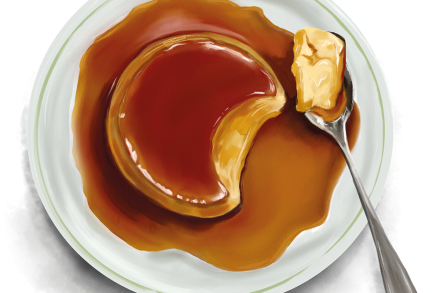
I’ve fallen in love with crème caramel 

If you’ve stuck out my cookery writing for long enough, you’ll know that I am a bit of a Labrador when it comes to different dishes: greedy, ready to try anything, and likely to enjoy it. Food is where my general cynicism and air of ennui gives way to unbridled enthusiasm. There are very few dishes that, when done well, I won’t chalk up in the ‘good’ column. For a long time, crème caramel was the exception to that rule. To be fair, my experience of it had been limited: childhood self-catering holidays in northern France meant that my introduction to the crème caramel did not show it at its best.

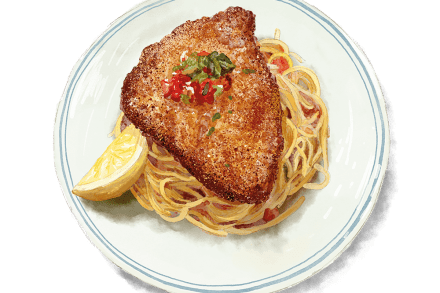
Chicken Milanese is the king of homemade fast food

When it comes to home cooking, we’re obsessed with optimisation. Today this manifests itself in reels on Instagram offering a ‘hack’ to make the time you spend in your kitchen shorter and your dinner to arrive more quickly. Harder, faster, better, stronger. None of this is new: there was a time when every Jamie Oliver cookbook shaved ten minutes of the promised cooking time off the last. Delia Smith’s How to Cheat at Cooking caused a public outcry (can you believe she advocated for frozen mashed potato?). The whole appeal of air fryers is that they’re fast, and while slow cookers don’t exactly get to their destination quickly, they do so with as little intervention as possible from the cook.

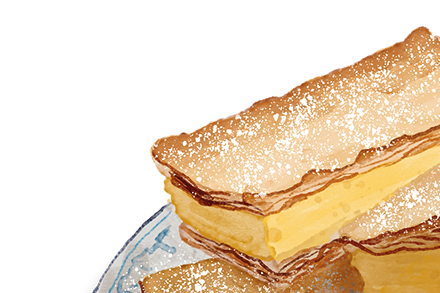
Embrace the squidge of a custard slice

Ihad a culinary revelation this week. I like to think I’m an egalitarian when it comes to food – I like beautiful, fancy restaurant stuff and home-cooked one-pot dishes, I like punchy, in-your-face flavour, and subtle, softer flavours. I love trying new-to-me dishes from around the world, and I love the comfort of eating suppers my grandma would make. You can put virtually anything in front of me and I’ll be thrilled. But as I contemplated this week’s recipe subject, I realised that I avoid foods that ooze. Doughnuts splurging out their jam, uncontainable ice-cream sandwiches, croissants or Danish pastries with custards or compotes that blob onto my clothes. Even really juicy stone fruit or a particularly ripe soft cheese makes me nervous.

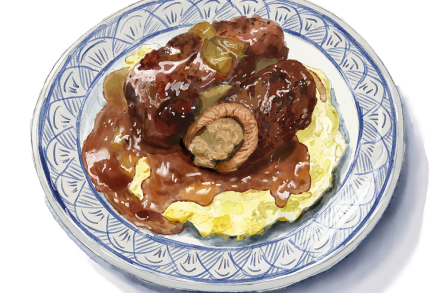
Beef olives – classic comfort food, without an olive in sight 

We all did mad things during the first Covid lockdown. For some it was getting a dog or starting up a microbakery. For me, it was signing up for a NVQ Level 2 in butchery. I’m still not quite sure how it happened, but, once the schools reopened, I spent my Tuesdays in a cold butchery store in east London, socially distanced from my septuagenarian master butchery tutor, who would teach me how to break down whole carcasses, the art of seam butchery and the trick to linking sausages.

The joy of iced buns

‘It’s just a hot dog bun with icing!’ the iced-bun detractors will shriek. I’m a lady with a lot of opinions about fairly esoteric foodstuffs, many of them declamatory, immovable, or strident, but I do not understand taking against the iced bun. I’m not sure what awful bakery-based trauma must have happened to you during childhood to make iced buns the target of your ire, but they are undeserving. For anyone not a self-proclaimed detractor, iced buns (also called Swiss buns or iced fingers) prompt reveries: forgotten childhood memories of plump buns in trollies and sticky fingers holding grown-up hands.

My shameful confession: I’m not a good baker

Contrary to popular conception, I’m not a great baker. I was hired by Bake Off for my judging experience, not my baking skill. I’m a good cook and I know what’s right and wrong about a cake, but I suspect my own baking efforts would not often get Paul Hollywood’s nod of approval. On the day before Good Friday I decided to make hot cross buns. They were a total disaster. Analysing them, I could hear myself say: ‘No flavour. How old were the spices you used? And when did you buy that yeast? You do know you should chuck out spices every year and that instant yeast does not last for ever?’ So, we went to Tesco and bought new spices and yeast. The second attempt was much better, but still not wonderful. We went late-night shopping and happily the Co-op still had hot cross buns.

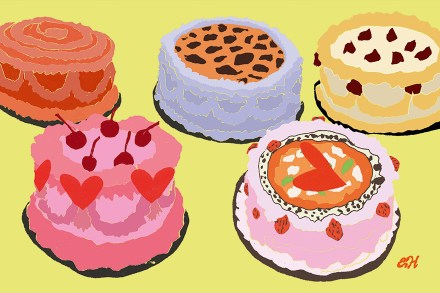
Loser’s: the campy and ironic bakery making made-to-order cakes

From our US edition

Going downtown in New York used to be cool. Before Soho became a glorified shopping mall, it was a haven for starving artists. Before Chelsea became family-friendly, Michael Alig was throwing Blood Feast parties at the Limelight. The rebel heart of downtown, which attracted generations of avant-garde creatives, is much harder to find today. All of Manhattan has seemingly “gone uptown.”  But Loser’s Eating House, a made-to-order bakery operating out of a tiny Soho ghost kitchen, is still serving up a little slice of downtown realness. Loser’s style is campy and ironic. The cakes rely on exaggeratedly large piping, done in a purposefully messy style Loser’s was launched in 2021 by baker Lizzy Koury, who was, until very recently, her company’s sole employee.

The real reason I’m leaving Bake Off

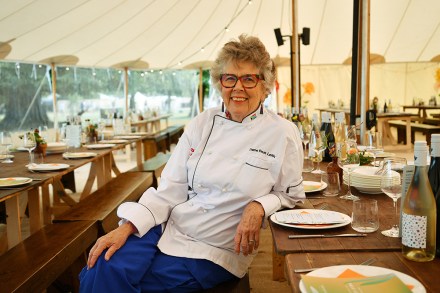
I have been dithering for years about when to stop judging The Great British Bake Off. When I joined nine years ago, I thought, since I was in my mid-seventies, that I’d be lucky to manage two years. At that age, my mother was deaf as a post and away with the fairies, believing her son was her father and that her cat was the one she’d had 40 years before. But my marbles stayed more or less in place and there seemed no good reason to give up a job I loved. Finally, though, the desire to work less and play more got to me. Bake Off and its offshoots such as The Great American Baking Show and even the Christmas specials are all filmed in the summer, which has meant I could never have a summer holiday. So, I finally jumped.

Why are roast potatoes so hard to get right?

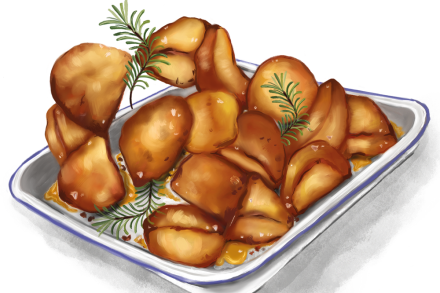
Roast potatoes shouldn’t be complicated. We’re talking two ingredients, plus some salt and maybe herbs if you’re feeling fancy. It’s just shoving some parboiled potatoes in a hot oven, right? Yet I can count on one hand the number of times that I’ve had a decent roast potato in a pub or restaurant. Bad ones are to be found all over the place. I don’t just mean school dinners, mass-catering, hospital-canteen potatoes here. The most carefully prepared Sunday roasts at charming establishments feature beautiful melting meat and thoughtfully cooked veg, all sitting alongside miserable roasties. Clammy. Dark brown. Soft (but not in a good way). A waste of a good potato. No one doesn’t like a roast potato; they’re practically our national dish.

Is this the end of the French croissant?

From our US edition

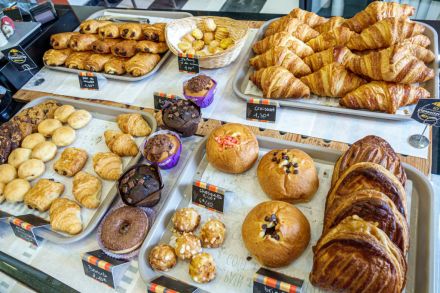
Occasionally, a French person reveals – without any malice or superciliousness – that they run on an alternative operating system from us Brits. And on an entirely different motherboard from our American cousins. Over the years of gathering supporting anecdotes, a surprising theme has emerged: butter. Take my first visit to Paris, more than 30 years ago. I innocently asked for butter with my croissant. Simple answer: “Non.” Naturally, I remonstrated. The waiter retorted: “A croissant eeez butter!” And, in fairness, he had a point. Upon biting into said viennoiserie, I had to concede: it was nothing like the dry grocery store versions I was used to. Moments later, a small pot of raspberry confiture was graciously placed on my table.

croissants

How to make the perfect pecan pie

A pecan pie has been on my kitchen table for the past few days, due to circumstances rendering every other surface or shelf unusable, thanks to badly timed building work and an absent fridge. A mixing bowl sits over it, protecting it from dust and sticky fingers. I’ll tell you what I’ve learned: everybody loves pecan pie. Everyone who has walked past it has stopped dead, done a double take, and then rhapsodised unprompted about the pie’s virtues. At one point, excitement was generated simply by the pie being in the background of a video call. Pecan pie, one of America’s traditional celebration (especially Thanksgiving) puddings, is adored by children, but it has a dark, complex sweetness that wins over grown-ups too, and the toasty nuts bring texture as well as richness.

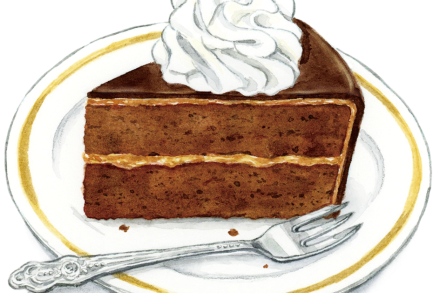
The secrets of sachertorte

My theory is that sachertorte is a victim of its own success. Over the past 150 years, it has become an Austrian icon and, as such, can be found throughout Vienna. And that’s the problem: its ubiquity means that inferior versions abound. It has developed an unfortunate reputation for being dry, dull, tasteless – a pale imitation of a chocolate cake. It is often described – even by its supporters – as a ‘grown-up’ chocolate cake or an ‘elegant’ chocolate cake, but I feel like this does it a disservice. Both feel a little like euphemisms for ‘not that nice’, but this couldn’t be further from the truth.

Don’t let science stop you from baking

From our US edition

Sometimes, cooking is art. Other times, it’s science. When it comes to baking, both are involved, which is what can cause problems for those who are otherwise skilled in the kitchen. Whereas throwing together ingredients and tossing them in the slow cooker or on the grill can produce delicious results, baking demands precision. I have experienced great successes when making a host of dishes that don’t require me to get overly scientific A little too much sugar in the dough can cause cookies to flatten, caramelize or end up burned. Setting an oven to the wrong temperature – or failing to preheat – can produce bread or cakes that are unevenly cooked.

baking

The importance of bread as a symbol of Ukrainian resistance

When Russia invaded Ukraine three years ago, the chef Olia Hercules lost the will to cook. With food so deeply connected to pleasure and to her Ukrainian roots, it somehow felt like an unbearable frivolity to be thinking about recipes while family members were under fire. ‘How,’ she asked, ‘can I cook while my brother is running with a gun in a forest defending Kyiv and my mum and dad are living under occupation?’ When her parents finally managed to leave the country and meet her in Italy, she began cooking again to welcome them. First she made borscht, following her mother’s recipe; then pasta. She could have just bought the dough ready-made – ‘but the gates are now open wide, and I can’t stop’, she writes in Strong Roots.

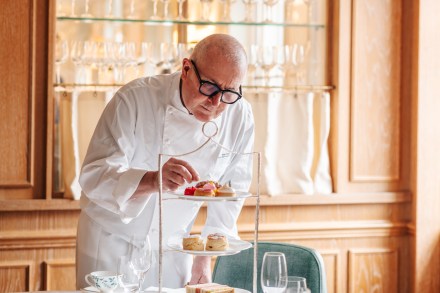
With Roger Pizey, Head of Pastry at Fortnum and Mason

20 min listen

Roger Pizey is a baker, chef and one of the most influential pâtissiers in the UK. He started his culinary journey as an apprentice at La Gavroche under Albert Roux before taking on the role of head of pastry at Marco Pierre White’s Harveys, during the time it achieved three Michelin stars. He has since worked at a number of London institutions and now serves as the head of pastry at Fortnum and Mason. On the podcast he tells Liv and Lara about childhood memories of Manchester tart, what he learnt from Albert Roux and Marco Pierre White, and why Fortnum’s rose éclair is the perfect dessert.

Baked Alaska has become more accessible than ever

From our US edition

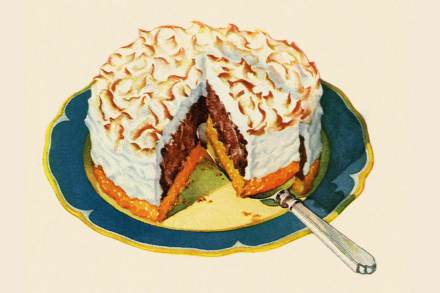
This doesn’t feel right. I am wrapping plastic around a freshly baked cake, preparatory to putting it in the freezer for thirty minutes. Then, I’m supposed to take it out and gingerly unmold a bowl of ice cream on top of it. Back into the freezer after that for another hour or so. The bowl of ice cream is lined with plastic wrap and filled with layers of raspberry sorbet, mango sorbet and chocolate ice cream. The ice cream was pressed flat to fill up all the gaps, and it went into the deep freeze two hours ago. Will it be firm enough to hold a beautiful dome shape as it unmolds onto the cake? Or will it slither and slide everywhere? I’m making Baked Alaska — or what seems to be a modern twist on it.

Baked Alaska

Pavlova: a dessert inspired by the Dying Swan

From our US edition

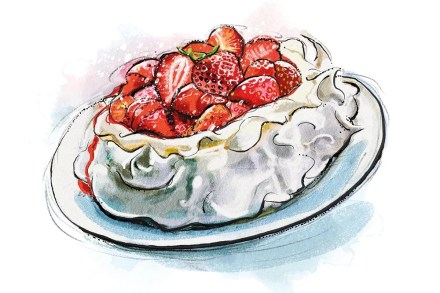
Pastry chef Alistair Wise says never to make pavlova on a rainy day. “Just forget about it,” he advises. And that’s only the tip of the iceberg when it comes to perfect-pavlova advice. Run a cut lemon around the inside of your bowl before whipping the egg whites. Don’t use fresh egg whites, but also don’t use cold egg whites. Don’t use a plastic bowl, as it may harbor grease. The bowl you do use must be scrupulously cleaned and dried... Don’t whip the whites on a “high” setting, but whatever you do, definitely don’t whip them on low. Use clean sugar — cue the desperate self-analysis of one who has never second-guessed the cleanliness of bagged sugar! Use superfine sugar, or all will be a disaster.

pavlova

How to make the perfect clafoutis

From our US edition

Clafoutis. Difficult to pronounce. But oh-so divine and easy to make. Originating in the Limousin region in south-central France, its name comes from the Provençal clafir, “to fill.” So popular was it “to fill” a dish with fruit and batter, that by the nineteenth century, the renown of clafoutis had spread from the Limousin to other regions of France and bordering countries. This classic and elegant summer dessert is usually made with cherries, among the first fruits to ripen, but also with other stone fruit as they appear — apricots, plums, berries and on into the fall with pears.

clafoutis

Baking mistakes: my Christmas clangers

From our US edition

In a world full of muffins, they say, be a cupcake. As an inspirational saying, it’s a good effort. But handsome is as handsome does: for solid worth, texture and deliciousness, give me the muffin every time. I remain open-minded and willing to be proven wrong, but it seems to me that however gloriously frosted, sprinkled, beflowered or bedazzled the exterior of a cupcake may be, its interior texture is always trying, in a socially anxious sort of way, to be cake. All the icing in the world can’t hide the strain. Allow me to suggest an alternative: in a world of Christmas cookies, be homemade shortbread. The last word in simplicity, shortbread is the Hermès scarf of the cookie world. It has confidence, identity, classical elegance.

Christmas
roman

Surviving the holidays with Alison Roman

From our US edition

The holidays are here. If you’re like me, you may view the year’s major baking season with slight dread, not because you’re a Scrooge, but because you lack confidence, patience or skill as a baker. Recipe developer and cooking influencer Alison Roman has written a cookbook for people like us, who find the “science” of baking frustrating compared to the “art” of cooking. The cookbook, Sweet Enough, affirms this preference; in a section called “What I Hate about Baking,” Roman lists gripes: “I hate when I mess up and feel like I wasted hours of my life.” Same. But this book, written with non-bakers in mind, is for the most part flexible and forgiving, and may well become your companion this December.