Australia

The rise and rise of Australia’s Nigel Farage

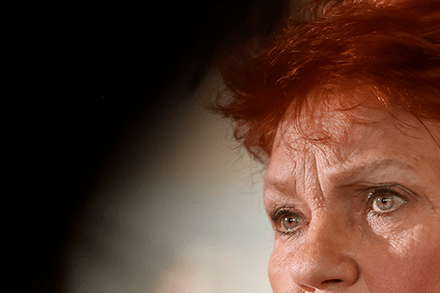
Sydney For three decades, Australia’s political Establishment has been predicting Pauline Hanson’s demise. But whenever critics tried to administer the kiss of death to the flame-haired firebrand, it somehow functioned as mouth-to-mouth resuscitation. Today her One Nation party is polling at levels once thought unimaginable. In recent polls, it even surpasses support for Australia’s centre-left Labor government and centre-right Liberal-National party opposition. Last month, One Nation won its first lower-house seat. Whatever happens next, Hanson has become one of the most consequential figures in modern Australian politics. To British readers, Hanson is often described as Australia’s answer to Nigel Farage. The reverse is closer to the truth.

Strewth! Australian culture is taking over Britain

Catherine and Heathcliff. These are surely roles that every attractive British actor should aspire to. Why mope between auditions for years if you don’t think it could be your windswept hair decorating bus posters one day? So the British director Emerald Fennell’s casting of two Australians – Jacob Elordi and Margot Robbie – to play these parts in ‘Wuthering Heights’ feels unfair. But her decision is canny. Elordi and Robbie are both gorgeous, of course, but they also come bearing a new type of cultural clout. Their perfect hair and facial symmetry are nothing compared with the quirkiness of their being Australian, the aesthetic that’s seducing young Brits most of all. The first clue was about five years ago, when many British men started looking ridiculous.

Coming of age in Melbourne: Landscape with Landscape, by Gerald Murnane, reviewed

Gerald Murnane’s Landscape with Landscape opens with a splendidly disgruntled preface. The book is a collection of six longish stories and was originally published in 1985, when it was panned by a reviewer. ‘Some writers may claim not to be affected by reviews or even not to read them,’ he observes in his preface: ‘I make no such claim.’ And he explains how this brutal notice (‘I call to mind easily some of the nastiest passages’) led to poor sales and the disappearance of the collection, his fourth book. There is some comedy in this alongside the spiky pathos. Murnane is about as close to review-proof as any writer can get. Now 86, he is often mentioned as a likely contender for the Nobel Prize in Literature. He has high-minded admirers (J.M.

My advice to Ben Stokes

In preparation for the 2005 Ashes series, the late Graham Thorpe, a man I looked up to enormously, turned to me and uttered the immortal words: ‘Straussy, there is Test cricket and Ashes cricket. They are completely different things.’ Never has a truer sentence been spoken. The Ashes breaks out of the normal cricket bubble. It means more than cricket: this is a biennial arm-wrestle with the respective sporting reputations of two enormously proud nations on the line. The prize is a little urn but also bragging rights for the next two years. The result of the Ashes, whether positive or negative, invokes an intense emotional response. It makes people feel. That is why it is so important.

An escape from investment banking to the open road

A beguiling cinema advert back in the 1970s showed a young man with a series of doors closing around him with resounding clunks. First, he was hemmed in by the boredom of school, then work, and finally a mortgage – but as soon as he got the keys to his first motorbike, he could hit the open road and escape to freedom. Vroom, vroom. I seem to remember the initial scenes were in grim black and white, but when he got the bike everything switched to vibrant colour – although that may be false memory syndrome.

Few people are as dangerous as an insecure man mocked

‘I have had more direct clinical experience than almost any other forensic psychiatrist of assessing and managing lone-actor perpetrators of massacres,’ writes Paul Mullen, professor emeritus at Monash University in Australia, in his introduction to Running Amok. He’s got non-clinical experience, too. In 1990, when he lived near Aramoana in New Zealand, he was disturbed by gunfire one night. It turned out that the neighbour of one of his patients was busy killing 13 people. Afterwards, Mullen supported the survivors and his patient, who felt ‘anguish’ at not spotting the red flags to prevent the massacre.

The force of Typhoon Tyson, Sydney, 1954

Lord Hawke, the grand old man of Yorkshire cricket and stalwart of the MCC, was not one to mince words. A century ago, the administrator rejected calls for the national XI to be led by Jack Hobbs. ‘Pray God no professional shall ever captain England,’ Hawke said. ‘We have always had an amateur skipper and when the day comes when we shall have no more amateurs captaining England it will be a thousand pities.’ It took 27 years. Elizabeth II would be less picky about commoners. She knighted Hobbs in her Coronation honours in 1953, the same year that Len Hutton, England’s first professional captain, led the side to regain the Ashes after 20 years. To defend the urn Down Under, however, as he hoped to do in 1954-55, was a hard task.

The titans who shaped Test cricket

Cricket histories are a dangerous genre both for writers and readers. They can be incredibly boring, the dullest of all probably being John Major’s weighty tome, which said everything you knew it would say as drearily as you feared. So Tim Wigmore, a young shaver who writes on cricket for the Daily Telegraph, has entered hazardous territory. Speaking as a proud cricket badger, who even has a book by Merv Hughes on his shelf (Dear Merv, 2001), I will admit that I have read rather too many cricket histories, and I swore that it would be a cold day in hell (or possibly at the county ground in Derby) before I would willingly start another. But Wigmore has written a splendid, comprehensive book full of good stories and droll asides.

A novel in disguise: Theory & Practice, by Michelle de Kretser, reviewed

Michelle de Kretser, of a Sri Lankan family living in Australia, is an exceptional novelist – perhaps among the ten best at work in English today. She has been recognised with literary prizes, but it’s surprising that she hasn’t made quite the impact on the public she deserves. She is one of those writers who one presses upon intelligent acquaintances and whose books reward rereading. One of her regular subjects – she is a novelist of bookish, intelligent lives – is the inability of the Australian intelligentsia ever to read an Australian novel. As the author of The Life to Come, perhaps the best Australian novel since Tim Winton’s Cloudstreet, she does well to present this worrying disengagement with amusement.

Is a criminal gang orchestrating anti-Semitism in Australia?

In late January, Australians were convulsed out of their summer holiday torpor by what appeared to be an elaborate anti-Semitic terror plot. Following a series of vandalism and firebomb attacks on synagogues, and cars and private property in suburbs with significant Jewish populations, details of the New South Wales police’s discovery of a caravan laden with plastic explosive were leaked to the media. This caravan was found parked in a street on Sydney’s rural fringe. The explosive had no detonators, but reportedly was accompanied by plans of Sydney’s Great Synagogue, which is located in a busy and narrow city centre street that would have magnified greatly the destruction and casualties caused by any blast.

The assisted dying bill is becoming a car crash

Kim Leadbeater has described her assisted suicide bill as ‘potentially one of the most important changes in legislation that we will ever see’. For Leadbeater and her allies, it is an attempt to make the law merciful: to give relief to those who want to control the manner of their death. But there is another, darker way to see the Leadbeater bill, and last week at the bill committee we got a glimpse of it. The committee stage was meant to reassure the doubters. At second reading, MPs were told that if the vote – just 18 days after the bill was published – seemed rushed, there would be plenty of time for parliament to change its mind. Layla Moran, one of the bill’s supporters, said: ‘Remember you can vote aye on a bill at second reading and no at a later stage.

Heartbreak in the workplace: Green Dot, by Madeleine Gray, reviewed

Hera, the heroine of Madeleine Gray’s first novel, is 24, which, as she says, ‘seems young to most people but not to people in their mid-twenties’. She lives in Sydney with her father and their dog and works as an online community moderator, but the contents of her work bag reveal her to be Bridget Jones’s edgier little sister: ‘My wallet, three pairs of underpants, headphones, nine tampons, a travel vibrator, two novels, a notebook, two beer caps, a bottle of sake and a fountain pen.’ She will also inevitably be compared to Hannah from Lena Dunham’s Girls and to Phoebe Waller-Bridge’s Fleabag. Gray’s writing style is droll but if Hera’s internal monologue sounds gauche and affected, it is useful to remember what the average 24-year-old sounds like.

How Rory Stewart led me astray

I have just returned from a tour of Australia and New Zealand, on whose citizens I inflicted An Evening With Stephen Fry. I first ‘played’ Australia in 1981. The Cambridge Footlights Revue that Hugh Laurie, Emma Thompson, Tony Slattery, Paul Shearer, Penny Dwyer and I had put on in Edinburgh attracted the attention of an Australian impresario called Michael Edgley. Would we be interested in taking our show around his country? Tony had another year of university to go and in the end Hugh and Emma joined up with the previous year’s Footlighters, Robert Bathurst and Martin Bergman. That summer Ian Botham had sensationally and all but single-handedly wrested the Ashes urn from the Australians’ grasp, so we called our show – something of a red rag to a bull – Botham, the Musical.

Who says Test cricket is boring?

Under a dark sapphire sky, tearing across grass as green as a lick of new paint, Mitchell Starc raced in to launch the first ball of the latest Australia vs India Test series last Friday. The murmur from the crowd of more than 30,000 at Perth’s Optus Stadium grew louder with every stride the tall, lean quickie took as he neared his point of delivery… is there anything more exciting than Test cricket at its best? In countries that still take the five-day game seriously, big crowds stillfill big arenas Most sporting contests start slowly – the cautious boxers circling each other, the centre forward tapping the ball backwards from the kick-off.

The towering talent of Joseph-Aukuso Suaalii

When it comes to dishing out God’s gifts, you feel the Almighty could be a little more even-handed. Take Joseph-Aukuso Suaalii for example. He is the extraordinary young centre who helped steer Australia to that exhilarating victory over England at Twickenham last weekend in one of the most thrilling games ever seen there. Suaalii was playing his first ever senior match in rugby union at the age of just 21. As a youngster his school had to seek special dispensation for him to play in the first XV as he was under 14. He later switched to rugby league and at 17 made his debut for the Sydney Roosters in the NRL. Two years later Rugby Australia coughed up £2.6 million to get him to switch codes again back to the 15-man game.

Will there ever be another cricket captain like Richie Benaud?

Some books have good titles. Many books, sadly, have terrible titles. But a few rare books have the perfect title – the one that tells you briefly what the book is about, and also whether you want to own it. Richie Benaud’s Blue Suede Shoes is one such. If that title grabs you, you should go out and buy it now, because the book is brilliant. If it doesn’t, you have probably stopped reading this review already and turned over to Melissa Kite. Either you love Blofeld’s ‘My Dear Old Thing’ eccentricities or you want him slowly roasted over an open fire Harry Ricketts is a poet and critic who was born in London but has lived in New Zealand since 1981.

A haunting theme: The Echoes, by Evie Wyld, reviewed

Evie Wyld’s powerful fourth novel opens from the perspective of Max, a ghost who haunts the south London flat where he lived with his girlfriend Hannah. A ghost story is new ground for Wyld, the multi-award-winning Anglo-Australian writer, but her signature traits are immediately evident – poetic observations of unusual details; a pervasive sense of grief and palpable trauma, leavened with a wry sense of humour (Max notes his ‘strong urge to file a complaint’ about being a ghost); and an intricate plot that compels readers to delve into complex past events.

What Labour could learn from Australia and New Zealand

I’m just coming to the end of a four-week speaking tour Down Under and have spotted some worrying signs of what our new government might have in store for us, particularly on the free speech front. During its six years in power, the Labour party in New Zealand tried to criminalise ‘hate speech’ against minority groups, and Australia’s Labor government has announced it will bring forward legislation to strengthen laws against speech that incites hatred in relation to race, religion, sexual orientation and transgender identity. Will Keir Starmer do likewise? In England and Wales, it’s already a criminal offence to stir up hatred on the basis of a person’s race, religion or sexual orientation, although Nicola Sturgeon went further.

The unimaginable tragedy of the Sydney stabbing attack

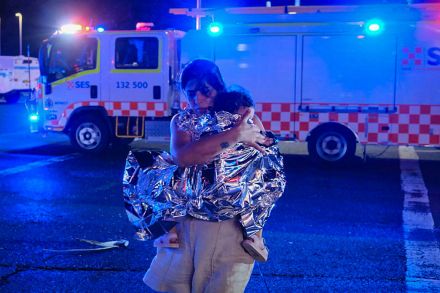
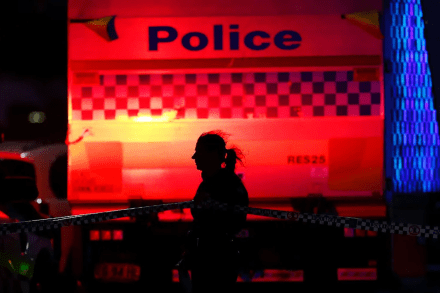
Bondi Junction, in Sydney's affluent eastern suburbs, is well known to many British backpackers and tourists. Close to the city's most famous beaches, it is where locals and visitors go to shop, enjoy the many cafes, or catch the train to town. The sprawling Westfield shopping complex there is a popular place. This Saturday afternoon, a pleasant autumn day, it was filled with shoppers, and people catching up with friends over coffee or just passing the time. None of them would have expected a rampage by a seemingly ordinary man, dressed in an Australian rugby league team jersey and shorts, wielding a knife. 'He looked like a man on a mission', an eyewitness said. What that mission was, no one yet knows.

From the Odyssey to The Wizard of Oz: Praiseworthy, by Alexis Wright, reviewed

Among many other prizes for her stunningly original work, Alexis Wright has won Australia’s greatest literary honour, the Miles Franklin Award, for a novel of the highest literary merit representing Australian life. It is ironic, but sadly apt, that her epic Praiseworthy should be published in the year that Australians, offered a chance to give greater political rights to their indigenous peoples, have voted not to. Everything blends together: dream and reality, donkeys and butterflies, the Odyssey and The Wizard of Oz Wright is an Aboriginal activist as well as a writer. Praiseworthy, which has already won the Queensland Literary Award for Fiction, is an impassioned environmental Ulysses of the Northern Territory, and not an easy read. It does not care to be.