Art

Plants meet Ebony G. Patterson’s sculptures at the New York Botanical Gardens

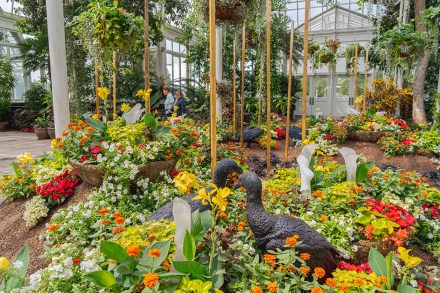
Nestled in the New York Botanical Gardens in the Bronx are a series of vultures, who lurk, grotesque and yet strangely beautiful, among the greenery.  The birds number in their hundreds, are larger than life and glint with glitter in the sun. They aren’t real, of course, but part of Jamaican artist Ebony G. Patterson’s expansive show, ...things come to thrive... in the shedding... in the molting... Works in the exhibition range from cast-glass leaves and body parts — including severed feet — peeking out from the plants to the imposing sculpture “… fester …”, a ten-foot wall covered with more than 1,500 red gloves on one side and tassels, beads and tapestry on the other.

The demands and joys of contemporary art 

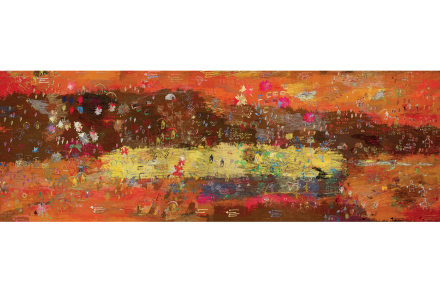
The career of artist Alberto Guerrero has been driven by an overarching desire to look for what is behind everything that we merely, and only dimly, perceive at present. The work of the forty-something Madrid-based Guerrero ranges from abstract, highly textured canvases and three-dimensional images which he calls “spherical paintings” to realistic presentations of daily life — such as his illustrated book Diary of a Quarantine showing life in the Guerrero household during Covid — and deeply reflective images of sacred art. There are few contemporary artists who have such a broad range and vision.

Guerrero

Lumpy, bulgy, human: Threads, at Arnolfini Bristol, reviewed

From our UK edition

Trophy office blocks designed as landmarks are not welcoming to humans; their glass and steel reception areas feel more suited to robots. But this summer the cavernous lobbies of two City buildings – 99 Bishopsgate and 30 Fenchurch Street – have been humanised by To Boldly Sew, an exhibition of wall hangings by the winner of this year’s Brookfield Properties Crafts Award, Alice Kettle. As the owners of Renaissance palazzi and Jacobean mansions understood, wall hangings bring warmth and colour to a cold interior: once more prized than paintings, they doubled as decorations and draught excluders. Now, dignified with the name of ‘fibre arts’, fabrics are back in the fine-art fold and most of the artists working with them are women.

Our great art institutions have reduced British history to a scrapheap of shame

From our UK edition

Let’s indulge in some identity politics for a second: I am from Hong Kong, born as a subject of the last major colony of the British Empire, minority-ethnic, descended from Chinese refugees, now living here in exile. This summer, both the National Portrait Gallery and Tate Britain are presenting new displays that are meant to reflect the ‘inclusive’ and ‘diverse’ identities of Britain. Supposedly, I fit nicely among their target audience. In reality, as an immigrant looking to be included in this nation, I am perplexed by my visits.

Inside the traditional art revolution

More and more often lately, people are rejecting tired modern art. They often find solace in the art of the past; online accounts admiring “traditional art” have amassed hundreds of thousands of followers, but they act as online repositories for a bittersweet recognition: what once was, no longer is. But the kind of art they seek, involving detail, meaning and skill, still exists, and it is growing. The cultural hegemony of contemporary, abstract art is slowly beginning to crack; through those cracks we can see new art surfacing. As I have become increasingly disillusioned with the state of politics, an observation from Ernst Jünger, the German philosopher and skeptic of the extreme politics of his day, rings true to me.

art revolution Milano Painting Academy

The secret life of China’s Banksy

From our UK edition

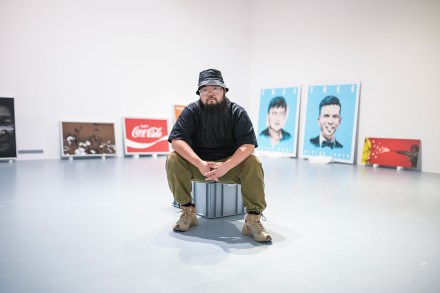
The crypt of St John’s Waterloo feels serene and secure, a world away from the bustling city above. ‘I will spend the day here, because I feel safe here,’ Badiucao tells me. The dissident political cartoonist, who has been called ‘China’s Banksy’, is preparing to display his work on the crypt’s newly restored brick walls as part of an exhibition by exiled artists. ‘I don’t walk alone in any city. I don’t feel safe,’ he says. I meet him soon after he flies in from Warsaw, where the Chinese government tried to close down his solo show, ‘Tell China’s Story Well’. Chinese diplomats pressured the Polish government and the Ujazdowski Castle Centre for Contemporary Art, which hosted him.

What the Old Masters can teach us about contemporary life

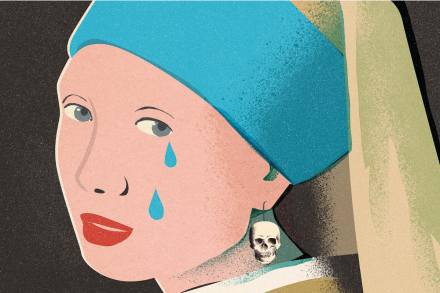
The seventeenth-century Dutch painter Johannes Vermeer is certainly having a moment, thanks to the enormous popularity of the retrospective of his work that concluded at the Rijksmuseum in June. Demand to see the gathering-together of twenty-eight of the thirty-seven currently known paintings by the Old Master far outstripped supply; the show sold out within two days of opening, and scalpers were allegedly reselling tickets online for hundreds, even thousands, of dollars. It’s certainly not difficult to understand why people would flock to see Vermeer’s work, thanks to his beautiful brushwork and sensitively lit compositions.

old masters
carrington

The surreal life of Leonora Carrington

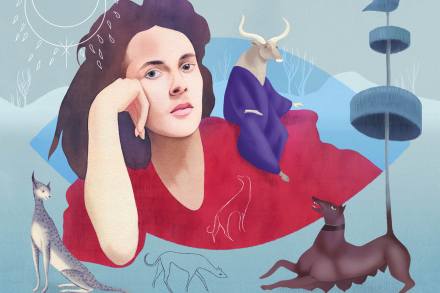
"It’s the belief that nothing is ordinary, that everything in life is extraordinary. And being old is no more, no less, extraordinary than being young.” When the artist and writer Leonora Carrington was asked in 2006 what “Surrealism” meant to her, this was her reply. It was a remarkably frank statement from an artist who had, at other points in her career, declared that she “was never a Surrealist,” even memorably asserting that the Surrealist link between women (the femme-enfant) and the muse was “bullshit.” Perhaps it owes its frankness to the interviewer: sitting across the kitchen in Carrington’s house in Mexico City was her cousin, the journalist and author Joanna Moorhead.

How to combine city break and safari in Kenya

From our UK edition

Nairobi is blossoming. With its vibrant art world, nascent farm-to-fork restaurant scene and unique hotels, east Africa’s biggest city is increasingly on the radar of international travellers. ‘We’re definitely seeing people wanting to stay longer in Nairobi,’ says Rose Hipwood of the Luxury Safari Company. ‘It’s absolutely a cosmopolitan city now. Rather than flying in and flying straight out on safari, people are wanting to extend their stays and see what restaurants, bars and museums there are.’ The country's safari offering is developing, too. Away from the crowds of the Maasai Mara, lesser-known hotspots are finding a following – devoid of people but brimming with nature.

In celebration of Gilbert and George

From our UK edition

I'd always questioned the creative genius of self-confessed 'living sculptures' Gilbert and George. Their dogged determination to be seen as 'different' felt archly self-conscious and not particularly interesting. Like so many fly-by-night avant-gardists of the 1960s, the duo's 'originality' tended to hang on hoary old controversies such as scatological imagery, sex and nudity – hardly revolutionary even back then. But listening to the pair's touching interview with John Wilson on BBC Radio 4's This Cultural Life recently made me reassess their contribution not just to art, but to the gaiety of the nation.

What makes Berthe Morisot’s nudes so unique?

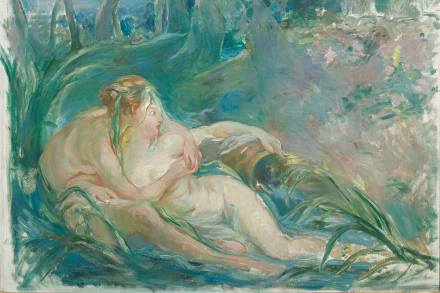
In the years before the French Revolution saw heads roll down the boulevards, revolutionaries murdered in the bath, and endless numbers of fluffy lap dogs forced to fend for themselves after their mamans met their untimely ends, one art critic made his name with his fearless criticism of Paris’s annual art exhibition, the “Salon.” The prominent style in mid- and late-eighteenth century France was Rococo — think impossibly ornate, gold-swirled furniture; paintings of pink, fluffy nymphs in gilt-edged, asymmetrical frames; and portraits of women in dresses so large, and so embellished, that they resemble iced wedding cakes more than human beings. In the face of endless walls of this style of art, the critic Denis Diderot was caustic.

Morisot
museums

What museums can learn from contemporary technology

"I grew up wanting to be an astronaut,” Robert Stein, the National Gallery of Art’s recently appointed chief information officer, tells me. “I studied electrical engineering, and I got a job doing high-performance computing. And then one day, I did a project with an art museum, and I thought, ‘Wait a second, this is an area of the world that needs more technology in order to connect more people together.’ And the rest was kind of downhill from there.” The National Gallery of Art in Washington, DC — the NGA — is now ranked the most popular art museum in America.

vang olsen

Pet portraitist Mimi Vang Olsen marches to the beat of her own drum

Mimi Vang Olsen operates in the West Village equivalent of a goldfish bowl. Every day, the eighty-five-year-old pet portraitist settles in a chair in her studio-cum-storefront on Hudson Street and gets to work, painting dogs, cats and the occasional guinea pig. Tourists stop to peer inside, cooing over a haphazard display of postcards and paintings. Locals tap on the glass to wave hello. During the pandemic, curiosity intensified: Vang Olsen’s shop became an Instagram sensation after she attached a blue mask onto a pug portrait hanging in the window for some much-needed levity. Vang Olsen, however, is nonchalant about the attention. She doesn’t have a cell phone or social media.

Is the New York subway the city’s best gallery?

Milton Glaser was among the most celebrated graphic designers in the world, honored with one-man shows at such glittering institutions as the Museum of Modern Art and the Cooper Hewitt National Design Museum. Glaser was the first graphic designer to receive the National Medal of the Arts award. His “I ♥ New York” logo has been emulated everywhere, and his Push Pin Studios set the standard for graphic design outfits around the world, likely creating more theater posters and magazine covers than any other in New York. But when Glaser pitched one of his “dotty landscape paintings” to the 2017 Metropolitan Transit Authority’s (MTA) call for artists, its Art & Design judges turned him down. Glaser took the rejection in his stride.

subway
Star Wars

Why are there no paintings in Star Wars?

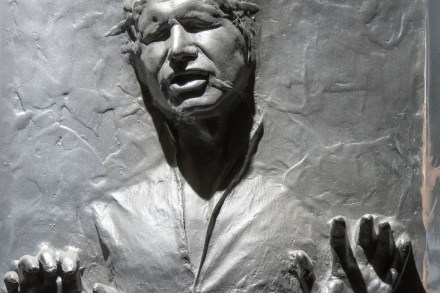
Why are there no paintings in Star Wars movies? The question occurred to me recently, rewatching The Rise of Skywalker. I’m old enough to recall seeing A New Hope in a drive-in in summer 1977, as well as the infamous Star Wars Holiday Special on television in 1978. Over time, my interest in Star Wars has shifted into something akin to nostalgia, so it may not be surprising that this question never struck me before. What is surprising, however, given their glaring omission from the films, is that the man who created the Star Wars universe happens to be a major collector of art — including paintings — and is due to open the Lucas Museum of Narrative Art in Los Angeles by 2025.

Home is where the art is: inside J.M.W Turner’s last house

From our UK edition

Joseph Mallord William Turner continues to occupy a singular place in British cultural consciousness. The English Romantic artist, watercolourist and printmaker – often referred to as ‘the painter of light’ – elevated landscape painting to high art and, when he died in 1851, left a legacy of 550 oil paintings, 2,000 watercolours and 30,000 works on paper. When one of these surfaces at auction, it sells for tens of millions of pounds. However, most of his works – with the power of nature, the sea and the industrial revolution as central themes – were bequeathed to the nation.

Meet Leonardo Bigazzi: the man behind the art in Inside

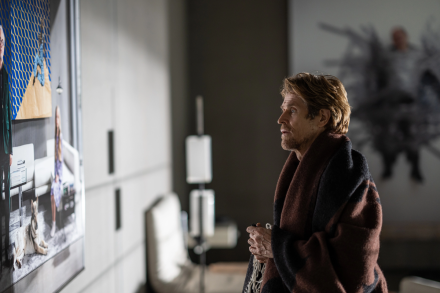
In the thriller Inside, an art thief named Nemo (Willem Dafoe) breaks into the New York penthouse of a renowned architect and collector. Once there he is all business, liaising with an unseen collaborator via walkie-talkie rather than stopping to admire the art.  It is no accident that the paintings he is there to steal, by the Austrian expressionist Egon Schiele, depict tortured souls, with emaciated frames and paper-thin skin. By the end of the movie Nemo will be a physical manifestation of Schiele’s works: a man living in wretched limbo, psychologically tortured and physically deplete.  Directed by Greek filmmaker Vasilis Katsoupis, Inside is a reworking of the one-man survival drama, at once euphoric and painful to watch.

inside leonardo bigazzi

The forgotten art of Hollywood backdrops

Hollywood is America’s greatest export. Yet most museums either fixate on the industry’s tawdriness, as with the Hollywood Museum’s preservation of Marilyn Monroe’s pill bottle, or prioritize indie films over the artistic yet popular movies of Old Hollywood. MoMa’s film program can get so lost in Sundance obscurity that you wouldn’t know movies were a popular art form. When the Academy of Motion Picture Arts and Sciences — aka the group that gives out the Oscars — opened the Academy Museum of Motion Pictures in Los Angeles, Americans hoped an intuition would finally document the products, people and dreams pumped out of La La Land. But the space was so preoccupied with twenty-first-century politics that it failed to honor the Jewish immigrants who built the damn town.

hollywood backdrops
salvador dalí alice cooper

When Salvador Dalí met Alice Cooper

It was the ultimate summit between the two kings of pop-art camp, and one of the weirdest celebrity encounters even by the standards of 1970s New York. Salvador Dalí might have been the century’s most notorious modernist, but by the spring of 1973, when he was turning sixty-nine, his reign as the high priest of surrealism had descended into self-parody. Paintings such as his 1931 “The Persistence of Memory,” with its array of limp watches set in a barren landscape, had once sharply polarized critical opinion. For years, people saw Dalí either as a beacon of intellectual and emotional freedom, or as a madman who was more interested in money than art.

Drinking with Picasso

In February 1900, a critically acclaimed art exhibition went up at a Barcelona café called Els Quatre Gats. It was neither the first nor the last show mounted at the establishment, a popular drinking spot for avant-garde artists, writers and others. It was, however, the very first solo outing for one of the café’s regular patrons: a brash nineteen-year-old local art student named Pablo Ruiz Picasso. It has now been fifty years since Picasso died, on April 8, 1973, and even as that anniversary is being commemorated worldwide with new exhibitions and publications, he has never really faded from public consciousness. His art and even personal objects associated with him are avidly collected, and he continues to inspire filmmakers, musicians and other artists.

picasso