Art

‘When a work lands the excitement is physical’: William Kentridge interviewed

From our UK edition

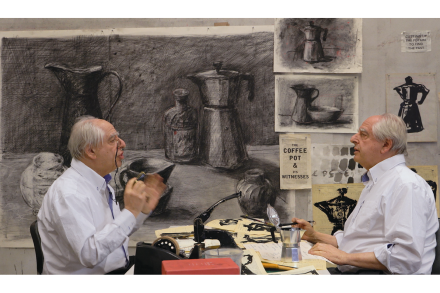
Watching William Kentridge’s film Self-Portrait as a Coffee-Pot is like being submerged inside his mind, inside the coffee pot maybe. There’s so much going on both visually and intellectually that there’s no room at all for a viewer’s own feeble thoughts. ‘When a work lands the excitement is physical, like biting into chocolate. You feel it in your salivary glands’ Superficially, the film is a look inside the South African artist’s studio and an invitation to watch him work. Over four-and-a-half hours and nine themed episodes you see him making his familiar expressive drawings in charcoal and ink, but this studio is also a stage; there’s dance, puppetry, dips into history, astronomy, philosophy.

The curse of distraction: Lesser Ruins, by Mark Haber, reviewed

From our UK edition

Earlier this year, I visited the Museum of Jurassic Technology in Los Angeles. This cherished museum appears at first to be a collection of bizarre arcana: botanical specimens, miniature dioramas, tributes to forgotten polymaths. Closer inspection reveals it to be something altogether stranger, at the junction of fact and fiction. Witty and highly individual, it invites us to sit with the wonder, to contemplate what we have seen. Phones are strictly banned. Lesser Ruins, the consummate third novel by the Minneapolis-based Mark Haber, feels like a literary analogue – taking us as it does down rabbit holes, a twisting tour of an overloaded mind. Its unnamed narrator is a former community college professor (retired or fired – there are different versions).

Presenting our planet and perilous situation as art

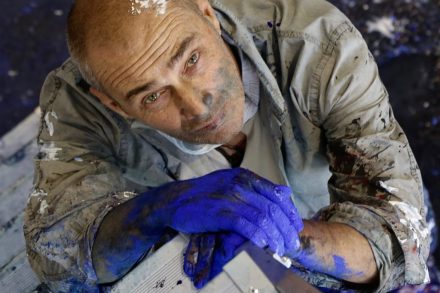
Philippe Pastor is an artist on a mission to educate, alarm and call to action. His subject: our planet and the perilous situation we find ourselves in at this moment of time.  Pastor’s latest works, installed to coincide with Climate Week in New York, are a clear indication of where he sees the state of play. The first enormous canvas, ominously titled La Fin Du Monde, seems to depict an apocalyptic clash of water, fire and ice. Heavy brush strokes are densely laid on with glue and pigment, giving a sense of the swirling waters enveloping us all. “I start the paintings with a story in my mind,” he said, speaking from his studio — a former seventeenth-century farm near Cadaqués.

Neel

Why Alice Neel remains a vital presence

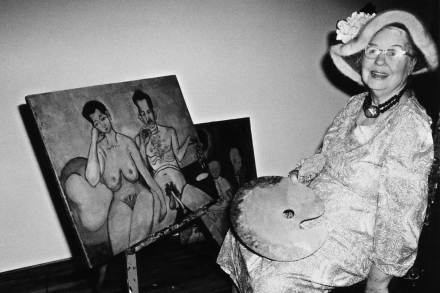
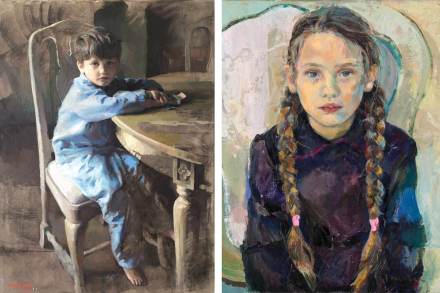
There is no portrait by Alice Neel quite as radical as her own. The artist was one of the first octogenarian women to exhibit a nude of herself with 1980’s “Self-Portrait.” In the painting, Neel grasps her paintbrush and sits exposed at the edge of a blue-and-white striped armchair. There’s no doubt about it; this is a woman of conviction who demands, “Look at me, in all my senescent glory: my silver hair, wrinkled face, sagging breasts, this is a life lived and here are its marks.” It’s only in the last decade or so that Neel has risen from relative obscurity to be acknowledged as one of the twentieth century’s greatest portraitists.

Wondrous treasure troves: the Jewish country houses of Europe

From our UK edition

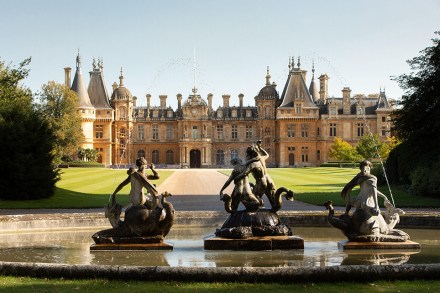
The words ‘country houses’ immediately make one think of England, yet only five of the 15 featured in this hefty, impressively illustrated book are in Britain. It is a compilation of essays: part histories of various Jewish families, part architectural descriptions and part stories of the chateaux, mansions, villas and, of course, country houses all over Europe, owned and sometimes built by these families. Each chapter is by a different author. The swimming pool was surrounded by such a profusion of lilies that the scent at night was overpowering  These homes had different functions. Some, like that of the German-born painter Max Liebermann, were built as traditional country retreats – his palatial town house was next to Berlin’s Brandenburg Gate.

War, one artwork at a time

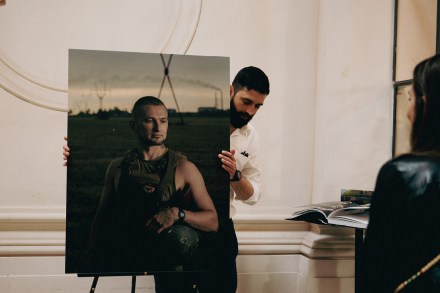
The chaos of the conflict in Ukraine is difficult to track, let alone to reflect on a human scale. After ten years of destruction and occupation, analyzing the situation from afar is a challenge. For many in Ukraine, art provides a way to communicate about a culture under siege, a sense of identity and a concrete way of engaging with people outside the country. While art can speak for itself, it requires human cultural ambassadors. To this end, Ukrainian nationals and their allies have been working tirelessly to promote the voices of a people under siege through museum exhibitions and events the world over.

art
Memorial

A classic monument for World War One

I was standing in front of “A Soldier’s Journey,” the centerpiece of the new National World War One Memorial in Washington, DC, chatting with its creator, sculptor Sabin Howard, when I raised a question. “So, are you the new Saint-Gaudens?” I asked. “No! No, God no!” exclaimed Howard. “That guy sucks.” Sabin Howard is nothing if not direct in expressing his opinions, which are refreshingly free of the artspeak that saturates most of the contemporary art world. It’s a frankness that is best appreciated by examining his current commission as well as trying to understand the artist himself.

Bordeaux

There’s more to Bordeaux than fine wine

In the seminal Casablanca, there is a classic moment when the Humphrey Bogart character is asked how he ended up there. Bogie, doing laconic and world-weary as only he could, replies, “My health. I came to Casablanca for the waters.” When Claude Rains’s iconic Captain Renault purrs, “Waters? What waters? We’re in the desert!” Bogart’s response is simple. “I was misinformed.” This exchange occurred to me when I recently visited Bordeaux, a city with awe-inspiringly beautiful architecture, some of France’s most stylish places to shop and eat, situated teasingly close to the beaches of the Atlantic coast. Yet if you attempted to tell anyone that you’d come to Bordeaux for history, couture or coastline, you’d get the Bordeaux version of “What waters?

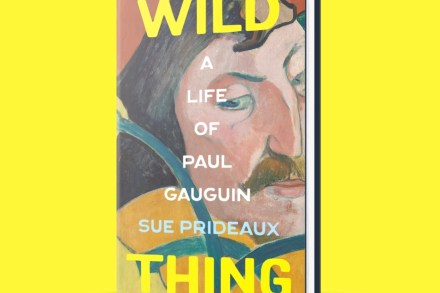
Sue Prideaux: Wild Thing, A Life of Paul Gaugin

From our UK edition

41 min listen

In this week's Book Club podcast Sam Leith’s guest is the great Sue Prideaux who, after her prize-winning biographies of Nietzsche, Munch and Strindberg, has turned her attention to Gauguin in Wild Thing: A Life of Paul Gauguin. She tells me about the great man's unexpected brief career as an investment banker, his highly unusual marriage and his late turn to anticolonial activism. Plus: why she starts with his teeth. This podcast is in association with Serious Readers. Use offer code ‘TBC’ for £100 off any HD Light and free UK delivery. Go to: www.seriousreaders.com/spectator Produced by Patrick Gibbons and Oscar Edmondson.

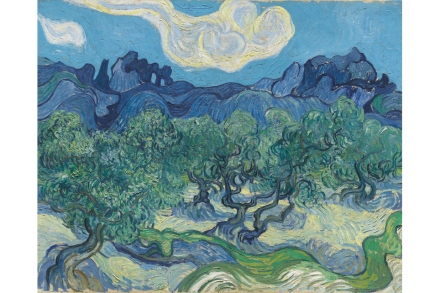
Inside the mind of Vincent Van Gogh

From our UK edition

Van Gogh only got one major review in his career, and he was mystified by it. When the critic Albert Aurier described his six paintings in the 1890 Brussels exhibition of Les XX as the product of a ‘terrible and distraught genius’, the artist responded that, far from being a genius, he was ‘very secondary’ and that his sunflowers – now in the National Gallery – were no different ‘from so many pictures of flowers more skilfully painted’. If he were alive today he would probably have protested at the National Gallery making an exhibition of his work the high point of its bicentenary programme, but he would have liked its focus on his inspirations rather than his distress.

Böcklin brings out the dead

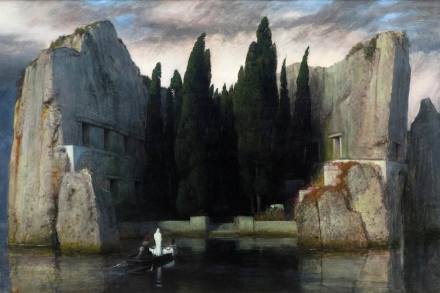
In the fall, a middle-aged man’s fancy turns to thoughts of death. As shadows lengthen, decay takes root in the raised beds, and the “spooky season” recalls the shortening of our days. It also provides an opportunity to reflect on how one artist embraced this time of year. Much of the life of the Basel-born Symbolist Arnold Böcklin (1827-1901) was haunted by the specter of death. His first fiancée died before they could marry; he himself nearly died of typhus. Of his fourteen children, five died in childhood; three others predeceased him. His daughter Maria was buried in the English Cemetery in Florence, where Böcklin spent much of his life. Scholars believe that the cemetery partly inspired Böcklin’s most famous work, 1880’s eerie “The Isle of the Dead.

Böcklin

Why is no one marching against VAT on school fees?

From our UK edition

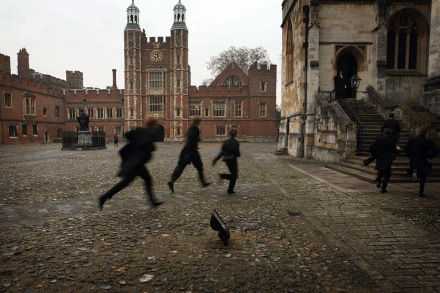
How passively we respond to revelations of Labour’s real direction of travel. As millions of pensioners brace for the confiscation of winter fuel payments and other Budget tax raids, shouldn’t they be pinning on their medals, raising their banners and marching down Whitehall – alongside columns of private school parents, furious at the imposition of VAT on fees? Yet so far barely a whimper of protest, as though those affected are racked with guilt at having kept the Tories in power for so long. In response to the school-fee fait accompli, Eton with its mile-long waiting list will hit parents with a full 20 per cent VAT hike from January, taking the annual cost per pupil to £63,000.

What are the most ‘unsettling’ artworks to hang in 10 Downing Street?

From our UK edition

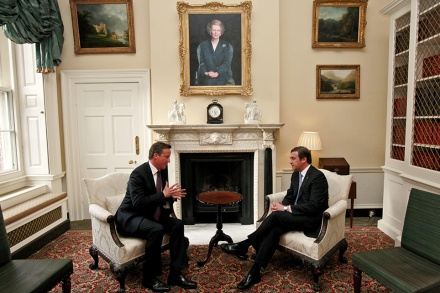
The art of politics Keir Starmer moved a portrait of Lady Thatcher from one room at 10 Downing Street to another because he found it ‘unsettling’. Some more possibly unsettling artworks that have hung at No. 10: — ‘More Passion’, by Tracey Emin, featuring the words ‘More Passion’ in neon, was installed by David Cameron in 2011. In 2022 Emin wrote on Instagram about her unhappiness that it was still there after the revelation of Boris Johnson’s lockdown parties. His ‘behaviour and lack of contrition’, she said, were ‘bizarre’. — Annabel’s – a series of lino cuts depicting Sloanes revelling at the Mayfair nightclub in the hedonistic mid-1980s – also hung in Downing Street during Johnson’s premiership.

In the studio with Merche Gaspar

I was sitting cross-legged on the floor of artist Merche Gaspar Caro’s studio in Barcelona on a rainy Monday morning when I asked myself, “Why isn’t this artist better known?” We had met by chance some months earlier, when I passed by the Galeria Subex, which at the time was hosting a show of her recent work. I was initially drawn in by the exhibition poster, which displayed a stunning image of a young woman wearing a dark-blue dress and a white apron. Once inside the gallery, I was enthralled by canvases of mothers and daughters, drawings of birds and paintings of children playing or curled up in bed reading stories. Many featured a wonderfully cool, contemporary palette of mauve, gray and sapphire.

Sylvester

The life of David Sylvester

It’s 1960, and the clock has struck seven in the morning on Manhattan Island. A car weaves through the clamorous city as the morning sun settles. In the front seat are the Canadian-American painter Philip Guston and the British art critic David Sylvester; the pair have just enjoyed a sobering Chinese meal after a long night of drinking with Willem de Kooning and Franz Kline, which called for the digestif of a drive. It has been an epochal night for Sylvester; he just doesn’t know it yet. In 1996, Sylvester, who would have turned 100 this year, wrote his essay “Curriculum Vitae” later reproduced in his acclaimed About Modern Art: Critical Essays 1948-2000.

Inigo Philbrick, the art world’s wheeler dealer stealer

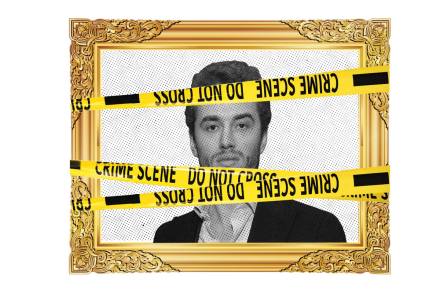
A few months after going on the lam in late 2019, the thirty-two-year-old wunderkind art dealer Inigo Philbrick sent his friend and colleague Orlando Whitfield a trove of documents. Philbrick wanted his old friend to write a sympathetic account of the misdeeds he stood accused of — since described as the biggest art fraud perpetrated in US history, for which Philbrick was later convicted and imprisoned. Whitfield has instead written All That Glitters, a memoir chronicling their friendship and dealings during a heady “gold rush” decade in the art world. Going through Philbrick’s correspondence and the court documents, Whitfield realized his friend was not the person he purported to be, certainly not the one his clients believed he was.

Philbrick
Resch

A beginner’s guide to buying art

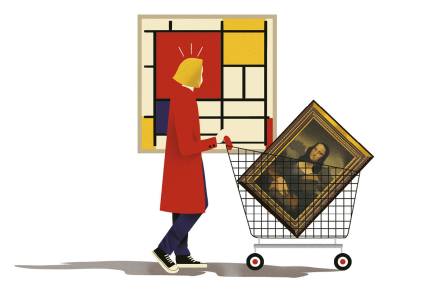
Perceived barriers to entry often keep potential art collectors from taking the step beyond admiration to acquisition. Sometimes this results from neither liking nor understanding what’s available, but basic hurdles can involve learning how best to source and price what you are collecting — and the terminology can be daunting too. In his latest book, How to Collect Art, art-market expert Magnus Resch puts forward the most comprehensive, clearly explained guide to art collecting that I’ve ever read. A best-selling author, an entrepreneur and an art collector himself, Resch not only teaches art management at Yale, but has written and commented on the art market for years.

The art of Japanese woodblock printing

From our UK edition

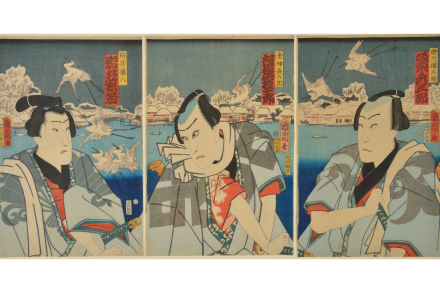
Van Gogh owned a copy of Utagawa Kunisada’s woodblock print of the ‘Yoshiwara Poet Omatsu’ (1861), which is currently on display at the Watts Gallery. It depicts the poetess who rose from humble origins in an elegant kimono at her dressing table and was part of Kunisada’s series of paintings titled Biographies of Famous Women, Ancient and Modern, but Van Gogh may not have known that. By the time he started amassing Japanese prints – he splurged on 600 of them in the winter of 1886 – they had become collectibles sought after by avant-garde artists for their clear lines, bright colours and the immediacy of their cropped figure compositions anticipating photography.

Bianca Bosker’s snapshot of the art scene

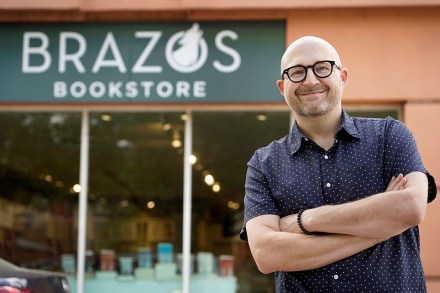
Early on in her entertaining account of five years immersed in the New York art scene, author Bianca Bosker is informed that, as far as the art world is concerned, because she is a journalist, she is the “enemy.” Given that the job of a journalist is to find things out, then explain and communicate those findings, it is unsurprising that a hermetic, deeply self-protective society like the art world would be resistant to journalistic inquiry. In reality it’s not just Bosker’s profession that makes it difficult for her to get past art’s gatekeepers, but a whole litany of personal and social failings that are gleefully enumerated by an art dealer early on.

Bosker
CreatiVets

CreatiVets and the art of war

On Independence Day, Americans recall not only the ideals that led to the founding of the United States, but the sacrifices of those who have made our unique experiment into an ongoing reality. Recognizing the challenges that affect many who have been in the military, CreatiVets, founded in 2013, provides help to disabled veterans through engagement with the arts. Program participants learn how to address and share their experiences through studio arts, music, songwriting and creative writing. The organization’s goal is to help these veterans “transform their stories of trauma and struggle into an art form that can inspire and motivate continued healing.