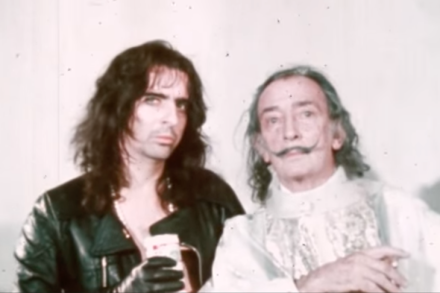
When Salvador Dalí met Alice Cooper
It was the ultimate summit between the two kings of pop-art camp, and one of the weirdest celebrity encounters even by the standards of 1970s New York. Salvador Dalí might have been the century’s most notorious modernist, but by the spring of 1973, when he was turning sixty-nine, his reign as the high priest of surrealism had descended into self-parody. Paintings such as his 1931 “The Persistence of Memory,” with its array of limp watches set in a barren landscape, had once sharply polarized critical opinion. For years, people saw Dalí either as a beacon of intellectual and emotional freedom, or as a madman who was more interested in money than art.