Art

Tracey Emin’s victimhood is a poor foundation for art

From our UK edition

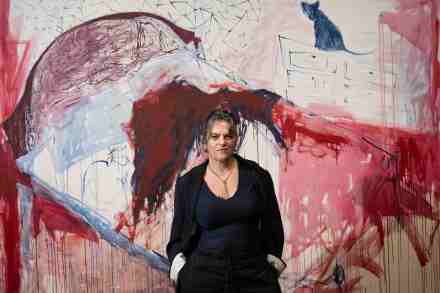
It was a given that the critics would indulge in emotional onanism when they covered the Tracey Emin retrospective at the Tate Modern – apt enough when you consider the sexual content of so much of it. But what surprised me was that it wasn’t just women. For the art is almost entirely about Being Tracey: her abortions, her sexual abuse as a teenager by horrible men, her diaries, her cancer with pictures of the bloody stoma, her famous unmade bed, with its used condoms, granny slippers and teddy (it sold in 2014 for £2.5 million) and her death mask, which was done in life … obviously. That, you might have thought, would put off the men.

Was Picasso a Catholic artist?

From our UK edition

There’s a new exhibition on Picasso which is actually transgressive: Picasso and the Bible. That promises to stir things up among worshippers of the great man, who was known for being Republican, Communist and atheist.   The premise of the exhibition – which was opened this week with great fanfare at Burgos Cathedral in Spain – is that an artist can leave the Church, but the Church never really leaves him. The real theme of the exhibition isn’t Picasso and the Bible; it’s Picasso and Catholicism, a more explosive subject.

My wild house parties with Rose Wylie

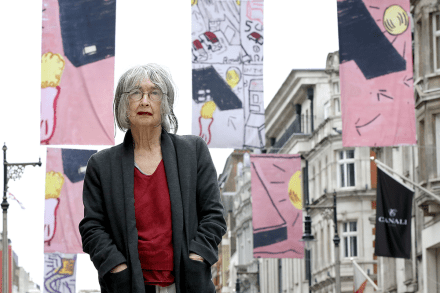
Dante’s Beach, Ravenna I rang up my old best friend, Luke-John, for a chat a few days ago and to ask him about his mum, Rose Wylie. She is 91 and this week becomes the first ever female painter to be given a solo show at the Royal Academy. When I was in my late teens and early twenties, her house in the village of Newnham, near Faversham, became a safe haven for me, and I used to stay there a lot. Rose and her husband Roy, who was also an artist and died in 2014, were just so dead cool. Neither was well-known, and they had little money, but they were seriously intellectual, seriously stylish and seriously good-looking. He had been to Goldsmiths and then been a student of David Bomberg’s at the Borough Polytechnic, and was doing a PhD on him at the Royal College of Art.

The predictable politics of the 2026 Grammys

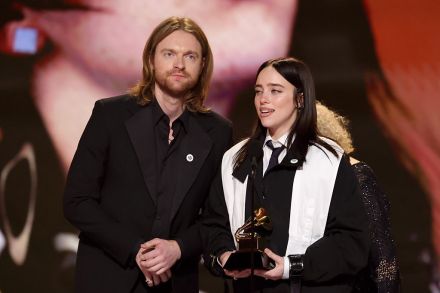
When Billie Eilish declared, during her acceptance speech for song of the year with “Wildflower” at last night’s Grammy awards, that “I feel like we just need to keep fighting and speaking up and protesting, and our voices really do matter,” she was speaking in the approved register. "Fuck ICE," she added but it was more of the same. In contrast to the Golden Globes, where the neutral tenor of the event was made up of tame jokes about the age of Leonardo DiCaprio’s girlfriends, the Grammys have turned into an opportunity for musicians to express political outrage. The awards themselves went as expected last night. Kendrick Lamar and Bad Bunny were the big winners of the night along with Eilish.

A prolonged love affair: The Two Roberts, by Damian Barr, reviewed

From our UK edition

For a time, Robert Colquhoun and Robert MacBryde were at the heart of the in-crowd. Stories of Francis Bacon, Lucian Freud and their wartime circle often make reference to the two young painters from Scotland. Feted in the 1940s for their modernist styles – Colquhoun typically portraying figures, MacBryde preferring still life scenes – they later lapsed into painful, drink-sodden obscurity. Damian Barr’s novel, The Two Roberts, is a tender and evocative act of resurrection. It portrays the men’s lives from the time of their first meeting as students at Glasgow School of Art to the moment in the mid-1950s when, penniless and out of fashion, they retreated to an ancient cottage in Suffolk.

What’s the greatest artwork of the century so far?

From our UK edition

15 min listen

For this week's Spectator Out Loud, we include a compilation of submissions by our writers for their greatest artwork of the 21st century so far. Following our arts editor Igor Toronyi-Lalic, you can hear from: Graeme Thomson, Lloyd Evans, Slavoj Zizek, Damian Thompson, Richard Bratby, Liz Anderson, Deborah Ross, Calvin Po, Tanjil Rashid, James Walton, Rupert Christiansen and Christopher Howse. Produced and presented by Patrick Gibbons.

Childhood illnesses and instability left Patti Smith yearning for ‘sacred mysteries’

From our UK edition

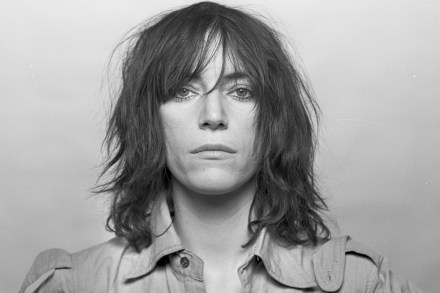
The punk icon Patti Smith’s latest memoir stretches from 1940s Michigan to present-day Nice, weaving around and complementing her other works of autobiography in its rendering of formative scenes. These include descriptions of periods of childhood illness, displays of sibling loyalty, powerful encounters with art and poetry, attachment to beloved clothes, marriage to Fred and the deaths of people close. Smith looks ahead to a time when she and her dwindling companions are gone: ‘Write for that future, says the pen.’ Our attention is periodically drawn to the pen’s motion as it ‘scratches across the page’, conjuring a lifetime of fluctuation.

South America is flush with Nazi-looted art

This summer, a niche story from the art world caught fire: an Old Master painting, stolen by the Nazis from a Dutch-Jewish art dealer, surfaced in Mar del Plata, Argentina. Remarkably, journalists from a Dutch newspaper spotted it on the wall of a house in a promotional photo that was part of a “for sale” real-estate listing. It turned out that one of the sellers of the house was the daughter of a Nazi official who worked for Reichsmarschall Hermann Göring, a notorious art plunderer. When the stolen painting was recognized, the daughter allegedly removed it from the wall, replacing it with another artwork – a tapestry. Argentine authorities then arrested her and her husband and charged them with concealing a crime.

nazi

Rauschenberg is a bore

Pity the security guard at the Guggenheim who must patrol the gallery in which Robert Rauschenberg: Life Can’t Be Stopped is installed. Mounted in commemoration of the artist’s centennial – Rauschenberg was born in Port Arthur, Texas, in October 1925 – Life Can’t Be Stopped includes “Revolver II” (1967), a set of plexiglass discs with images overlaid. A cord leads from the back of this contraption to a pedestal on which there is a control panel – a set of buttons placed in proximity to the viewer. These switches set the plexiglass discs in motion, and they beg to be pushed. On my trip to the museum, visitor after visitor was shushed away from “Revolver II” with the age-old plaint: “Please don’t touch the art.

Adam McEwen’s small masterpieces of the uncanny

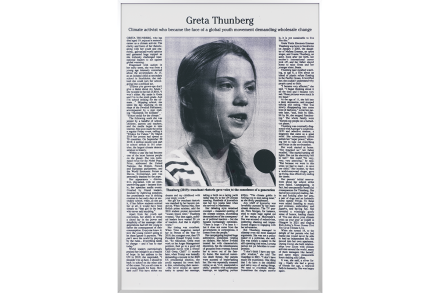
We meet at Adam McEwen’s apartment on the Upper East Side, a few hours before he makes a lightning trip back to London, where he was once a journalist working for the Daily Telegraph. After studying art, McEwen worked for a while writing obituaries, and his eureka moment came in 2000 with the decision to turn his day job into art. He began to write fake obituaries for living subjects, adopting the detached prose and visual design of a broadsheet newspaper. Each text was presented as a black-and-white C-print, and subjects included Jeff Koons, Marilyn Chambers, Macaulay Culkin and Nicole Kidman. McEwen’s fictitious obituaries are small masterpieces of the uncanny. In the instant of reading one, the hypothesized death seems real.

McEwen

What’s wrong with elitism?

From our UK edition

There was a time when the serious business of concert-giving closed down for the summer. Artists were expected to take time off – to rest, to fish, to learn repertoire. But now many of the most important musical events happen during the resting, fishing months, not least the BBC Proms. This year I was determined that vacation should mean just that, as I swapped the stage for the stalls, from Janacek’s Katya Kabanova at Glyndebourne to Top Hat at Chichester to Good Night, Oscar at the Barbican. It was an idyllic break, but it’s back to work. My new season began in New York, a second home since 1981 when I was a student at the Juilliard School, where I now have one student.

Ben Shahn’s work remains as timely as ever

How can an artist express social and political dissent in a polarized, volatile time? Look no further than the sobering and rousing Ben Shahn: On Nonconformity. Throughout his decades-long career, Shahn (1898-1969) crafted paintings, murals, posters, drawings, photographs and prints chronicling the news of the world, with a focus on the suffering of society’s most wounded. This is the first major retrospective of his work to appear in the US since 1976. The country has changed, and yet Shahn’s work remains as timely as ever.  His social-realistic approach fell out of fashion as critics came to prefer abstract and pop art. But Shahn remained true to his own aesthetic, as the show’s 175 works demonstrate.

Shahn

Vermeer’s Love Letters is something of a riddle

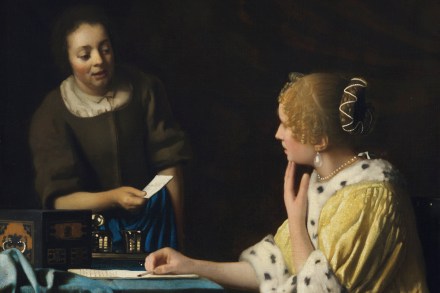
Johannes Vermeer (1632-75) is doubtless a blockbuster artist, but the Frick’s exhibition, Vermeer’s Love Letters, is the size of a postage stamp – or, maybe more fittingly, a wax seal. The Frick has three Vermeers of its own, but only one made the cut: “Mistress and Maid” (c. 1664-67). From the 37 known works by the artist, the museum has only borrowed two to bolster the show: “Woman Writing a Letter with her Maid” (c. 1670-72) and “The Love Letter” (c. 1669-70). Each depicts a woman, her maid and at least one letter somewhere in the mix. Though we don’t know exactly what’s written in those papers, it’s fair to say that these discreet works have an air of romance. The show’s effect is something of a riddle. Why has the Frick picked these three?

Vermeer
Esther

How Esther inspired the imagination of Rembrandt

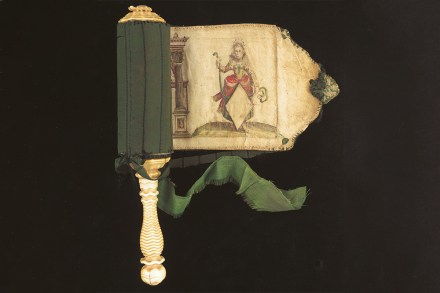
If you attended Sunday or Hebrew school, you know the story. There once lived in the ancient Persian city of Susa a King Ahasuerus and his Jewish wife, Queen Esther. At first she hid her Jewish identity from the king, only revealing it in order to foil the plot hatched by Haman, her husband’s Jew-hating second-in-command, to exterminate all who shared her faith. In doing so, Esther saved her people from destruction – and earned a volume in the Hebrew Bible named for her. Less well-known is that centuries later, in the Amsterdam of Rembrandt van Rijn (1606-69), Esther’s valor also made her a heroine to the citizens of the predominantly Protestant Dutch Republic.

Svitlana Morenets, Michael Simmons, Ursula Buchan, Igor Toronyi-Lalic, Richard Morris & Mark Mason

From our UK edition

37 min listen

On this week’s Spectator Out Loud: Svitlana Morenets says that Trump has given Zelensky cause for hope; Michael Simmons looks at how the American healthcare system is keeping the NHS afloat; Ursula Buchan explains how the Spectator shaped John Buchan; Igor Toronyi-Lalic argues that art is no place for moralising, as he reviews Rosanna McLaughlin; Richard Morris reveals how to access the many treasures locked away in private homes; and, Mark Mason provides his notes on bank holidays. Produced and presented by Patrick Gibbons.

Give Eric Ravilious a rest

From our UK edition

How do artists sustain a reputation? We’d like to think it’s on the basis of their work. In the case of visual artists, it would be nice to think they make it because their art is beautiful, original or absorbing. It shouldn’t be a matter of what the art is about, or Benjamin West’s epic historical tableaux would be better paintings than Jean Siméon Chardin’s still lives. It shouldn’t be about the artist’s personality or history, or we would rate Benjamin Haydon (tragic suicide) over John Constable (domestically inclined Tory). On the other hand, it doesn’t always work like that.

‘Being a mom sometimes sucks’: an interview with Sarah Hoover

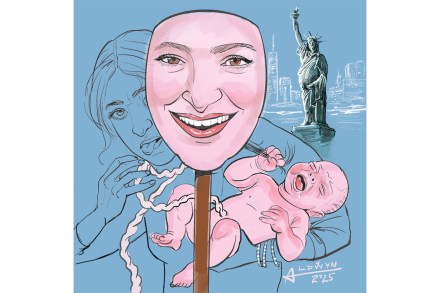
I am expecting Sarah Hoover to be brash. The New York art-scene stalwart and influencer has written a warts-and-all misery memoir about motherhood and self discovery called The Motherload, which is presently cruising atop US bestseller lists. The book, unanimously agreed to be “unflinchingly honest” about all the bad things that can happen on a woman’s journey to and through new motherhood, opens with a stream-of-consciousness account of a party Hoover threw at the Chateau Marmont in 2017 for her first baby’s ten-month birthday. “I’d be in LA for a couple of weeks, staying at the hotel, and a diet of room service and edibles was my general game plan.

Hoover
Museums

How museums can promote diversity without demonizing tradition

The resignation of Jim Ryan as president of the University of Virginia in June marks the growing momentum of the Trump administration’s efforts to dismantle diversity, equity and inclusion initiatives within US universities. The Department of Justice deemed Ryan’s resignation a step toward resolving its inquiry into UVA’s compliance with the administration’s new policies. Conservatives may be encouraged by news of major institutions like UVA and Harvard rolling back heavy-handed DEI programming. But pure reactionary animus to the excesses of progressive ideology has often gotten conservatives into trouble – not just in education, but in the arts.

What’s wrong with taking selfies in galleries?

From our UK edition

There is nothing more glorious than an art gallery selfie. In the same way that hearing someone mispronounce Van Gogh lets you know you’re dealing with an autodidact (the best!), so a gallery selfie suggests someone who doesn’t quite belong in that space: someone who is ignorant of the etiquette of the art world and who is enjoying themselves because of, not despite, that. Complaining about taking selfies in galleries is so obviously a class thing (not to mention an age thing). Which is why it’s so charming to see Tate Britain’s director Alex Farquharson (whose name does not make him sound like a class warrior) enthuse about encouraging visitors to take ‘Instagrammable pictures’ of the gallery’s work in an effort to entice tourists in.

On holiday with Goya

When I’m first invited to a sojourn in Madrid to learn about the life and work of Francisco Goya and the conservation work of Factum Arte, I’m thrilled but also a little apprehensive. While art-themed travel is right up my street and I live a mere train trip from the Spanish capital, Goya’s work is known for being a little, well, dark – particularly during his later years. As a fan of the Botticellis of this world, spending a few days with the artist famous for his "black paintings" was not something I was sure I’d enjoy.  And yet, three days later, as I stand in front of Goya’s grave in La Ermita de San Antonio de la Florida, I find myself moved in a way I never could’ve anticipated.

Goya