Art

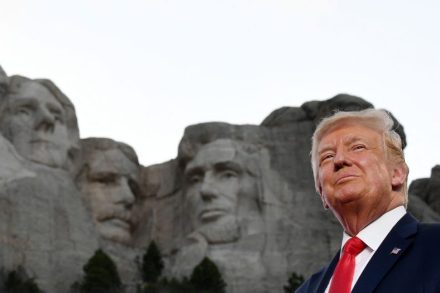
Who could be Mount Rushmore’s fifth head?

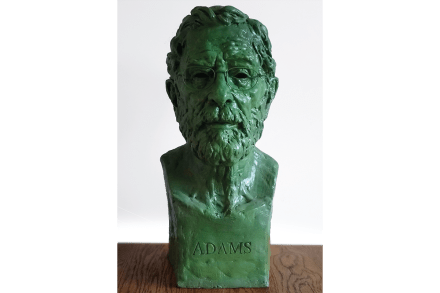
Late last week, the New York Times once again floated the idea that President Trump could become the fifth head on Mount Rushmore, to the right of Abraham Lincoln (that’s for sure). He’d be like the fifth Beatle, but yuge. While it’s true that Trump has brought peace to Africa and the Middle East in the last week, and has done an excellent job lining the Oval Office with gold filigree, maybe we should hold off on carving his visage into a mountainside until we see the final fate of the Big, Beautiful Bill. For Trump’s a jolly good fellow, and what nobody can also deny is that there’s available rock space in South Dakota. The President likes nothing more than a good real-estate deal on undeveloped land. But let’s hold off on clearing headspace for the Donald just yet.

Rushmore

Why do my outfits make people so angry?

From our UK edition

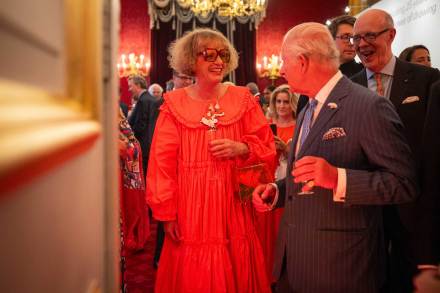
I have always cycled everywhere in London, not because I want to save the planet but because I want to get to my destination on time. I ride a big heavy Dutch woman’s bike: practical, less nickable and I can wear pretty much anything while riding it. On this occasion I was wearing frilly pink nursery-print dungarees, pink patent bootees, a sweet little jacket with puffy pale-blue bows down the front, a pink cloche hat and a pink-and-blue shiny PVC backpack. I was just locking my bike to the railings on Charing Cross Road when an angry man approached. ‘Are you a paedophile?’ he roared. ‘Why are you dressed like that?

The blossoming career of Cedric Morris

From our UK edition

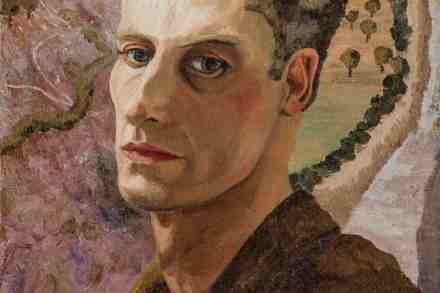
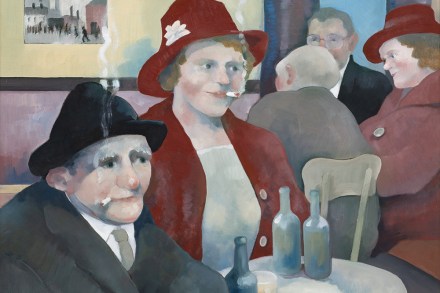
In the winner-takes-all world of modern art, there’s every chance you might not have heard of Cedric Morris. Why should you? No matter how much you sweeten the tea, the Welshman, born in 1889, was no Pablo Picasso, Mark Rothko or Salvador Dali. Nor from our 21st-century outlook can it be said that the name itself inspires much confidence: ‘Cedric’ sounds about as on-trend as a character from a short story by Saki, and when paired with Morris, the combination offers up all the avant-garde promise of a baked camembert starter at an Aberdeen Angus steakhouse.

Admirable in their awfulness – the siblings Gus and Gwen John

From our UK edition

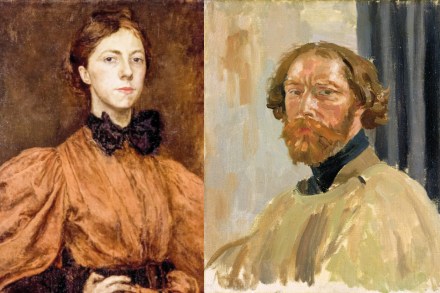
‘In 50 years’ time,’ Augustus John gloomily reflected following his sister’s death on 18 September 1939, ‘I will be known as the brother of Gwen John.’ He was right. In 2004, when the Tate mounted a joint retrospective of Augustus and Gwen John, it was Gwen who had become the major artist. The ‘variable strident chords’ of the self-styled Gypsy King, likened in his youth to Michelangelo, Rembrandt and Raphael, had been supplanted by the ‘sustained minor key’ of the nunlike recluse.

Figures emerge like ghosts from Antonia Showering’s canvases

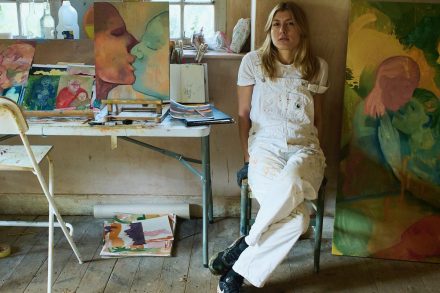
Figures emerge like ghosts from Antonia Showering’s canvases, their sketchy lines and expressionistic color palette relaying an atmosphere of deeply personal narrative as much as an emotional message, wordless but with universal resonance. Take 2025's "The Waiting Room" (2025), from her current show, titled In Line, at Timothy Taylor: A woman, resting on a bed in a pool of maroon, has just given birth; her belly appears aglow in a warm yellow as her newborn, outlined in pale purple, rests next to her, umbilical cord still attached. “I wanted to talk about the vulnerability about someone postpartum,” says the artist. The hues she’s employed are bodily, those of flesh, fat, and veins, yet here transcend into a surreal haze of life’s first moments. Antonia Showering, 5L (2024).

Antonia Showering

Why does Irish art avoid the Troubles?

Almost three decades after the Good Friday Agreement was signed in 1998, it is possible, if not always easy, to see the funny side of the Troubles. Derry Girls, Lisa McGee’s coming-of-age television series, and Milkman, Anna Burns’s surreal novel, wring laughs as well as tears out of mayhem. There are few laughs in Steve McQueen’s Hunger, which did “for modern film” according to one critic, “what Caravaggio did for Renaissance painting.” For those who prefer horror unmediated by fiction, Patrick Radden Keefe’s Say Nothing is the best example of longform journalism since Capote’s In Cold Blood. But along with their setting, these dazzling creations have something else in common: to get made, they all needed the backing of a producer or publisher from the UK or US.

Irish

In ambiguity, Tancredi Di Carcaci finds inspiration

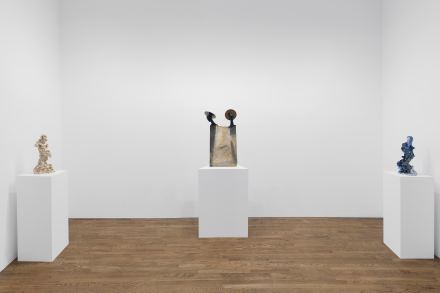
The narratives we tell ourselves about the past are hardly set in stone. It’s in this ambiguity where Tancredi Di Carcaci finds inspiration. Through his practice, the British artist contemplates, and sometimes perpetuates, the blurring of straightforward histories, especially that of art, as traditionally passed down. His sculptures – a mix of ceramic works and assemblages combining cast bronze, ceramic and hunks of marble and stone sourced from Siena, Egypt and elsewhere – have aesthetic and thematic roots spanning the Renaissance, neoclassical revival, Romantic painting and 20th-century modernism.“For me, with art, I don't try and restrict myself.

Palo Gallery

The sad decline of painting

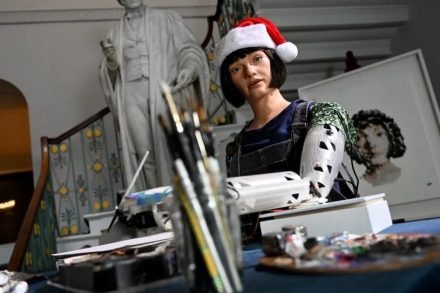
What hope is there for artists following the sale last year of the robot Ai-Da’s portrait of Alan Turing, entitled “A.I. God,” for $1 million? Someone has perhaps paid over the odds for a 3D print with a few marks added by a robotic arm and a few more by studio assistants to areas of the canvas Ai-Da couldn’t reach. Innovation wins. In the 1970s, the walls of art-school degree shows were studded with plaster casts of students’ genitals. By the 1980s, students were discouraged from attempting realist painting, but messy gray abstract works were still acceptable. Then it was found objects and piles of stuff. One young studio assistant I knew in the 2000s had a tutor at art school who’d gained top marks in his degree by filming himself pouring a glass of milk over his head.

painting

The weakening case against museum restitution

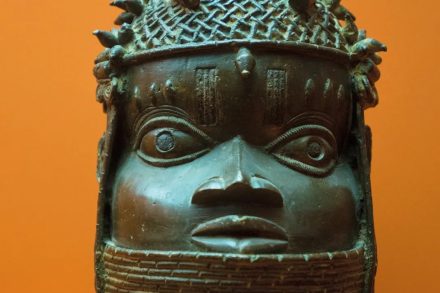
When passions are aroused, all of us are liable to overstate our case. Dan Hicks, a curator at Oxford’s extraordinary Aladdin’s Cave of anthropology, the Pitt-Rivers Museum, is perhaps a case in point. A Swedish academic, Staffan Lunden, has convincingly argued that Hicks is guilty of "distortion" when writing about the British raid on Benin in 1897, which brought several thousand objects, including finely wrought brass statuettes, to museums across the world. Hicks published his uncompromising views in 2020 in a prize-winning book, The Brutish Museums: The Benin Bronzes, Colonial Violence and Cultural Restitution.

restitution

The Judgment of Berkshire

From our UK edition

Almost 50 years ago, in a hotel bar in central Paris, French wine faced a reckoning. Steven Spurrier, a British wine merchant, decided California deserved a spell in the sun: at the time French wine was the dominant force in Europe, with bottles from the New World – Australia, New Zealand, the US and the like – considered their poor cousin. Spurrier came up with the idea to pit the very best French Bordeaux against Californian cabernet sauvignons and chardonnays against white Burgundies, and have a panel of experts – all French – rank them in a blind tasting that came to be known as the Judgment of Paris. California won both categories. Odette Khan, a well-known critic, reportedly demanded her scorecard back so news of her grave error wouldn’t reach the papers.

Real artists have nothing to fear from AI

From our UK edition

Christie’s is making digital-art history again – or at least trying to. Between 20 February and 5 March, it is hosting Augmented Intelligence, the first major auction dedicated solely to AI-generated art. This follows a series of headline-grabbing stunts, including the first major sale of an AI-generated artwork in 2018 – ‘Portrait of Edmond de Belamy’ ($432,500) by the Paris-based collective Obvious – and the first NFT sale by a major auction house,  Beeple’s ‘Everydays: The First 5,000 Days’, which shattered expectations (and good taste) by selling for $69 million in 2021.

The genuine faker John Myatt

John Myatt held his breath as the bidding began in the Christie’s auction room. His drawings were selling, one by one. He had dreamed of having his work on the block since the beginning of his career. He felt a tingle of adrenaline as the paddles went up... and victory as he strolled through the city streets with a wad of money in his back pocket afterward. But the feeling didn’t last long. Eventually, Myatt started to feel empty and disappointed. The psychic void grew as the prices that his agent, John Drewe, sought for his work went up and up.

Myatt
Barcelona

Barcelona rising

Barcelona is one of the world’s great cities; happily, it seems to be waking up from a lengthy nightmare of its own conjuring. During the anti-everything leadership of its previous mayor, failed actress Ada Colau, empty storefronts, open-air drug markets and sidewalks reeking of urine proved unconducive to outside investment. A deal to establish a local branch of the Hermitage Museum fell through, thanks to political virtue-signaling by local officialdom. Anti-tourism campaigners stepped up their activities over a period of years, even as cities such as Madrid and Málaga began to boom with historic renovations, new luxury hotels and cultural projects designed to attract visitors. Fortunately, things seem to be turning a corner.

Emil Sands’s unique body of work

Jet lagged, frozen, wrapped in multiple layers against the polar winds of a New York January storm, it was a thrill to walk into a gallery space full of sun-drenched summer scenes. At first glance, these are beautiful paintings of beautiful young people on beaches, but look again and you realize they are a meditation on the fragility of body image and how illusory perfection is. This is a topic Emil Sands is uniquely qualified to portray — more on that later. But first, the paintings: a longer look reveals that the beaches are serving as stage sets and mindscapes for an exploration of vulnerability and exposure — an experience intrinsically tied to the act of sharing space with other near-naked bodies.

emil sands

Why young MAGA supporters are flocking to Remilia

From our UK edition

The MAGA social scene was defined on the eve of Donald Trump’s inauguration by the Coronation Ball – perhaps the most exuberant celebration of the new ‘Golden Age’. The principal speaker was, unsurprisingly, Steve Bannon, the architect of Trump’s first victory and the voice of the neo-reactionary core of the President’s movement. More surprising perhaps though was the Ball’s principal sponsor, Remilia Corporation, a conceptual art movement. It was as if a Reform UK rally were sponsored by the Turner Prize. After Bannon’s speech, a representative of Remilia, an artist operating behind the pseudonym L.B. Dobis, stood at the podium to speak about internet art and to outline Remilia’s plans to remake the world one meme at a time.

The plain-speaking bloke from Warrington who painted only for himself

From our UK edition

We don’t all get to achieve what we could have achieved in life. And yes, I know, so what? Tough luck. Cry me a river, build me a bridge and get over it. But, like it or not, some people really do have the odds stacked more heavily against them than others and yet somehow carry on regardless. In The Secret Painter, the scriptwriter Joe Tucker (Parents, Big Bad World) tells the true story of his Uncle Eric, born in 1932 – an ordinary man who never gave up. Let’s be honest, The Secret Painter could have been absolutely terrible.

From Balfour to Zola: the many faces of ‘naturalism’

From our UK edition

My husband said ‘A.J. Balfour played the concertina’, which is perfectly true, though he did other things, even as prime minister. The concertina was inessential to what I thought was a neat way of sorting out the meanings of naturalism. The word is used quite a bit these days, with four main meanings. My mnemonic for the meanings are Balfour, Bolingbroke, Zola and Caravaggio. When ‘The Hay Wain’ went on show in 1824, the Telegraph explained, ‘its naturalism and heroic scale were hailed as a revelation’. That naturalism may be labelled Caravaggio after an observation in 1950 by E.H. Gombrich in The Story of Art about ‘Caravaggio’s “naturalism”, that is, his intention to copy nature faithfully’.

Guiding young minds through the National Gallery of Art

"Are there any more questions?” I asked loudly. I was struggling to make myself heard above about thirty seventh-graders, whom I was leading on a tour of the National Gallery of Art. There had already been many questions that morning, even before we began looking at objects in the museum’s permanent collection. We had just finished an analysis and discussion of techniques and symbolism in a seventeenth-century sculpture from Seville, so I took advantage of the momentary lull in the hand-raising and was walking toward the next work on our itinerary when I heard an unexpected sound. Thud. Turning, I saw that one of the students had fainted, practically at my feet. Teacher and chaperones rushed in, and after a few moments the student was fine.

tour
Tokyo

Tokyo drift: Japan’s once-pricey capital is now cost-effective… for Americans

I spent my last afternoon in Tokyo stocking up on snacks and feasting on cheap and delicious conveyor belt sushi, in anticipation of characteristically criminal airport concession prices. But when I made my way past Haneda Airport’s Rodeo Drive-esque esplanade of luxury shops — does anyone really buy a $10,000 Omega watch on their way to their gate? — I was in for a surprise. Bottles of water, iced tea and other soft drinks were less than $1 in airport vending machines, just like everywhere else in the country. I wasn’t hungry, but when I realized that I could buy a plate of yakisoba with shrimp, pork and squid for the yen equivalent of $6 and six takoyaki (essentially balls of fried octopus) for $4.75, I ordered both.

The otherworldly artist who made his name at The Spectator

From our UK edition

There is something otherworldly about Rory McEwen’s paintings of plants, leaves and fruit. They are indisputably beautiful, often breathtakingly so, but they are almost eerie in their self-possession. They are like planets vibrating to the music of the spheres – quivering with arrested energy. These images are super-real (rather than surreal) but they sometimes have a surreal edge that can be disturbing. ‘I paint flowers as a way of getting as close as possible to what I perceive as the truth’ Although best known for painting these botanical watercolours on vellum, Mc-Ewen (1932–82) was a man of many parts: an extraordinarily talented figure, a poet and broadcaster, a folk and blues musician as well as, for many, the greatest botanical painter of the past hundred years.