Art

The appeal of asymmetry: Contrapposto, by Dave Eggers, reviewed

From our UK edition

There are novelists who seem to spend their entire careers either apologising for being themselves or trying to become someone else entirely. And then there’s Dave Eggers, who has spent much of the last quarter century trying – and, it has to be said, as far as one can tell, very happily succeeding – to become Dave Eggers. Ever since A Heartbreaking Work of Staggering Genius appeared in 2000, fulfilling almost entirely the audacious promise of its title, Eggers has occupied that peculiarly American position of being not simply Yet Another Novelist, but the Guy, the Man, the yardstick by which all others might be judged and found wanting. He’s a publisher, campaigner, literacy activist, editor, artist, children’s author, philanthropist and impresario.

The art of betrayal: Exhibition, by Alex Hyde, reviewed

From our UK edition

Exhibition, Alex Hyde’s second novel, recounts the intimate, messy, ambiguous and ultimately ill-fated relationship between two fictionalised Young British Artists in the early 1990s. Rosie ‘Rabble’ Stone, the narrator, is a gifted but grounded Mancunian photographer, newly arrived in London to begin her studies at a prestigious art school. There she meets, and soon moves in with, a beautiful and accomplished (and throughout nameless) figurative artist destined for greatness. They are inspired by, though very different from, Tracey Emin and Sarah Lucas and the works they produced in this period. The story begins in Brixton, at an ‘upside-down’ house to which Rabble has been directed to find lodgings.

Blood, sweat and tears on the road to Nice

From our UK edition

Provence Straight from a weekend of helping a friend with chronic obstructive pulmonary disease, I drove to Nice airport to pick up my eldest daughter, her husband and four-year-old who were arriving for a holiday. I was late and hoping for a slight delay at border control so I could meet them in that most joyful of places: the arrivals hall, with its cast of reuniting families, friends, lovers and waggy-tailed dogs. But these days Nice airport, contrary to reported chaos elsewhere, is efficient and there are no queues coming in or leaving. My little granddaughter ran into my arms just as I was walking towards the terminal building.

How to paint like the ancient Greeks

From our UK edition

Last week David Hockney was cited as an example of a great English artist who insisted on working, like ancient Greek sculptors, in a well-established tradition. But how did Greek painters work? Let Pliny the Elder remind us. According to Pliny, Apelles (fl. c. 330 bc) from the island of Cos ‘surpassed all painters before and after him’. Court painter to Alexander the Great, he published volumes on the principles of painting – he favoured a palette of white, black, red and yellow – and was modest enough to recognise excellence in others: indeed, he thought a certain Protogenes his equal (he bought his paintings to sell as his own), except in one respect – that he (Apelles) ‘knew when to remove his hand from the picture’.

Small, skewed pictures that cast a spell: the art of Mollie Douthit

From our UK edition

In this clever, moving mosaic of a book, Sara Baume tells us she originally wanted to be an art critic and that she wrote exhibition catalogue copy. It has served her well, as Opening Night is an evolved form of that genre – including 39 excellently reproduced images of paintings by the subject, and one extra – but it is also a form of memoir. By that I do not mean ‘life writing’ or ‘autofiction’, as it is a work of remembering and memorialising, even if that involves recording the gaps and lapses. The lacunae operate like an undercoat: the occluded thing that changes how you see. Just before the pandemic, Baume states in the opening sentence: ‘I met Mollie’s paintings before I met Mollie.

The problem with ‘queer art’

In 1911, Duncan Grant’s “Bathing” went on display as part of a design scheme for the dining room of the Borough Polytechnic in Southwark. This large painting depicts a group of strongly muscled male bathers diving, swimming and hauling themselves into a boat. Only one of them is wearing a bathing slip, and while this kind of spectacle might have been familiar to anyone educated at a public school at this period, the art critic of the Times complained that it could well have “a degenerative influence on the children of the working class.” The picture now hangs in Tate Britain, and is used on the gallery’s website to direct people to an account of “Queer Life and Art.
art
artist

Would the ancients have appreciated David Hockney?

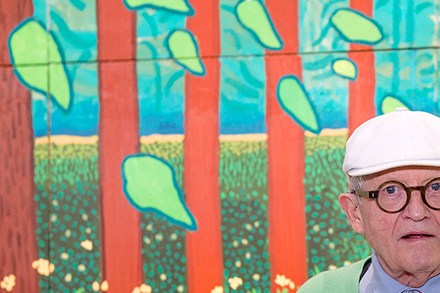
David Hockney has died, and there has died with him an artist whose work has given those of us who are not artists a very great deal of pleasure, in striking contrast to most art that wins prizes these days. The ancient Greeks did not have a word for “art.” The closest they got to it was tekhnê (cf. “technical”), brilliantly defined by Aristotle as “the trained ability to produce something under the guidance of rational thought,” always difficult to discern in the work of most modern artists. So in the ancient world, the artist was on the same level as (say) a dentist – someone whose purpose it was to serve the ordinary public to the best of his technical capacity.

Would the ancients have appreciated David Hockney?

David Hockney has died, and there has died with him an artist whose work has given those of us who are not artists a very great deal of pleasure, in striking contrast to most art that wins prizes these days. The ancient Greeks did not have a word for ‘art’. The closest they got to it was tekhnê (cf. ‘technical’), brilliantly defined by Aristotle as ‘the trained ability to produce something under the guidance of rational thought’, always difficult to discern in the work of most modern artists. So in the ancient world, the artist was on the same level as (say) a dentist – someone whose purpose it was to serve the ordinary public to the best of his technical capacity.

The highs and lows of life as an artist

Provence ‘Painting is a stupid job. Do something useful and train to be a nurse,’ commented a man beneath a column I wrote last month. Although well used to the vitriol levelled at artists from some quarters, I found this particularly annoying. I was a general nurse from 1981 to 1985, after which I completed psychiatric training and spent five years working in acute psychiatry in the east end of Glasgow. That was followed by a year as a district nurse and seven more as a practice sister. I nursed because my lower-middle-class background, with its discouragements and lack of contacts, didn’t equip me even to consider somehow making a living from the two things I’d loved most since I was a child: books and art.

David Hockney was a style icon

From our UK edition

How appropriate that the late David Hockney favoured that ash blonde hair colour, given that the chain-smoker was said to get through 100 cigarettes a day? And not just any old fags: the long, slender and upmarket Davidoff Magnum Classic, of which he was said to keep a store of 2,000 at home for emergencies. Hockney said they helped him concentrate. But this everyday accessory was also a yellowed two-fingers to anyone who wanted to close down what he saw as his right to live as he chose. More than that – and let’s hope no school kids are reading – they imbued him with an old Hollywood, rebel cool, especially in more anti-tab times. ‘You can’t have a smoke-free Bohemia,’ as he once noted.

The art of resurrecting forgotten artists

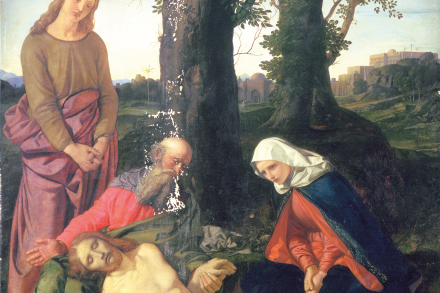
A retired priest in North Wales once told me that after the war he had been asked by Billy Butlin to buy 19th-century paintings for the holiday-camp chapels, because they were going cheap. One he bought, for 49 guineas in 1947, was William Dyce’s 1835 “Lamentation of the Dead Christ.” In 1983, after the Butlin’s chapels had closed, it made a handy £125,000 at auction, when it was bought by Aberdeen Art Gallery. As late as 1962, Lord Leighton’s great “Flaming June” (1895) was sold for £50. Today? Millions. Talk about “the bubble reputation.” The pattern of artistic fame followed by subsequent obscurity has been repeated through the centuries.

The return of orientalism

From our UK edition

I’m bullish about AI. All aesthetic snobs should be. In the war on man-made slop – still the most pressing threat – algorithms are an ally. After all, how much of the output of Netflix, Hollywood or Sony will retain its allure once AI is ventriloquising it to perfection? The qualities that have made popular art popular – legibility, fluency, tidiness – will surely be fatally tainted, perhaps even start to repel us. What we will crave instead is for culture to look and feel weird – opaque, messy, frangible. The experimental might even become box office. Wishful thinking? Well if the Rewire music festival in The Hague is anything to go by – so rammed this year that it was actually rather unbearable – it might already be happening.

Who says Lauren Sánchez Bezos doesn’t belong at the Met Gala?

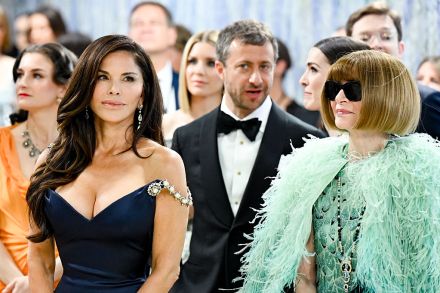
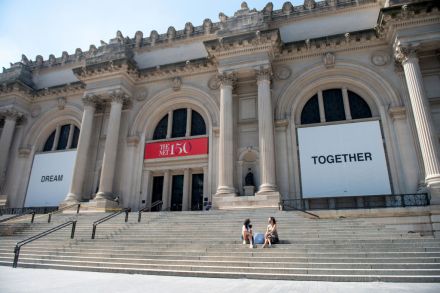
Lauren Sánchez Bezos, with her blown-out lip filler, understands fashion. She understands that, unlike the gatekeepers of painting and literature, fashion figureheads aren’t ashamed to dirty their hands by digging around in the money pot. It was only fitting, then, that Lauren and her husband Jeff Bezos sponsored this year's Met Gala. Its theme was "Fashion Is Art." All Kardashian-Jenners present came in bodices protruding in the shape of their nipples Sánchez Bezos showed up to the Met red carpet in a navy-blue gown that nodded to John Singer Sargent's painting of Madame X, a socialite and the wife of a French banker. The painting's portrayal of a pale, corpse-like, high-society woman was considered indecent because of the single strap falling off her shoulder.

Letters: what vegetarians get wrong

From our UK edition

Flat broke Sir: John Power’s article on the property squeeze (‘Flatlined’, 18 April) identifies a symptom of a deeper problem, the overregulation of property. Buyers are deterred by spiralling service charges, which are themselves driven by layers of legislation, insurance premium hikes and rocketing labour costs. Those still willing to take the plunge are then hit by a tax system that actively discourages transactions. In the absence of buy-to-let demand, it is no surprise values are dropping. The solution is obvious. Stamp duty, with its crude cliff edges, freezes activity and distorts prices. A landlord or renovator can face £20,000 or more in tax on an entirely ordinary flat, a deterrent by design. This is not a plea for higher prices.

Antony Gormley’s lonely figures transfer to paper

If there’s any consolation to be had in the prospect of AI filling the world with humanoids, it will be the look on their glassy faces when they realise that one of us has beaten them to it. The Turner Prize-winning sculptor Sir Antony Gormley, 75, has installed casts of himself from Crosby beach in Liverpool to Gateshead, from Texas to the Netherlands and western Australia. He and his simulacra might not detain our new overlords for very long, of course, but in the meantime ‘The Gormleys versus the Bots’ is the Doctor Who episode I’m here for. The man responsible for the magnificent ‘Angel of the North’ studied at Goldsmith’s, the playground of Damien Hirst, Sarah Lucas and other YBAs.

Constable should be on a banknote

From our UK edition

In all the recent hoo-ha about banknotes and who or what to put on them, one name has been curiously absent – that of John Constable. Born 250 years ago this year, he was the son of a prosperous Essex miller and merchant who would rise to become probably the greatest proponent of landscape painting in history.  Where his contemporary Turner – who got the £20 note, of course – had an expressive style that took landscapes towards ethereal impressionism, Constable took nature itself to his heart and somehow made it even better – not unlike a portrait painter flattering his subject. If we weren’t British, we would probably have a major gallery in his name.

Trump’s presidential library is predictably crass

Maybe a tad prematurely for a term that ends only in 2029, the Trump Organization has released a short video on Truth Social revealing, with a dizzying CGI fly-throughs, proposals for the Donald J. Trump presidential library. Any great memorial should be both surprising and inevitable. The Donald J. Trump presidential library is neither, being woefully predictable in its crassness and feeble as a design It’s not about Making America Literate Again: there’s not a book in sight. I could not even see a reference to Trump’s own great contribution to world literature: The Art of the Deal. By contrast, the Ptolemies’ great library in Alexandria had perhaps 700,000 papyrus rolls. But that was there-and-then and POTUS 47 is nothing if not here-and-now.

library

Palm Beach gets a European twist

In these parts, it is always said that the most disappointing aspect of Palm Beach life is… well, the beach itself. Yes, it has sand, sea, minimal surf (and, as often as not, “dangerous marine life,” as the deep purple flags flown at the lifeguard stations indicate). But that is all. There is nothing like what you get, for example, in the north shore of the Mediterranean where, from Gibraltar in the west to Bodrum in Turkey, thousands of miles to the east, every few hundred yards you have a chic café or a ritzy restaurant, or boutiques selling everything from bikes to bikinis. No, the beaches of Palm Beach are socially inept, empty of entertainment, where the most exciting thing I have seen (twice) is a seven-foot shark caught on a line, which is a touch off putting for bathers.

History of art is not a ‘soft’ subject

From our UK edition

I may be biased because I teach it, but history of art A-level often feels like the greatest, yet most dismally undervalued, subject in the curriculum. It explores history’s most innovative thinkers, enhances visual literacy, teaches history through the prism of creativity and emotion, sharpens critical thinking, and fosters empathy and open-mindedness. Yet it languishes as a minority character in the pantheon of school subjects. It has always been chronically underappreciated by students, teachers, school heads and governments. I worry that its disparagement tells us something rather depressing about our own cultural values and even our sense of what education is for. Just to scotch a popular misconception from the outset – history of art is not a ‘soft’ subject.

Tracey Emin’s victimhood is a poor foundation for art

From our UK edition

It was a given that the critics would indulge in emotional onanism when they covered the Tracey Emin retrospective at the Tate Modern – apt enough when you consider the sexual content of so much of it. But what surprised me was that it wasn’t just women. For the art is almost entirely about Being Tracey: her abortions, her sexual abuse as a teenager by horrible men, her diaries, her cancer with pictures of the bloody stoma, her famous unmade bed, with its used condoms, granny slippers and teddy (it sold in 2014 for £2.5 million) and her death mask, which was done in life … obviously. That, you might have thought, would put off the men.