Anthropology

The Rockefeller Wing reopens

From our US edition

Of the 1,800 objects on display at the newly reopened Michael C. Rockefeller Wing at The Metropolitan Museum of Art, the funerary poles of the Asmat people stick out.  At 15 feet tall, they tower above the swarm of visitors and nearly touch the newly rendered, gorgeously curved ceilings. The poles, decorated with carvings of haunted-looking faces and bodies, were traditionally made to mark a violent death. Once that death was avenged, the poles were removed to the woods, where they were left to decay.  These particular poles have further meaning, though, beyond their eerie beauty and the symbolism they confer of the cycle of life. They were collected by Nelson Rockefeller’s son, Michael, on a trip to spend time with the Asmat in New Guinea in 1961.

The story of Noah’s flood will never go out of fashion

‘They put the behemoths in the hold along with the rhinos, the hippos and the elephants. It was a sensible decision to use them as ballast, but you can imagine the stench.’ So begins Julian Barnes’s quirky novel A History of the World in 10½ Chapters, through which the story of Noah and the flood flows like an underground river. As Philip C. Almond shows in this impressively erudite book, the tale courses through two millennia of western thought with similar power. The story, found early in the book of Genesis, lurks in the half-remembered shadows of our biblically illiterate age. Fed up with human wickedness, God promises to wash everything away in a universal flood.

A world history of morality is maddeningly optimistic

The memory of Tsutomu Yamaguchi will be with me for some time. Though wounded, he survived the Hiroshima atom bomb and returned to his home town, Nagasaki. Three days later, he survived another nuclear attack. He died in 2010, aged 93. This fat, complex, good-natured and intriguing book is full of such memorable material. Hanno Sauer is a German philosopher with an all-encompassing mind and a capacity to entertain. His arguments are sometimes clogged and improbable and I don’t find his primary thesis – basically that things can only get better – credible, but then I feel the same about most philosophers. The thesis is based on Sauer’s belief that moral norms are what made us the dominant species and will continue to do so.

The futility of ever hoping to give peace a chance

‘War – what is it good for?’ asked Edwin Starr on his 1970 single of the same name, before answering his rhetorical question:   ‘Absolutely nothing.’ In this, Starr was not only excoriating America’s contemporary folly in Vietnam. He was implicitly endorsing the philosopher Immanuel Kant’s recommendation that humanity could and should trade up from endless war to perpetual peace, and the anthropologist Margaret Mead’s suggestion that war was not natural to our species.

What Charles Darwin got wrong

From our US edition

Have you noticed that whenever the conversation turns to the subject of Charles Darwin, an extraordinary amount of dogmatism is often on view?  What’s curious is that the dogmatism is patent on both sides of the debate, on the side of the Darwinists just as much as the side of Darwin’s critics.  I have often noted with amusement how sensitive to criticism the Darwinian faithful are. Any hint of a shadow of dissent and they rush for the garlic, the wooden stake and a signed copy of On the Origin of Species. I think I understand the psychology of the response. They are terrified lest acknowledging the strength of this or that criticism start them down the road toward creationism and teaching the Book of Genesis in Biology 101. Where does the truth lie?

charles darwin

A frictionless history of fieldwork: In Search of Us reviewed

To be an anthropologist today is to understand, as few in the secular modern university can, what it is to be marked by a consciousness of original sin. Contemporary ethnographies are full of passionate mea culpas from scholars concerned that they have inherited the guilt of their discipline’s founding fathers, men who inhabited a world of red-cheeked missionaries and pith-helmeted viceroys. Lucy Moore is not the most natural candidate for a historian of the discipline. Her back-catalogue shows her to be a generalist and belletrist – a book on the Roaring Twenties, one on Indian princesses and another on Georgian rakes. Her prose is fluent and soothing, her narratives informative without being especially taxing, their outlook humane but never subversive.

The Ivy League scolds come for Amy Wax

From our US edition

I have always admired the tag corruptio optima pessima: the corruption of the best is the worst. Take the Ivy League. These super-rich, super-prestigious institutions are so wealthy and so beguiling because, once upon a time, they represented and — more to the point — successfully transmitted to their students the prime civilizational values of our culture. We’re told, and I have no reason to disbelieve it, that the light we see from distant stars is very old and, in some cases, is light from stars that were long ago extinguished. It is same with the Ivy League and their near competitors. Today, they are utterly bankrupt — not financially, of course. No, in a good old greedy capitalist sense, they are filthy, stinking rich.

amy wax

Is Europe a continent? Does it matter? 

From our US edition

Nikole Hannah-Jones, who is never at a loss for a tweet, ridiculed Americans who are expressing alarm over the threat to Europe implicit in Putin’s invasion of Ukraine. She put down those spoilsports for their referring to Europe as a “continent.”  Quoth Hannah-Jones, under her nom-de-plume Ida Bae Wells: What if I told you Europe is not a continent by definition, but a geopolitical fiction to separate it from Asia and so the alarm about a European, or civilized, or First World nation being invaded is a dog whistle to tell us we should care because they are like us. The triumphant silliness of the author of the 1619 Project always comes down to her desire to find racism at the root of whatever happens.

europe nikole hannah-jones

Anthropology has turned its back on its legacy

From our US edition

Freezing rain the other night turned our snowy road to ice and sent our car sliding backwards into a ditch. That was better than the cliff on the other side. This being rural Vermont, my cell phone’s only service was its flashlight and it was a dark and slippery hike to the nearest house. Three hours later, roadside assistance had us back on four wheels. I surely lost some points in the rugged individualism rankings, but my wife and I were only a little chilled by the adventure. Things could be — and indeed they are — much worse elsewhere. At least we didn’t have a former Baywatch actress throwing punches at us for traveling sans mask.

anthropology

The 17th-century Huron chief Kondiaronk can still teach us valuable lessons

Ten years ago, David Graeber was a leading figure of the Occupy Wall Street movement. He and his fellow protesters camped out in Zucotti Park, storing $800,000 of donations in trash bags because they didn’t believe in banks. The American anthropologist and anarchist activist called this an experiment in ‘post-bureaucratic living’. But such politics made Graeber persona non grata at US universities, so he moved to Britain where, in 2013, he became a full professor at the LSE. There, until his death last year aged 59, he imagined anarchist utopias and indicted what he took to be an oxymoron: western civilisation.

This is the golden age of the grifter – and there’s a podcast for every con

Truly we are living in the golden age of the grifter. From Fyre Fest to the WeWork empire to Theranos to the personal development cult NXIVM, we see a charismatic person promising us endless growth, pleasure or wealth and we give them all our money. The con-man economy doesn’t just stop at the men and women leading these frauds and profiting wildly from them. (Some of them go to jail, yes, but WeWork leader/charlatan Adam Neumann was paid many millions of dollars just to go away.) There is also now a podcast, usually sponsored by a security system, for every con.

Is it possible that Neanderthals had a spiritual life?

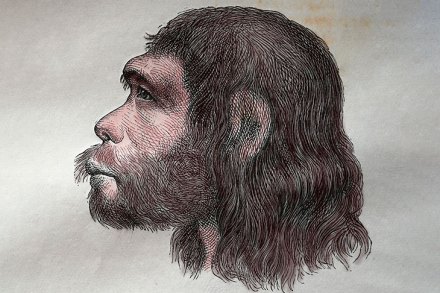
When I studied anthropology back in the early 1980s, Neanderthals were still largely the bulk-browed brutes of yore, grunting in smoky caves and loping across the tundra. Their vanishing from the fossil record some 40,000 years ago was a result of competition, along with a little interbreeding, with our own forebears. The story, as I received it then, retained something of the racially hierarchical views at large when the first fossilised bones were recovered in Germany, from near the Neander river, in 1856. Neanderthals were made extinct by an altogether smarter creature. It was inevitable — the clue was in the name: Homo sapiens. Neanderthals have come a long way since.