Anthropic

Dario Amodei’s wife emailed Epstein for sex blog seed round

From our US edition

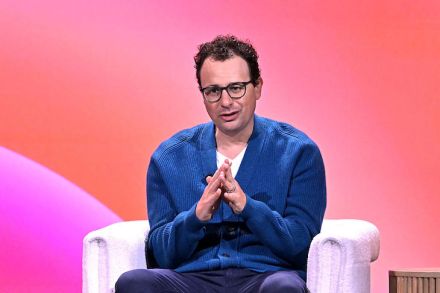
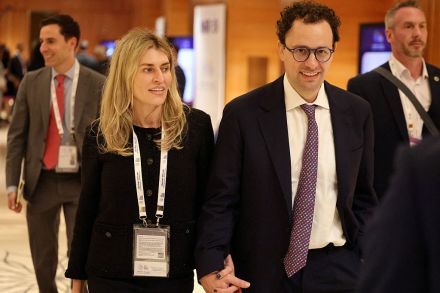
How do you conceal yourself from the all-seeing-eye of the internet? Being married to the founder of an AI giant helps, apparently. A Wall Street Journal article this week delves into Cami Clark, the wife and key advisor to Anthropic’s Dario Amodei. “There are scant details about Clark online – and efforts have been made to remove references to her,” the Journal reports. One reason for this could be Clark’s past exploits running Eddice, an online sex magazine-cum-blog – and how at one point she sought investment from, oops, Jeffrey Epstein.

cami clark epstein dario amodei

The Founding Fathers of AI

From our US edition

In the spring of 1722, a 16-year-old apprentice in a Boston print shop began slipping letters under the door at night, signed by a middle-aged widow named Silence Dogood, who did not exist. The apprentice was Benjamin Franklin. His brother James, who owned the paper, had no intention of printing his kid brother, so Franklin invented a woman and let her say the things he couldn’t. Readers wrote in guessing at the author. No one suspected the boy sweeping the floor. Franklin would go on to be a printer, a postmaster, a scientist famous across Europe for his electrical experiments and a founder of libraries, fire companies and, in time, of the United States itself.

America’s Anthropic blackout won’t make the world safer

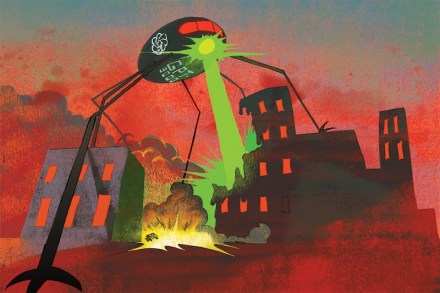
For the first time, the United States government has switched off frontier artificial intelligence and forced the world to go without it. Two of the most capable AI systems ever built, Claude Fable 5 and Claude Mythos 5, went dark last week. Not just in China or Iran. A researcher in London, a developer in Tokyo, an entire company in Berlin, all cut off at once, all treated as equally dangerous. A letter reached Anthropic at 5.21 on a Friday afternoon from Commerce Secretary Howard Lutnick, citing national security authorities. It told the company to suspend access for every foreign national, anywhere in the world. There is no switch that lets in Americans and keeps out everyone else. To comply, Anthropic said it had to take the models down for all users at once.

Silicon Valley wants to control the economy

From our US edition

I recently walked past an old minicab stand which, during our younger student days, sallied my friends back and forth between the city’s nightlife and our more affordable suburban digs. It is gone now; only a dilapidated and cordoned-off shack remains of a once-thriving minicab empire. Like thousands of others across the western world, the business went into terminal decline the moment Uber appeared in our lives. Yet a simple check of the app today shows the price of an Uber is not substantially less than a minicab ride back then. Uber rocketed to celestial heights because it was heavily subsidized by venture capital – driving the value through the floor, bankrupting all physical competitors, before it then jacked up the price to create an instant monopoly.

LLM

The Pope’s AI intervention shames our politicians

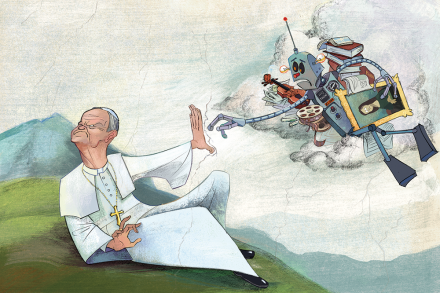
I was born into a sternly Presbyterian culture. Politically, I’m more Orange than Donald Trump’s skin tone. But today I am on my knees giving thanks to the Pope. He has produced the most powerful political document of the year, taking on the greatest challenge of our times. His first encyclical, Magnifica Humanitas, deals with the changes which will be wrought to all our lives by artificial intelligence in the months and years ahead. AI will transform our economies and societies massively and irrevocably; it will change what it means to be human; it may even mark the end of humanity itself. If it takes the Pope to alert us to this revolution then perhaps the Reformation wasn’t such a good idea after all.

AI

How to fight the AI revolution

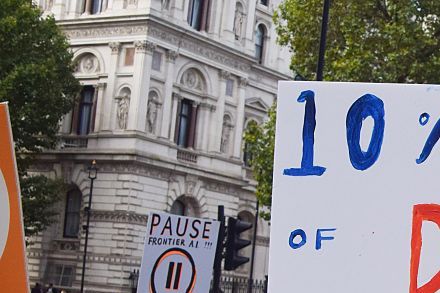
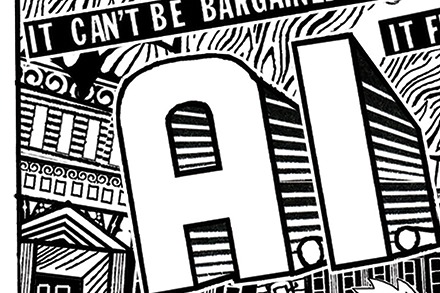
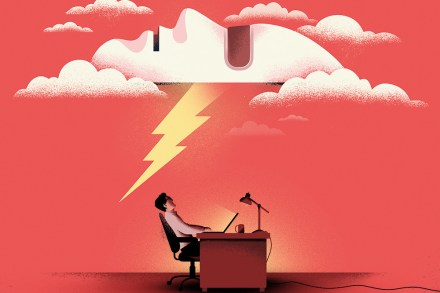
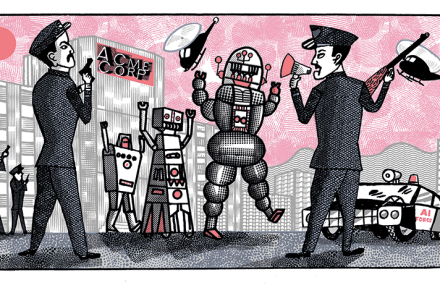
Ask ChatGPT to write a Spectator leader about the risks of AI and it begins like this: ‘There are two kinds of people talking about artificial intelligence today. One group is exhilarated, convinced that AI will usher in a new era of abundance, productivity and human flourishing. The other is distinctly alarmed, warning of mass unemployment, runaway systems and even existential catastrophe. They disagree on almost everything – except one crucial point. This is going to be a big change. And Britain, like most countries, is not nearly ready for it.’ As the bot identifies, the consensus among experts is that AI’s impact will be seismic, whether for good or ill.