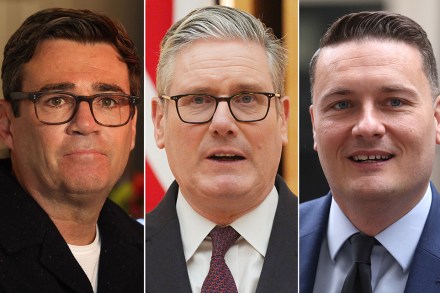
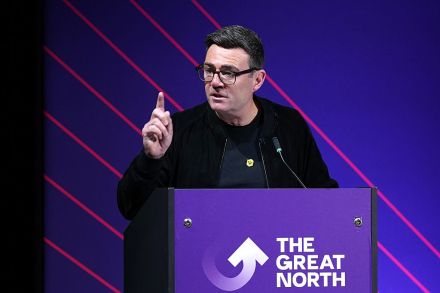
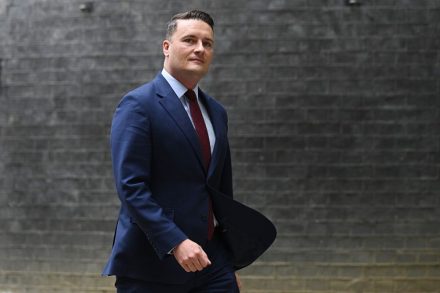
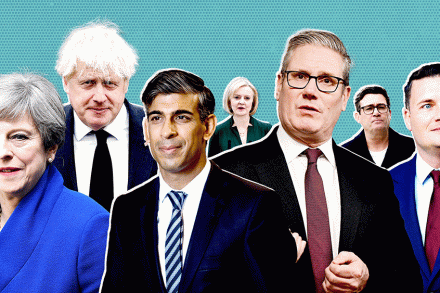
Andy burnham

True neoliberalism has never been tried

From our UK edition

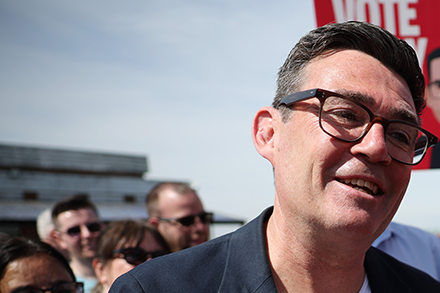
Friedrich Hayek once argued that if you put the word ‘social’ in front of a noun, the meaning was negated. Social justice wasn’t about due process; social democracies didn’t safeguard freedom. For those on the left, who can never have enough social-isms, there is a more toxic prefix. If you want to damn something, stick a ‘neo’ in front. Nothing is quite as wicked as a neoconservative, but coming dangerously close is a neoliberal. Liberals were once generally supposed to be the squishiest of centrists. But listen to the men and women making the weather in British politics now, and you’d imagine that neoliberals were the horsemen of the apocalypse. Andy Burnham has blamed ‘40 years of neoliberalism’ for the problems faced by workers in Makerfield, and indeed beyond.
Is Andy Burnham up to the job of prime minister?

When the Labour party football team played a group of journalists at Loftus Road two years ago the hacks won 4-1. The politicians’ solitary goal came from a late penalty. When the referee pointed to the spot, the center-forward stepped up, elbowing well-known politicians such as Ed Balls, David Miliband and Sadiq Khan out of the way in his bid for glory. There was a notable absence that day. “Keir [Starmer] had been due to play, but he didn’t turn up,” a witness recalls. “If he had been there, he’d probably have grabbed the ball and there might have been a tussle.” Instead, Andy Burnham said: “This is mine,” and calmly slotted it into the corner. “It was a perfect penalty,” says the witness.

Andy Burnham

When does a drama become a psychodrama?

When Labour blocked Andy Burnham from standing as its candidate last time around, Douglas Alexander, the Scottish Secretary, rejoiced at avoiding "three months of psychodrama – who’s up, who’s down, who’s getting on with who…" But as Gareth Roberts remarked in The Spectator’s Coffee House, "I’m not quite sure what the difference is between psychodrama and good old-fashioned plain original-flavor drama." Indeed, Mr. Alexander’s characterization of psychodrama sounds like the essential lineaments of pure politics: "Who loses and who wins; who’s in, who’s out," as King Lear puts it. King Lear itself might be a classic psychodrama, if madness is the defining feature.

psychodrama

We need to demand more from our politicians

From our UK edition

The first mention of Westminster came in a charter of 785, attributed to King Offa, granting land in ‘that terrible place’. The document was a forgery though, drawn up by 12th-century monks to make Westminster Abbey seem a site of holy terror. Even so, ‘that terrible place’ would strike most people today as a good description of SW1. Parliament has failed to cover itself in glory in recent years: the financial crisis, the expenses scandal, the Brexit wars, the prime ministerial merry-go-round, the unfair if unshakeable perception that our politicians are fiddling – with their finances, and possibly their staffers – while Britain suffers. No wonder, then, that politicians of all stripes have tried to boost their popularity by railing against Westminster.

Can Andy Burnham really do it?

From our UK edition

30 min listen

Andy Burnham is the man on everyone’s lips in Westminster. As he campaigns to return to parliament in the Makerfield by-election, Tim and James bring you the definitive guide to Burnham – and what could happen next. They’re joined by Joshi Herrmann, founder and editor of Mill Media, whose profile of Burnham had Westminster buzzing over the weekend. He shares his view of the Greater Manchester mayor’s ‘unusual gifts and glaring weaknesses’, whether ‘Burnhamism’ really exists, and if Burnham’s emotional style of politics could survive the brutality of No. 10.

Pity Andy Burnham

From our UK edition

There is something infinitely melancholy in hearing what political ambition does to perfectly nice people. I awoke on Monday to hear Danny Kruger (an MP, formerly Conservative, now defected to Reform) defending his party’s candidate in the Makerfield by-election, one of whose past social media posts was simply too disgusting for me to repeat here. True, Mr Kruger was not defending the post itself, but the candidate’s right to a ‘private’ (protested Kruger) history of such social media comments. Well, maybe. But I seem to remember Kruger’s past speeches have been especially admired for their high moral tone – he is a strong Christian – and so his being forced to defend a candidate’s right to a history of filthy misogyny in a public forum will have hurt him.

A lot can happen in Makerfield this weekend

From our UK edition

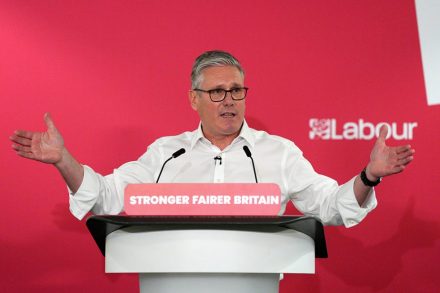
It’s been another bizarre week in Westminster, with Sir Keir Starmer going about business as if everything is completely normal while a shadow leadership race to replace him ramps up in the background. But the absurdity of left-wing turmoil hit its peak yesterday when Andy Burnham officially launched his campaign to win the Makerfield by-election and take over as PM. In the car park of a sports and social club in Ashton-in-Makerfield, the Greater Manchester mayor was flanked by a cadre of MPs from Labour’s more left-leaning flank, including the Corbynista Rebecca Long-Bailey, Barry Gardiner and Charlotte Nichols. Liverpool City Region mayor Steve Rotheram was there. And so, too, was Jonathan Reynolds, the chief whip and man in charge of upholding loyalty to the Prime Minister.

Why Labour’s fate will be decided in the Strait of Hormuz

From our UK edition

36 min listen

For this week’s Edition, Lara Prendergast is joined by The Spectator's John Power, feminist campaigner Julie Bindel and former adviser to Boris Johnson – and co-host of the In The Room podcast, Cleo Watson. They explore the idea that the Strait of Hormuz, not Makerfield, will determine the fate of the current Labour government. Starmer may be facing a challenge to his authority from mayoral shapeshifter Andy Burnham, but neither the PM or the wannabe MP will be rewarded if grocery and energy prices continue to soar. How much can be done to insulate Britain from future pain? And do they trust Labour to do so? Also this week: is Wes Streeting a better option than Burnham?

‘Being a Labour mayor in Manchester is playing politics on easy mode’: Is Andy Burnham up to the job of PM?

When the Labour party football team played a group of journalists at Loftus Road two years ago the hacks won 4-1. The politicians’ solitary goal came from a late penalty. When the referee pointed to the spot, the centre-forward stepped up, elbowing well-known names like Ed Balls, David Miliband and Sadiq Khan out of the way in his rush to grab the glory. There was a notable absentee that day. ‘Keir [Starmer] had been due to play, but he didn’t turn up,’ a witness recalls. ‘If he had been there, he’d probably have grabbed the ball and there might have been a tussle.’ Instead, Andy Burnham said: ‘This is mine,’ and calmly slotted it into the corner. ‘It was a perfect penalty.

Labour must be honest with voters about the coming crisis

From our UK edition

So far, Labour has staged a contested leadership election in government only once – 50 years ago, in 1976. The New Economics Foundation once declared 1976 to be post-war Britain’s happiest year, judging by income equality and public spending. Cosseted by memories of a hot summer of space hoppers and Swap Shop, the left-wing thinktank brushed over strikes, stagflation and Britain going – to use the obligatory phrase – cap in hand to the International Monetary Fund (IMF). Compared with Labour’s current phoney war, that election was enviably swift. Harold Wilson resigned on 16 March; three rounds of voting by Labour MPs later, and James Callaghan entered Downing Street on 5 April.

Will the bond markets undo Burnham?

From our UK edition

13 min listen

Andy Burnham’s campaign for Makerfield is already gathering pace, complete with Oasis soundtrack to a new campaign video. But as Labour’s would-be challenger tries to pitch himself as the man to replace Keir Starmer, questions remain over his economic credibility. Michael Simmons and Tim Shipman join Noa Hoffman to Burnham, the bond markets, and if Starmer can really dig in if Burnham wins the by-election.

Starmer rival Wes Streeting finally resigns from cabinet

After days of deliberation, Wes Streeting has finally quit Keir Starmer’s government. At the stroke of 1 p.m. GMT, the Ilford MP resigned as Health Secretary in a two-page letter that laid out his differences with the UK Prime Minister. He details, at length, the results the pair have achieved in government and says they offer "good reasons for me to remain in post." But: As you know from our conversation earlier this week, having lost confidence in your leadership, I have concluded that it would be dishonorable and unprincipled to do so. It is the opening salvo of a merciless script that goes for Starmer’s jugular. Streeting pins blame for the "unprecedented" results of last week, which pose "an existential threat to the future integrity" of the UK on Starmer himself.

wes streeting

Things can always get worse

I have spent the past week marvelling at the behaviour of our commentating class. They seem to have whipped themselves back into that familiar frenzy which must lead, inexorably, to the Prime Minister stepping down. ‘He has to go’; ‘The most incompetent prime minister of my lifetime’; ‘Things can’t go on like this’ – these were the general sentiments revolving around Keir Starmer even before his party’s thumping in last week’s local elections. The problem is that some of us have a long-ish memory. So when people say the Starmer government is uniquely incompetent or ineffectual, a tiny flare goes off in my mind. Have these people forgotten Theresa May?

Keir Starmer has one card left to play

As calls for Sir Keir Starmer’s head grow ever louder among Labour MPs, the British Prime Minister is digging his heels in. He has one more card left to play: divide and conquer. While scores of backbenchers are desperate for change at the top, they are completely split on the question of who should take over. Those on the Labour right who have deserted Sir Keir are rallying behind Wes Streeting. The soft left are desperate for the return of Andy Burnham but, short of that, could support bids from Angela Rayner or Ed Miliband. This lack of any consensus works to Starmer’s advantage.

starmer

18 ways to save your political career

From our UK edition

Dear wannabe leaders of Britain. What a lot of you there are! I’ve been writing about leadership and the craft of politics for 25 years and I’m sick of watching the same mistakes repeated. I’m keen to help. So listen up Nigel, Kemi, Zack, Ed, Ed, Andy, Angela and Wes – and you Keir, it’s never too late to learn. 1) TL;DR: If you have no time for impertinent journalists, here’s the executive summary. You need a plan, plus strategy and tactics to deliver it. You need a narrative to explain it to voters. You need the charisma and application to take your party, the civil service and the country with you. And you need to build a team to do the bits that you cannot accomplish alone.

Letters: Yvette Cooper for PM!

From our UK edition

Bet on Yvette Sir: Were Angela Rayner, Ed Miliband, Andy Burnham or Wes Streeting to succeed Sir Keir (‘After Starmer’, 2 May) as prime minister without first becoming a holder of one of the other three Great Offices of State, this would mark the first time in more than a century that a current or previous holder has not become prime minister in the middle of a parliament when the occasion arose. On the basis of this very strong tradition, the real contenders are David Lammy, Shabana Mahmood, Yvette Cooper and Rachel Reeves. Of these, the only credible potential candidate appears to be Cooper, who could run as a ‘safe pair of hands’ to stop the frontrunners, should sufficient Labour MPs want her to do so.

Is Britain ready for Chancellor Ed Miliband?

When Morgan McSweeney concluded his evidence to the Foreign Affairs Select Committee about the Peter Mandelson affair, a senior Labour figure remarked: “What really did we learn from all this? That Keir made a bad decision, wants someone else to blame and didn’t really know what was going on in his own government. Fancy that!” The fact that 14 Labour MPs voted to refer the Prime Minister to the Privileges Committee (the body which forced Boris Johnson from the political stage) – and a total of 53 recorded no vote in his defense – is far from a ringing endorsement of his leadership. But the significance of the Mandelson hearings has been misunderstood.

ed miliband

What is ‘Starmerism’?

From our UK edition

If Keir Starmer didn’t already understand Harold Macmillan’s warning about ‘events, dear boy, events’, he got a lesson on Saturday. At 4.49 p.m. on Truth Social, Donald Trump ate humble pie about the -sacrifice of British troops in Afghanistan, having previously claimed Nato forces avoided the front line. ‘We enjoyed it for a few minutes,’ a close aide recalled. Eleven minutes, to be precise. At 5 p.m. on the dot, Andy Burnham announced that he wished to stand in the Gorton and Denton by-election. So began the latest psychodrama at the top of the party. This was an open challenge to Starmer’s authority and a test both of his remaining political power and his willingness to use it.

Portrait of the week: Burnham blocked, Braverman bails and Starmer clashes with Trump

From our UK edition

Home Labour’s National Executive Committee refused permission for Andy Burnham, currently Mayor of Greater Manchester, to stand in a by-election at Gorton and Denton. The decision was made by ten people, including Sir Keir Starmer, the Prime Minister, with only Lucy Powell, Labour’s deputy leader, voting for Mr Burnham. Mr Burnham winning the seat had been seen by some as a route for him to become prime minister after Andrew Gwynne, its MP (who was suspended from the Labour party for bad jokes), left the Commons by applying for the office of Crown Steward and Bailiff of the Manor of Northstead. The by-election will be on 26 February. Fifty Labour MPs signed a letter to Sir Keir calling the decision ‘a real gift’ to Reform.

Don’t surrender to soulless self-checkouts

From our UK edition

A friend runs a small factory employing 60 skilled workers. He exports industrial components worldwide, competing with Europe for quality and China for price: a model enterprise for the productive economy we wish we had more of. Earlier this year, his top concerns were the hike in employers’ national insurance (costing the equivalent of several new apprentices) and the advent of Donald Trump’s tariffs. Since then, he’s been hit by a cyber-attack – and his story, a miniature of Jaguar Land Rover’s, is a parable for business everywhere. Like most companies today, this one is paperless: IT-dependent in everything from product design to accounting and HR. It also happens to hold ample cash, which hackers could have spotted from Companies House filings.